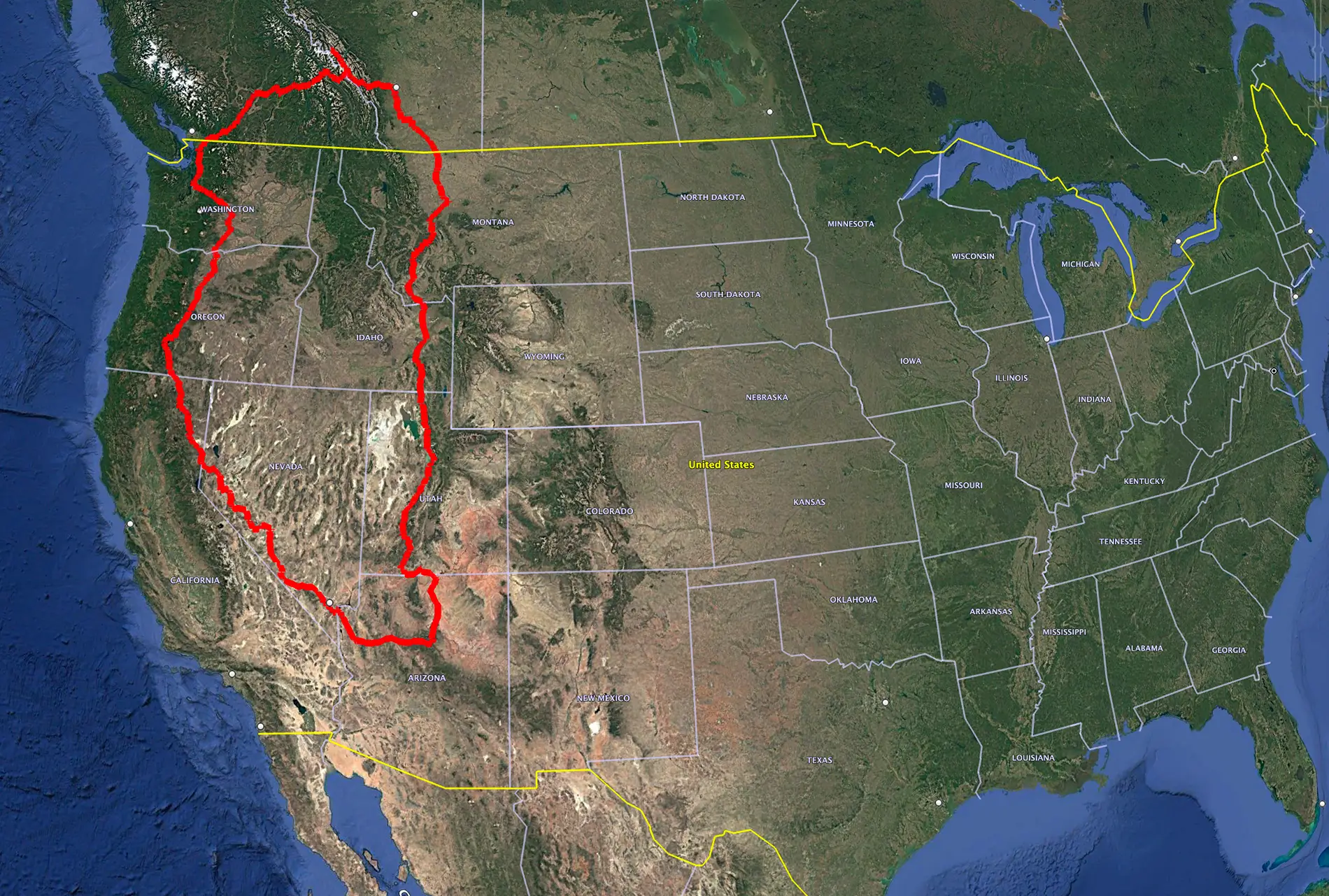
We are on a 1500 mile road trip from northern AZ to Boulder and back.
We’ve been wandering our way through the Rockies on the way back to AZ.
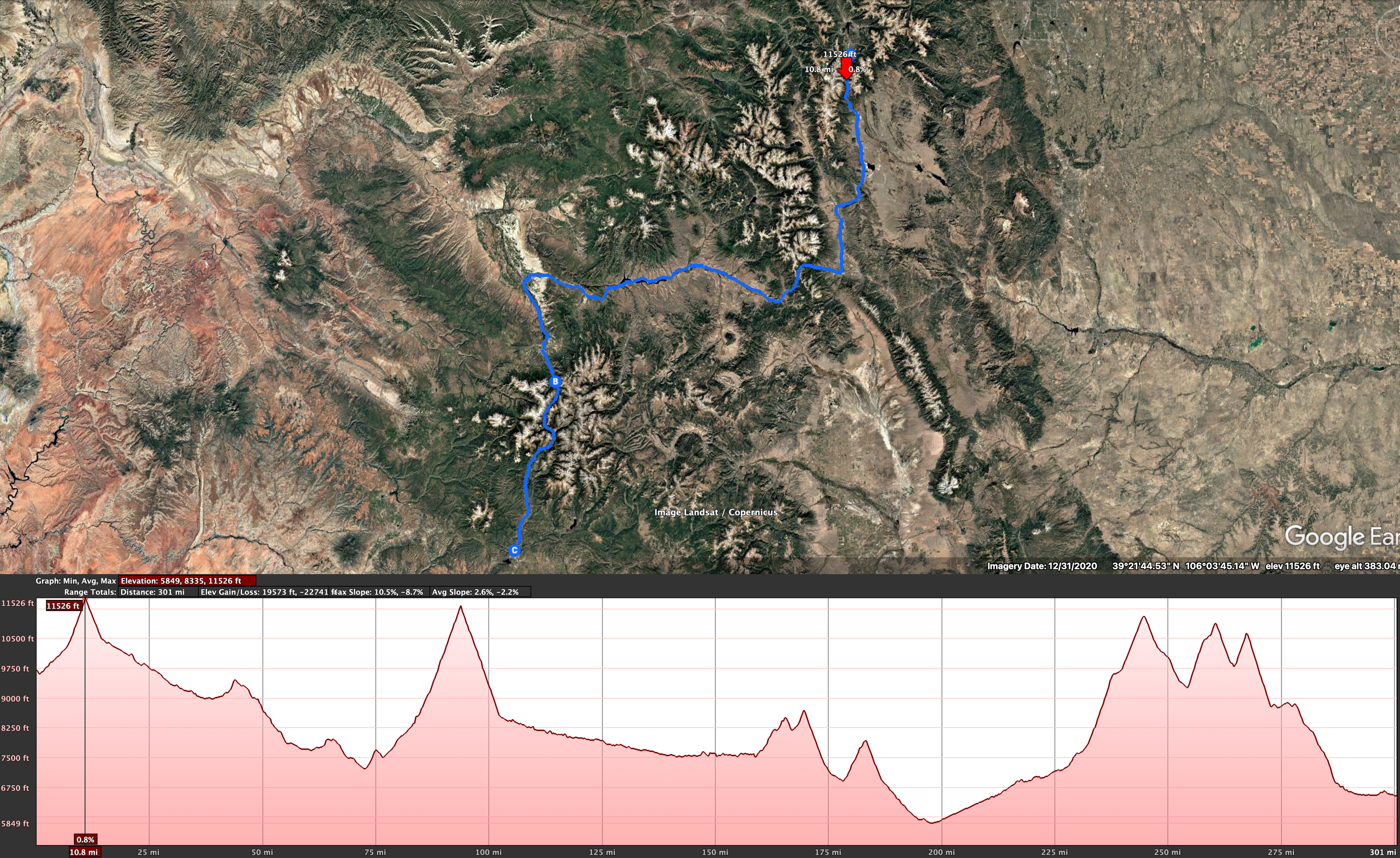
Last night, we charged to 100% overnight in Breckenridge. Then drove 320 miles through the mountains to just a bit south of Durango.
The overall elevation loss was not insignificant (about 9700 feet to about 6500 feet). But there were a lot of climbs in between. Speeds were generally limited to 50 mph or less except for a few places where they were up to 65 mph.
With the starting state of charge of 100%, the truck estimated 440 miles range. We stopped at a marina along the Curecanti National Recreation Area to eat lunch. There was a slow, L2 charger there that we plugged into. It gave us only about 1% before we were back on the road. Not really helpful to us, but I bet it could be helpful to people who spend several hours on the water.
We arrived at our hotel south of Durango with 213 miles remaining on the range estimation and 49% state of charge. We drove 320 miles through the mountains, with lots of climbs and descents (but remember that the cost to climb the mountain is more than is recovered coming down).
The starting estimate was 440 miles.
After 320 miles of travel, the truck thinks we could go another 210 miles. That would suggest 530 miles of range.
For the 320 miles of travel, the truck used 52%. That would suggest 615 miles of range.
Frankly, after 1300 miles driving this truck, I have come to the conclusion that a 205 kWh battery in a pickup truck is overkill if you’re not towing. Save some money, buy the smaller battery, and get the higher payload.
We’ll do some towing in the next month, so I’ll have a chance to better understand its performance with a load on the hitch.
We left Durango with 88% state of charge and arrived home with 23% state of charge. That’s 65% or 133 kWh for a 320 mile drive, so about 2.4 miles/kWh. We stopped for a restroom break, but weren’t feeling especially hungry, so did not stay for a meal. And we didn’t charge. And now we’re more tired than we would have been if we’d stayed for an extra 10-15 minutes. I don’t think we would have charged, though. It’s “free” to charge at home since we use excess solar to charge the truck.
Anyway...
After 1540 miles road tripping with the Silverado through northern Arizona, southern and eastern Utah, and the Colorado Rockies, here’s my preliminary review:
The Silverado is a phenomenal BEV pickup truck. It drives like a truck (except when you forget to turn off the 4-wheel steering before you hit the freeway). It’s not as comfortable as the Lightning. It’s more comfortable than the Tacoma or the Mustang Mach-E. Its range is ridiculously long. Too long to be worth the cost of buying the 205 kWh battery (max range) unless you’re going to often tow long distances with it. We made many of the same stops with the Silverado as we’ve made with the Lightning on the same trips. We didn’t have to charge at every one of those stops, but we were stopping anyway. I think it’s going to save us a little bit more money per mile driven, but not a substantial amount. It will make it easier to tow our tent trailer to Canada this summer—well, except the rear charge port is dumb design.
Some things we’ve encountered, good and bad.
I expected the HUD to be a gimmick that we turned off and left off, but it’s turned out to be more useful than gimmicky.
The air suspension suffers from the same thing every air suspension I’ve tested suffers from: it’s both too harsh and too soft. In the turns and at higher speeds on poorly-maintained roads, the suspension allows more roll than I’d like it—I’ll have to investigate whether sway bars and anti-body-roll can be installed with this suspension.
The high mass of the vehicle contributes to excess body roll.
The high mass also reduces acceleration capability. But also the 4-wheel steering contributes to poor control under high acceleration. So we set the vehicle in the least sporty-drive mode and the acceleration is still infinitely better than any gas vehicle I’ve ever driven. This is in no small part because there’s zero lag between pressing the accelerator and the vehicle responding. Every gas vehicle I’ve driven has a terrible lag and engine lugging behavior when the accelerator is smashed. No EV I have driven has that, not even the Chevrolet Bolt.
There’s significantly less wind noise in the Silverado than the Lightning.
There’s more tire noise, but it’s in part due to the high pressure of the OEM tires (61 PSI front and 74 PSI rear).
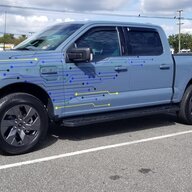
The 24” wheels and 35” tires are both dumb and silly. I’ve already ordered 18” wheels and 33” tires. I’ll have to figure out how to recalibrate the odometer and speedometer to adjust for the smaller tires.
I really hate the war on buttons. I’m glad GM kept the HVAC buttons, but think the people who okayed the removal of the Start/Stop button are utter morons. Every designer who is stupid enough to think removing it was a good idea should be fired. I have a fix for it, but it’s still just incredibly stupid to remove this. It shows to me how lazy the designers were when considering actual use of the vehicle. They could only imagine a single use-case; they couldn’t be bothered to have a conversation with people who use their vehicles differently than “get in, drive, park, get out.”
It’s also bad design to have placed the charge port in the rear of a tow vehicle.
Android Automotive suffers from several issues related to being a walled garden. I’ll be side-loading the apps that I need to make it usable.
There are issues with the interface in that it’s different from what we’ve grown use to in the Ford ecosystem. We’ll figure it out eventually.
The rearview mirror is comically small. I’ll be replacing it. I have no use for the camera in the rear view mirror, so that’s not a loss.
The 5’11” bed is better than the 5.5' bed of the Lightning. I would have given up a bit more cabin space for an even longer bed, but this is the best bed available on a BEV pickup so far. I think the mult-function tailgate will make the bed that much more useful than the Lightning’s.
I’m sure there’s more.
The biggest issues we have run into is the lack of a start/stop button, the excess weight, and the too-large wheels. Two of those are fixable. We’ll just have to deal with the excess weight.
After a little over a month and 3700 miles with the Silverado, here’s my current impression….
The Lightning was a more comfortable truck and better for most road trips. The Silverado is okay. Its extra range does help with towing; it’s okay for ranch work but not as good as the Lightning, mostly because I didn’t have to fight with the designers of the Lightning (the Silverado shuts itself off when you close the door because the designers were stupid enough to think that the dumb idea of removing the Start/Stop button from Tesla should be applied to a truck). The Silverado's rear port makes it less useful as a tow vehicle. I’m still not convinced the Silverado was the right trade. If only Ford had kept the Lightning in production but added another size in battery, I think we would have gone for that. I’m close to but not quite at the “regret” stage of having traded the Lightning for the Silverado.
To be clear: The Silverado is a good truck. It’s just not as good a truck as the Lightning was given the way I use the truck. The only benefit is longer towing distance. I still stop at the same locations when I road trip; I still need to pee, and a bigger battery in the truck doesn’t change that.
<rant>
What’s sad is that there aren’t any manufacturers building a truck that’s all-around excellent for ranch work, towing, and road tripping.
They should keep a Start/Stop button or other mechanism for allowing the driver to determine when the truck is ready to drive. I don’t want a programmer in Detroit or Silicon Valley to make uninformed guesses about how I use the vehicle. I’d rather have a physical key than the stupid auto start/stop behavior in the Silverado.
They should never put the charge port in the rear. The delusion that the insane CEO knows what he’s talking about is sad and should be rejected. Put the charge port in the front.
We don’t need 4-wheel steering. It’s a gimmick and has very little practical use. Same with crabwalk.
Stop putting 22”-24” wheels on these trucks. Give us an option for 18” wheels with LT tires from the factory. And I don’t want 35” tires. Give me 30-32” tires from the factory.
We do want to be able to tow decent distances. I could do that with the Lightning; I can go farther with the Silverado. I’d probably go back to a Lightning if I could do it without additional expense of paying for my mistake of trading the Lightning for the Silverado.