

Sponsored

chl

Well-known member
First Name
CHRIS
Joined
Dec 16, 2022
Threads
9
Messages
3,335
Reaction score
2,033
Location
alexandria virginia
Vehicles
2023 F-150 LIGHTNING, 2012 Nissan Leaf, 2015 Toyota Prius, 2000 HD 883 Sportster
Occupation
Patent Atty / Electrical Engineer
With the OTA history, I am really not worried about it either. We all know it takes years for them to release even simple feature updates.
LOL, true...but when the do issue OTA's they often screw a few things up as well, eh?

I agree that since Ford is abandoning the Lightning, more or less, it does seem unlikely they would intentionally stop the SIgenergy system from working with it.

Knock on wood...

Yes, Ford has their own proprietary HIS with Siemens, who owns the software that operates it? Seems like Ford since they want a $500 fee for the privilege depending on the trim - I have a Pro so the program for the HIS was not included.

Not sure if Ford implements it the exact same way as Sigenergy, though if Sigenergy 'copied' Ford's method, it could be an intellectual property or licensing violation.

A sticky wicket that.

It is a bit strange to think about: we own the physical trucks, but license the use of the software that runs them.

-----

"The primary legal implication is that you are entering a long-term service relationship with Ford, where the vehicle's functionality can be altered remotely, and your ability to modify or repair it independently is constrained by software licensing..."

Key legal implications include:

  • Software Licensing and Control (EULA): You are subject to an End User License Agreement (EULA) that grants a license to use the software but restricts reverse engineering, decompilation, and modification. Essentially, you do not "own" the code, only the right to use it, which limits your ability to alter the truck's operating system.
Modifying the software ("jailbreaking") can void warranties, although manufacturers must generally prove that the modification caused the specific failure.

(An AI legal analysis - but seems pretty accurate)


-----

If they did issue a tweak that stops it from working, I suppose someone would figure out how to undo it with FORscan pretty quick, but that would be a violation of the EULA and subject one to copyright violation(s).

Intentionally not installing OTA's within a reasonable time after they are issued would void the warranty according to the warranty language, if Ford could prove that caused the 'damage.'

However, if Ford's new EV trucks include a V2X ability that would be compatible with other systems, like Sigenergy, I would hope Sigenergy would be talking to them about it and getting any necessary permissions, etc.

If Ford offers a competing system with the new EV Truck, could be hardball time...like what they did to the inventor of the intermittent windshield wiper, Robert Kearns...of course they lost in the end after 10 years of litigation...

https://federalcourthistoricaledmi.org/homepage-inspiro/history/historical-cases/case-kearns/
Sponsored

 

djwildstar

Well-known member
First Name
Guy
Joined
Mar 14, 2023
Threads
2
Messages
286
Reaction score
402
Location
Atlanta, GA
Vehicles
2023 Lightning Lariat ER, 2023 Mach-E GTPE
Occupation
Information Security
Not sure if Ford implements it the exact same way as Sigenergy, though if Sigenergy 'copied' Ford's method, it could be an intellectual property or licensing violation.
The two systems operate rather differently.

Ford's system uses the truck's CCS DC pins for power export only. In a power failure scenario, the Home Integration System's interconnect isolates the home from the power company feed automatically. The interconnect, inverter, and charge station pro communicate over RS-485. The charge station pro talks to the Lightning over Bluetooth, and if everyone is in agreement, the Lightning locks the connector and connects the high-voltage battery. This sends ~400V DC through the charge station to the inverter, which then powers critical circuits. Even in automatic mode, it takes very noticeable time to complete all of the handshakes and restore power.

The Sigenergy system appears to exploit a loophole in DC fast charging: once you've connected to the vehicle, there appears to be no requirement that it actually charge the vehicle -- instead, the "charger" can draw power from the vehicle. This requires that the system have a live 400V feed at all times, but allows it to switch from charging to discharging very quickly.
 

JRDM2

Well-known member
First Name
J
Joined
Nov 17, 2025
Threads
2
Messages
86
Reaction score
59
Location
Michigan
Vehicles
2025 Lightning Flash
I watched a couple videos of the system from users and installers in Australia only last week. I didn't know it was coming to the US. I'm interested but not in a position to get it yet. I hope it succeeds, it has a lot going for it.
 
Last edited:

ClevelandBeemer

Well-known member
Joined
May 10, 2025
Threads
9
Messages
291
Reaction score
356
Vehicles
2025 F150 Lightning Flash 131kWh
The powerwall array is great. Doesnt have to be mutually exclusive. Powerwall never needs to leave the house....
I never said anything about the Powerwall not being a good product. However the Sigenergy system has SIGNIFICANTLY more flexibility while coming in at a lower cost.
 

Jenovalente

Member
First Name
Jens
Joined
Dec 11, 2023
Threads
0
Messages
22
Reaction score
6
Location
Charlotte, NC
Vehicles
2023 F150 Lightning XLT
I remember watching the live reveal for the F150 lightning back in 2021 and thinking that is a cool truck. Maybe someday. Then the moment came where they showed the truck powering your house, and I was sold.
The Ford system that was released worked for me, but did not have the response or features that I really wanted...

Sigenergy has now come along, and their system with the V2X DC charger is the system that I had been hoping for. I have had their main components for almost a year now, but finally got the V2X module this past week. I will go through a detailed explanation of the system and its components below.

Load Hub:

Load Hub.webp

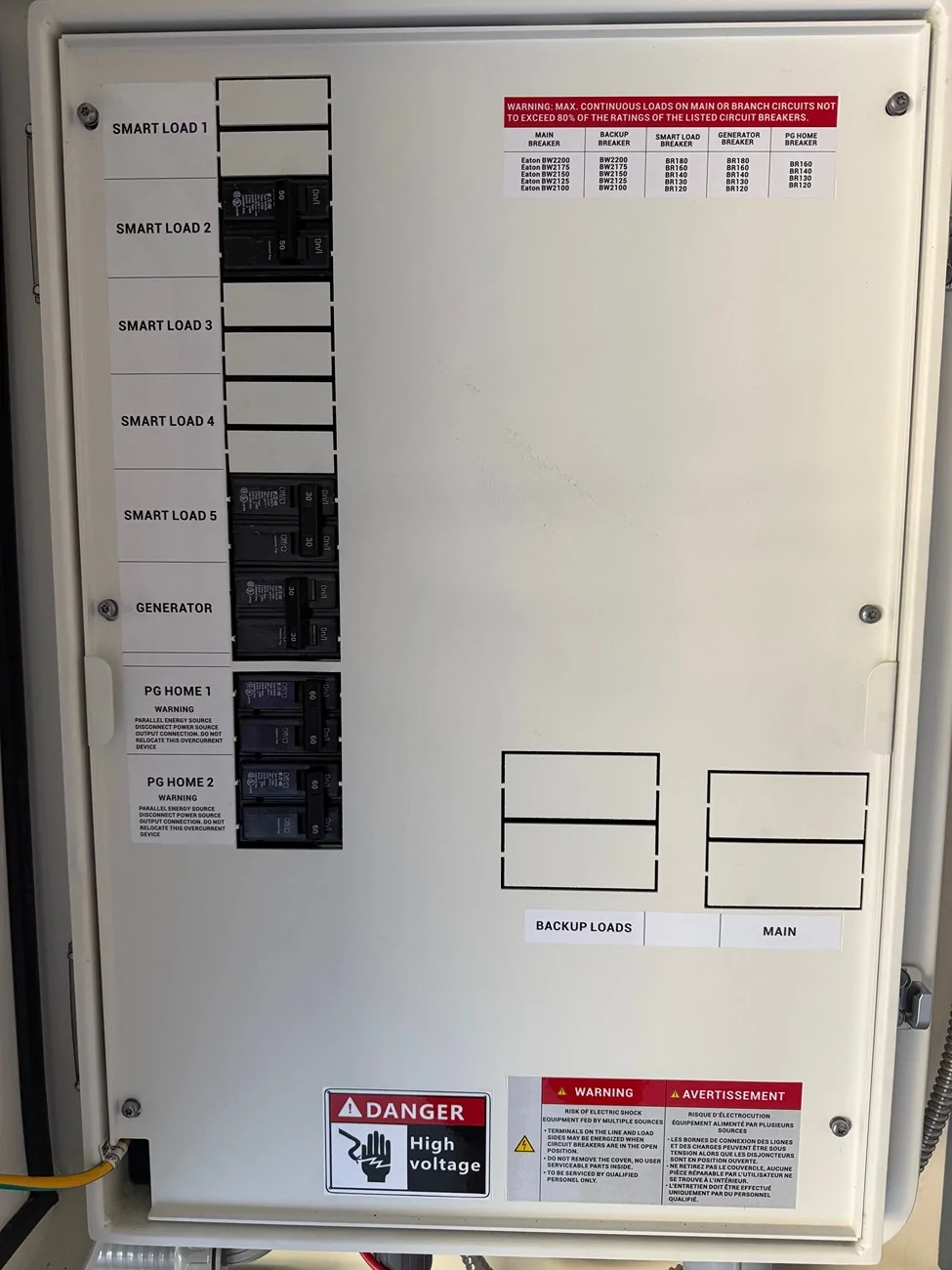
The load hub, while optional, is a key component to making the system great. It combines the functionality of the transfer switch and a smart panelboard (like SPAN) into a single item. At its core, it is a 200A service entrance rated automatic transfer switch. You can locate it between your utility meter and your main panelboard for whole home backup, or you can locate it between your main panel and a secondary/critical loads panel.
It also has 8 - 240V double pole smart breaker locations for various equipment. 2 of the positions are for the Sigenergy inverters only. 1 position is dedicated to a generator input (more details below). The other 5 positions can be used for smart managed loads or other inverters (sigenergy or 3rd party). You can use these if you want your dryer, oven,or any other load to be controlled manually or automatically in a grid outage or even on-grid low battery situation.
The most important feature of this, is their 0ms fail over. If you keep your equipment on performance mode, it is always ready to take over in a grid failure. If you have batteries or the truck plugged into V2X, there is not even hardly a flicker of the lights when you go off grid from a power failure. None of your devices like computers, or network equipment will shut down or even know the power is out. We have had utility power failures and only knew because the app sent a notifcation.

Energy Controller:

Inverter Stack.webp


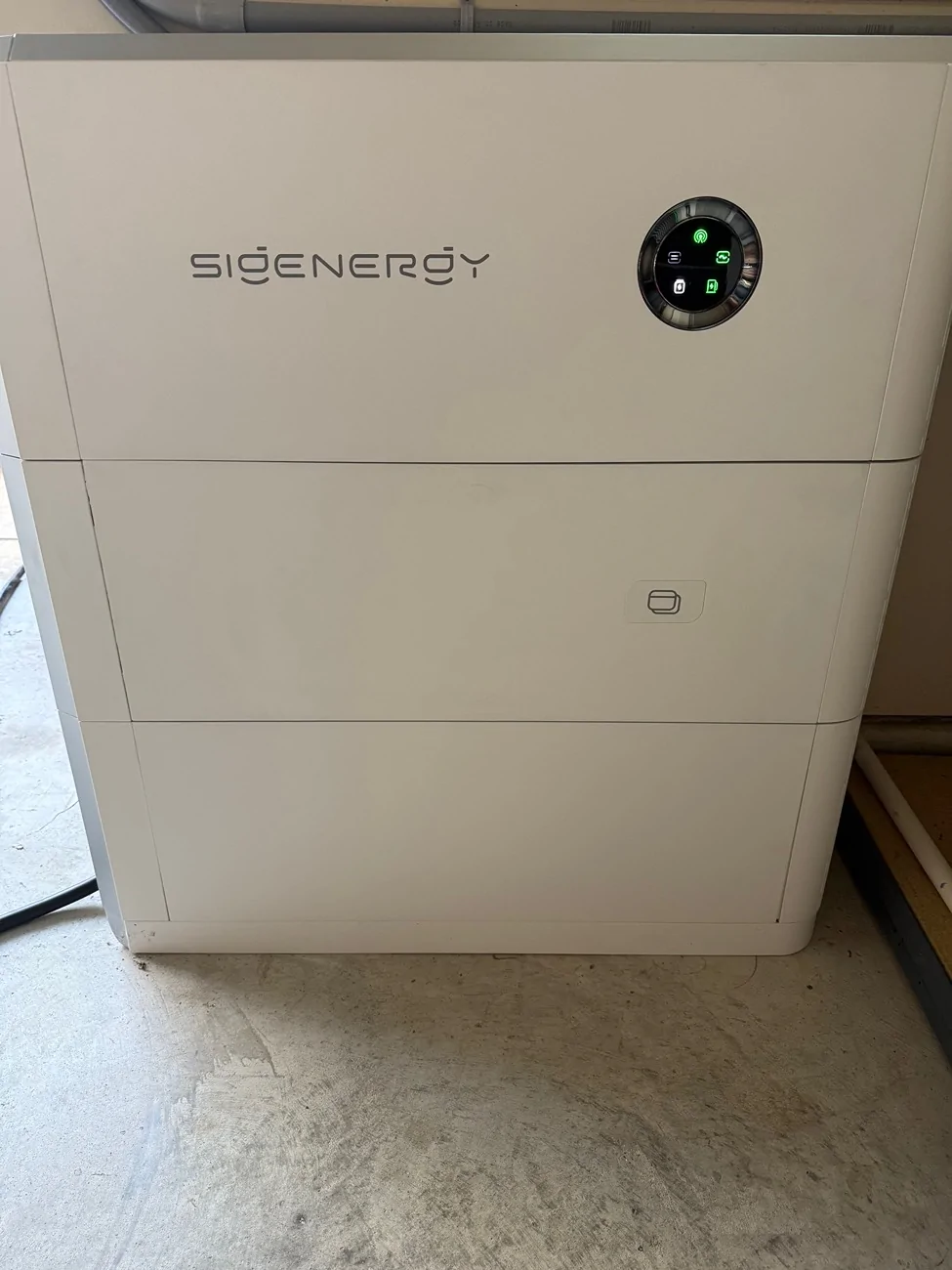
The energy controller is the hybrid inverter. It manages all the loads and physically sits on top of the stack of batteries. It has a continuous rating of 11.4 kW and has a short time surge limit higher than that. Now to get all 11.4kW you do need enough solar, batteries, V2X, or combination of those to achieve that power level. While this is good enough for most people, it is possible to parallel more inverters (up to 3 total) for up to a possible 34kW of power for large and high-load houses. The Energy Controller is also what interfaces with you app. You can have a system with just the Energy Controller for on-grid only applications (including V2X), but to have off grid, you need a load hub. One very nice feature is that all the communication of your Energy Controller and Load hub are all done over a network connection. It can be Wifi, cellular, or hard wired network into your home router. I have my whole system hard wired to a network switch so it is very fast and reliable connection. No more RS-485 communications. The only wiring that comes out of the whole stack is your 240V power that goes to the panelboard or Load Hub, and your network cable. All DC interconnection is built into the modules and you just line them up as you build your stack. There are no cables to mess with at all between the modules. This includes the V2X charger.

V2X Bi-directional DC EV charger:

V2X mode 1.webp
V2X mode 2.webp
V2X mode 3.webp
Bi-Directional Mode.webp


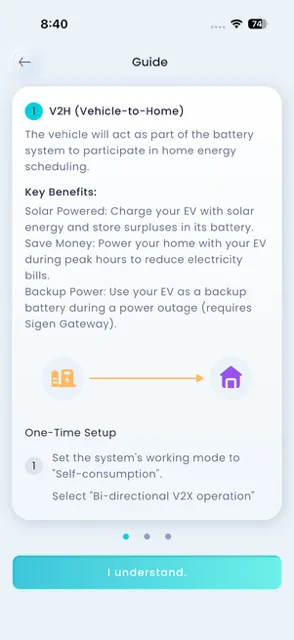
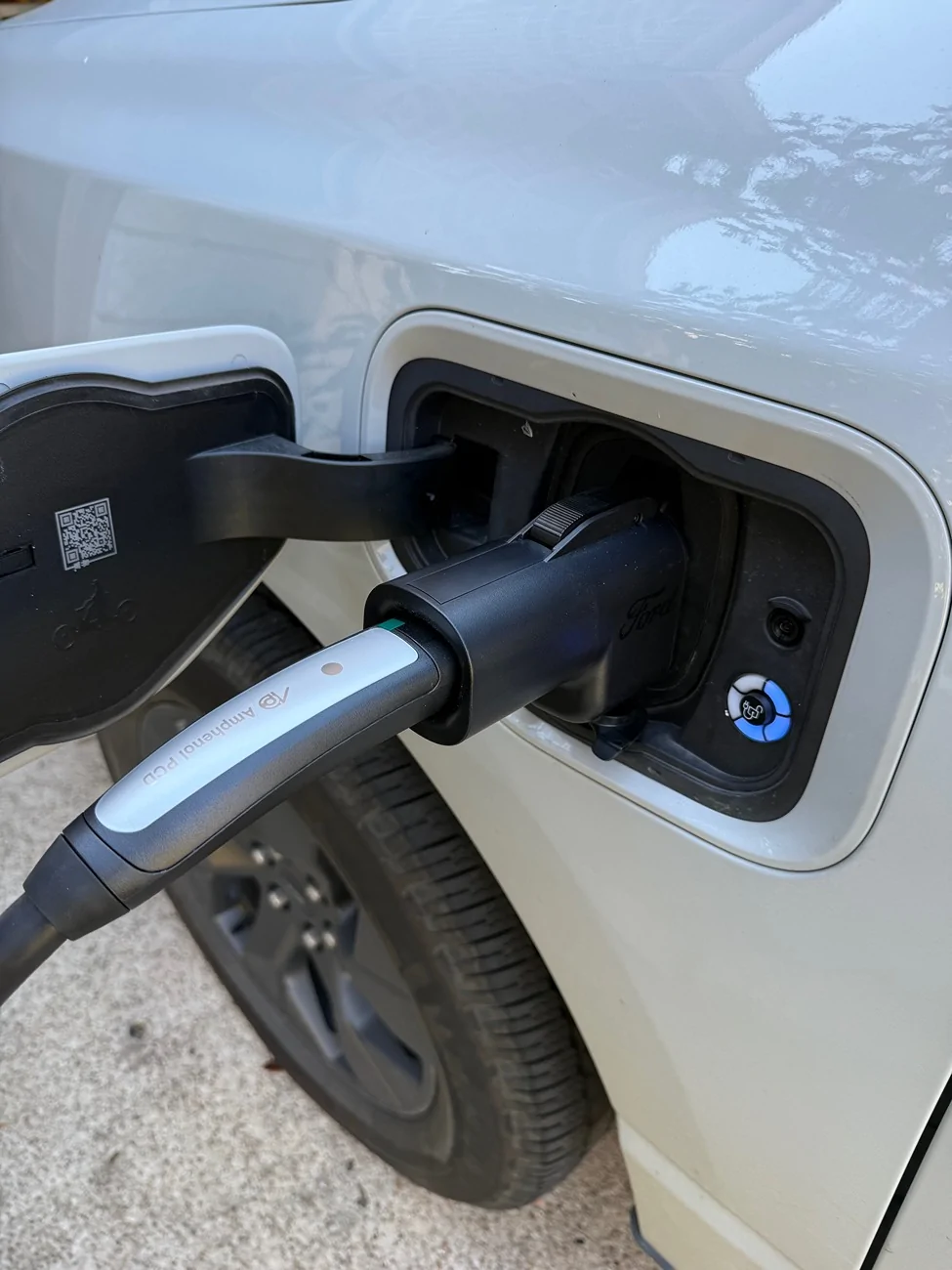
Ok this is what you are here for. For Sigenergy the V2X charger is a module that is the exact size of a battery module. It just sits in the stack immediately below the Energy controller and comes with a 25 ft. cable that comes out at the bottom of the stack. This does mean that you have to have the controller stack somewhat near your vehicle location. You can purchase it with either NACS or CCS adapters, but it is not designed to easily re-wire back and forth. You choose this option up front.

NACS Adapter.webp


I decided to use the NACS cable and bought a second NACS to CCS DC fast charge adapter (some one as used for Tesla Superchargers) that I keep permanently connected. I can easily remove it if I want to have someone with a NACS connector try my system / their car out. Speaking of that, this system works with a whole host of different EV models and more are becoming compatible soon. The Lightning and Mach-E have some of the best perfomance of any of the vehicles out there, but even Rivian and most CCS compatible Tesla's work great. The Sigenergy website lists what they believe to be compatible vehicles.

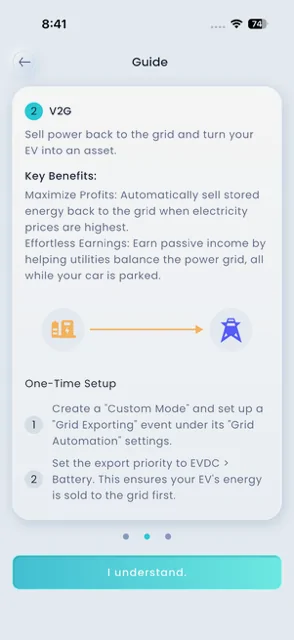
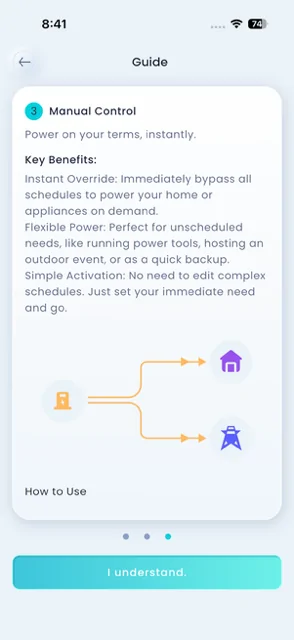
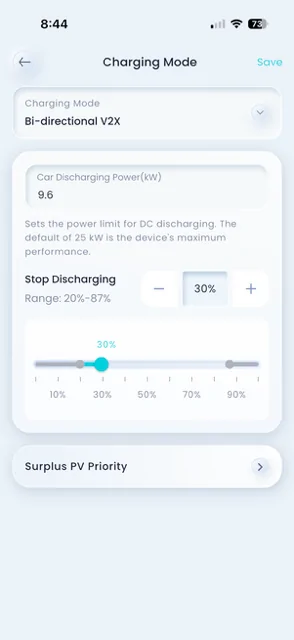
For performance this is a DC charger, so it bypasses the trucks AC charger. It also bypasses the limit of 48A that the AC charger has on 2024+ and old standard range Lightnings. Now technically off the grid it still has a 11.4kW limit for both charge and discharge to your panel. There is a boost ability however, that can bring your charge or discharge rate up to as much as 25kW. That is equal to about 100 amps on an AC charger. The caveat is that you have to use the solar or batteries that are directly connected to the same stack as the charger. In my case I don't have any solar and only one battery, so my limit would be 16kW. The 25kW can come from mix/match sources though. You could be getting 5kW from solar, 9 kW from battery, and 11kW from grid, if you wanted to get the full 25kW charge rate when it is needed.
This is a DC charger and thus works at the truck DC charger setting (not the same as the AC battery % max you might have set). It also has some caveat, like with the latest update it locks when the vehicle is locked and you don't have any key nearby.

Bi-directional.webp


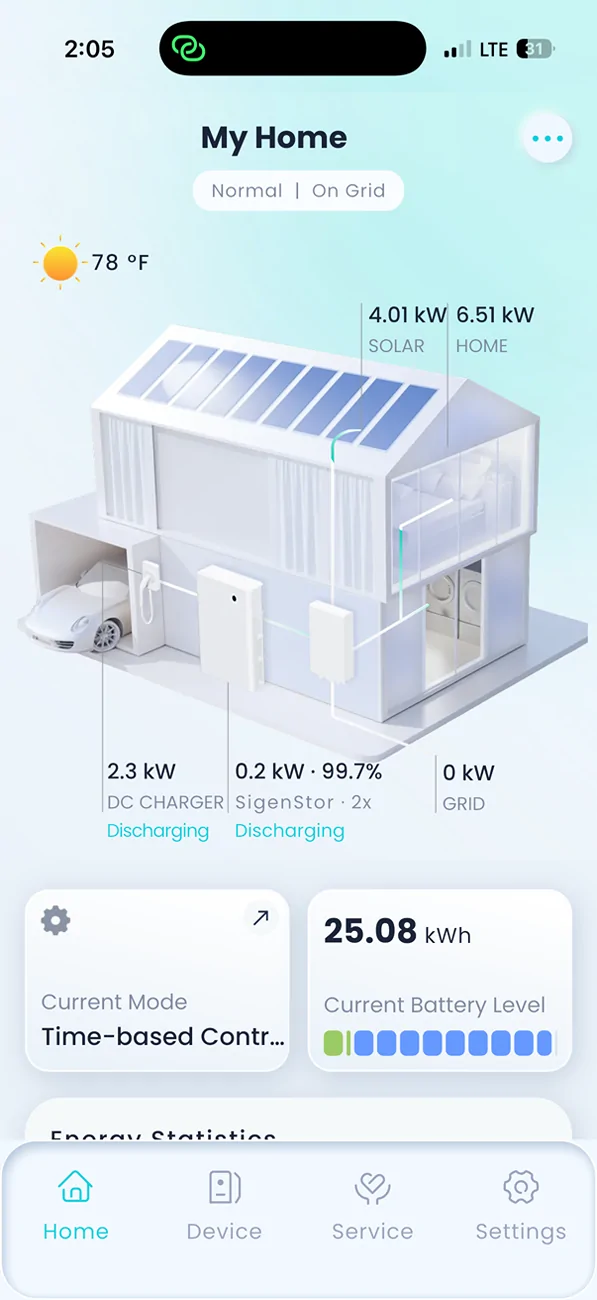
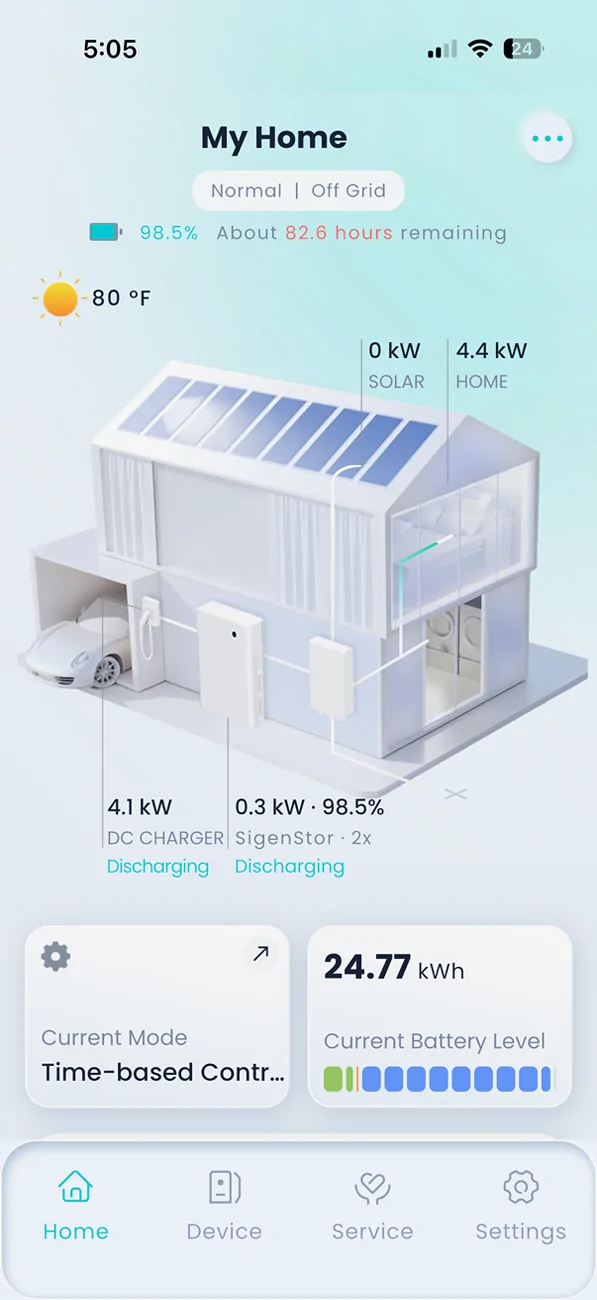
Once you are using the V2X, the truck becomes just part of the battery system and operates in synch with all the other components. There is a mode called self-consumption, where it is exactly like being off grid. It serves all your homes needs from all the sources available. If you have solar, and it exceeds the home load, it will begin to re-charge your batteries and vehicle automatically. It goes back and forth as needed automatically. The graphic above shows when my solar was meeting my AC needs, but the microwave got turned on, which took energy from the truck.

IMG_2797.webp


I can start my 5 ton AC unit while off-grid with this system (I do have an Easy Start on my unit)

Batteries:

Battery Priority.webp


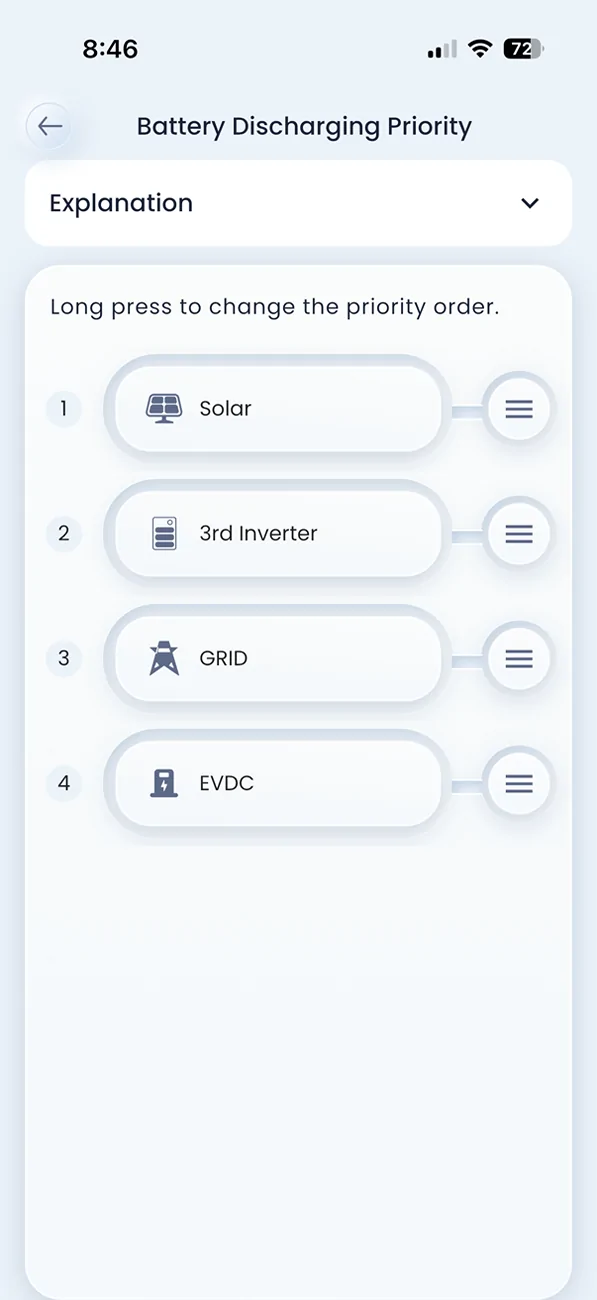
The batteries currently come in 6 kWh or 9 kWh increments. They are fully in parallel and can be mixed and matched. I believe currently each inverter supports up to 5 batteries, or 4 batteries + V2X module. That means you can have up to 45 kWh in a single inverter stacks. You can create an even larger system by adding more batteries with a 2nd or even 3rd inverter. If a battery were to fail, it does not affect anything else in the stack. It just takes itself out of service. You can not only mix different battery sizes, but also different technology in the future.

Solar:

Solar Priority.webp


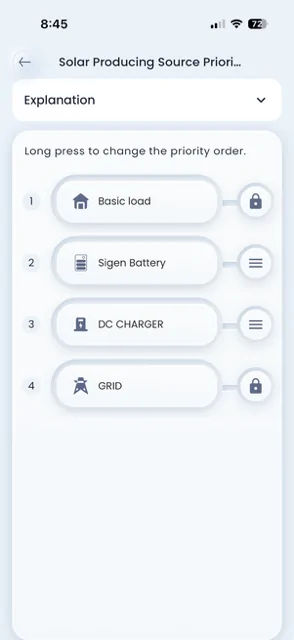
Solar is not required for the system, or for V2X, but it does integrate nicely. The inverter has 4 built in MPPT connections if you want to add it directly for a full DC coupled system. If you have the load hub or an external CT device sold by Sigenergy, you can also use AC coupled solar, even existing systems. I personally use my 5kW SolarEdge inverter I have had for 10 years now. It integrates exactly the same as if I had solar directly into the Sigenergy inverter (other than the power limit from the AC interface on the inverter).

Generator (with Load Hub):

IMG_2492.webp
IMG_2493.webp


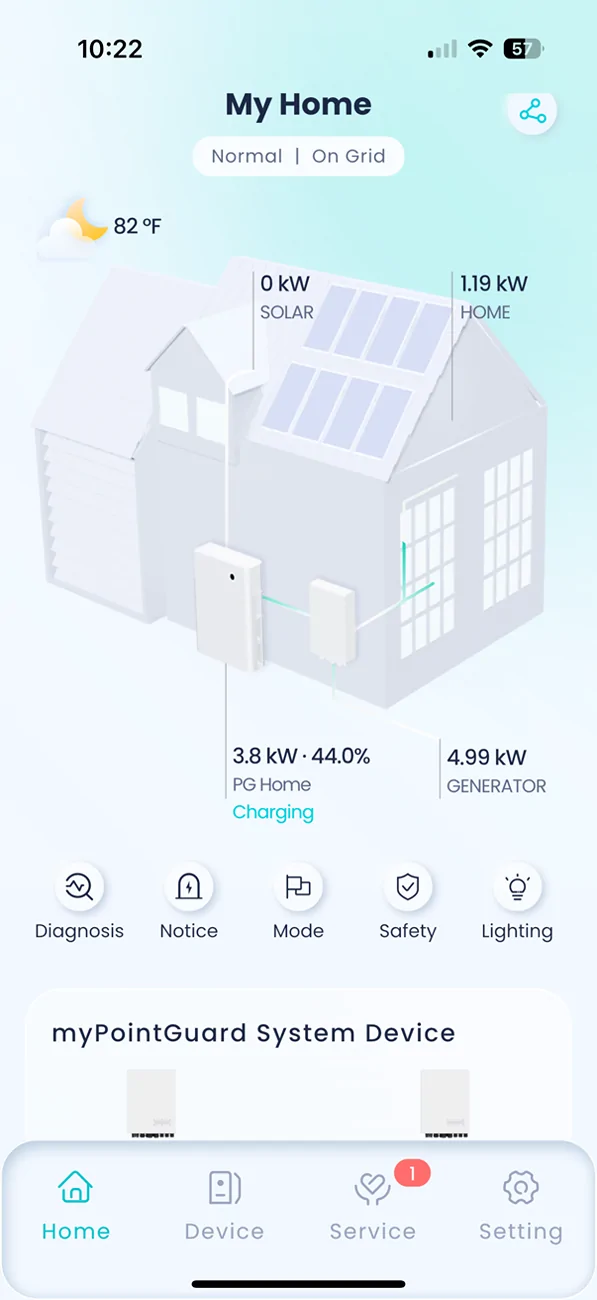
Lastly there is a generator input built in the load hub. You can have up to 80A generator that works with the system (off-grid only). It will work with nearly any type of portable or permanently installed generator. It can also automatically start-stop generators with remote start feature. You can set exactly how much load you want to pull from the generator. You can have the generator start up and not only service the house load, but also recharge the system battery (or EV with the V2X). One the charge level is reached, it will automatically turn off the generator input, so you can maximize the efficiency and minimize the runtime.
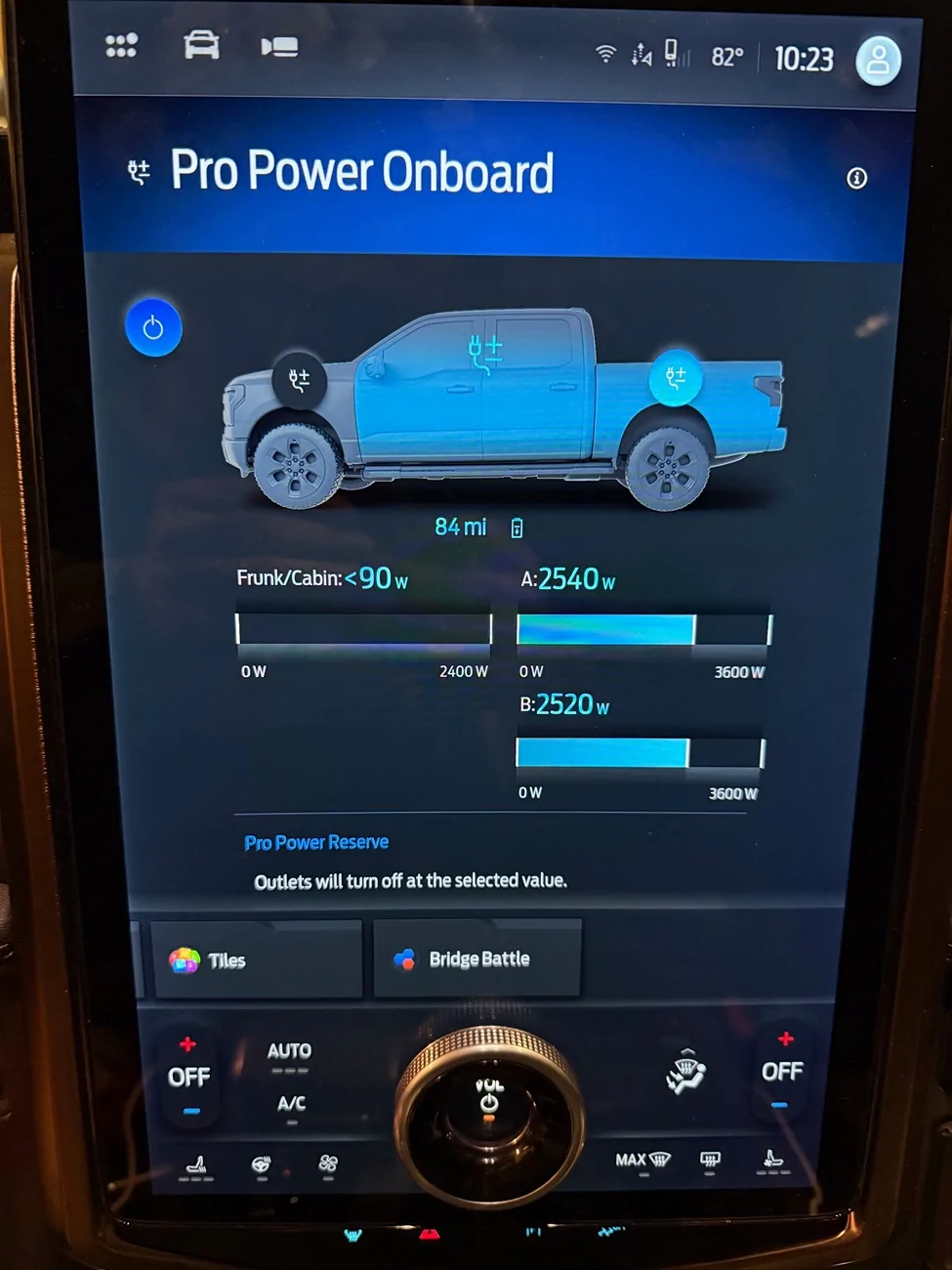
I have also successfully tested this with the Lightning Pro-power, but this only works if you disconnect the ground terminal between the two. This can cause a potentially dangerous issue and I don't recommend it. The V2X is really what you should use to connect the Lightning.


How to get it:
Sigenergy does require a certified installer to be able to commission the system. The best way to get these products is to reach out to a certified installer and get a quote.
It is possible to have any licensed electrician become a certified installer through a registration and small training program. Ask your favorite local electrician if you don't want to go through an unknown company.
The components are sold through distribution. I won't post the link here, but you can find retail pricing for the components online if you search.
I will say this is not the cheapest system. If you have ever researched systems on sites like Signature Solar, you will see lower cost systems. That being said, of the professional systems like Tesla, Franklin, etc. this is on the low cost side of that spectrum. It is likely lower cost for material and labor than Tesla. It is also the only system with both a bi-directional charger and generator input (both of which can be used at the same time).
🤤
 

Sponsored

123XYZ

Well-known member
Joined
Sep 1, 2023
Threads
0
Messages
81
Reaction score
40
Location
SF Bay Area
Vehicles
2023 F-150 Lightning Pro
Good question. There is nothing that needs to be enabled or set in the lightning. The truck just thinks it is connected to a DC charger.
This system will work with all model years and trim level of the Lightning, and doesn't require any sort of option package.
To be completely clear, are you saying that, for V2X, the truck needs no additional setup and will DISCHARGE through this system just by making a DC connection just like it would with any other DC charger?
 
OP
OP

tearitupsports

Well-known member
First Name
Russell
Joined
Jun 1, 2024
Threads
12
Messages
427
Reaction score
457
Location
Cypress, TX
Vehicles
2023 F-150 Lightning Lariat ER
Occupation
Industrial Automation & Controls
To be completely clear, are you saying that, for V2X, the truck needs no additional setup and will DISCHARGE through this system just by making a DC connection just like it would with any other DC charger?
To my knowledge with the way it works it shouldn’t matter if you have a Pro or Platinum. If serious I am sure Sigenergy could find a location for you to test first.
 
OP
OP

tearitupsports

Well-known member
First Name
Russell
Joined
Jun 1, 2024
Threads
12
Messages
427
Reaction score
457
Location
Cypress, TX
Vehicles
2023 F-150 Lightning Lariat ER
Occupation
Industrial Automation & Controls
Thank you for that very nice write up. I don't have solar but want to be able to use the Lightning for backup power. Would what you describe work in that way?
Solar is totally optional. The Sigenergy inverter is also a solar inverter so you could just add panels down the road.
 
OP
OP

tearitupsports

Well-known member
First Name
Russell
Joined
Jun 1, 2024
Threads
12
Messages
427
Reaction score
457
Location
Cypress, TX
Vehicles
2023 F-150 Lightning Lariat ER
Occupation
Industrial Automation & Controls
I understand this system is modular and each one would be different but what would the approximate cost be for this system with say one battery and the v2x system with inverters and load center?
I may have missed it but how much for that whole system?
I can't tell you exactly. The base (bare minimum) system would be around $8k-$9k for the components I believe. This is about the same price as the Ford system if you also included a Charge Station pro and LG battery. There are a lot of homes that would be a 1 day install for this system.

Overall I think it would be very comparable to a whole home generator price.

Now once you have the base system, adding extra batteries or solar panels would be very low cost.
 
OP
OP

tearitupsports

Well-known member
First Name
Russell
Joined
Jun 1, 2024
Threads
12
Messages
427
Reaction score
457
Location
Cypress, TX
Vehicles
2023 F-150 Lightning Lariat ER
Occupation
Industrial Automation & Controls
Thanks for the write up.

What is "performance mode"? Only true online double-conversion can provide 0ms transfer. So, does it do double-conversion? The fact that lights can flicker suggests it's not.
It's not a UPS so double conversion does not apply really, but in performance mode, the inverters are always active ready to take the load. There is an energy saving mode where the inverters go to sleep when not providing a load. I think it says they take about 50ms to wake up, which could cause devices to reboot. The light flicker are on very sensitive LED. Sometimes that doesn't even happen.


Also, does the app work during Internet outages? If not, is there a way to monitor/control the system using local communication interfaces?
Network communication is nice. Does it require Internet connection back to the mother ship in China for normal operation? Also, are the network interfaces and protocols open and accessible for third-party integration?
No the app does not work if there is no internet. I believe they are working on that. Modbus TCP is supported and they publish the full register map.
If the Internet goes down, the system still works as normal. I think they give you weeks offline before going into a basic feature mode without a network connection. The network ports are open to Modbus TCP for 3rd party management systems. I believe they may also have an API but I am not certain.


Does AC coupling work off-grid? And what kind of control settings (e.g. frequency shift parameters) are provided for AC coupling off-grid?
Yes AC coupled solar works fine off grid as long as there is room in the battery to absorb the extra. The Load Hub can just shut off the relay to the solar inverter. I believe it also can do frequency shift. The system will automatically turn off or on the inverter based on the battery %.
I don't know if this also takes into account the V2X or just the stationary battery. I believe its the latter.

Did you try the V2X and ProPower at the same time? That would be interesting to see.
No I haven't but I am quite certain it would work. I have done it with the Ford HIS. They are completely independent and you can power the home with V2X and also use all the outlets of the truck for other things.

Is it cheaper than Tesla just for the home battery (i.e. no V2X)? That would be remarkable.
I am quite sure that for the same battery capacity, Sigenergy would the the same or less than Tesla powerwall. The labor difference would also be significant, because a powerwall needs special equipment on-site. One you expand the system to more battery, the Sigenergy would be much lower in cost.
 

Sponsored

lazjen

Well-known member
First Name
Chris
Joined
May 8, 2024
Threads
6
Messages
48
Reaction score
162
Location
Sunshine Coast, QLD, Australia
Vehicles
F150 Lightning XLT ER 2023
I've recently (about 3 weeks ago now) got one of these systems installed here. Note that I am located in Australia and one of the rare people here that have a Lightning. Australia has gone mental with batteries (we already were that way with solar) since July last year when the gov introduced a rebate scheme. At that point the system savings on batteries was about 30% (google for details and the changes, etc). Recently it was noted that 250000 homes have installed batteries in this time with a total capacity of 6 Gw.

My system has 6 x 8 kWh batteries (48 kWh), the 25 kW DC bidirectional charger (CCS2 for us here) and 2 x 10 kW inverters (as it's a 2 stack system).

I do have a Tesla PW3 that was already in place before this and I'm in the process of trying to get it properly integrated into the system. I expanded my solar from approx 16 kW to 22 kW as part of this install.

We're heavy electric users here, "rural-residential" zoning, so grid supply is mostly ok but not the cleanest. Also, we have no town based amenities, so have our own water, etc. If we lose power, we lose water. Our place is fully electrified - 2 EVs, cooking, air con (this is near critical here), mowers, etc - no gas, etc.

We have access to wholesale electric prices (through Amber Electric) and can sell back to the grid at peak times. The V2X capability of the Lightning and this system means we can push a lot back to the grid. Our regulations limit us to export 15 kW per hour (its 5 kW per phase and we are 3 phase here). It's early days for us right now, but our bills for the summer season (right now) should be close to zero. We're effectively not importing anything (unless the weather is bad over multiple days, or the buy price is very low or negative).

Amber provides an app to assist with the energy trading aspect and has a SmartShift algorithm that is currently trying to learn our usage pattern to provide better results. Right now the app doesn't handle V2X at all so it gets a bit confused about where the energy is coming from sometimes, e.g. it sometimes states that the export to the grid I've doing in the evening or before dawn is coming from Solar excess. :) I suspect I may have to turn to using a setup with Home Assistant to properly control things in the future. For now I'm persisting (with manual intervention) to see what happens.

The system did cost a bit to get installed, made worse for our location, our bit more complex setup and install issues, etc. Ignoring hard to quantify non-monetary requirements like clean power, independence, reliability and resiliency, I expect this system to pay itself off within 8 years - and that's the worse case scenario. Depending on how the energy trading goes I might be able to knock another year or so off that. It should also be noted that unless we're doing long distance trips, our EVs are home charged (effectively solar). So if I were to factor in the "fuel" costs as well, the payback gets even better.

Below you can see a pretty screenshot from the Sigenergy app. This is our energy usage over the last 17 days. Left side is the source, right side is the consumer. Weather has been mixed - lots of cloud, rainy periods, erratic sunlight. The "3rd Inv" I think is the Tesla PW3 - that as mentioned above is still being sorted out properly.

So far, we are very happy with the system. Besides the PW3 integration, there's some minor edge case issues with the Sigenergy <-> Lightning control. I think it's to do with the SoC of the Lightning when trying to connect, and what the Lightning max charge limit is set to. If the limit is max charge limit is equal to, or greater than what's in the battery, the Sigenergy system tries to connect and fails thinking the system is full - this is a problem if you want to draw from the Lightning battery at this point. I have to do system settings gymnastics with the Lightning to set the max charge to 100% (I can't seem to set it to the that permanently) and try to ensure I charge to less than 100% for the bidirectional to work.

Ford F-150 Lightning Sigenergy V2X for the Lightning (and most other EV's).  The way bi-directional charging should be! Screenshot_20260303-104216
 

lazjen

Well-known member
First Name
Chris
Joined
May 8, 2024
Threads
6
Messages
48
Reaction score
162
Location
Sunshine Coast, QLD, Australia
Vehicles
F150 Lightning XLT ER 2023
No the app does not work if there is no internet. I believe they are working on that. Modbus TCP is supported and they publish the full register map.
If the Internet goes down, the system still works as normal. I think they give you weeks offline before going into a basic feature mode without a network connection. The network ports are open to Modbus TCP for 3rd party management systems. I believe they may also have an API but I am not certain.
They do have an API as you suspect. There's Home Assistant setups that can integrate with it - see https://emhass.readthedocs.io/en/latest/ as an example
 
Joined
Feb 12, 2025
Threads
0
Messages
9
Reaction score
1
Vehicles
2022 Ford F-150 Lightning Lariat
You can not only mix different battery sizes, but also different technology in the future.
Do you mean that this could be made to work with a Tesla Powerwall? I’ve lost my patience waiting for Tesla to enable bidi support in its ecosystem.
 

lazjen

Well-known member
First Name
Chris
Joined
May 8, 2024
Threads
6
Messages
48
Reaction score
162
Location
Sunshine Coast, QLD, Australia
Vehicles
F150 Lightning XLT ER 2023
Do you mean that this could be made to work with a Tesla Powerwall? I’ve lost my patience waiting for Tesla to enable bidi support in its ecosystem.
I'm trying to do this, since I had a PW3 in place already. Still trying to get things sorted out, but the idea is that the PW3 is another energy source for the system. It's not working properly yet as the Tesla app is not showing any energy in its system. I think something dumb is happening at the moment where as soon as some power gets into the PW3, it goes straight out again into the Sigenergy system. The Sigenergy app seems to show it as another Solar source (probably app coding limitations), but there's no way to configure it.

Early days for this I guess, but I would expect that over time, mixed brand battery setups will become more prevalent, so they're going to have to learn to work together somehow.
 
OP
OP

tearitupsports

Well-known member
First Name
Russell
Joined
Jun 1, 2024
Threads
12
Messages
427
Reaction score
457
Location
Cypress, TX
Vehicles
2023 F-150 Lightning Lariat ER
Occupation
Industrial Automation & Controls
I'm trying to do this, since I had a PW3 in place already. Still trying to get things sorted out, but the idea is that the PW3 is another energy source for the system. It's not working properly yet as the Tesla app is not showing any energy in its system. I think something dumb is happening at the moment where as soon as some power gets into the PW3, it goes straight out again into the Sigenergy system. The Sigenergy app seems to show it as another Solar source (probably app coding limitations), but there's no way to configure it.

Early days for this I guess, but I would expect that over time, mixed brand battery setups will become more prevalent, so they're going to have to learn to work together somehow.
Do you have solar still connected to your PW3? If so does it have a mode where it can charge only from solar and then only export the saved power. With that you could essentially turn it into a solar inverter from the Sigenergy point of view.
Sponsored

 
Last edited:


Top