
tearitupsports
Well-known member
- First Name
- Russell
- Joined
- Jun 1, 2024
- Threads
- 13
- Messages
- 463
- Reaction score
- 530
- Location
- Cypress, TX
- Vehicles
- 2023 F-150 Lightning Lariat ER
- Occupation
- Industrial Automation & Controls
- Thread starter
- #1
I remember watching the live reveal for the F150 lightning back in 2021 and thinking that is a cool truck. Maybe someday. Then the moment came where they showed the truck powering your house, and I was sold.
The Ford system that was released worked for me, but did not have the response or features that I really wanted...
Sigenergy has now come along, and their system with the V2X DC charger is the system that I had been hoping for. I have had their main components for almost a year now, but finally got the V2X module this past week. I will go through a detailed explanation of the system and its components below.
Load Hub:

The load hub, while optional, is a key component to making the system great. It combines the functionality of the transfer switch and a smart panelboard (like SPAN) into a single item. At its core, it is a 200A service entrance rated automatic transfer switch. You can locate it between your utility meter and your main panelboard for whole home backup, or you can locate it between your main panel and a secondary/critical loads panel.
It also has 8 - 240V double pole smart breaker locations for various equipment. 2 of the positions are for the Sigenergy inverters only. 1 position is dedicated to a generator input (more details below). The other 5 positions can be used for smart managed loads or other inverters (sigenergy or 3rd party). You can use these if you want your dryer, oven,or any other load to be controlled manually or automatically in a grid outage or even on-grid low battery situation.
The most important feature of this, is their 0ms fail over. If you keep your equipment on performance mode, it is always ready to take over in a grid failure. If you have batteries or the truck plugged into V2X, there is not even hardly a flicker of the lights when you go off grid from a power failure. None of your devices like computers, or network equipment will shut down or even know the power is out. We have had utility power failures and only knew because the app sent a notifcation.
Energy Controller:
The energy controller is the hybrid inverter. It manages all the loads and physically sits on top of the stack of batteries. It has a continuous rating of 11.4 kW and has a short time surge limit higher than that. Now to get all 11.4kW you do need enough solar, batteries, V2X, or combination of those to achieve that power level. While this is good enough for most people, it is possible to parallel more inverters (up to 3 total) for up to a possible 34kW of power for large and high-load houses. The Energy Controller is also what interfaces with you app. You can have a system with just the Energy Controller for on-grid only applications (including V2X), but to have off grid, you need a load hub. One very nice feature is that all the communication of your Energy Controller and Load hub are all done over a network connection. It can be Wifi, cellular, or hard wired network into your home router. I have my whole system hard wired to a network switch so it is very fast and reliable connection. No more RS-485 communications. The only wiring that comes out of the whole stack is your 240V power that goes to the panelboard or Load Hub, and your network cable. All DC interconnection is built into the modules and you just line them up as you build your stack. There are no cables to mess with at all between the modules. This includes the V2X charger.
V2X Bi-directional DC EV charger:

Ok this is what you are here for. For Sigenergy the V2X charger is a module that is the exact size of a battery module. It just sits in the stack immediately below the Energy controller and comes with a 25 ft. cable that comes out at the bottom of the stack. This does mean that you have to have the controller stack somewhat near your vehicle location. You can purchase it with either NACS or CCS adapters, but it is not designed to easily re-wire back and forth. You choose this option up front.
I decided to use the NACS cable and bought a second NACS to CCS DC fast charge adapter (some one as used for Tesla Superchargers) that I keep permanently connected. I can easily remove it if I want to have someone with a NACS connector try my system / their car out. Speaking of that, this system works with a whole host of different EV models and more are becoming compatible soon. With the way the system works (DC charge session), all trim levels and model years of Lightning should work. The Lightning and Mach-E have some of the best perfomance of any of the vehicles out there, but even Rivian and most CCS compatible Tesla's work great. The Sigenergy website lists what they believe to be compatible vehicles.
For performance this is a DC charger, so it bypasses the trucks AC charger. It also bypasses the limit of 48A that the AC charger has on 2024+ and old standard range Lightnings. Now technically off the grid it still has a 11.4kW limit for both charge and discharge to your panel. There is a boost ability however, that can bring your charge or discharge rate up to as much as 25kW. That is equal to about 100 amps on an AC charger. The caveat is that you have to use the solar or batteries that are directly connected to the same stack as the charger. In my case I don't have any solar and only one battery, so my limit would be 16kW. The 25kW can come from mix/match sources though. You could be getting 5kW from solar, 9 kW from battery, and 11kW from grid, if you wanted to get the full 25kW charge rate when it is needed.
This is a DC charger and thus works at the truck DC charger setting (not the same as the AC battery % max you might have set). It also has some caveat, like with the latest update it locks when the vehicle is locked and you don't have any key nearby.

Once you are using the V2X, the truck becomes just part of the battery system and operates in synch with all the other components. There is a mode called self-consumption, where it is exactly like being off grid. It serves all your homes needs from all the sources available. If you have solar, and it exceeds the home load, it will begin to re-charge your batteries and vehicle automatically. It goes back and forth as needed automatically. The graphic above shows when my solar was meeting my AC needs, but the microwave got turned on, which took energy from the truck.
I can start my 5 ton AC unit while off-grid with this system (I do have an Easy Start on my unit)
Batteries:
The batteries currently come in 6 kWh or 9 kWh increments. They are fully in parallel and can be mixed and matched. I believe currently each inverter supports up to 5 batteries, or 4 batteries + V2X module. That means you can have up to 45 kWh in a single inverter stacks. You can create an even larger system by adding more batteries with a 2nd or even 3rd inverter. If a battery were to fail, it does not affect anything else in the stack. It just takes itself out of service. You can not only mix different battery sizes, but also different technology in the future.
Solar:
Solar is not required for the system, or for V2X, but it does integrate nicely. The inverter has 4 built in MPPT connections if you want to add it directly for a full DC coupled system. If you have the load hub or an external CT device sold by Sigenergy, you can also use AC coupled solar, even existing systems. I personally use my 5kW SolarEdge inverter I have had for 10 years now. It integrates exactly the same as if I had solar directly into the Sigenergy inverter (other than the power limit from the AC interface on the inverter).
Generator (with Load Hub):
Lastly there is a generator input built in the load hub. You can have up to 80A generator that works with the system (off-grid only). It will work with nearly any type of portable or permanently installed generator. It can also automatically start-stop generators with remote start feature. You can set exactly how much load you want to pull from the generator. You can have the generator start up and not only service the house load, but also recharge the system battery (or EV with the V2X). One the charge level is reached, it will automatically turn off the generator input, so you can maximize the efficiency and minimize the runtime.
I have also successfully tested this with the Lightning Pro-power, but this only works if you disconnect the ground terminal between the two. This can cause a potentially dangerous issue and I don't recommend it. The V2X is really what you should use to connect the Lightning.
How to get it:
Sigenergy does require a certified installer to be able to commission the system. The best way to get these products is to reach out to a certified installer and get a quote.
It is possible to have any licensed electrician become a certified installer through a registration and small training program. Ask your favorite local electrician if you don't want to go through an unknown company.
The components are sold through distribution. I won't post the link here, but you can find retail pricing for the components online if you search.
I will say this is not the cheapest system. If you have ever researched systems on sites like Signature Solar, you will see lower cost systems. That being said, of the professional systems like Tesla, Franklin, etc. this is on the low cost side of that spectrum. It is likely lower cost for material and labor than Tesla. It is also the only system with both a bi-directional charger and generator input (both of which can be used at the same time).
The Ford system that was released worked for me, but did not have the response or features that I really wanted...
Sigenergy has now come along, and their system with the V2X DC charger is the system that I had been hoping for. I have had their main components for almost a year now, but finally got the V2X module this past week. I will go through a detailed explanation of the system and its components below.
Load Hub:
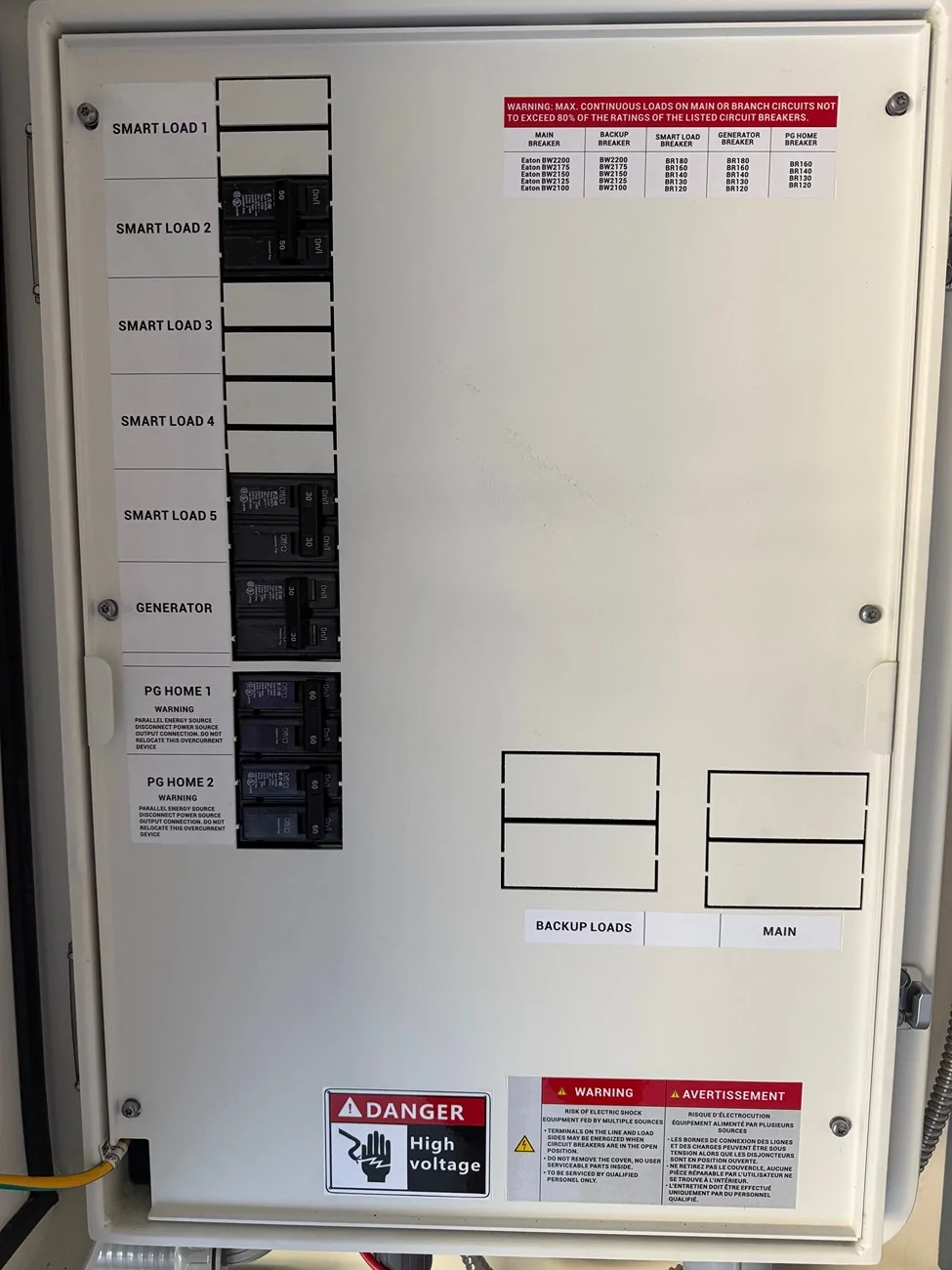
The load hub, while optional, is a key component to making the system great. It combines the functionality of the transfer switch and a smart panelboard (like SPAN) into a single item. At its core, it is a 200A service entrance rated automatic transfer switch. You can locate it between your utility meter and your main panelboard for whole home backup, or you can locate it between your main panel and a secondary/critical loads panel.
It also has 8 - 240V double pole smart breaker locations for various equipment. 2 of the positions are for the Sigenergy inverters only. 1 position is dedicated to a generator input (more details below). The other 5 positions can be used for smart managed loads or other inverters (sigenergy or 3rd party). You can use these if you want your dryer, oven,or any other load to be controlled manually or automatically in a grid outage or even on-grid low battery situation.
The most important feature of this, is their 0ms fail over. If you keep your equipment on performance mode, it is always ready to take over in a grid failure. If you have batteries or the truck plugged into V2X, there is not even hardly a flicker of the lights when you go off grid from a power failure. None of your devices like computers, or network equipment will shut down or even know the power is out. We have had utility power failures and only knew because the app sent a notifcation.
Energy Controller:
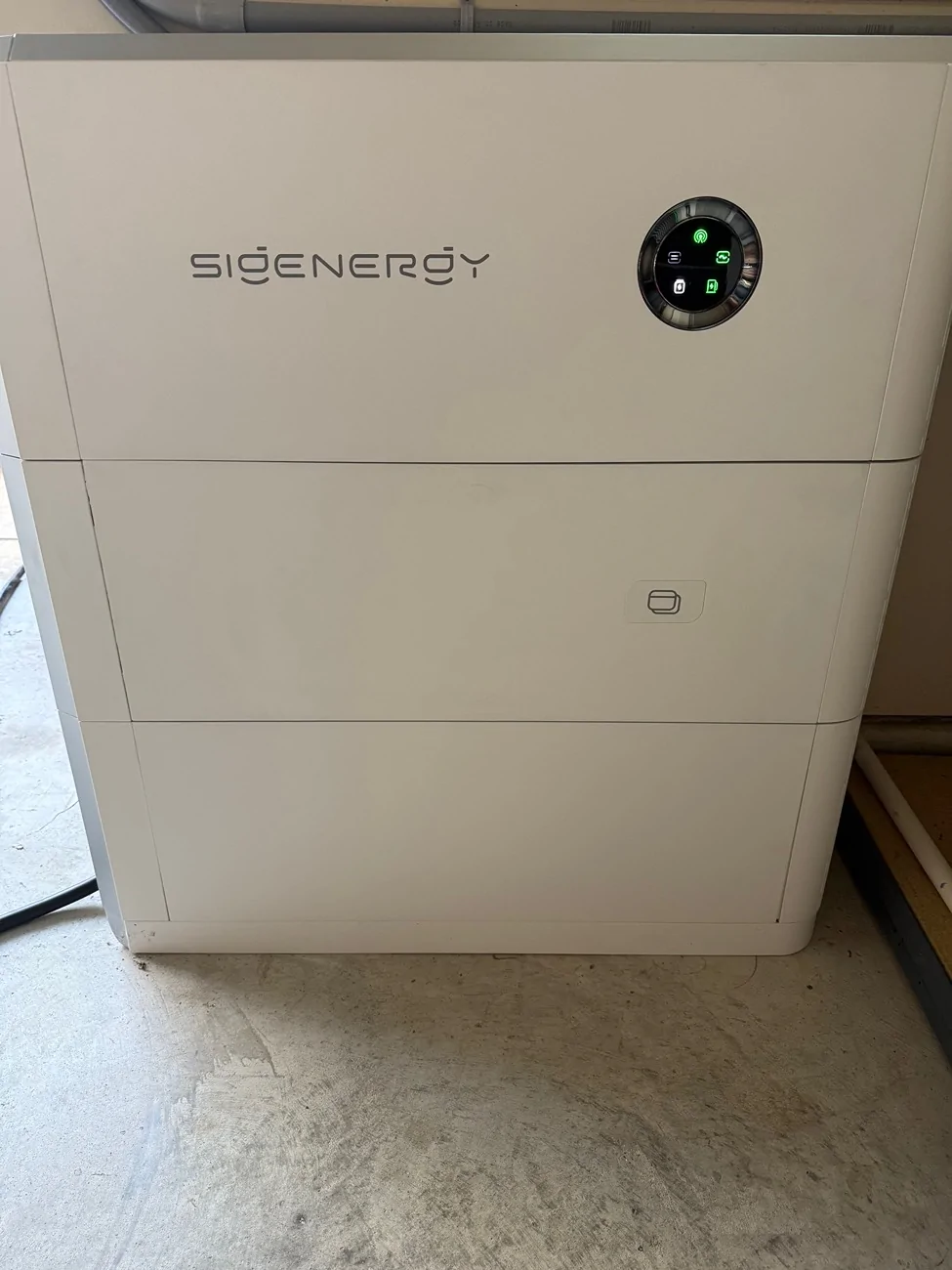
The energy controller is the hybrid inverter. It manages all the loads and physically sits on top of the stack of batteries. It has a continuous rating of 11.4 kW and has a short time surge limit higher than that. Now to get all 11.4kW you do need enough solar, batteries, V2X, or combination of those to achieve that power level. While this is good enough for most people, it is possible to parallel more inverters (up to 3 total) for up to a possible 34kW of power for large and high-load houses. The Energy Controller is also what interfaces with you app. You can have a system with just the Energy Controller for on-grid only applications (including V2X), but to have off grid, you need a load hub. One very nice feature is that all the communication of your Energy Controller and Load hub are all done over a network connection. It can be Wifi, cellular, or hard wired network into your home router. I have my whole system hard wired to a network switch so it is very fast and reliable connection. No more RS-485 communications. The only wiring that comes out of the whole stack is your 240V power that goes to the panelboard or Load Hub, and your network cable. All DC interconnection is built into the modules and you just line them up as you build your stack. There are no cables to mess with at all between the modules. This includes the V2X charger.
V2X Bi-directional DC EV charger:
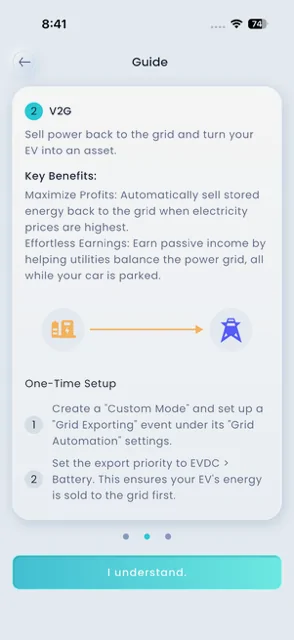
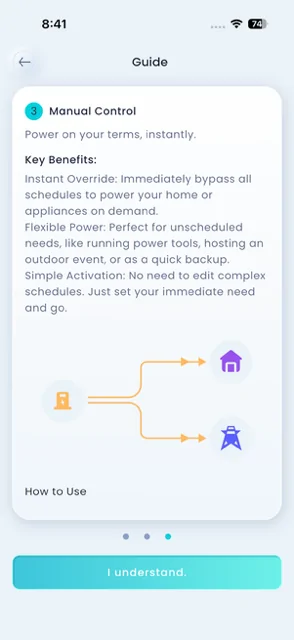
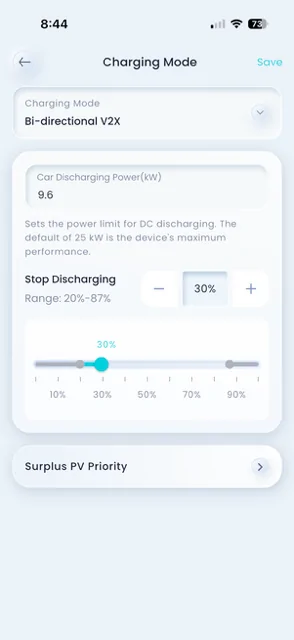
Ok this is what you are here for. For Sigenergy the V2X charger is a module that is the exact size of a battery module. It just sits in the stack immediately below the Energy controller and comes with a 25 ft. cable that comes out at the bottom of the stack. This does mean that you have to have the controller stack somewhat near your vehicle location. You can purchase it with either NACS or CCS adapters, but it is not designed to easily re-wire back and forth. You choose this option up front.
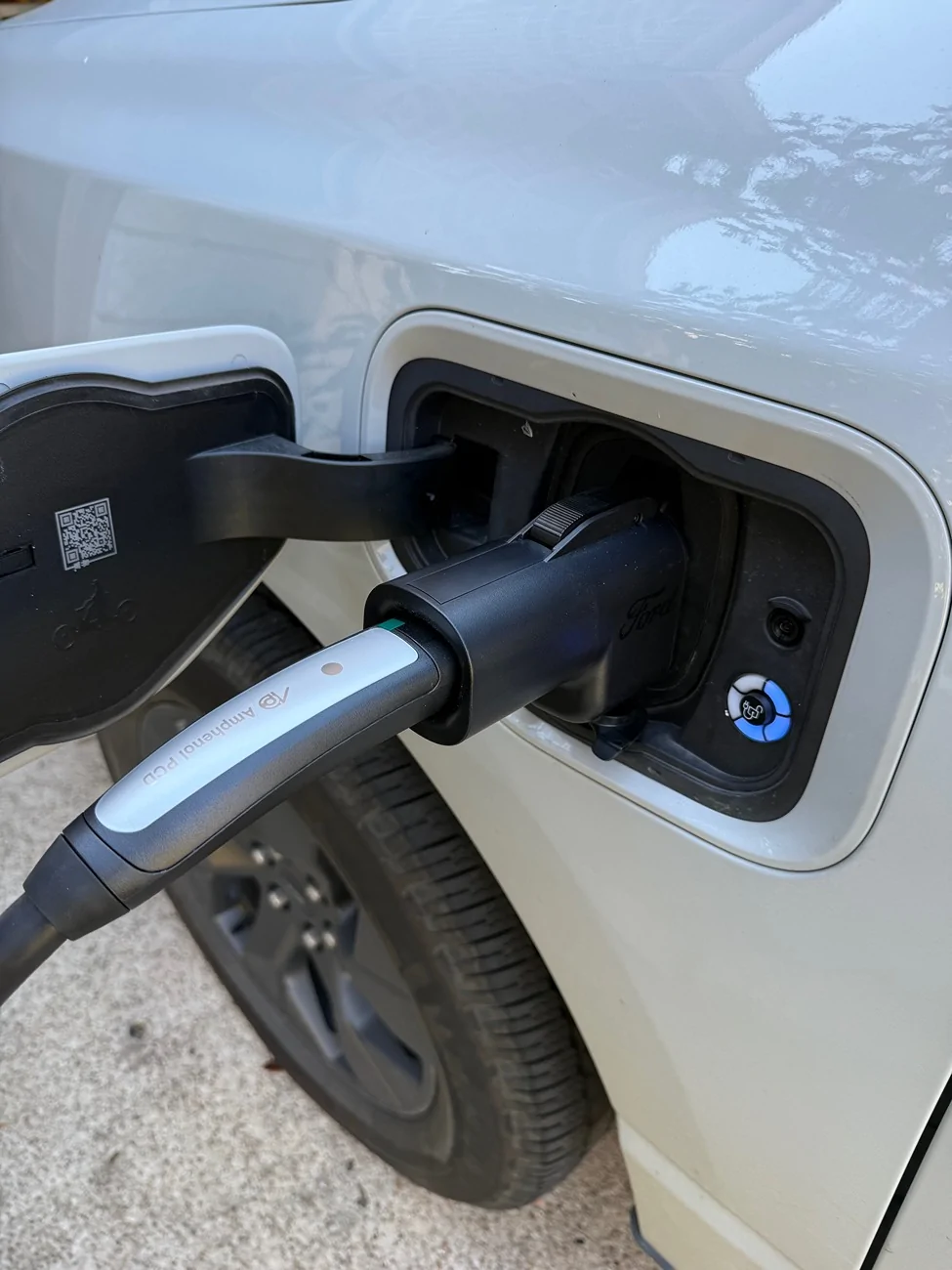
I decided to use the NACS cable and bought a second NACS to CCS DC fast charge adapter (some one as used for Tesla Superchargers) that I keep permanently connected. I can easily remove it if I want to have someone with a NACS connector try my system / their car out. Speaking of that, this system works with a whole host of different EV models and more are becoming compatible soon. With the way the system works (DC charge session), all trim levels and model years of Lightning should work. The Lightning and Mach-E have some of the best perfomance of any of the vehicles out there, but even Rivian and most CCS compatible Tesla's work great. The Sigenergy website lists what they believe to be compatible vehicles.
For performance this is a DC charger, so it bypasses the trucks AC charger. It also bypasses the limit of 48A that the AC charger has on 2024+ and old standard range Lightnings. Now technically off the grid it still has a 11.4kW limit for both charge and discharge to your panel. There is a boost ability however, that can bring your charge or discharge rate up to as much as 25kW. That is equal to about 100 amps on an AC charger. The caveat is that you have to use the solar or batteries that are directly connected to the same stack as the charger. In my case I don't have any solar and only one battery, so my limit would be 16kW. The 25kW can come from mix/match sources though. You could be getting 5kW from solar, 9 kW from battery, and 11kW from grid, if you wanted to get the full 25kW charge rate when it is needed.
This is a DC charger and thus works at the truck DC charger setting (not the same as the AC battery % max you might have set). It also has some caveat, like with the latest update it locks when the vehicle is locked and you don't have any key nearby.
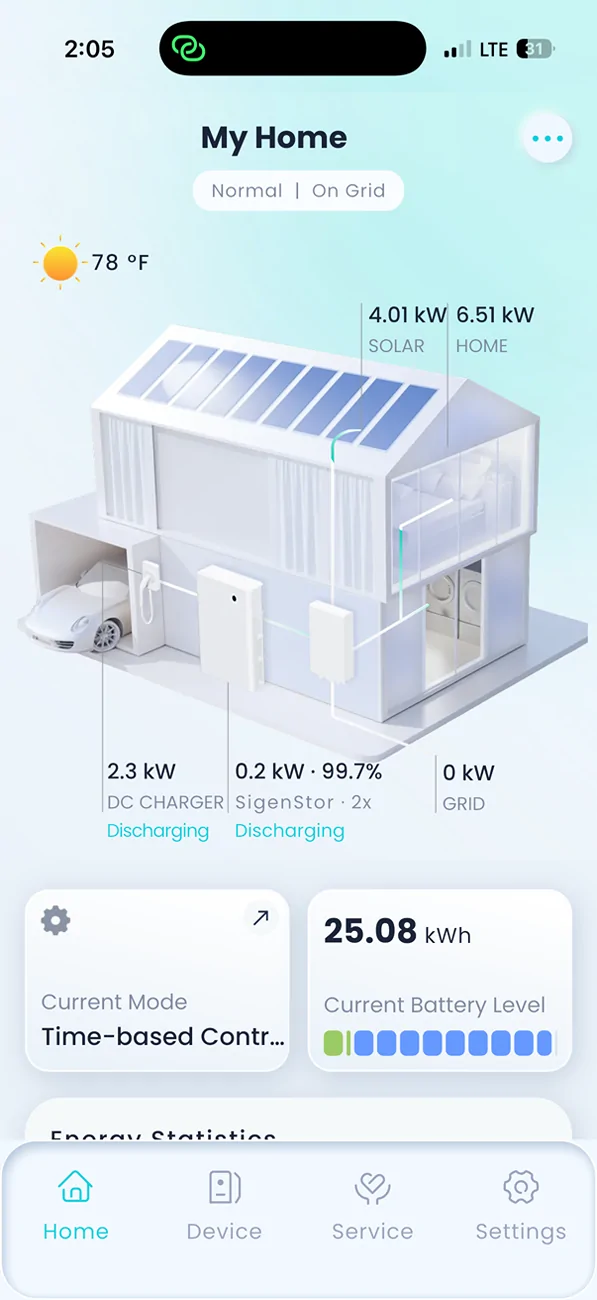
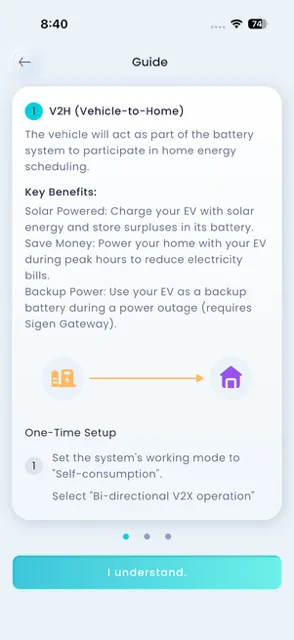
Once you are using the V2X, the truck becomes just part of the battery system and operates in synch with all the other components. There is a mode called self-consumption, where it is exactly like being off grid. It serves all your homes needs from all the sources available. If you have solar, and it exceeds the home load, it will begin to re-charge your batteries and vehicle automatically. It goes back and forth as needed automatically. The graphic above shows when my solar was meeting my AC needs, but the microwave got turned on, which took energy from the truck.
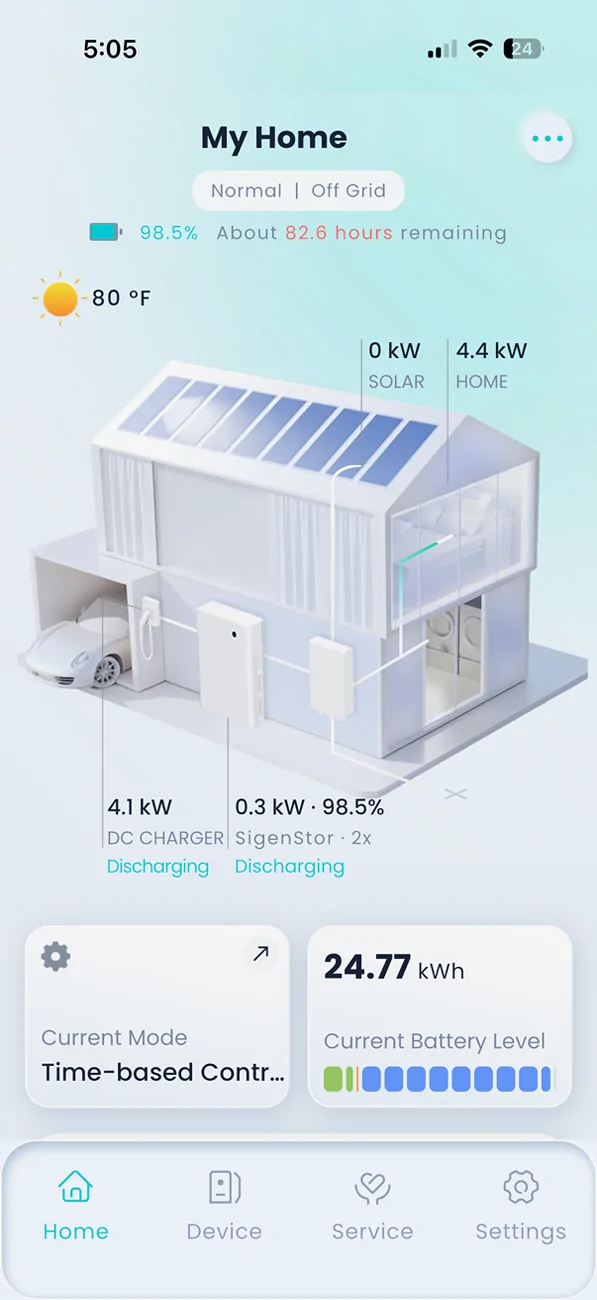
I can start my 5 ton AC unit while off-grid with this system (I do have an Easy Start on my unit)
Batteries:
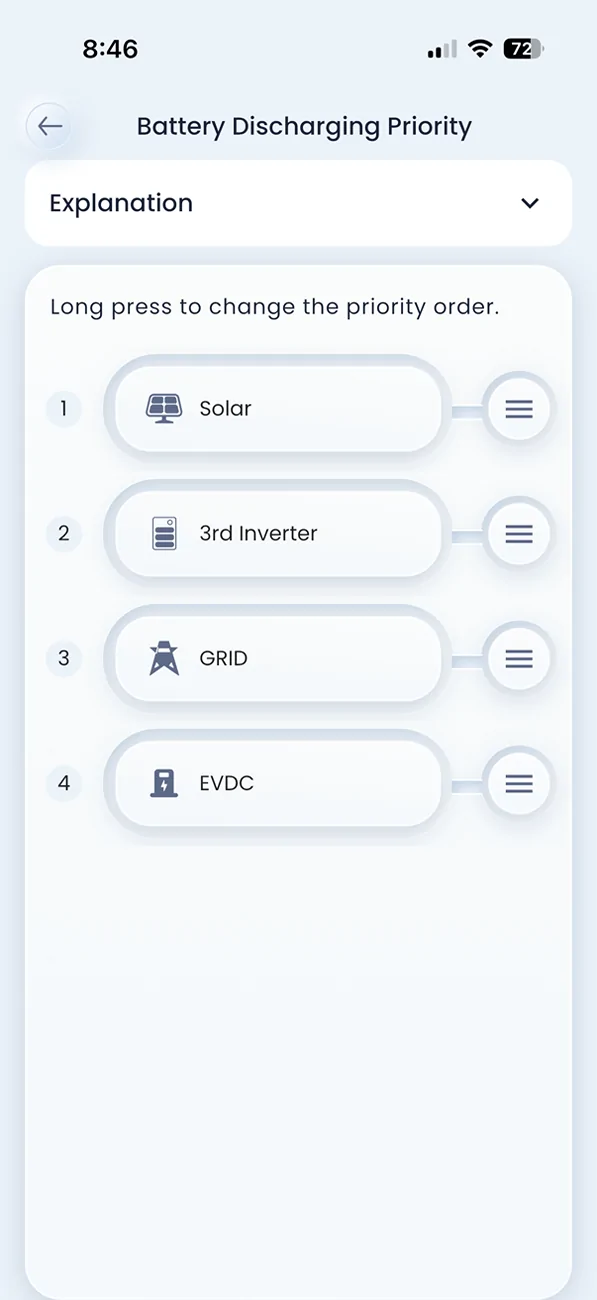
The batteries currently come in 6 kWh or 9 kWh increments. They are fully in parallel and can be mixed and matched. I believe currently each inverter supports up to 5 batteries, or 4 batteries + V2X module. That means you can have up to 45 kWh in a single inverter stacks. You can create an even larger system by adding more batteries with a 2nd or even 3rd inverter. If a battery were to fail, it does not affect anything else in the stack. It just takes itself out of service. You can not only mix different battery sizes, but also different technology in the future.
Solar:
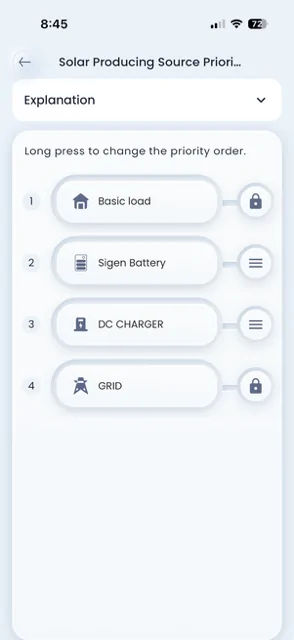
Solar is not required for the system, or for V2X, but it does integrate nicely. The inverter has 4 built in MPPT connections if you want to add it directly for a full DC coupled system. If you have the load hub or an external CT device sold by Sigenergy, you can also use AC coupled solar, even existing systems. I personally use my 5kW SolarEdge inverter I have had for 10 years now. It integrates exactly the same as if I had solar directly into the Sigenergy inverter (other than the power limit from the AC interface on the inverter).
Generator (with Load Hub):
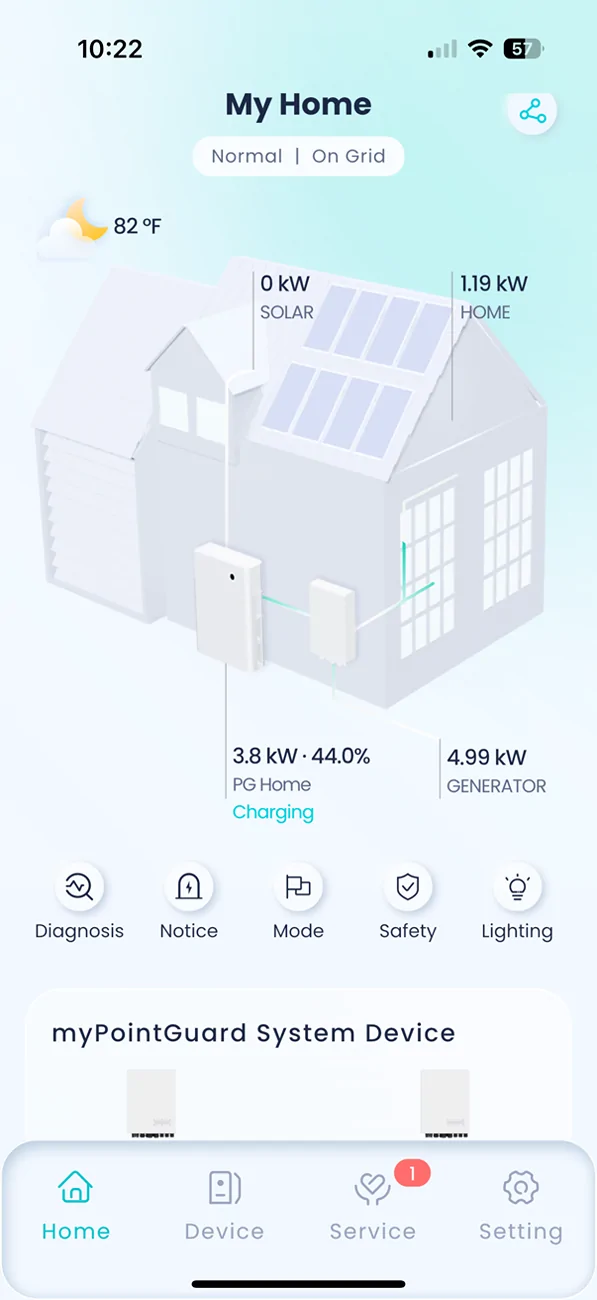
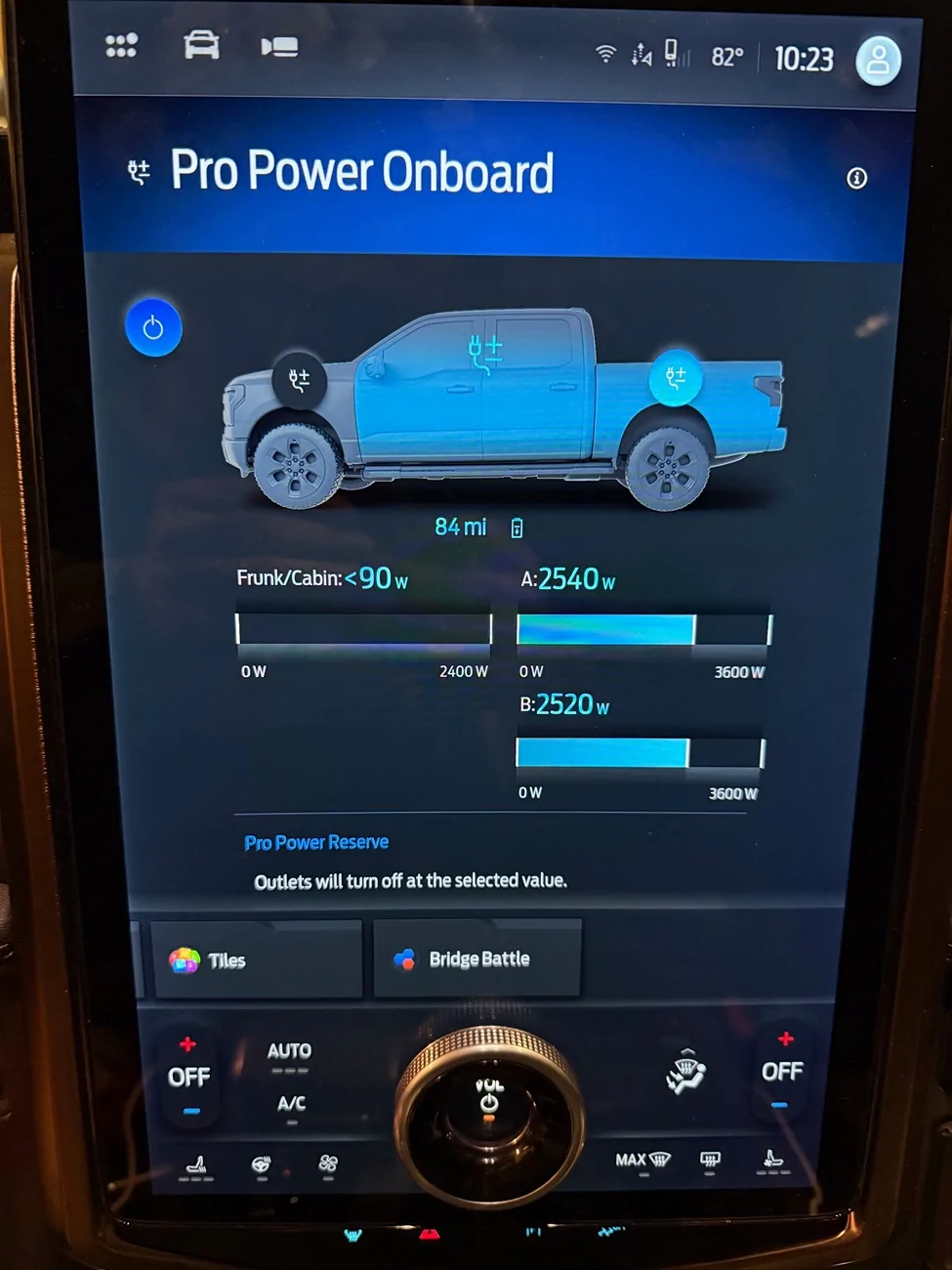
Lastly there is a generator input built in the load hub. You can have up to 80A generator that works with the system (off-grid only). It will work with nearly any type of portable or permanently installed generator. It can also automatically start-stop generators with remote start feature. You can set exactly how much load you want to pull from the generator. You can have the generator start up and not only service the house load, but also recharge the system battery (or EV with the V2X). One the charge level is reached, it will automatically turn off the generator input, so you can maximize the efficiency and minimize the runtime.
I have also successfully tested this with the Lightning Pro-power, but this only works if you disconnect the ground terminal between the two. This can cause a potentially dangerous issue and I don't recommend it. The V2X is really what you should use to connect the Lightning.
How to get it:
Sigenergy does require a certified installer to be able to commission the system. The best way to get these products is to reach out to a certified installer and get a quote.
It is possible to have any licensed electrician become a certified installer through a registration and small training program. Ask your favorite local electrician if you don't want to go through an unknown company.
The components are sold through distribution. I won't post the link here, but you can find retail pricing for the components online if you search.
I will say this is not the cheapest system. If you have ever researched systems on sites like Signature Solar, you will see lower cost systems. That being said, of the professional systems like Tesla, Franklin, etc. this is on the low cost side of that spectrum. It is likely lower cost for material and labor than Tesla. It is also the only system with both a bi-directional charger and generator input (both of which can be used at the same time).
Sponsored
Last edited: