
electricpig
Well-known member
- First Name
- Tim
- Joined
- Sep 10, 2024
- Threads
- 2
- Messages
- 324
- Reaction score
- 409
- Location
- Northwest Arkansas
- Vehicles
- 23 F150 Lightning XLT, Tesla Y
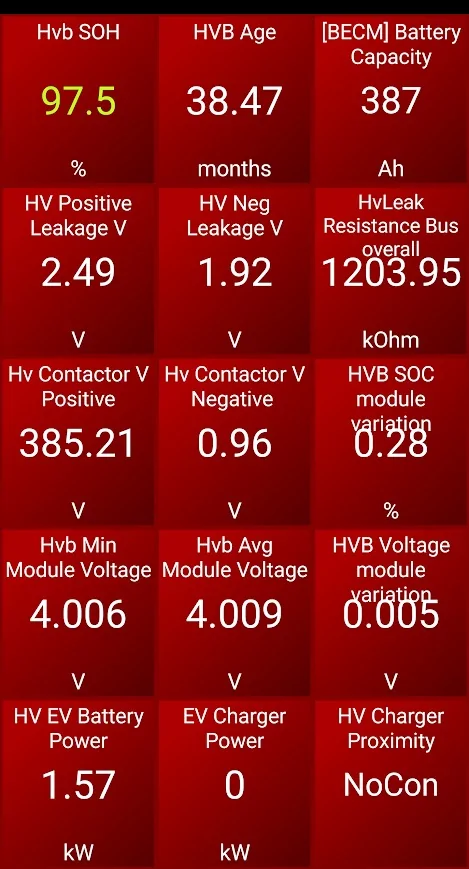
Which I stated multiple times that it is based on BMS calibration, meaning accuracy, and that all of these are at the mercy of the BMS. But contained energy is a fundamental that the other values outside of other fundamentals such as voltage and voltage variation, are calculated from, and is therefore a more fundamental value. However, it is very subject to temperature as I have said multiple times.Again, how much energy that is contained in the battery is an estimate, it cannot be directly measured. IF the energy to empty value changes then the battery is accounting for the SOH. It either ignores that completely and the energy to empty is an estimate, or it uses its calculated SOH value.
Battery module failures can come from a LOT of factors, most of them unrelated to "SOH". SOH is a degredation metric but module failures can happen from errant temp readings, overly high or low cell voltages, an out of bound value, a failed test, unusual heating, an internal fault in the BMS, or many other factors, all of which are unrelated to SOH.
In the end both energy to empty and SOH are internally calculated metrics, neither is inherently more accurate than the other. Plus, as I have directly measured, the energy to empty maxed out and yet the pack continued to absorb energy for quite some time, indicating the capacity value is not strictly a direct reporting.
Sponsored
Last edited: