
Sponsored

bc1

Well-known member
Joined
Oct 25, 2025
Threads
10
Messages
350
Reaction score
257
Location
McPherson, KS
Vehicles
2025 Ford f150 Lightning Flash
Those electrons are a busy bunch...a few of them flow around my brain now and then too!

If anybody else is curious about how many electrons they corralled and rounded up, the conversion works out to: 1kWh @ 240V = about 9.36 x 10^22 electrons
And with all those electrons flowing around our brains, then we also need to know how many electrons are in a coulomb? Since you mentioned the ford app is counting coulombs when charging, I believe. And while you are at it, what the heck is a coulomb?

When I was getting out of the Army near the end of the Vietnam war, they had all these vets coming back going on unemployment to no jobs needing expert riflemen so they started different training programs before ETS. I took the Radio TV repair course. Don't remember anything about coulombs and don't remember seeing it mentioned in Ohm's Law. At that time everything was vacuum tubes except for the incoming power supply was going to solid state as I recall. I can still visualize the block diagram of a tv in my head maybe naming 3/4ths of the components.
Sponsored

 
  • Haha
Reactions: chl

windydrew

Active member
First Name
Andrew
Joined
Jan 5, 2024
Threads
0
Messages
33
Reaction score
22
Location
Kansas
Vehicles
23 Lightning Lariat ER
Occupation
Solar Installer/Electrician
If you really want to know your cost for charging you need to calculate the true cost you must include all the amounts for Energy Charge, Fuel Charge, Asset Securitization Charge, Regulatory Assessment Fee, Gross Receipts Tax, and Municipal Franchise Fee and break that down to get the real cost by 1 kwh. Most just use the Energy Charge on their bill. Electrical Utility makes their bills complicated on purpose. Duke Energy for residential charges one price for the first 1000 kwh and then a higher amount for the rest of your usage. Plus they do not have a off prime time cost for the standard residential service. I calculated out the total cost and found that I could change to a Time Of Use plan that had different costs during a 24hr period and by adjusting how I now charge and manage power for my home to get the best value and reduce my monthly bill. Now my yearly cost for electrical power for the year is less than it was before I had the truck so for me this truck has not impacted me at all. It is kind of like free transportation.
My $0.13/kWh is including the fees. It's actually $0.123 with fees in the winter
 

chl

Well-known member
First Name
CHRIS
Joined
Dec 16, 2022
Threads
9
Messages
2,952
Reaction score
1,846
Location
alexandria virginia
Vehicles
2023 F-150 LIGHTNING, 2012 Nissan Leaf, 2015 Toyota Prius, 2000 HD 883 Sportster
Occupation
Patent Atty / Electrical Engineer
And with all those electrons flowing around our brains, then we also need to know how many electrons are in a coulomb? Since you mentioned the ford app is counting coulombs when charging, I believe. And while you are at it, what the heck is a coulomb?

When I was getting out of the Army near the end of the Vietnam war, they had all these vets coming back going on unemployment to no jobs needing expert riflemen so they started different training programs before ETS. I took the Radio TV repair course. Don't remember anything about coulombs and don't remember seeing it mentioned in Ohm's Law. At that time everything was vacuum tubes except for the incoming power supply was going to solid state as I recall. I can still visualize the block diagram of a tv in my head maybe naming 3/4ths of the components.
How many electrons? A plethora! lol

Actually, approx. 6.24 x 10^18 which is 6.24 billion billion, so they say...but has anybody really counted them? No it's all based on math and theory of electrons as charge carriers.


The unit of electric charge, the coulomb (C), is named in honor of French physicist
Charles-Augustin de Coulomb (1736–1806). It originated from his pioneering work in the 1780s, where he used a sensitive torsion balance to measure the force between charged objects, establishing Coulomb's Law, which states that force is proportional to the product of the charges and inversely proportional to the square of the distance between them...
The coulomb is defined as the amount of charge transported by a current of one ampere in one second (1C = 1A x 1sec).

And the charge in our circuits, bateries, etcc., is carried by electrons according to the standard model atomic theory: The model describes the atom as having a small, dense, positively charged nucleus surrounded by electron shells, accurately modeling the subatomic world.
Ford F-150 Lightning Annual Energy Usage - What Was Yours Last Year? 1769710300169-54


Like Plato's shadows on the cave wall, we observe and we infer a lot of stuff, come up with theories, give things names like electrons, time, space, gravity, but then along come people like Einstein who change our understanding of what we thought was reality.

I actually started out in engineering by taking a course in radio engineering, a 2 week prep course for the FCC Radio Telephone Operator's License at a place in Fredericksburg VA called REI in 1978, took the FCC exam and passed then took the 2 day course for another FCC test and passed that, and got a First Class Radio-Telephone Operators License.

I had been a drummer working in various genres of music up until then, and I was the guy with the PA system who knew how to re-solder guitar cords for guitar players who got carried away, lol.

The REI course got me interested in learning more about electronics, so I enrolled in college and ended up with a MS degree...then someone mentioned patent law to me in passing, so I went 4 more years at night to law school while working for the US Patent and Trademark Office full time during the day. Then I worked as a patent attorney in private practice ever since.

I lost some friends to the Vietnam War, not easy to talk about that era.
But always in the back of my mind somewhere.
 

RLXXI

Well-known member
Joined
Jun 10, 2021
Threads
34
Messages
1,638
Reaction score
1,488
Location
3rd rock
Vehicles
2025 F 150 Flash, 2013 F 150 XLT, 2014 Escape, 2011 Suzuki DR 650SE
Occupation
Automotive Technician
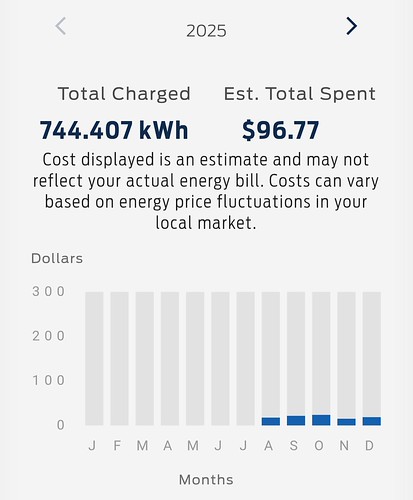
Bought my 25 Flash mid June and had to wait about a month and a half for the FCSP to get installed so there's probably another $50 worth of using the 240v portable charger and a couple experimental dcfc for not much as they were just to get the feeling of doing it for the 1st time.

Ford F-150 Lightning Annual Energy Usage - What Was Yours Last Year? 55067884603_19ccf4d706
 
  • Like
Reactions: chl

Sponsored

chl

Well-known member
First Name
CHRIS
Joined
Dec 16, 2022
Threads
9
Messages
2,952
Reaction score
1,846
Location
alexandria virginia
Vehicles
2023 F-150 LIGHTNING, 2012 Nissan Leaf, 2015 Toyota Prius, 2000 HD 883 Sportster
Occupation
Patent Atty / Electrical Engineer
Bought my 25 Flash mid June and had to wait about a month and a half for the FCSP to get installed so there's probably another $50 worth of using the 240v portable charger and a couple experimental dcfc for not much as they were just to get the feeling of doing it for the 1st time.

55067884603_19ccf4d706.jpg
Same here, I used the FMPC for about 6 months in 2024 before installing the FCSP.

And some of the data disappeared for the beginning of 2025 - I don't remember my theory on why - but luckily I had recorded it in a spreadsheet entering the data every time I charge the truck.

Once I get my Emporia Vue 3 installed, I'll be loaded with even more energy use data!
 

bc1

Well-known member
Joined
Oct 25, 2025
Threads
10
Messages
350
Reaction score
257
Location
McPherson, KS
Vehicles
2025 Ford f150 Lightning Flash
How many electrons? A plethora! lol

Actually, approx. 6.24 x 10^18 which is 6.24 billion billion, so they say...but has anybody really counted them? No it's all based on math and theory of electrons as charge carriers.


The unit of electric charge, the coulomb (C), is named in honor of French physicist
Charles-Augustin de Coulomb (1736–1806). It originated from his pioneering work in the 1780s, where he used a sensitive torsion balance to measure the force between charged objects, establishing Coulomb's Law, which states that force is proportional to the product of the charges and inversely proportional to the square of the distance between them...
The coulomb is defined as the amount of charge transported by a current of one ampere in one second (1C = 1A x 1sec).

And the charge in our circuits, bateries, etcc., is carried by electrons according to the standard model atomic theory: The model describes the atom as having a small, dense, positively charged nucleus surrounded by electron shells, accurately modeling the subatomic world.
1769710300169-54.gif


Like Plato's shadows on the cave wall, we observe and we infer a lot of stuff, come up with theories, give things names like electrons, time, space, gravity, but then along come people like Einstein who change our understanding of what we thought was reality.
Thanks. I get it now. Charles-Augustin de Coulomb and Coulomb's Law that predates Georg Ohm's law from his treatise of 1827.

The coulomb (C) is the standard international system of units (SI) unit of electric charge and represents the quantity of electricity transported by a constant current of one ampere in one second.

However the rest of us would have got it if you said that battery capacity measured in Amphere-hours (AH) and 1 AH = 3600 coulombs. A single lightning strike can discharge between 15 and 350 coulombs. A typical static shock involves only a tiny fraction of a coulomb called nanocoulombs. Or that 1 coulomb is an enormous amount of charge. Place a 1 coulomb charge one meter apart from another 1 coulomb charge and they would exert the force of 9 billion Newtons which is roughly the weight of 2,000 jetliners. Courtesy of Gemini AI by the way. :)
 
  • Like
Reactions: chl

chl

Well-known member
First Name
CHRIS
Joined
Dec 16, 2022
Threads
9
Messages
2,952
Reaction score
1,846
Location
alexandria virginia
Vehicles
2023 F-150 LIGHTNING, 2012 Nissan Leaf, 2015 Toyota Prius, 2000 HD 883 Sportster
Occupation
Patent Atty / Electrical Engineer
Thanks. I get it now. Charles-Augustin de Coulomb and Coulomb's Law that predates Georg Ohm's law from his treatise of 1827.

The coulomb (C) is the standard international system of units (SI) unit of electric charge and represents the quantity of electricity transported by a constant current of one ampere in one second.

However the rest of us would have got it if you said that battery capacity measured in Amphere-hours (AH) and 1 AH = 3600 coulombs. A single lightning strike can discharge between 15 and 350 coulombs. A typical static shock involves only a tiny fraction of a coulomb called nanocoulombs. Or that 1 coulomb is an enormous amount of charge. Place a 1 coulomb charge one meter apart from another 1 coulomb charge and they would exert the force of 9 billion Newtons which is roughly the weight of 2,000 jetliners. Courtesy of Gemini AI by the way. :)
Well, you asked how many electrons in one coulomb after all.

In simple terms coulomb counting is done by keeping track of the current into and out of the battery (charge/discharge) over time to determine the SOC of a battery. Inaccuracies in the measurement of the currents can accumulate over time, so battery voltage measurement is often used to correct. I think that might be what is done by Ford.
----
Yes, that AI got it right.

For anyone who's reading that, yes, 1 coulomb is a heck of a large charge which you might only find rotating on the surface of a UFO as it glides along opening up a worm hole in front of it...

You might also wonder, if a battery contains so many coulombs in such a small space much smaller than 1 meter and many more than 1 coulomb, then why doesn't the force in Newtons cause the Li battery in our Lightnings to explode?!

In simple terms, most of the electrons are bound in atoms and molecules of the metals whose atoms also have oppositely charged protons that neutralize the charges in the battery, so they exist as "potential" energy. Chemical reactions involving the electrolyte and the metals free them to flow as current transferring electrons from one end of the battery through a circuit and back to the other end of the battery.

During charging charges are pushed back into the battery in the opposite direction and the charge current is measured over time "coulomb counting" to determine the potential energy stored in the battery, and the SOC. To be accurate one has to account for the initial state of the battery and do a good job of coulomb counting. Because errors can accumulate with coulomb counting, often a battery voltage measurement is used to adjust the calculated energy and SOC.
 
  • Wow
Reactions: bc1

bc1

Well-known member
Joined
Oct 25, 2025
Threads
10
Messages
350
Reaction score
257
Location
McPherson, KS
Vehicles
2025 Ford f150 Lightning Flash
More USELESS INFORMATION before I quit on the subject of coulombs, I had to ask gemini ai how many coulombs in a 1.5 volt AA battery. Drum roll please. Typical battery is 5,000C to 10,800C. Zinc carbon general purpose with 400-900 mAh capacity is 1,440C to 3,240C. Alkaline with 2,400 mAh is 8,640C and one with 3,000 mAh is 10,800C. NiMH rechargeable range from 1,700 to 2,750 mAh are 6,120C to 9,900C. Lithium Iron Disulfide with 3,000 mAh have 10,800C and perform better under high current drain than alkaline cells.

Coulombs = Charge. mAh = Capacity.

Of course, now I can't go to the store and buy any batteries without going to the mfr website to check their mAh and coulomb ratings. :sadface:

So I asked for the Members Mark alkaline batteries I buy from Sam's Club. The AA as done by independent testing came out at 100 milliamp discharge rate gave a capacity of 2,518 mAh and roughly equals 9,065C. Testing at 200 milliamp discharge rate gave a capacity of 2,243.5 mAh and roughly equals 8,076C. The faster discharge rate reduces the coulombs and the capacity of the battery which may explain why Lithium do better with a high discharge rate.

Coulombs = Milliampere-hours (mAh) x 3.6

I've lived for 73 years doing just fine without having heard of the word "coulomb" or knowing what it meant. Now maybe dementia will kick in someday so I can forget it. :)
 
  • Like
Reactions: chl

chl

Well-known member
First Name
CHRIS
Joined
Dec 16, 2022
Threads
9
Messages
2,952
Reaction score
1,846
Location
alexandria virginia
Vehicles
2023 F-150 LIGHTNING, 2012 Nissan Leaf, 2015 Toyota Prius, 2000 HD 883 Sportster
Occupation
Patent Atty / Electrical Engineer
More USELESS INFORMATION before I quit on the subject of coulombs, I had to ask gemini ai how many coulombs in a 1.5 volt AA battery. Drum roll please. Typical battery is 5,000C to 10,800C. Zinc carbon general purpose with 400-900 mAh capacity is 1,440C to 3,240C. Alkaline with 2,400 mAh is 8,640C and one with 3,000 mAh is 10,800C. NiMH rechargeable range from 1,700 to 2,750 mAh are 6,120C to 9,900C. Lithium Iron Disulfide with 3,000 mAh have 10,800C and perform better under high current drain than alkaline cells.

Coulombs = Charge. mAh = Capacity.

Of course, now I can't go to the store and buy any batteries without going to the mfr website to check their mAh and coulomb ratings. :sadface:

So I asked for the Members Mark alkaline batteries I buy from Sam's Club. The AA as done by independent testing came out at 100 milliamp discharge rate gave a capacity of 2,518 mAh and roughly equals 9,065C. Testing at 200 milliamp discharge rate gave a capacity of 2,243.5 mAh and roughly equals 8,076C. The faster discharge rate reduces the coulombs and the capacity of the battery which may explain why Lithium do better with a high discharge rate.

Coulombs = Milliampere-hours (mAh) x 3.6

I've lived for 73 years doing just fine without having heard of the word "coulomb" or knowing what it meant. Now maybe dementia will kick in someday so I can forget it. :)
I am finishing my 75th year on planet earth this summer...I learned about coulombs about 50years ago in engineering class (or maybe in physics class) and haven't really had a need to remember it all these years until EV's came along and talk of "coulomb counting" emerged.

Then I had to refresh my memory about it and integral calculus and figure out it just means calculating the cumulative energy added or subtracted to the battery in a given time period using sampling.

But when one gets down to the granularity of the universe we live in, full of charged particles, energy fields, massless particles (light photons), the particles maybe really being vibrating strings with different modes in 10 or maybe 11 space-time dimensions, it gives one perspective on just how amazing everything is so, and start thinking that maybe we should not be destroying it on a daily basis?
 

Sponsored

Grumpy2

Well-known member
Joined
Nov 23, 2022
Threads
21
Messages
1,075
Reaction score
1,149
Location
Central Oregon Coast
Vehicles
23 F150 Pro SR
Occupation
Retired Hvy Construction
how amazing everything is so, and start thinking that maybe we should not be destroying it on a daily basis?
YES, I wish we all could agree on this .
 
  • Like
Reactions: chl

Timeless Epoch

Well-known member
First Name
Chad
Joined
Mar 3, 2025
Threads
5
Messages
209
Reaction score
330
Vehicles
2024 F150 Lightning Platinum
Occupation
Professionally: Disaster Recovery - Recreationally: Watchmaker
I haven't had my truck a year yet, but I did look at my usage from my EVSE's perspective. I was surprised by December. (January is shaping up the same)

I work from home, and road trips aside, I drive 90% very locally. I'm getting about 1.8M/KWh in winter. In December I drove about 300 miles. I was surprised to see I used almost a half a megawatt (462KWh).

Granted my exact mileage may be off a little, but my approximate "effective" efficiency was .65M/KWh. 😳

I used approximately 167KWhs in driving + 10% overhead for charing: 184KW. Leaving 278KWh with what I presume is maintaining minimal HVB temps plus 4 schedule departures.

Just interesting to know...
Sponsored


Top