
Sponsored

Charge time & cost calculator spreadsheet

unshortness

Member
First Name
Peter
Joined
Apr 27, 2026
Threads
0
Messages
21
Reaction score
12
Location
Hamilton, Ontario, Canada
Vehicles
2024 Lightning Flash
yup, we charge both our EV's from 11PM onwards to make sure we're using the ULO rates. I want to charge a BES system up during the same time (11PM-7AM) and then run the house on it during the day :)
Did you look into the Sigenergy system with the bi-directional DC charger? That way you can use the truck battery to power your house. I got a quote for the entire system including a 15 kWh battery (needed if you want the system to operate in a blackout) and it was almost $30K CAD.
Sponsored

 
OP
OP
DerMot

DerMot

Well-known member
First Name
Derek
Joined
Jul 11, 2025
Threads
15
Messages
100
Reaction score
136
Location
Ontario, Canada
Vehicles
2023 Mustang Mach e Premium, 2024 F-150 Lightning Platinum
Occupation
IT Leader
I want to do it independently from the truck/EVs....
 

chl

Well-known member
First Name
CHRIS
Joined
Dec 16, 2022
Threads
9
Messages
3,882
Reaction score
2,390
Location
alexandria virginia
Vehicles
2023 LIGHTNING PRO, 2012 Nissan Leaf, 2015 Toyota Prius, 2000 HD 883 Sportster
Occupation
Patent Atty / Electrical Engineer
Wow. Our rates don't swing that widely.

1000008033.webp
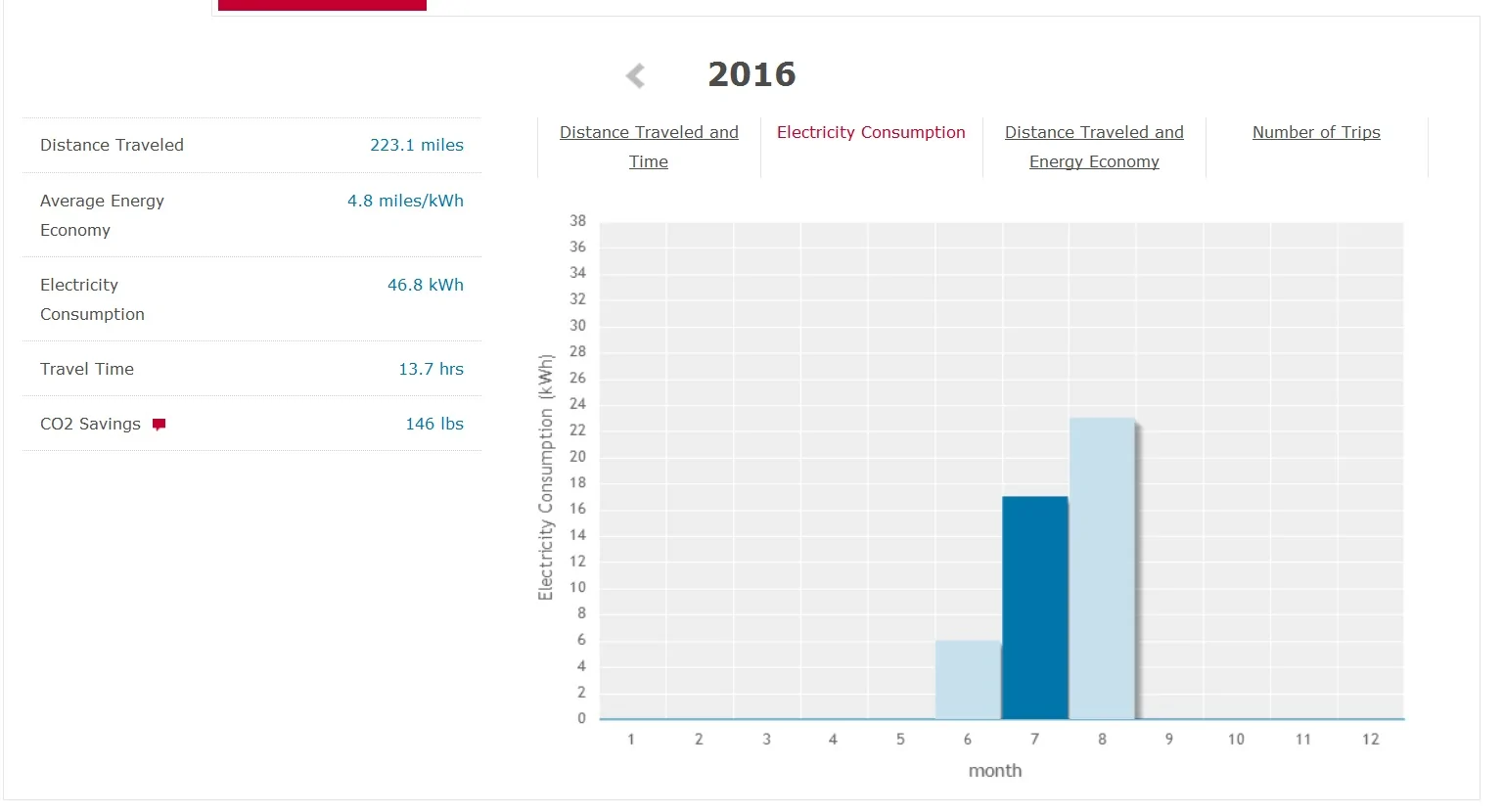
My rate OFF PEAK doesn't swing widely either, but my truck's use of kWh does.

It uses much more in the winter with heating things, and sometimes I include the overnight on plug heating into my calculation.

If we have a cold spell and I keep the truck plugged in all the time, the cost per mile goes up a lot.
Last winter during an ice/snow storm and the days after, the number went to 24 cents for the month of Feb if I included the all-day and night heating.

The dash mi/kWh and the Ford app's report of how much energy was added to the battery is not what I use for the cost per mile. I use the actual numbers from my FCSP 'insights' and the odometer reading at the time of charging.

So 4 cents per mile is my best number.
It happens in Spring and Fall when I am not using Heat or AC.
I think the dash mi/kWh reported 3.8 when that happened.

I also had a couple holes in my numbers because I was charging the truck up and then running PPOB for some testing for Ford of the reserve issue, and a couple times the FCSP lost some data when there was a utility power glitch I think.

But I have about 2 years of data with only a few holes, so I have a good idea of how it performs vs our Prius hybrid, depending of the price of gasoline.

I have an emporia vue energy monitor system that I have not installed yet which will give me even more accurate numbers I think and won't have the data loss the FCSP sometimes has...knock on wood.
 

chl

Well-known member
First Name
CHRIS
Joined
Dec 16, 2022
Threads
9
Messages
3,882
Reaction score
2,390
Location
alexandria virginia
Vehicles
2023 LIGHTNING PRO, 2012 Nissan Leaf, 2015 Toyota Prius, 2000 HD 883 Sportster
Occupation
Patent Atty / Electrical Engineer
Did you look into the Sigenergy system with the bi-directional DC charger? That way you can use the truck battery to power your house. I got a quote for the entire system including a 15 kWh battery (needed if you want the system to operate in a blackout) and it was almost $30K CAD.
Wow....expensive but if you need it, so be it.

Since I rarely have outages, a $400 transfer switch and the PPOB 240V 30A outlet works for my 10 emergency circuits, refrigerator, coffee pot, microwave, tv, phones, PCs and high efficiency gas furnace fan. Can't run big things, like the HVAC, hot tub, or hot water heater of course.

If I lived in hurricane alley or a place with a lot of outages, it'd be a different set up, something like the sigenergy system - and I'd probably want solar panels as well as the add-on battery storage backup.

One thing I like about the new Ford UEV truck is it will have on-board V2X capabilities, so maybe it won't need an expensive external system?

An AI result says:

"...It utilizes an integrated "E-Box" Energy Management Unit that consolidates power conversion and distribution into a single module, enabling both Vehicle-to-Home (V2H) backup power and Vehicle-to-Grid (V2G) power management... This platform is designed out-of-the-box to support both V2H (Home Backup Power) and V2G (Home Power Management), allowing users to ration energy during grid outages or offset peak electricity rate ... The truck will run on a structural 400-volt architecture utilizing cell-to-structure lithium-iron-phosphate (LFP) batteries, optimized for home-to-grid energy dispatch..."

Of course the devil is in the details, so time will tell.
 

RickLightning

Well-known member
Joined
Jan 17, 2022
Threads
115
Messages
7,331
Reaction score
10,062
Location
SE MI
Vehicles
'22 Lightning ER Lariat,'22 Mach-E Premium 4X
My rate OFF PEAK doesn't swing widely either, but my truck's use of kWh does.

It uses much more in the winter with heating things, and sometimes I include the overnight on plug heating into my calculation.

If we have a cold spell and I keep the truck plugged in all the time, the cost per mile goes up a lot.
Last winter during an ice/snow storm and the days after, the number went to 24 cents for the month of Feb if I included the all-day and night heating.

The dash mi/kWh and the Ford app's report of how much energy was added to the battery is not what I use for the cost per mile. I use the actual numbers from my FCSP 'insights' and the odometer reading at the time of charging.

So 4 cents per mile is my best number.
It happens in Spring and Fall when I am not using Heat or AC.
I think the dash mi/kWh reported 3.8 when that happened.

I also had a couple holes in my numbers because I was charging the truck up and then running PPOB for some testing for Ford of the reserve issue, and a couple times the FCSP lost some data when there was a utility power glitch I think.

But I have about 2 years of data with only a few holes, so I have a good idea of how it performs vs our Prius hybrid, depending of the price of gasoline.

I have an emporia vue energy monitor system that I have not installed yet which will give me even more accurate numbers I think and won't have the data loss the FCSP sometimes has...knock on wood.
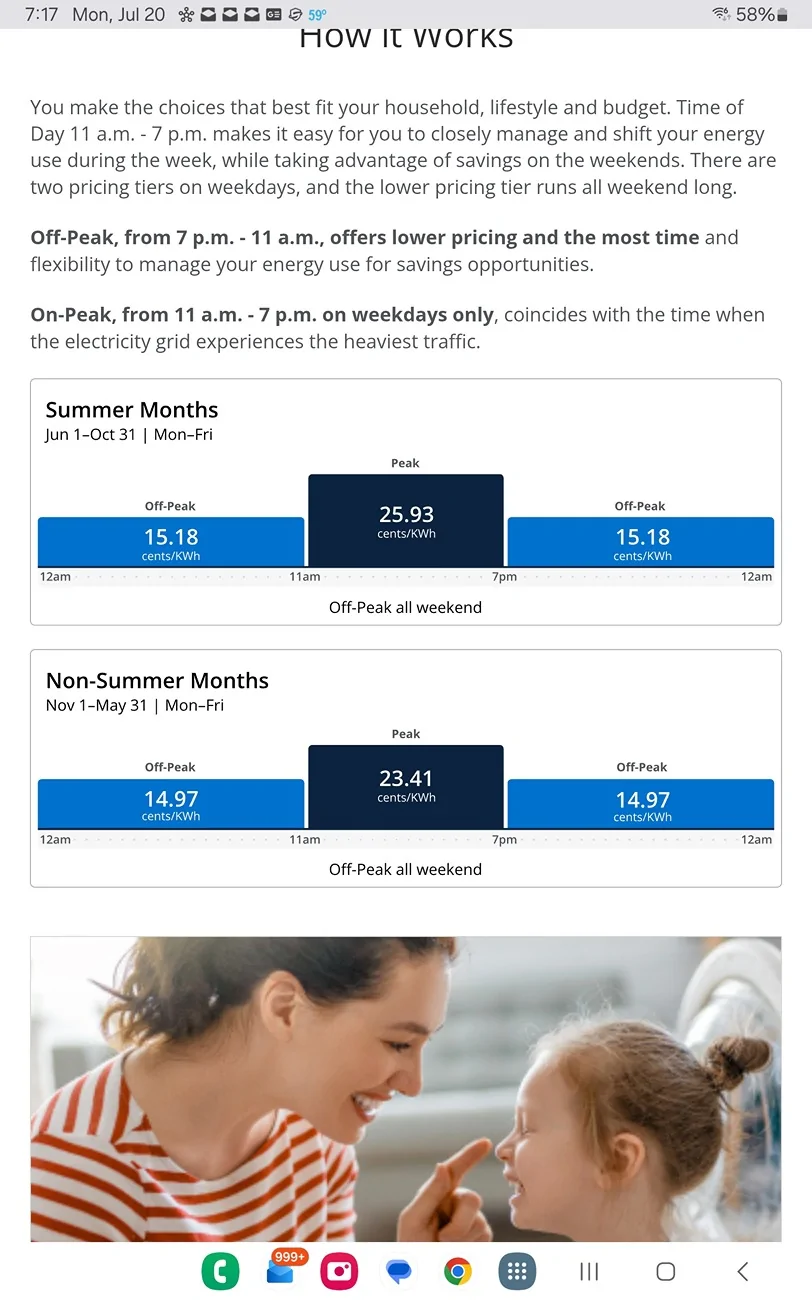
I prevent my vehicles from pulling power in peak hours (11AM - 7PM M-F), so if the battery wants to heat it can wait until off-peak hours.
 
  • Like
Reactions: chl

Sponsored

unshortness

Member
First Name
Peter
Joined
Apr 27, 2026
Threads
0
Messages
21
Reaction score
12
Location
Hamilton, Ontario, Canada
Vehicles
2024 Lightning Flash
Wow....expensive but if you need it, so be it.

Since I rarely have outages, a $400 transfer switch and the PPOB 240V 30A outlet works for my 10 emergency circuits, refrigerator, coffee pot, microwave, tv, phones, PCs and high efficiency gas furnace fan. Can't run big things, like the HVAC, hot tub, or hot water heater of course.

If I lived in hurricane alley or a place with a lot of outages, it'd be a different set up, something like the sigenergy system - and I'd probably want solar panels as well as the add-on battery storage backup.

One thing I like about the new Ford UEV truck is it will have on-board V2X capabilities, so maybe it won't need an expensive external system?

An AI result says:

"...It utilizes an integrated "E-Box" Energy Management Unit that consolidates power conversion and distribution into a single module, enabling both Vehicle-to-Home (V2H) backup power and Vehicle-to-Grid (V2G) power management... This platform is designed out-of-the-box to support both V2H (Home Backup Power) and V2G (Home Power Management), allowing users to ration energy during grid outages or offset peak electricity rate ... The truck will run on a structural 400-volt architecture utilizing cell-to-structure lithium-iron-phosphate (LFP) batteries, optimized for home-to-grid energy dispatch..."

Of course the devil is in the details, so time will tell.
Unfortunately my 2024 Flash doesn't have the PPOB so this isn't an option for me. Also the PPOB is limited to 7.2 kW and my 4 ton heat pump is on a 50 amp breaker so on those cold winter days 7.2 kW is not really enough. The Sigenergy system is too expensive at the moment for me to pull the trigger on it, but it has advantages over the PPOB that's for sure. You don't need to turn the truck on or anything, just plug it via the CCS port every night and it is connected to the Sigenergy inverter for charging and discharging whenever you want.
 
  • Like
Reactions: chl

chl

Well-known member
First Name
CHRIS
Joined
Dec 16, 2022
Threads
9
Messages
3,882
Reaction score
2,390
Location
alexandria virginia
Vehicles
2023 LIGHTNING PRO, 2012 Nissan Leaf, 2015 Toyota Prius, 2000 HD 883 Sportster
Occupation
Patent Atty / Electrical Engineer
Last year a member wrote an android app that's pretty good. no need for computer running excel) check out this thread and send him a PM. He still checks the forum as I see a post from late May. Home-built Android app for Lightning owners
The app on the phone/tablet in the link would be really good for trips and trip planning.
.
But the OP's excel spread sheet seems geared more to the 'big picture' energy use at home.

One of the first things I did when I got the Lightning was make a similar excel spread sheet to see how my utility electric bill was impacted, what it cost per mile to drive the Lightning, etc.

Ford F-150 Lightning Charge time & cost calculator spreadsheet 2016-Annual-electricity-consumption
 

chl

Well-known member
First Name
CHRIS
Joined
Dec 16, 2022
Threads
9
Messages
3,882
Reaction score
2,390
Location
alexandria virginia
Vehicles
2023 LIGHTNING PRO, 2012 Nissan Leaf, 2015 Toyota Prius, 2000 HD 883 Sportster
Occupation
Patent Atty / Electrical Engineer
I prevent my vehicles from pulling power in peak hours (11AM - 7PM M-F), so if the battery wants to heat it can wait until off-peak hours.
Yes, I hear ya.

I generally did the same, just had it plugged in at night when it was colder and the rates are lower.
Only a few days when I left it plugged in during peak rate times because the weather out side was frigthful.

The on peak rate in winter is roughly three times the cost per kWh as the "super off-peak rate" which is when I normally would charge the ruck, 5.38 cents per kWh vs. 1.7 cents per kWh. (All the other stuff, taxes, fuel, etc. not included in the kWh rate, but are divided evenly among the rates/times of day as far as I can tell.)

The on peak time slot in winter is 10hours, 6-11am and 5-10pm, super off peak is 1am-5am, there is also an 'off peak' time, 5-6am, 11am-5pm and 10pm-1am where the rate is roughly 2 cents per kWh, but since that is so close to super off peak in cost, I ignore it generally.

So really unplugging during peak time on the few days it was really cold would not have made a huge difference in my utility bill.
 

chl

Well-known member
First Name
CHRIS
Joined
Dec 16, 2022
Threads
9
Messages
3,882
Reaction score
2,390
Location
alexandria virginia
Vehicles
2023 LIGHTNING PRO, 2012 Nissan Leaf, 2015 Toyota Prius, 2000 HD 883 Sportster
Occupation
Patent Atty / Electrical Engineer
Unfortunately my 2024 Flash doesn't have the PPOB so this isn't an option for me. Also the PPOB is limited to 7.2 kW and my 4 ton heat pump is on a 50 amp breaker so on those cold winter days 7.2 kW is not really enough. The Sigenergy system is too expensive at the moment for me to pull the trigger on it, but it has advantages over the PPOB that's for sure. You don't need to turn the truck on or anything, just plug it via the CCS port every night and it is connected to the Sigenergy inverter for charging and discharging whenever you want.
Makes sense in your situation...however...

The 4 ton heat pump's running amps may only be about 20A, it's the starting surge current that requires the big breaker.

There are these things called soft starters that you add on to equipment like that which prevents that big surge current.

They have the added benefit of making things like that last longer - the surge currents do put more stress on compressors and motors etc.

They are not cheap, but a lot less than a $30k sigenergy system.

People use them to run their cooling ACs off the PPOB, according to some posts I've seen.
 

unshortness

Member
First Name
Peter
Joined
Apr 27, 2026
Threads
0
Messages
21
Reaction score
12
Location
Hamilton, Ontario, Canada
Vehicles
2024 Lightning Flash
Makes sense in your situation...however...

The 4 ton heat pump's running amps may only be about 20A, it's the starting surge current that requires the big breaker.

There are these things called soft starters that you add on to equipment like that which prevents that big surge current.

They have the added benefit of making things like that last longer - the surge currents do put more stress on compressors and motors etc.

They are not cheap, but a lot less than a $30k sigenergy system.

People use them to run their cooling ACs off the PPOB, according to some posts I've seen.
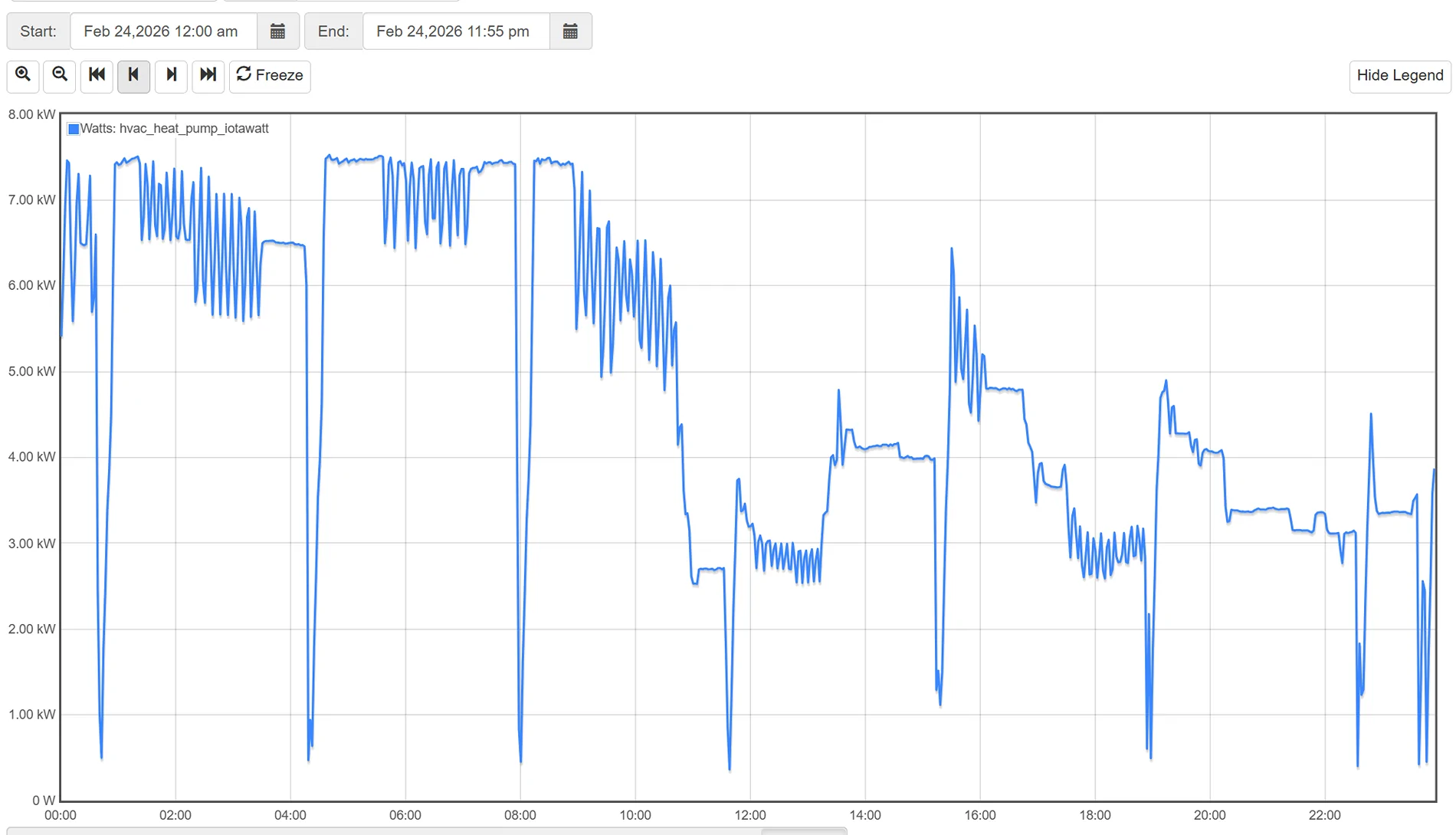
My heat pump is a Fujitsu XLTH unit which has an inverter/variable speed compressor and fans which is basically a built in soft start. It always starts low and ramps up. Here is the chart of power dwar from just my heat pump on Feb 24, 2026 and you can see the peak draw is close to 7.4 kW without any other loads from my house. The times the power usage drops are when the unit goes into defrost to melt the ice off the coils. It works great and its a great way to heat your home but it draws a shit ton of power.

Ford F-150 Lightning Charge time & cost calculator spreadsheet 1784579701460-cn
 

Sponsored

chl

Well-known member
First Name
CHRIS
Joined
Dec 16, 2022
Threads
9
Messages
3,882
Reaction score
2,390
Location
alexandria virginia
Vehicles
2023 LIGHTNING PRO, 2012 Nissan Leaf, 2015 Toyota Prius, 2000 HD 883 Sportster
Occupation
Patent Atty / Electrical Engineer
My heat pump is a Fujitsu XLTH unit which has an inverter/variable speed compressor and fans which is basically a built in soft start. It always starts low and ramps up. Here is the chart of power dwar from just my heat pump on Feb 24, 2026 and you can see the peak draw is close to 7.4 kW without any other loads from my house. The times the power usage drops are when the unit goes into defrost to melt the ice off the coils. It works great and its a great way to heat your home but it draws a shit ton of power.

1784579701460-cn.webp
Wow!
That is even more than the specs I looked at say it should be using even in a cold climate like Canada, but maybe the info I found is wrong? Your documentation might say something different, can't always trust the internet...

"...A 4-ton (48,000 BTU) Fujitsu XLTH cold-climate heat pump draws roughly 3.82 kW to 5.56 kW of electrical power when actively running, depending on whether it is a ducted or ductless system ..."

I was looking at the 5560W at 240V to get the approx. 20A number.

Is the bottom in hours or minutes or is it the time of day?

Makes you wonder how the native people living in igloos without electricity survived, eh? :)
 

unshortness

Member
First Name
Peter
Joined
Apr 27, 2026
Threads
0
Messages
21
Reaction score
12
Location
Hamilton, Ontario, Canada
Vehicles
2024 Lightning Flash
Wow!
That is even more than the specs I looked at say it should be using even in a cold climate like Canada, but maybe the info I found is wrong? Your documentation might say something different, can't always trust the internet...

"...A 4-ton (48,000 BTU) Fujitsu XLTH cold-climate heat pump draws roughly 3.82 kW to 5.56 kW of electrical power when actively running, depending on whether it is a ducted or ductless system ..."

I was looking at the 5560W at 240V to get the approx. 20A number.

Is the bottom in hours or minutes or is it the time of day?

Makes you wonder how the native people living in igloos without electricity survived, eh? :)
I'm not sure where you were looking but the design and technical manual from fujitsu for my exact heat pump says this unit can pull over 8 kW depending on the conditions. See page 12 under the AMUG48LMAS model. That quote sounds like an AI bot answer.

blob:https://connect.fujitsugeneral.com/2f4109d3-205a-4080-ad9b-94dee72716e6

At warmer temperatures yes it will only pull 5 kW because the COP is higher when it is warmer. But on that day it got down to -13C and it it was outputting 48,000 btu/hr = 14 kW of heat and using 7.5 kW of electricity the COP would have been 1.87. Still much better than electric resistive but not a COP of 2.5 that your numbers would indicate.
 
  • Like
Reactions: chl

chl

Well-known member
First Name
CHRIS
Joined
Dec 16, 2022
Threads
9
Messages
3,882
Reaction score
2,390
Location
alexandria virginia
Vehicles
2023 LIGHTNING PRO, 2012 Nissan Leaf, 2015 Toyota Prius, 2000 HD 883 Sportster
Occupation
Patent Atty / Electrical Engineer
I'm not sure where you were looking but the design and technical manual from fujitsu for my exact heat pump says this unit can pull over 8 kW depending on the conditions. See page 12 under the AMUG48LMAS model. That quote sounds like an AI bot answer.

blob:https://connect.fujitsugeneral.com/2f4109d3-205a-4080-ad9b-94dee72716e6

At warmer temperatures yes it will only pull 5 kW because the COP is higher when it is warmer. But on that day it got down to -13C and it it was outputting 48,000 btu/hr = 14 kW of heat and using 7.5 kW of electricity the COP would have been 1.87. Still much better than electric resistive but not a COP of 2.5 that your numbers would indicate.
Thanks for the info/documentation - that link gave me an error, but I take your word for it.

WOW, chilly up there in Canada.

BTW, my grandfather was part of the US Gov't team that surveyed the US - Canadian border with Alaska back in the day (the 1920's) - that's him at the front of the dog sled pack:

Ford F-150 Lightning Charge time & cost calculator spreadsheet US Geological Survey 1925-1927 dissplay


His mom, my great-grandmother was from Oslo Norway, so I guess it was in his DNA.
 

GoodSam

Well-known member
First Name
Good
Joined
Jan 5, 2022
Threads
39
Messages
977
Reaction score
570
Location
93111
Vehicles
17CRV, 22 Lightning XLT 312A SR iced blue silver
Occupation
occupying space
The on peak rate in winter is roughly three times the cost per kWh as the "super off-peak rate" which is when I normally would charge the ruck, 5.38 cents per kWh vs. 1.7 cents per kWh.
Hope you can keep those low rates, but in California wildfire costs and minimal nuclear fission (needs to be more secure waste product handling) while going to solar/wind/battery (except when tRump folks put their finger on stopping offshore wind, ETTD) is keeping costs up, say 30+ cents per kWh! [60 cents per kWh peak hours 4-9pm].
 
  • Wow
Reactions: chl

chl

Well-known member
First Name
CHRIS
Joined
Dec 16, 2022
Threads
9
Messages
3,882
Reaction score
2,390
Location
alexandria virginia
Vehicles
2023 LIGHTNING PRO, 2012 Nissan Leaf, 2015 Toyota Prius, 2000 HD 883 Sportster
Occupation
Patent Atty / Electrical Engineer
Hope you can keep those low rates, but in California wildfire costs and minimal nuclear fission (needs to be more secure waste product handling) while going to solar/wind/battery (except when tRump folks put their finger on stopping offshore wind, ETTD) is keeping costs up, say 30+ cents per kWh! [60 cents per kWh peak hours 4-9pm].
Solar/wind etc are cheaper once up an running, but there are upfront costs that have to be paid.

From looking at the history of it, it seems that if it weren't for fed. gov. subsidies and incentives, fueled by a need for enriched material for nuclear weapons programs, a civilian nuclear power industry would not have existed at all in the US.

Boiling water with a deadly material that has a half life in the thousands of years and produces 'waste' that is highly corrosive of everything seems like a really bad idea to me...as does having the ability to destroy civilization with nuclear weapons. To err is human, to really screw up you need a nuclear power plant?

Ford F-150 Lightning Charge time & cost calculator spreadsheet yes-me-worry1


Seems like CA has grid maintenance issues by the private utilities that own them from news reports that have caused some of the fires complicating the issues. The liability costs to the utilities found to have been responsible for the fires must be enormous.

One way or another all the costs for the grid, including negligence costs, get passed on to the consumer

If a privately owned utility through rates and surcharges, if public through taxes.

The differences include that publicly traded private companies have a fiduciary duty to their stockholders and have a management structure that gets paid based on profits on a yearly basis, although rates may be regulated by the elected government or appointed officials.

Public utilities are funded by tax payers from the general revenue, and tax rates are often subject to the political whims of the populace - almost nobody thinks THEY should be paying taxes, lol.

There are pros and cons to private vs publicly owned utilities, I don't know which is better in the long run.
Plenty of examples of failures in both cases.

Will it be better when AI runs everything including the grid?

Somehow I doubt it...and dread it.
Sponsored


Top