
Texas Dan
Well-known member
- Thread starter
- #1
I just read an article on Insiderevs.com that said Ford was losing $36,000 per Lightning and was scaling back on EV investment. Most of the posts on that article were gloom and doom and all about how Ford was losing the EV game. The fact is that the game is only just beginning and revolves around the Corporate Average Fuel Efficiency (CAFÉ) standards.
To give a little background, the CAFÉ standards were first mandated back in 1978 to combat rising fuel costs. For the first couple of years the requirements were very aggressive, rising 10 to 20 percent per year, then surprisingly the CAFÉ standards did not change from 1990 to 2010. The Energy Independence and Security Act of 2007 (EISA07) reset the CAFÉ targets and actually got us to the where we are today in terms of vehicle fuel efficiency and EVs.
Before 2011 the CAFÉ standards were fairly simple with one mpg target for passenger cars and one target for light trucks. In 2011 a footprint component was added making it much more complicated to calculate the CAFÉ requirement with still separate standards for passenger cars and light trucks. The Lightning has a “footprint” of about 74 square feet (the same for all F150 Crew Cabs), which puts it at the high end of the CAFÉ standard for light trucks.
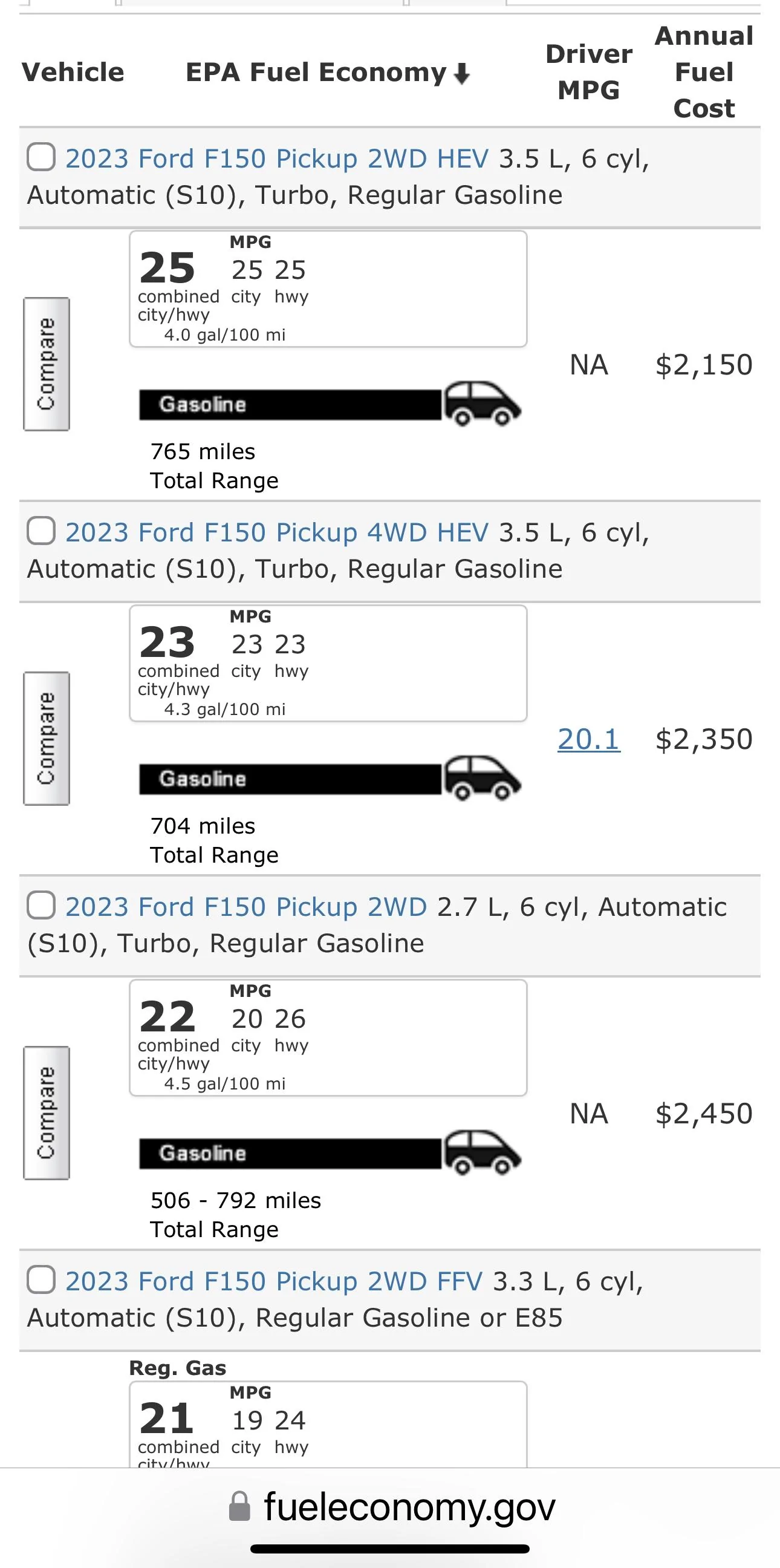
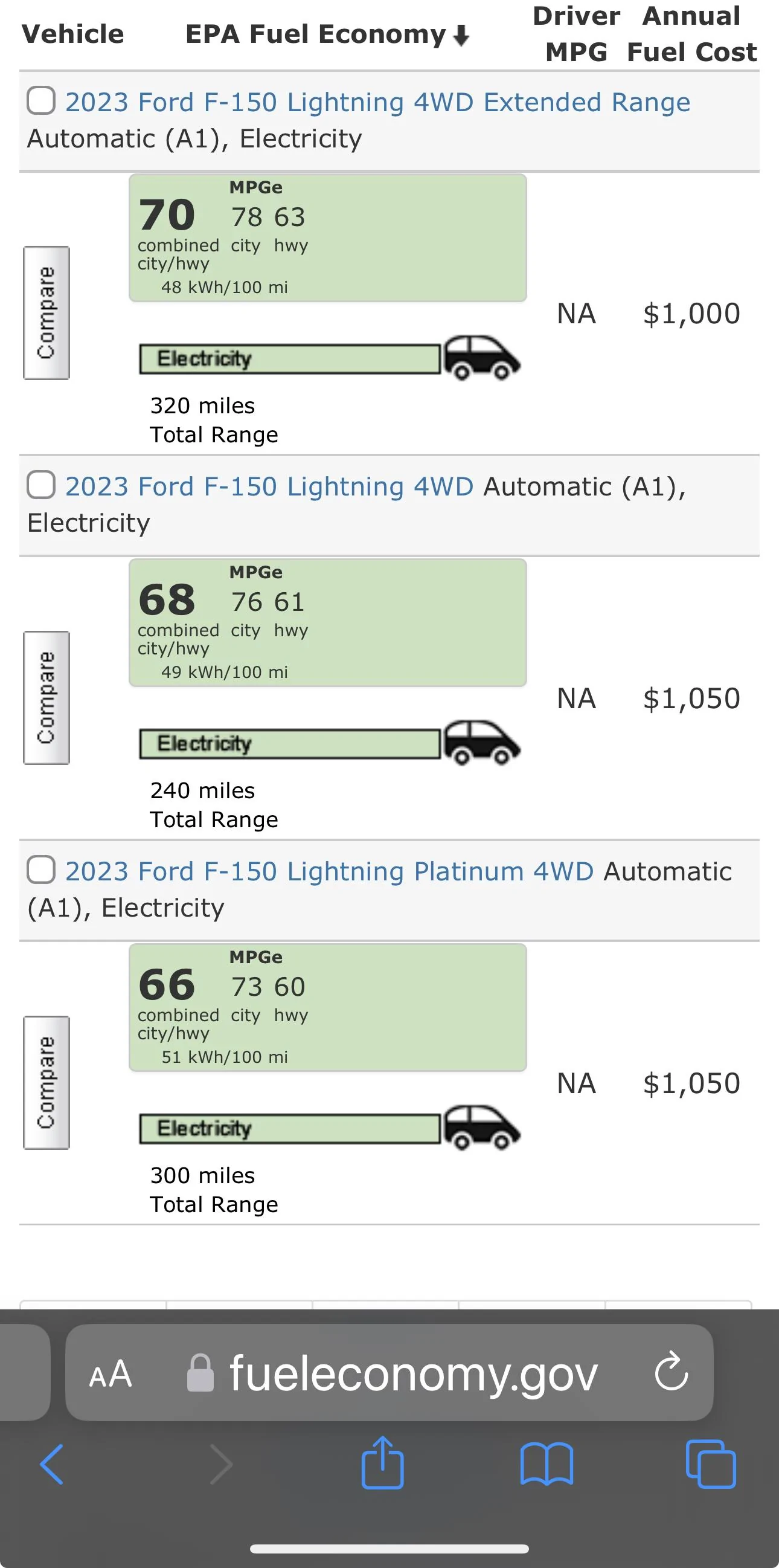
For 2023 the CAFÉ standard for light truck with a 74 square foot footprint is about 26 mpg. The 2023 Lightning has a efficiency rating of 70 mpge but the most fuel efficient 2023 F150 is rated at 25 mpg (and that’s a hybrid) with the least fuel efficient 2023 F150 rated at 12 mpg. So it’s questionable whether Ford can even now achieve the CAFÉ standards on the F150 without the Lightning.
As I said, the CAFÉ calculations are complicated and I’m not sure if I am comparing the vehicle to the requirements correctly and since it’s a corporate average all the other Ford vehicles have to be factored in but the point is that the CAFÉ targets are moving and it’s going to get much, much more difficult for Ford to achieve the targets. The 2032 CAFÉ target for the 74 square foot footprint light truck is going to be about 42 mpg. So we are talking about increasing the average efficiency of the F150 by over 60% in less ten years keeping in mind that we went twenty years without increasing the efficiency requirements at all.
I don’t think Ford can achieve the CAFÉ targets without going all or mostly all electric. Of course, the car manufacturers can just pay the penalties, but the further vehicle average gets away from the target the steeper the penalties will be. As the CAFÉ penalties increase, ICE vehicle cost will increase making the scale tip further towards EVs and that’s what many people don’t seem to understand.
To give a little background, the CAFÉ standards were first mandated back in 1978 to combat rising fuel costs. For the first couple of years the requirements were very aggressive, rising 10 to 20 percent per year, then surprisingly the CAFÉ standards did not change from 1990 to 2010. The Energy Independence and Security Act of 2007 (EISA07) reset the CAFÉ targets and actually got us to the where we are today in terms of vehicle fuel efficiency and EVs.
Before 2011 the CAFÉ standards were fairly simple with one mpg target for passenger cars and one target for light trucks. In 2011 a footprint component was added making it much more complicated to calculate the CAFÉ requirement with still separate standards for passenger cars and light trucks. The Lightning has a “footprint” of about 74 square feet (the same for all F150 Crew Cabs), which puts it at the high end of the CAFÉ standard for light trucks.
For 2023 the CAFÉ standard for light truck with a 74 square foot footprint is about 26 mpg. The 2023 Lightning has a efficiency rating of 70 mpge but the most fuel efficient 2023 F150 is rated at 25 mpg (and that’s a hybrid) with the least fuel efficient 2023 F150 rated at 12 mpg. So it’s questionable whether Ford can even now achieve the CAFÉ standards on the F150 without the Lightning.
As I said, the CAFÉ calculations are complicated and I’m not sure if I am comparing the vehicle to the requirements correctly and since it’s a corporate average all the other Ford vehicles have to be factored in but the point is that the CAFÉ targets are moving and it’s going to get much, much more difficult for Ford to achieve the targets. The 2032 CAFÉ target for the 74 square foot footprint light truck is going to be about 42 mpg. So we are talking about increasing the average efficiency of the F150 by over 60% in less ten years keeping in mind that we went twenty years without increasing the efficiency requirements at all.
I don’t think Ford can achieve the CAFÉ targets without going all or mostly all electric. Of course, the car manufacturers can just pay the penalties, but the further vehicle average gets away from the target the steeper the penalties will be. As the CAFÉ penalties increase, ICE vehicle cost will increase making the scale tip further towards EVs and that’s what many people don’t seem to understand.
Sponsored
Last edited: