

Maquis
Well-known member
Canadian dollars…don’t forget the exchange rate.Yeah, y’all have much better pricing up north of the border it seems!
Sponsored
Canadian dollars…don’t forget the exchange rate.Yeah, y’all have much better pricing up north of the border it seems!

Wally World is mostly EA but they sometimes have other brands. Wally also announced earlier this year (2025) that they are installing their own brand chargers at many more Wally Worlds.Doesn’t Walmart use Electrify America chargers? They’re always super simple/intuitive to use
They’ll probably do a better job of it on their ownWally World is mostly EA but they sometimes have other brands. Wally also announced earlier this year (2025) that they are installing their own brand chargers at many more Wally Worlds.
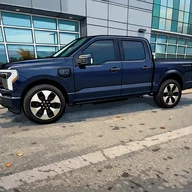
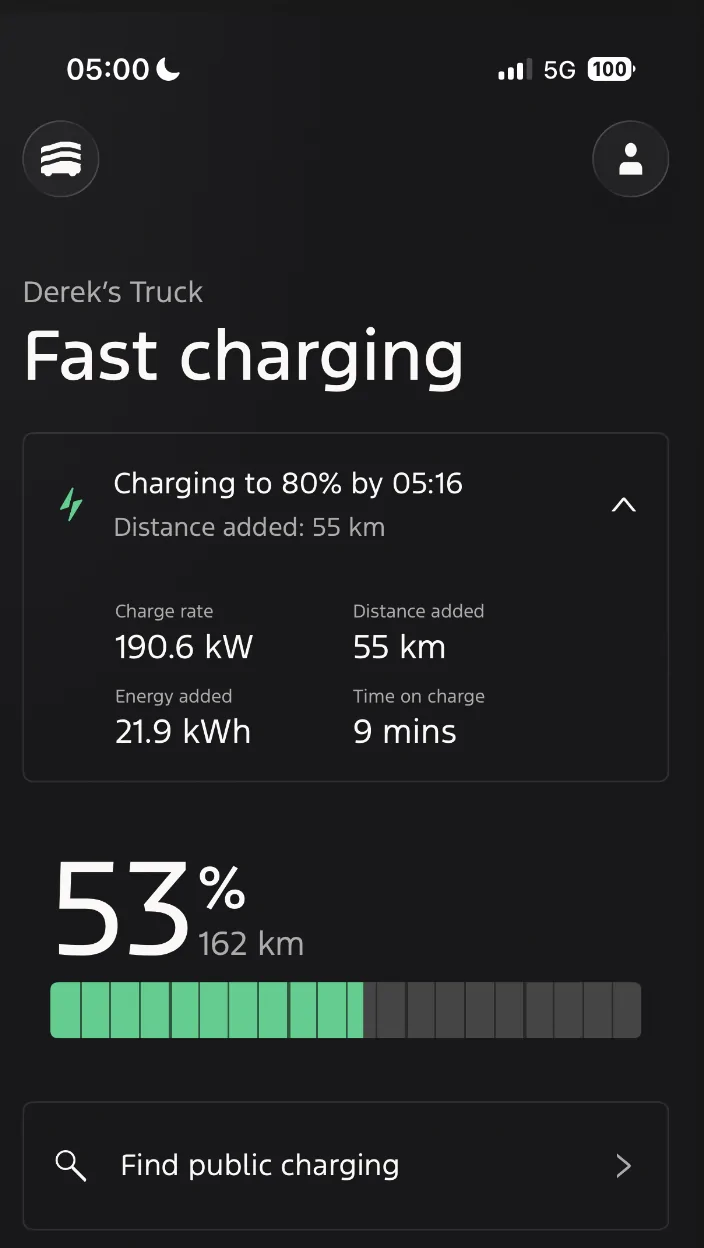
The Georgetown EA is 64 cents. 43% of 131 is 56kWh. 56 x 64= $36... Had you joined EA's membership prior to charging for $7, you would have saved $9 on that one charge and saved $2 net.After 5,300 miles of solely charging at home, yesterday I stopped at the Walmart in Georgetown, KY to charge on a level 3 for the first time. I was shocked. First of all it took me 10 minutes to figure out how to get it going. Then while I was charging another guy showed up in a Kia EV, couldn't figure out how to start a session, and left. Then a third couple showed up in a Hyundai and tried for 5 minutes to get their car in a position where the cord would reach their charge port. Ridiculous.
Then, it charged me $40 bucks for 43% of a charge! Good grief...my previous F-250 was less expensive to fuel and had 90% more range.
I'm glad that I can do 99% of my charging at home because if I had to rely on public charging it would absolutely be a deal breaker for me.
Many places they have installed their own!Doesn’t Walmart use Electrify America chargers? They’re always super simple/intuitive to use
That would be less US dollar is higher than Canadian dollar.Canadian dollars…don’t forget the exchange rate.
Yep - hydro power is relatively cheap.That would be less US dollar is higher than Canadian dollar.


It is OK to compare apples and oranges as long as we do it everywhere. For example, for the trip I am on right now, for which I took the ICE, my choices were not between an ICE F150 and Lightning. Real life choice was between a 4 cylinder outback and Lightning so his comparison chart would not apply to me. But for two nights of my two weeks vacation, I did have available level 2 charging (and could use them if I brought Lightning) so I think his inclusion of those is fair. However in similar situation, I would not ask people I am staying with on this trip to charge at their home. I would and have when it was my brother. Overall, Lightning still would be more expensive for me. More importantly, for the specific unplanned trip I took, more stressful for charging and parking.Well if some of the charging was free the whole comparison is kinda meaningless. Minimally not apples to apples

The only public charging I use is Tesla. All the other ones suck.After 5,300 miles of solely charging at home, yesterday I stopped at the Walmart in Georgetown, KY to charge on a level 3 for the first time. I was shocked. First of all it took me 10 minutes to figure out how to get it going. Then while I was charging another guy showed up in a Kia EV, couldn't figure out how to start a session, and left. Then a third couple showed up in a Hyundai and tried for 5 minutes to get their car in a position where the cord would reach their charge port. Ridiculous.
Then, it charged me $40 bucks for 43% of a charge! Good grief...my previous F-250 was less expensive to fuel and had 90% more range.
I'm glad that I can do 99% of my charging at home because if I had to rely on public charging it would absolutely be a deal breaker for me.
This is the issue now in the US with removal of the subsidies. These companies now have to compete on true costs. Only Tesla has figured out how to build at scale with manageable costs. Tesla is around 40-50k per stall vs the $150k per for other manufacturers.We just put in 2 dual port/omni port/long corded Charge Point L2s as workforce chargers at one of our facilities and set the price at $.28/kWh which is typical for our area. Thought about a couple of DC fast chargers but the initial capital cost is $$$ (~$250,000+) and particularly for the transformers to serve a couple DCFCs.
$.28 per kWh is about 50% (or less) of the charging cost typical of a Tesla or EA DCFC chargers. Chargers are available to the public, not just nearby workers.
Our local utility cost? $.064 per kWh.

Nonsense.Well if some of the charging was free the whole comparison is kinda meaningless. Minimally not apples to apples


