
Sponsored

Can't get full 80Amps out of Tesla Gen 2... How to monitor the J1772 negotiation??

galstaf

Well-known member
Joined
Jul 20, 2025
Threads
3
Messages
114
Reaction score
64
Location
North Georgia
Vehicles
2015 LEAF x 2, 2022 F150 Lightning Lariat ER (511A trim)
Occupation
community offgrid training
Subject: 2022 ER Lightning rejecting 80A charging on Tesla Gen 2 EVSE?

Hey all!

I’m running into a frustrating issue trying to get my 2022 Lariat ER to accept its full 80A charging capability. I’m using a
Tesla Gen 2 80A Wall Connector
with an 80A rated NACS-to-J1772 adapter.
The Setup:
  • Truck: 2022 Lariat Extended Range (equipped with dual onboard chargers for 80A/19.2kW support).
  • EVSE:
    Tesla Gen 2 Wall Connector
    (80A max).
  • Wiring: 100A breaker with <10ft of #4 gauge for the final connection to the EVSE.
  • Thermal Camera Check: No heat issues at the breaker or wiring; Plus the error happens within 10 seconds
The Problem:
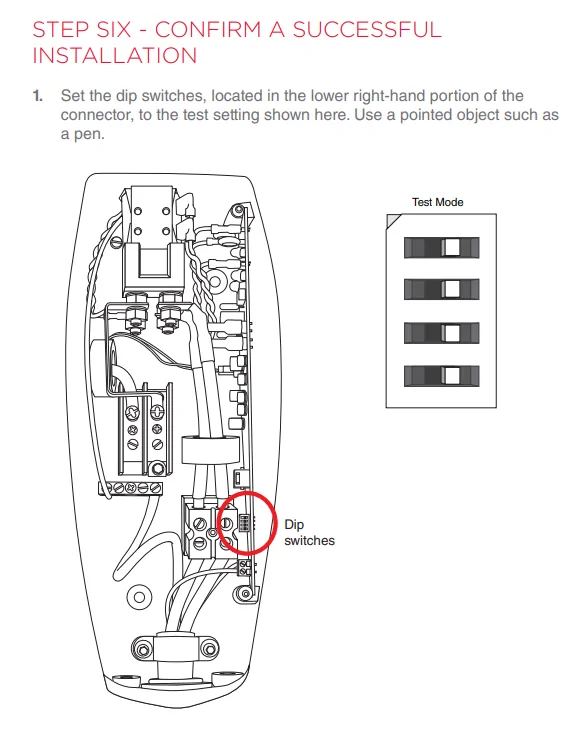
  • When the EVSE dip switches are set to 80A, the truck "thinks" for about 10 seconds and then the EVSE flashes a red error light. No HV contactors ever click in.
  • If I down-clock the EVSE dip switches to 64A, the truck charges perfectly.
  • A test Cybertruck pulls its max 48A from this same setup without issues.
What I'm looking for:
Is there a way to see the actual J1772 negotiation logs? I want to know if the Tesla EVSE is rejecting the Ford's request or if the Ford is seeing something it doesn't like in the pilot signal at that amperage.

IIs it possible to use Fordscan or some other app to see if I can pull any relevant error codes. Has anyone else encountered a hard "fail" instead of a down-negotiation when trying to hit 80A?
Sponsored
 

bmwhitetx

Well-known member
First Name
Bruce
Joined
May 21, 2021
Threads
48
Messages
3,215
Reaction score
4,671
Location
DFW-Texas
Vehicles
2022 F150 Lightning Lariat ER
Occupation
Retired engineer
Seems like this Lucid owner seeing the same thing.
 

Maquis

Well-known member
First Name
Dave
Joined
May 20, 2021
Threads
10
Messages
4,420
Reaction score
5,934
Location
Illinois
Vehicles
2021 Mach-E E4-X; 2023 Lightning Lariat ER
The EVSE puts out a variable pulse width square wave to tell the vehicle the max charge rate. Since other makes have seen similar behavior, I suspect that there is something wonky with the square wave at higher settings. Best way to tell is with an oscilloscope.
 

garsh

Well-known member
First Name
Brad
Joined
Dec 28, 2025
Threads
0
Messages
99
Reaction score
138
Location
Pittsburgh
Vehicles
2023 Ford F-150 Lightning Lariat
Reference: Tesla Gen 2 Wall Connector Installation Manual

On page 21, it talks about setting the DIP switches.

For DIP switch #2, it says it should always be "up". Flip this switch "down" and see if it works any better.

This appears to control the protocol being used to communicate. This picture says it chooses between "legacy" and "normal". Some people report that non-Teslas start being able to charge successfully when this switch is in the "down" position. So "legacy" may default to J1772.
 

garsh

Well-known member
First Name
Brad
Joined
Dec 28, 2025
Threads
0
Messages
99
Reaction score
138
Location
Pittsburgh
Vehicles
2023 Ford F-150 Lightning Lariat
I'm not sure where this website obtained its information, but it appears to confirm the behavior of that switch:

https://cablesforcharging.com/using-a-type-2-to-type-1-adaptor-with-a-tesla-wall-charger/

For newer Tesla wall chargers that are bought for domestic purposes, when the wall charger is plugged in, it uses SWCAN to communicate with Teslas (the Leaf does not use this, it uses J1772 signalling). After 30 seconds of being plugged in without any communication via SWCAN the Tesla wall charger will revert to “Legacy” J1772 signalling. Then the LEAF will respond. – So wait 30 seconds for a sign.
...​
The “DOWN” setting will force the wall charger to only use J1772 signalling, and it will not use SWCAN. Tesla vehicles can communicate in J1772 protocol, so with the position set to DOWN both Leaf and Tesla will charge.
 

Sponsored

garsh

Well-known member
First Name
Brad
Joined
Dec 28, 2025
Threads
0
Messages
99
Reaction score
138
Location
Pittsburgh
Vehicles
2023 Ford F-150 Lightning Lariat
Galstaf, what adapter are you using to plug the wall connector into the truck?
Is it actually rated for 80 amps?

Is there a way to see the actual J1772 negotiation logs?
The J1772 protocol is all analog, so there won't be any sort of log. It uses a pilot signal to communicate available amperage. You would need to have a signal analyzer to monitor the pilot pin to see what's happening.

Here's a decent description of J1772
 
Last edited:
OP
OP
galstaf

galstaf

Well-known member
Joined
Jul 20, 2025
Threads
3
Messages
114
Reaction score
64
Location
North Georgia
Vehicles
2015 LEAF x 2, 2022 F150 Lightning Lariat ER (511A trim)
Occupation
community offgrid training
On page 21, it talks about setting the DIP switches.

For DIP switch #2, it says it should always be "up". Flip this switch "down" and see if it works any better.

This appears to control the protocol being used to communicate. This picture says it chooses between "legacy" and "normal". Some people report that non-Teslas start being able to charge successfully when this switch is in the "down" position. So "legacy" may default to J1772.

I believe it is all J1772.. that is the protocol standard for the F150. The protocol uses a 1000Hz PWM signal to tell the charger what the duty cycle it can support is.
The switch you mentioned is for telling the EVSE you are using a voltage >240VAC (which I am not).

My EVSE has 4 DIP switches that you can configure to set the max Amperage ... it errors at 0001 (80A), but works at 0101 (64A).

I guess it is possible that the adapter is distorting the PWM signal at the higher duty rate? Does this sound feasible?
 
OP
OP
galstaf

galstaf

Well-known member
Joined
Jul 20, 2025
Threads
3
Messages
114
Reaction score
64
Location
North Georgia
Vehicles
2015 LEAF x 2, 2022 F150 Lightning Lariat ER (511A trim)
Occupation
community offgrid training
Galstaf, what adapter are you using to plug the wall connector into the truck?
Is it actually rated for 80 amps?
So it is claimed on the specifications. I ordered a different one to see if that makes a difference
 
OP
OP
galstaf

galstaf

Well-known member
Joined
Jul 20, 2025
Threads
3
Messages
114
Reaction score
64
Location
North Georgia
Vehicles
2015 LEAF x 2, 2022 F150 Lightning Lariat ER (511A trim)
Occupation
community offgrid training

garsh

Well-known member
First Name
Brad
Joined
Dec 28, 2025
Threads
0
Messages
99
Reaction score
138
Location
Pittsburgh
Vehicles
2023 Ford F-150 Lightning Lariat

Sponsored

garsh

Well-known member
First Name
Brad
Joined
Dec 28, 2025
Threads
0
Messages
99
Reaction score
138
Location
Pittsburgh
Vehicles
2023 Ford F-150 Lightning Lariat
It is Gen 2 for sure, and was sold as such. I think Gen 3 tops out at 48A.
It does, but it's strange that you don't have the switches mentioned in the manual.

Can you share a picture, preferably with the cover off?
 
OP
OP
galstaf

galstaf

Well-known member
Joined
Jul 20, 2025
Threads
3
Messages
114
Reaction score
64
Location
North Georgia
Vehicles
2015 LEAF x 2, 2022 F150 Lightning Lariat ER (511A trim)
Occupation
community offgrid training
@ANYONE THAT KNOWS THE CHARGING PROTOCOL INTIMATELY. Is the following correct? I have had several different AI's check each other's work which seems to be the only way to stop them making stuff up.


The Tesla Gen 2 Wall Connector follows the SAE J1772 standard for AC charging communication when connected to a non-Tesla vehicle like the F-150 Lightning. While the physical plug is different (NACS vs. J1772), the signaling logic remains identical for Level 2 charging. SAE International defines this "basic signaling" protocol, which the Tesla unit utilizes through an adapter.

The Signaling Process
  • Control Pilot (CP) Signal: The Gen 2 unit generates a 1 kHz square wave at +/- 12V on the Control Pilot pin. This is the primary communication line between the truck’s Secondary Onboard Diagnostic Module (SOBDM) and the EVSE.
  • Current Advertisement (PWM): The EVSE uses Pulse Width Modulation (PWM) to tell the Lightning how much current it can safely pull. For an 80A-capable Gen 2 unit, it uses a 96% to 97% duty cycle to advertise the full 80A/19.2kW limit.
  • Proximity Pilot (PP): The truck monitors the resistance on the Proximity Pilot pin to ensure the adapter is fully seated before allowing the high-voltage contactors to close.

Load Sharing vs. Vehicle Communication
It is a common misconception that the Gen 2 unit uses digital communication with the vehicle.
  • Unit-to-Unit: The "communication" terminals (D+ and D-) inside the Gen 2 unit are for RS-485 daisy-chaining between multiple Wall Connectors for power sharing.
  • Unit-to-Vehicle: There is no digital handshake (like CAN bus or PLC) between the Gen 2 EVSE and the F-150. The interaction is purely analog, relying on the voltage levels and duty cycle of the 1 kHz pilot signal.
When charging a Lightning, the Tesla EVSE acts as a "dumb" source, simply pulsing the 1 kHz signal. The truck's SOBDM reads this analog pulse and, if the signal integrity is within SAE J1772 tolerances, it initiates the charge.
 

garsh

Well-known member
First Name
Brad
Joined
Dec 28, 2025
Threads
0
Messages
99
Reaction score
138
Location
Pittsburgh
Vehicles
2023 Ford F-150 Lightning Lariat
Last edited:

garsh

Well-known member
First Name
Brad
Joined
Dec 28, 2025
Threads
0
Messages
99
Reaction score
138
Location
Pittsburgh
Vehicles
2023 Ford F-150 Lightning Lariat
  • When the EVSE dip switches are set to 80A, the truck "thinks" for about 10 seconds and then the EVSE flashes a red error light.
How many times does it flash?

@ANYONE THAT KNOWS THE CHARGING PROTOCOL INTIMATELY. Is the following correct?
Basically. The part that's missing is that the Wall Connector defaults to the SWCAN protocol. You have to wait for that to time out before it will switch to the J1772 protocol.
Sponsored


Top