
Sponsored

Battery Maintainer Usage

How often do you use them?


  • Total voters
    48

potato

Well-known member
First Name
John
Joined
Feb 1, 2024
Threads
0
Messages
452
Reaction score
673
Location
BC, Canada
Vehicles
2023 F150 Lightning XLT ER
How would you get the frunk open if battery is dead? If battery just low, there isn't any engine to turn over, so wouldn't truck just start?
There is a manual frunk release down by the driver's left foot
Sponsored


RLXXI

Well-known member
Joined
Jun 10, 2021
Threads
31
Messages
1,567
Reaction score
1,362
Location
3rd rock
Vehicles
2025 F 150 Flash, 2013 F 150 XLT, 2014 Escape, 2011 Suzuki DR 650SE
Occupation
Automotive Technician
My commute is very short so it's never on long enough to recharge the 12v battery. However, I leave PPOB turned on all day at work to power a dual channel dash cam/dvr for sentry duty while I'm working. With PPOB on, it keeps the LVB charged up.

No maintainer needed in my case.
 

DavidS

Active member
First Name
DAVID
Joined
Dec 27, 2025
Threads
0
Messages
29
Reaction score
33
Location
Green Bay, WI
Vehicles
F150 Lightning Lariat
Good question and i think i need to buy one, i need to store the Ligthning outside in -10 to 0 F temperature for the next 3 months (i'll be out of the country) and the dealership told me: 1-unplug the truck from the charger 2-put a battery maintainer on the 12 v battery. Does this relate to previous experiences by owners here ?
The manual says you should leave the HVB at 50% and plugged in for storing your Lightning over thirty days.
“Storage State of Charge-
You can increase the battery life by
maintaining your state of charge below
100%. When you park your vehicle for an
extended period of 30 days or more, we
recommend your battery be at an
approximately 50% state of charge.
Storing your vehicle's high voltage battery
at higher states of charge is less favorable
than storing at lower states of charge.

Note: To achieve this state of charge for
storage, you can drive your vehicle down to
50% and set a charge limit for your location.”
 

Northcaptain

Member
First Name
Andre
Joined
Aug 12, 2025
Threads
1
Messages
23
Reaction score
15
Vehicles
F350 2010 V10 Triton and F150 2025 Lightning Lariat
funny because the service manager at my Ford dealer told me, to store your Lightning for a long time in winter outside... minimum 50% charge. Unplug the 12 v battery because it will discharge, leave the car unconnected and it will put itself to sleep with no sensible battery degradation and will not try to heat the battery.
 

Sponsored

davehu

Well-known member
Joined
Jan 7, 2022
Threads
57
Messages
1,192
Reaction score
1,176
Location
hot springs, AR
Vehicles
2023 Lighting Lariat ER, Iconic Silver
Occupation
retired
For those of you who use Battery Maintainers. How often do you use them? Daily, Weekly, or Monthly?
doesn't qualify for me to answer the poll but I used it religiously for my boat. Plugged in 7x24 except, of course, when using it. My last battery (Die Hard) lasted an unbelievable 11 years without ever failing.
 
  • Like
Reactions: chl

chl

Well-known member
First Name
CHRIS
Joined
Dec 16, 2022
Threads
8
Messages
2,781
Reaction score
1,743
Location
alexandria virginia
Vehicles
2023 F-150 LIGHTNING, 2012 Nissan Leaf, 2015 Toyota Prius, 2000 HD 883 Sportster
Occupation
Patent Atty / Electrical Engineer
doesn't qualify for me to answer the poll but I used it religiously for my boat. Plugged in 7x24 except, of course, when using it. My last battery (Die Hard) lasted an unbelievable 11 years without ever failing.
Not so unbelievable, just basic lead-acid battery science at work to those who know about such things.

I've had car and truck batteries last a long time on a maintainer - my Leaf 12v has lasted 14 years and my 2001 Ford Ranger battery lasted 20 years and both are still working well.

Lead-acid batteries last a long time if kept at or near 100% when not in use, one of the first things I learned when I began studying electrical engineering.

A $40 charger.maintainer with an AGM mode is a good investment - beats being stranded somewhere or having to buy a new battery when the 3yr/36k mile warranty runs out on the truck.
 

WTScott

New member
First Name
Scott
Joined
Nov 7, 2025
Threads
0
Messages
1
Reaction score
1
Location
The Woodlands, TX
Vehicles
2025 F150 Lightning Flash, 2023 Mercedes GLS450, 2018 Porche Cayenne GTS Plug In
Occupation
Retired
I know this is only one of a zillion threads on this, but what a strange process for the 12V battery. In theory, you could maintain the 12V battery perfectly and extend its life significantly by using the huge (relatively) pool of electrons in the vehicle. Obviously, the logic (not the mechanics) changes when you are underway and it acts like an alternator on the car and charges the 12V battery? Does it maintain a % of charge or go to 100% optimum? Same question on charge - seems to cut off or act differently. Tried to get a summary from Grok, but more confusing.......

BTW - new owner of 2025 Flash - love the truck - 6th F150 and best ever (so far). Hope the ER is exactly the same engineering though I guess we will lose the frunk...

Grok response,

The numerous posts recommending (or debating) a battery tender (trickle charger/maintainer) on the Ford F-150 Lightning's 12V battery stem from real-world owner experiences where the built-in charging system from the main high-voltage (HV) lithium battery pack doesn't always keep the 12V battery optimally charged, especially in certain usage patterns.While the DC-DC converter does draw from the HV pack to recharge the 12V battery when needed (typically when the vehicle is "awake," driving, or actively plugged in and charging), it's not foolproof in every scenario. Here's why many Lightning owners still push for an external tender:
  • Parasitic drain when parked/unused — Even when "off," the truck has ongoing low-level draws (e.g., 25-50 mA baseline, plus spikes from modules waking for FordPass app checks, remote start attempts, key fob pings, over-the-air update prep, or other always-on systems). Short drives or frequent "awakenings" (door opens, app use) without enough runtime can prevent full recharges, leading to gradual depletion over days/weeks. Owners report dead 12V batteries after 1-3 weeks of sitting, even sometimes when plugged in at low amps or if the truck doesn't trigger HV-to-12V charging reliably.
  • Long-term parking or infrequent use — If the truck sits for extended periods (e.g., vacations, second vehicle status), the 12V can drop low enough to cause sulfation (permanent capacity loss in AGM/lead-acid batteries), failure to start, or bizarre cascading issues like "Electrical System Drain Service Required," steering faults, frunk problems, no app connectivity, OTA update failures, or the truck entering deep sleep mode. Many threads describe these as "bricked" or glitchy behavior resolved only by jumping/charging the 12V.
  • Inconsistent DC-DC converter behavior — The system charges the 12V opportunistically (e.g., more aggressively when plugged in or driving), but it may not top it off fully if the 12V SoC doesn't drop low enough to trigger, or during very short accessory use without full vehicle wakeup. Some owners note voltage readings (e.g., ~12.5V off vs. 13.5-14.5V charging) that suggest it's not always maintaining ideal levels for longevity. Ford's BMS is conservative/pessimistic about 12V health, and low voltage can trigger errors even if not fully dead.
  • Battery longevity and reliability perks — A tender keeps the 12V at full float charge (e.g., ~13.6V) without overcharging, reducing sulfation and extending life (AGM batteries hate chronic undercharge). Owners report benefits like more reliable OTA updates (which can fail or corrupt if voltage sags), fewer random warnings, and avoiding expensive/towing scenarios. Some permanently mount one (connected to frunk jump posts so BMS still monitors) and plug it in during idle times.
  • Forum consensus variation — Not everyone uses one—many say "just drive regularly and keep it plugged in" works fine for daily drivers, as HV charging handles it. Ford doesn't officially recommend routine tender use (it could theoretically confuse BMS SoC tracking if done constantly), and the manual emphasizes plugging in + maintaining HV SoC for storage. But the volume of "my 12V died after X days" stories, plus costly replacements and downtime, drives the "better safe than sorry" advice for tenders, especially for low-mileage or garage-queen owners.
In short, the HV-to-12V charging works well for active use, but real-world edge cases (parasitic loads + infrequent driving) create enough failures that the community heavily promotes tenders as cheap insurance (~$50-100) against headaches. If your Lightning is driven often and plugged in, you probably don't need one—but many owners swear by it after learning the hard way.
 
  • Like
Reactions: chl

chl

Well-known member
First Name
CHRIS
Joined
Dec 16, 2022
Threads
8
Messages
2,781
Reaction score
1,743
Location
alexandria virginia
Vehicles
2023 F-150 LIGHTNING, 2012 Nissan Leaf, 2015 Toyota Prius, 2000 HD 883 Sportster
Occupation
Patent Atty / Electrical Engineer
I know this is only one of a zillion threads on this, but what a strange process for the 12V battery. In theory, you could maintain the 12V battery perfectly and extend its life significantly by using the huge (relatively) pool of electrons in the vehicle. Obviously, the logic (not the mechanics) changes when you are underway and it acts like an alternator on the car and charges the 12V battery? Does it maintain a % of charge or go to 100% optimum? Same question on charge - seems to cut off or act differently. Tried to get a summary from Grok, but more confusing.......

BTW - new owner of 2025 Flash - love the truck - 6th F150 and best ever (so far). Hope the ER is exactly the same engineering though I guess we will lose the frunk...

Grok response,

The numerous posts recommending (or debating) a battery tender (trickle charger/maintainer) on the Ford F-150 Lightning's 12V battery stem from real-world owner experiences where the built-in charging system from the main high-voltage (HV) lithium battery pack doesn't always keep the 12V battery optimally charged, especially in certain usage patterns.While the DC-DC converter does draw from the HV pack to recharge the 12V battery when needed (typically when the vehicle is "awake," driving, or actively plugged in and charging), it's not foolproof in every scenario. Here's why many Lightning owners still push for an external tender:
  • Parasitic drain when parked/unused — Even when "off," the truck has ongoing low-level draws (e.g., 25-50 mA baseline, plus spikes from modules waking for FordPass app checks, remote start attempts, key fob pings, over-the-air update prep, or other always-on systems). Short drives or frequent "awakenings" (door opens, app use) without enough runtime can prevent full recharges, leading to gradual depletion over days/weeks. Owners report dead 12V batteries after 1-3 weeks of sitting, even sometimes when plugged in at low amps or if the truck doesn't trigger HV-to-12V charging reliably.
  • Long-term parking or infrequent use — If the truck sits for extended periods (e.g., vacations, second vehicle status), the 12V can drop low enough to cause sulfation (permanent capacity loss in AGM/lead-acid batteries), failure to start, or bizarre cascading issues like "Electrical System Drain Service Required," steering faults, frunk problems, no app connectivity, OTA update failures, or the truck entering deep sleep mode. Many threads describe these as "bricked" or glitchy behavior resolved only by jumping/charging the 12V.
  • Inconsistent DC-DC converter behavior — The system charges the 12V opportunistically (e.g., more aggressively when plugged in or driving), but it may not top it off fully if the 12V SoC doesn't drop low enough to trigger, or during very short accessory use without full vehicle wakeup. Some owners note voltage readings (e.g., ~12.5V off vs. 13.5-14.5V charging) that suggest it's not always maintaining ideal levels for longevity. Ford's BMS is conservative/pessimistic about 12V health, and low voltage can trigger errors even if not fully dead.
  • Battery longevity and reliability perks — A tender keeps the 12V at full float charge (e.g., ~13.6V) without overcharging, reducing sulfation and extending life (AGM batteries hate chronic undercharge). Owners report benefits like more reliable OTA updates (which can fail or corrupt if voltage sags), fewer random warnings, and avoiding expensive/towing scenarios. Some permanently mount one (connected to frunk jump posts so BMS still monitors) and plug it in during idle times.
  • Forum consensus variation — Not everyone uses one—many say "just drive regularly and keep it plugged in" works fine for daily drivers, as HV charging handles it. Ford doesn't officially recommend routine tender use (it could theoretically confuse BMS SoC tracking if done constantly), and the manual emphasizes plugging in + maintaining HV SoC for storage. But the volume of "my 12V died after X days" stories, plus costly replacements and downtime, drives the "better safe than sorry" advice for tenders, especially for low-mileage or garage-queen owners.
In short, the HV-to-12V charging works well for active use, but real-world edge cases (parasitic loads + infrequent driving) create enough failures that the community heavily promotes tenders as cheap insurance (~$50-100) against headaches. If your Lightning is driven often and plugged in, you probably don't need one—but many owners swear by it after learning the hard way.
Yes, Ford could reprogram the system to: 1) top off to 100% regularly and 2) at a 'trickle' current that will not stress the battery and will 3) avoid deep discharging to prevent permanent sulfates forming.

From what I read, Tesla did that after numerous 12v battery failures.

This is not only an issue with the Lightning and Mach-e, other EVs have the same issue, e.g., the Nissan Leaf, it is an active topic on their forums.

But any 12v lead-acid battery in any vehicle will last longer if kept at 100% whenever not in use.

Besides the cost of replacing a battery or the inconvenience of getting stranded and needing a jump, there is the problem of recycling the lead they contain. Too often companies ship them to poor countries to be processed where significant lead contamination of air, soil and water may result.

So the longer one can make their lead-acid battery last, the better all around.
 

SSNutz

Well-known member
First Name
Troy
Joined
Sep 25, 2024
Threads
5
Messages
58
Reaction score
44
Location
SE Wisconsin
Vehicles
2024 Flash
Occupation
Sr Process Innovation Specialist
I turn my EVSE down to 8 amps for small changes but extends the time charging. This is mainly to for the LVL battery maintenance. I use car scanner to check is SOC. Works well for me. Especially during this cold, cold weather.
 

Sponsored

chl

Well-known member
First Name
CHRIS
Joined
Dec 16, 2022
Threads
8
Messages
2,781
Reaction score
1,743
Location
alexandria virginia
Vehicles
2023 F-150 LIGHTNING, 2012 Nissan Leaf, 2015 Toyota Prius, 2000 HD 883 Sportster
Occupation
Patent Atty / Electrical Engineer
I turn my EVSE down to 8 amps for small changes but extends the time charging. This is mainly to for the LVL battery maintenance. I use car scanner to check is SOC. Works well for me. Especially during this cold, cold weather.
One of the ways others have used to keep the 12v battery better maintained.
The last stages of topping off the AGM battery can take quite a while.
Your vehicle is a 2024 so rather new.
These battery failures seem to show up after 2 to 3 years based on memory from what I've seen in the posts, sometimes in less time.

Your strategy might not be practical for some owners who need larger faster charging though.

Hope it works out in the long run for your truck.

This thread from the MAch-e forum goes through some AGM battery explanation, which may be informative:

https://www.macheforum.com/site/threads/how-to-recondition-service-your-12v-battery.11069/
 

SSNutz

Well-known member
First Name
Troy
Joined
Sep 25, 2024
Threads
5
Messages
58
Reaction score
44
Location
SE Wisconsin
Vehicles
2024 Flash
Occupation
Sr Process Innovation Specialist
One of the ways others have used to keep the 12v battery better maintained.
The last stages of topping off the AGM battery can take quite a while.
Your vehicle is a 2024 so rather new.
These battery failures seem to show up after 2 to 3 years based on memory from what I've seen in the posts, sometimes in less time.

Your strategy might not be practical for some owners who need larger faster charging though.

Hope it works out in the long run for your truck.

This thread from the MAch-e forum goes through some AGM battery explanation, which may be informative:

https://www.macheforum.com/site/threads/how-to-recondition-service-your-12v-battery.11069/
Agree not for everyone. For me, the days I need more charge I turn my EVSE amps up (48 amps max). Key is to maximize the time the vehicle is charging, which means the LVB is charging. Not everyone can change the amps. Works well for me and easy to control from my phone.
 
  • Like
Reactions: chl

Crash McBang

Member
First Name
Crash
Joined
Jan 18, 2023
Threads
1
Messages
10
Reaction score
17
Location
97701
Vehicles
2022 f150 lightning
Occupation
Avoider Of Yard Work
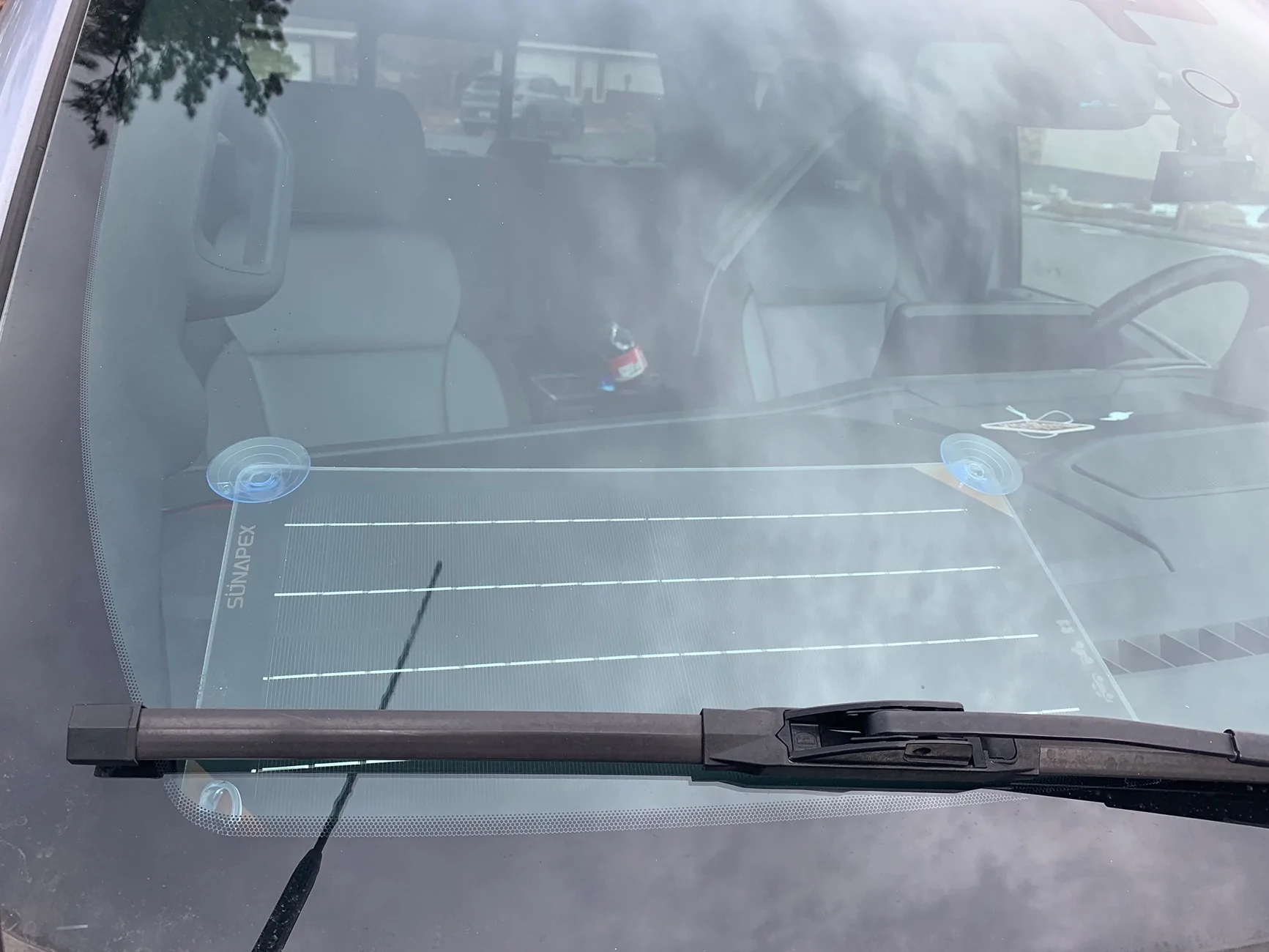
I found I did not drive the truck as often as I thought I would, especially in winter - it sits outside, so I added a Sunapex 30W solar trickle charger and mounted it low on the passenger side of the windshield on the inside, so it does not interfere with the airbag. Even on cloudy days it keeps the battery happy.

Ford F-150 Lightning Battery Maintainer Usage IMG_1095
 

chl

Well-known member
First Name
CHRIS
Joined
Dec 16, 2022
Threads
8
Messages
2,781
Reaction score
1,743
Location
alexandria virginia
Vehicles
2023 F-150 LIGHTNING, 2012 Nissan Leaf, 2015 Toyota Prius, 2000 HD 883 Sportster
Occupation
Patent Atty / Electrical Engineer
I found I did not drive the truck as often as I thought I would, especially in winter - it sits outside, so I added a Sunapex 30W solar trickle charger and mounted it low on the passenger side of the windshield on the inside, so it does not interfere with the airbag. Even on cloudy days it keeps the battery happy.

IMG_1095.webp
How is it wired to the 12v battery?
Some of those use the vehicle accessory/cigarette lighter outlet, but Ford specifically says not to do that, and besides that it disconnects/de-powers after a period of time (30min?).

On Manual Page 182:

When you switch the vehicle on, you can
use the socket to power 12 V appliances
with a maximum current rating of 20 A. Do
not use the power point over the vehicle
capacity of 12 V DC 240 W or a fuse could
blow. Do not plug in any device that
supplies power to the vehicle through the
power points.
This could result in damage
to vehicle systems
. Do not hang any
accessory from the accessory plug. Always
keep the power point caps closed when
not in use. Do not insert objects other than
an accessory plug into the power point.
 

Crash McBang

Member
First Name
Crash
Joined
Jan 18, 2023
Threads
1
Messages
10
Reaction score
17
Location
97701
Vehicles
2022 f150 lightning
Occupation
Avoider Of Yard Work
The panel comes with a long cable, which is tucked along the door and under the hood. There are quick disconnects from the cable to the battery so that the panel can be unplugged from the battery if needed.
Sponsored


Top