
Sponsored

Blowing breaker on home charger setup.

PJnc284

Well-known member
Joined
Sep 30, 2024
Threads
0
Messages
974
Reaction score
1,041
Location
Garner, NC
Vehicles
2023 Ford F150 Lightning Lariat ER
Just in case you're unaware, most plug-in EVSEs have temperature sensors built into the plug. The sensor detects if the connection at the wall outlet is overheating (due to a high resistance connection at the plug or outlet). If the outlet overheats, the EVSE will throw a fault and shut off.
I wouldn't trust that to work. Quite a few have ended up with fried 14/50 outlets due to the cheap ones not being rated for constant ev load.
Sponsored


Heliian

Well-known member
Joined
Mar 9, 2023
Threads
5
Messages
1,832
Reaction score
2,100
Location
Canada
Vehicles
2023 LR Lariat, code name "Boogaloo"
rated for constant ev load.
It's not the load, more the plug cycles.
That's why commercial grade outlets are better and now they are being relabeled by the manufacturers for ev use. They haven't come up with an actual standard yet. A standard would be nice to clear up any confusion over what receptacle to use. Current "EV rated" receptacles are merely labels put on by the manufacturer at this stage.
 

chl

Well-known member
First Name
CHRIS
Joined
Dec 16, 2022
Threads
7
Messages
2,480
Reaction score
1,531
Location
alexandria virginia
Vehicles
2023 F-150 LIGHTNING, 2012 Nissan Leaf, 2015 Toyota Prius, 2000 HD 883 Sportster
Occupation
Patent Atty / Electrical Engineer
My educated guesses:

Pops the breaker but apparently not immediately so likely not a short circuit wiring problem.

Charges for a while then pops - charging at 24A (or 32A)? Then it's likely a either the wire wasn't torqued to spec for the breaker (or came loose) or it's a bad 40A breaker that is overheating as others and your electrician have suggested.
----
I would also advise NOT using an extension cord with the EVSE. Although yours is relatively short, still not a good idea. Have your electrician hard wire your EVSE would be the best solution.

Second best would be a heavy duty EV rated receptacle, but that could still be problematic outdoors unless in a suitable case/cover. The new code here in the US is specifying EV-rated receptacles for new installs - heavy duty.

Not sure about your area, but it is a violation of electrical code (NEC) here in the US where the NEC has been adopted to use an extension cord with an EVSE.

Extension cords provide several potential problem - voltage drop, heat, and the plug connections.

---

Disclaimer

I am an electrical engineer but not a licensed electrician.

The information provided in this post is provided for information purposes only and does not constitute any endorsement or recommendation. No warranty, expressed or implied, is made regarding the accuracy, adequacy, completeness, legality, reliability, or usefulness of any information found in this post. It is your responsibility to verify and investigate this information.
 

chl

Well-known member
First Name
CHRIS
Joined
Dec 16, 2022
Threads
7
Messages
2,480
Reaction score
1,531
Location
alexandria virginia
Vehicles
2023 F-150 LIGHTNING, 2012 Nissan Leaf, 2015 Toyota Prius, 2000 HD 883 Sportster
Occupation
Patent Atty / Electrical Engineer
It's not the load, more the plug cycles.
That's why commercial grade outlets are better and now they are being relabeled by the manufacturers for ev use. They haven't come up with an actual standard yet. A standard would be nice to clear up any confusion over what receptacle to use. Current "EV rated" receptacles are merely labels put on by the manufacturer at this stage.
It is coming in the 2026 NEC update form what I hear.

Something like this is what I've seen:

Receptacles used for EV charging must be listed for the application, with specific requirements for EV Power Export (EVPE) systems calling for 250V max, 50A max, single-phase, and listing for that use (NEC 625.60)..... The 2026 NEC introduces rules for receptacles to be listed specifically for EV charging, aiming for consistency and enhanced safety, with new provisions for "extra duty" enclosures in wet locations.

Also they require it be GFCI protected which will result in nuisance trips with some EVSEs so hard wired is the way to go.
 

kibo

Member
First Name
JA
Joined
Oct 20, 2024
Threads
0
Messages
5
Reaction score
9
Location
Melbourne, FL
Vehicles
23 ER Lariat, 21 Tacoma
I wouldn't trust that to work. Quite a few have ended up with fried 14/50 outlets due to the cheap ones not being rated for constant ev load.
I'm just making sure he (and anyone else using extension cords) realizes he is subverting that safety feature.

You should never rely on a safety feature to protect you (e.g., intentionally submerging electronics and relying on a GFCI outlet to protect you from electrocution, or swinging from a safety lanyard), because there are no guarantees they will work. But like a seat belt, I'm not going to operate without them engaged. They exist for a reason ("written in blood") and could be the thing that saves someone's life.

And using high quality EV rated outlets is another sensible "must have" as you point out (in lieu of hardwiring). That way you're not primarily relying on on the safety sensor to save your house/life.
 

Sponsored

chl

Well-known member
First Name
CHRIS
Joined
Dec 16, 2022
Threads
7
Messages
2,480
Reaction score
1,531
Location
alexandria virginia
Vehicles
2023 F-150 LIGHTNING, 2012 Nissan Leaf, 2015 Toyota Prius, 2000 HD 883 Sportster
Occupation
Patent Atty / Electrical Engineer
I'm just making sure he (and anyone else using extension cords) realizes he is subverting that safety feature.

You should never rely on a safety feature to protect you (e.g., intentionally submerging electronics and relying on a GFCI outlet to protect you from electrocution, or swinging from a safety lanyard), because there are no guarantees they will work. But like a seat belt, I'm not going to operate without them engaged. They exist for a reason ("written in blood") and could be the thing that saves someone's life.

And using high quality EV rated outlets is another sensible "must have" as you point out (in lieu of hardwiring). That way you're not primarily relying on on the safety sensor to save your house/life.
100% agree.
I'd like to also mention the folks who cut the ground wire when powering their house to avoid tripping of the PPOB and expect the truck GFCI to detect a ground fault in their house.
 

I <3 My Lightning

Well-known member
Joined
Aug 29, 2024
Threads
4
Messages
208
Reaction score
282
Location
USA
Vehicles
'23 XLT ER 312A Oct. build date
My bad.... :cwl:... Warning, do not use an extension cord.

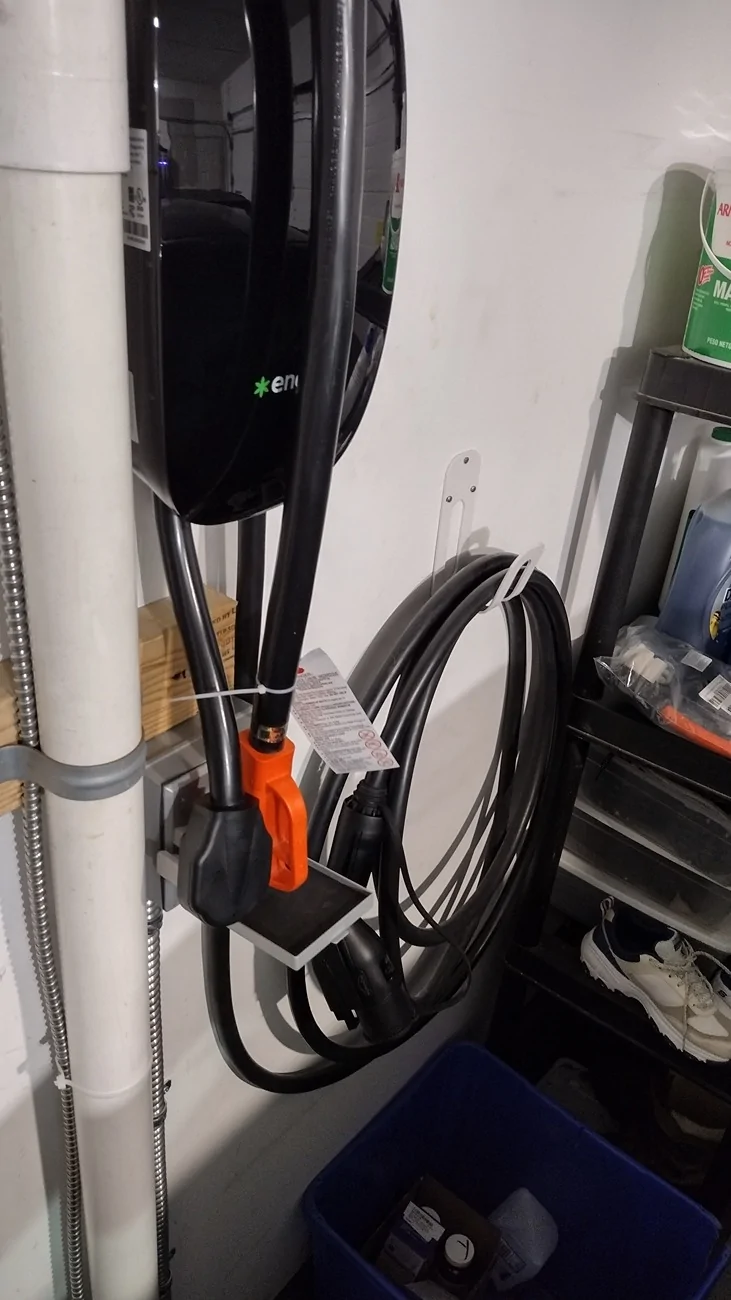
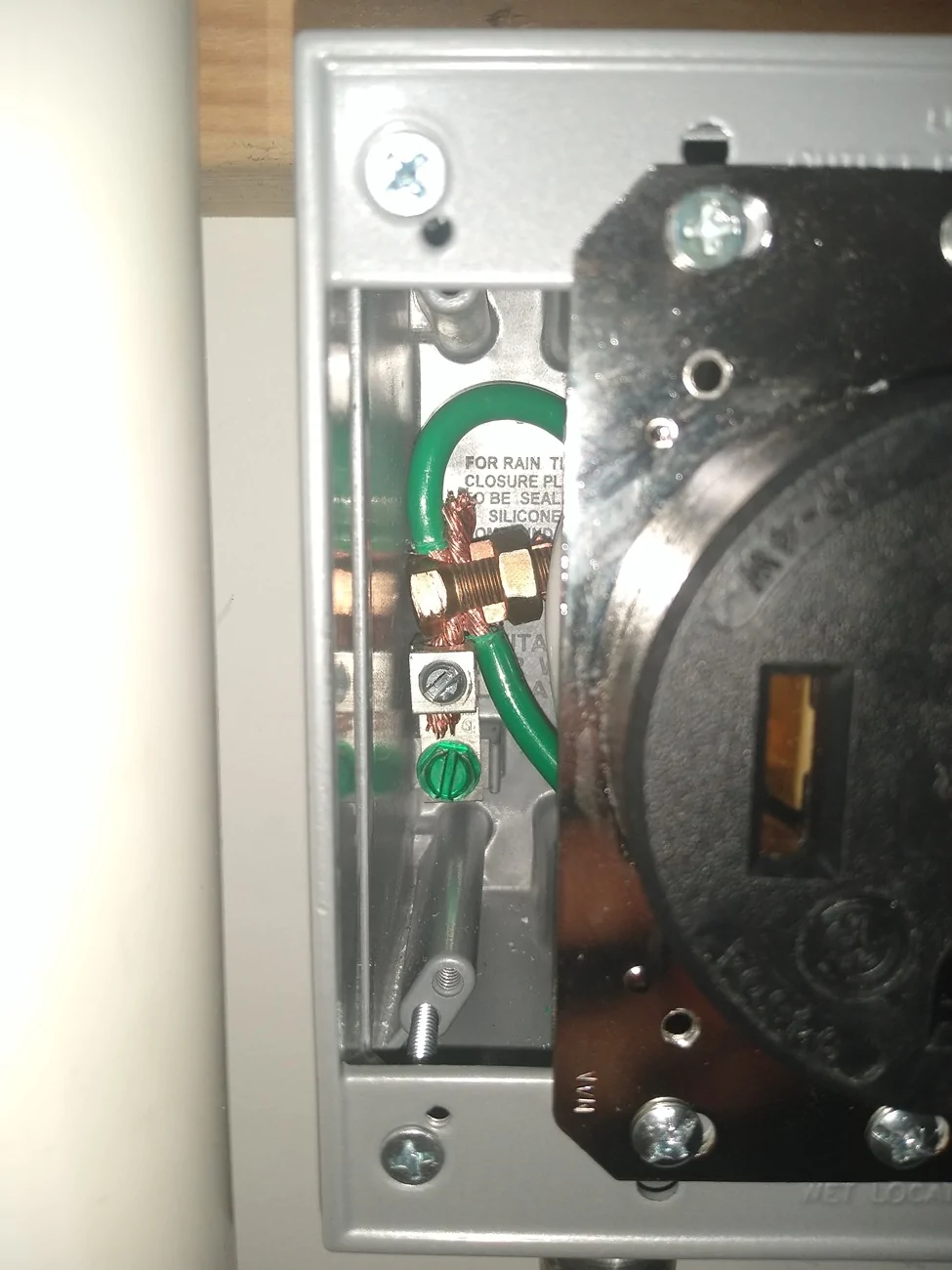
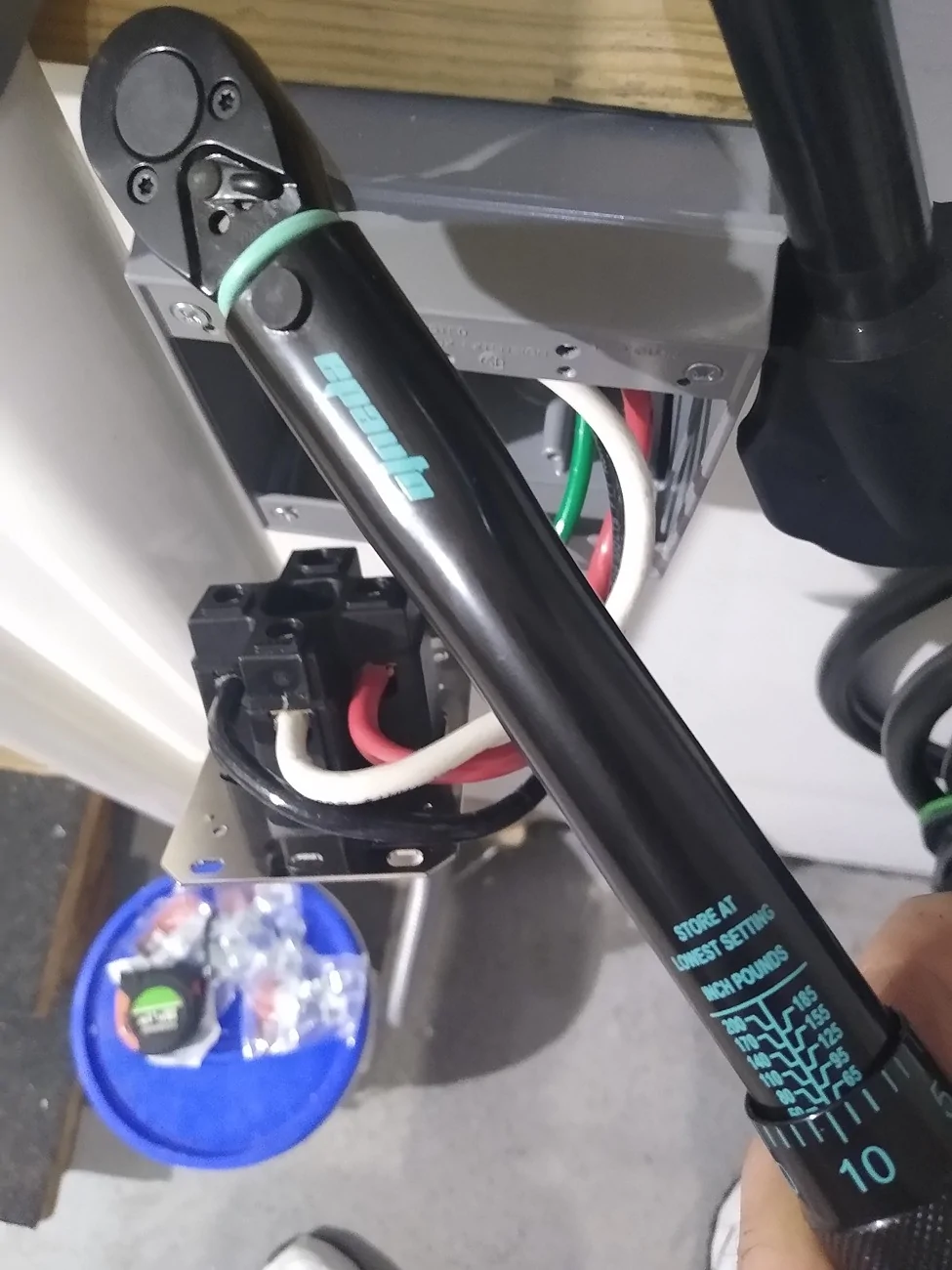
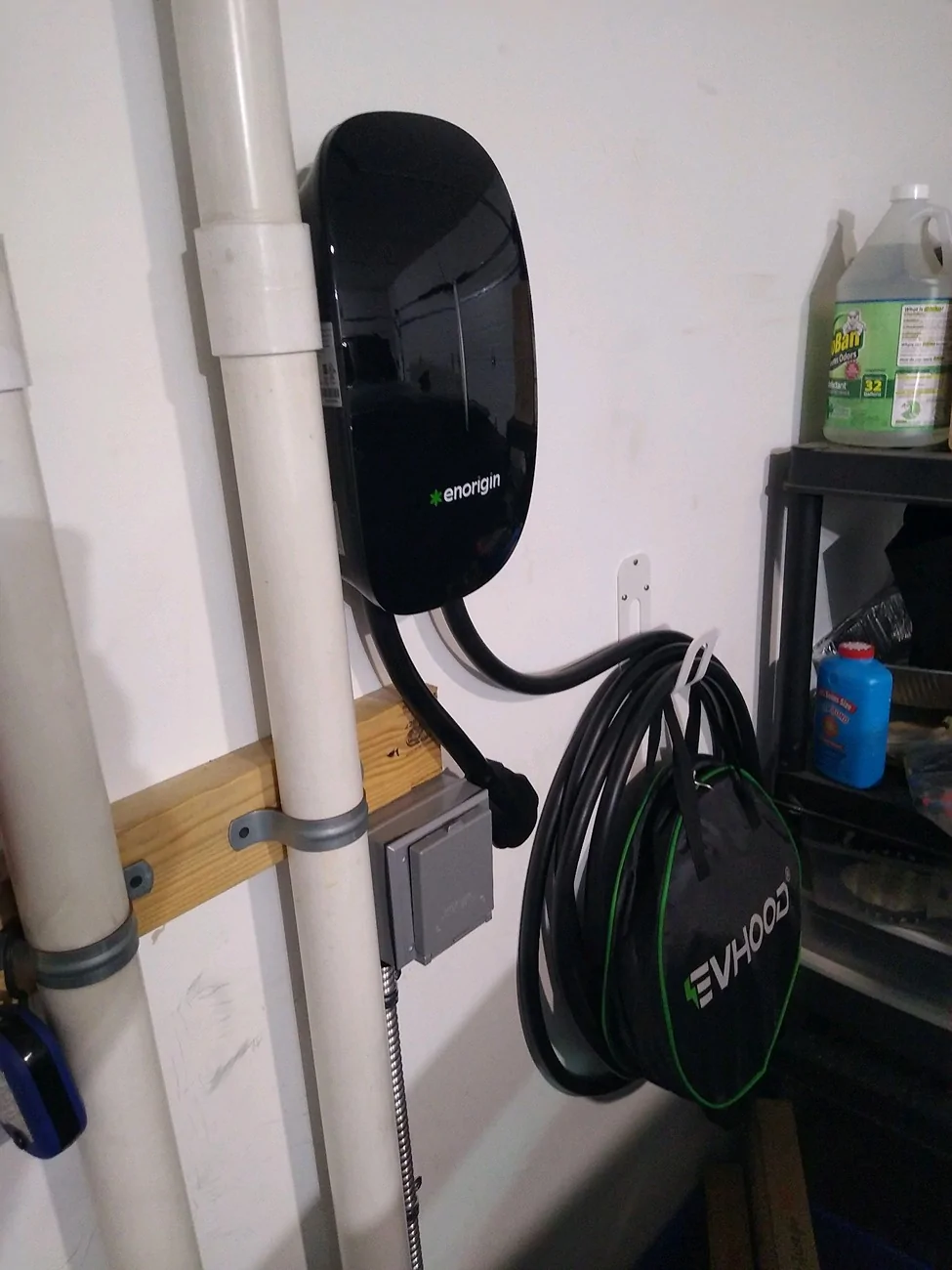
50 amp breaker, 52 ft of MC Southwire 6awg 90C rated, to a Hubble nema 14-50 outlet with a 2 gang metal outdoor rated box with extension ring and Dremel'd out cover... Use it with our dumb Enorogin, uL listed and actually tested, 40 amp, that comes overbuilt with 48amp 105C rated wire and 23' charging cable (that is not a typo, that's less than the max of 25' by NEC... I think the European company interpreted the add on of the 1 ft power lead, the unit and the handle as all part of that 25' NEC limit)... But I digress...

Warning, do not use an extension cord...

And I use that setup with my PORTABLE 🤫 Ford CSP set to 40 amps with a 30ft 6 awg 50 amp outdoor rated extension cord, clamped every 3-4 feet, not the NEC 6 feet min, and customized 6awg 50 amp outdoor plug.
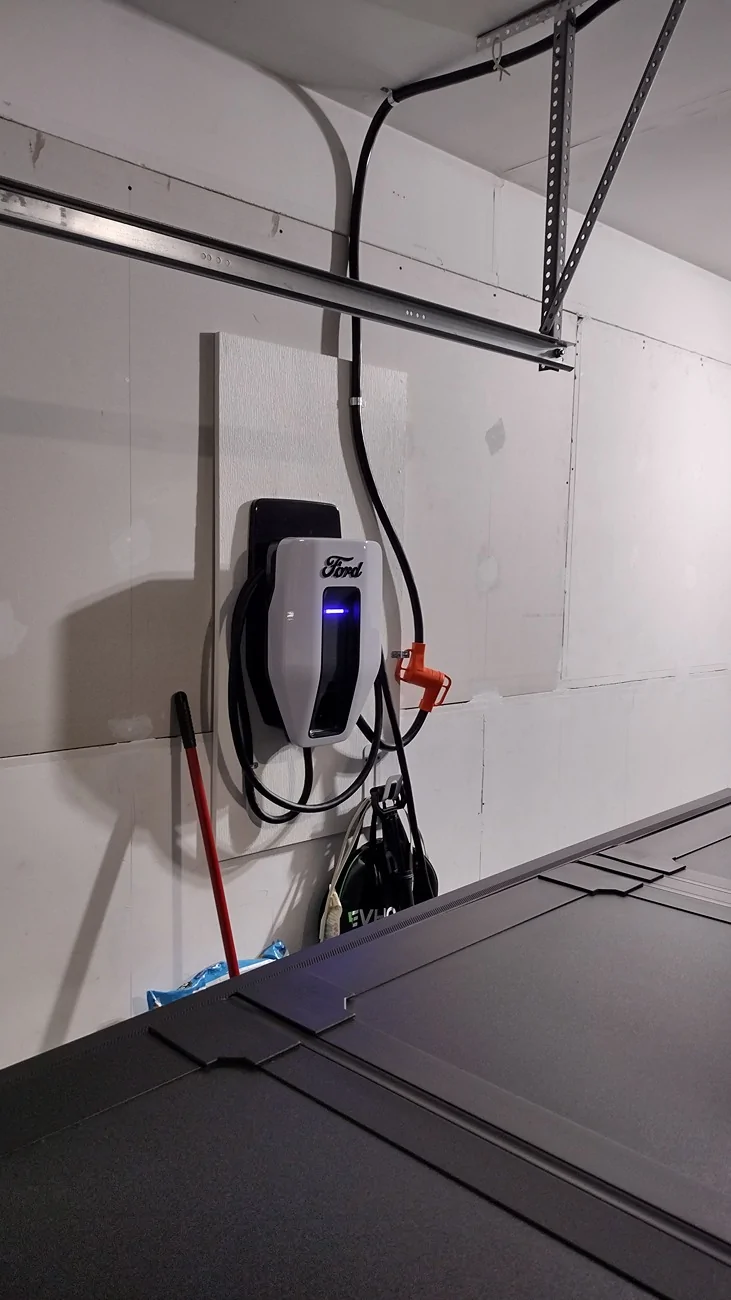
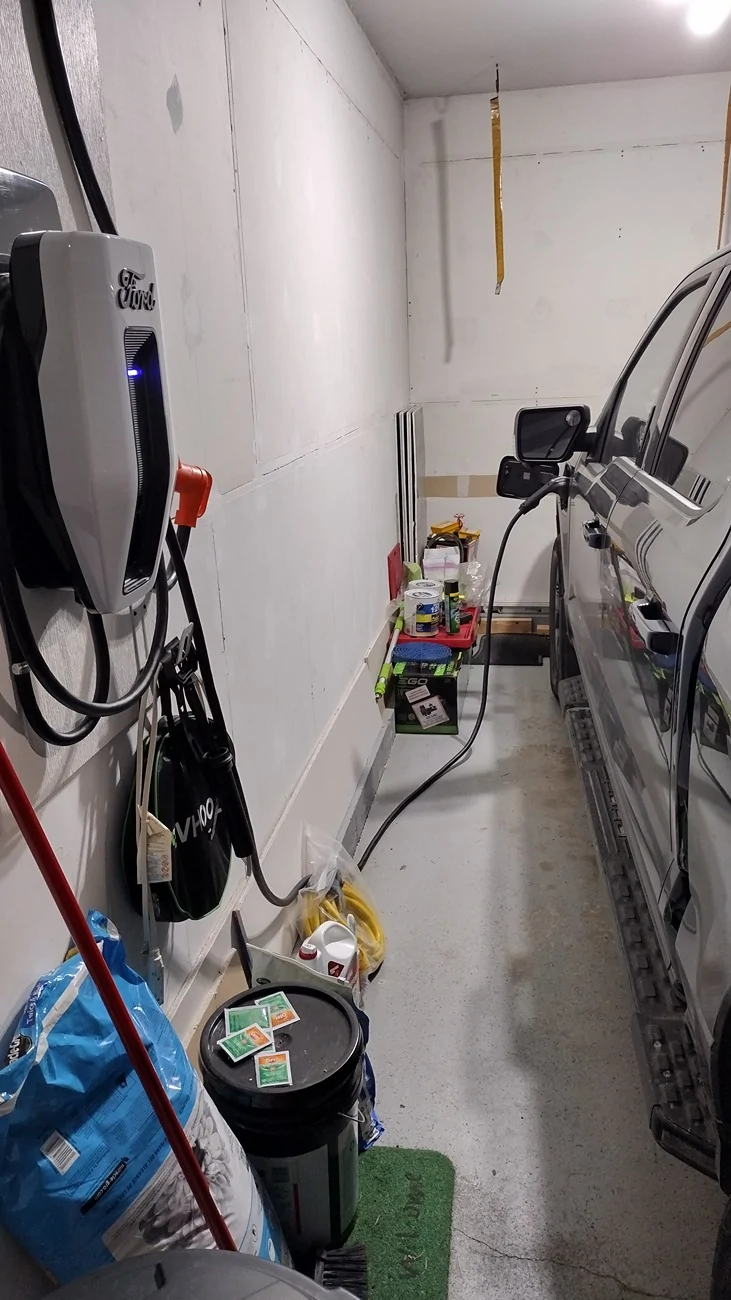
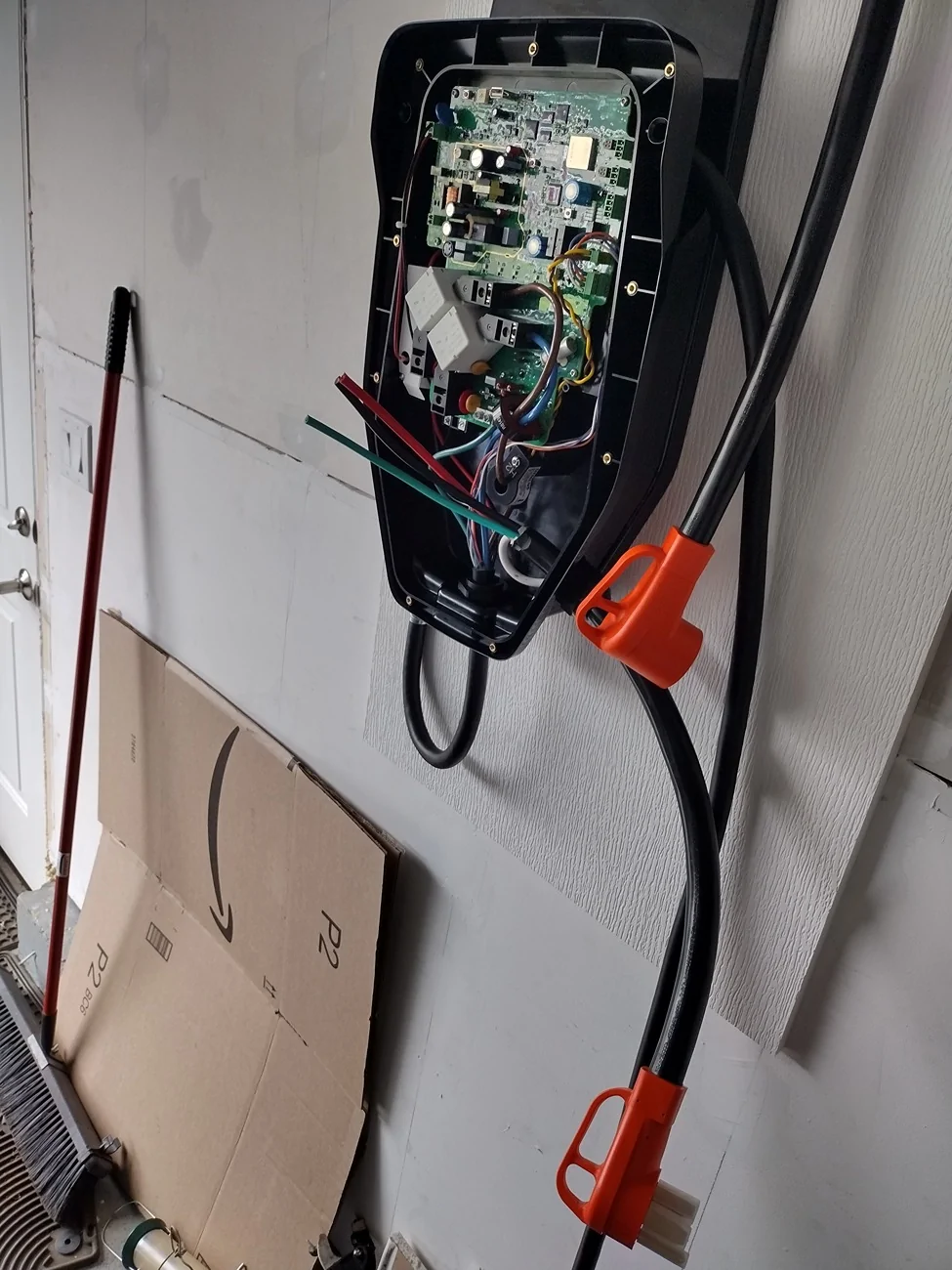
Warning, do not use an extension cord.

My setup is so over built and is barely warm to the touch when running for many hours... oh and it's in a fully rockwool insulated with mini split conditioned garage... Some folks like to precondition their EVs since that reside outside. I take my precondition approach differently...

That's right, don't use an extension cord... And ignore the PVC pipes, one is for kitchen vent air make up and one for the tankless hot water.

BTW, don't use an extension cord when using your pro power either.

I'm probably the only non responsible responsible one that doesn't like to leave their only used 2 times per week evse pluged in all the time and also once a year checks the breaker and outlet and verify the torque specs.

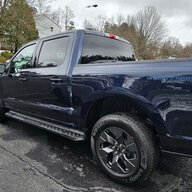
Ford F-150 Lightning Blowing breaker on home charger setup. IMG_20241207_150510415_HDR
Ford F-150 Lightning Blowing breaker on home charger setup. IMG_20241207_150525082_HDR
Ford F-150 Lightning Blowing breaker on home charger setup. IMG_20240504_161514985_HDR
Ford F-150 Lightning Blowing breaker on home charger setup. IMG_20241207_150426673_HDR
Ford F-150 Lightning Blowing breaker on home charger setup. IMG_20230624_160235864
Ford F-150 Lightning Blowing breaker on home charger setup. IMG_20230618_130338349


Ford F-150 Lightning Blowing breaker on home charger setup. 55716
 
Last edited:

chl

Well-known member
First Name
CHRIS
Joined
Dec 16, 2022
Threads
7
Messages
2,480
Reaction score
1,531
Location
alexandria virginia
Vehicles
2023 F-150 LIGHTNING, 2012 Nissan Leaf, 2015 Toyota Prius, 2000 HD 883 Sportster
Occupation
Patent Atty / Electrical Engineer
Curious why that set up?

Was your service panel out of room for another EVSE circuit?

Was it less expensive than running wire from the service panel to the garage and hard-wiring the FCSP, or putting another wired receptacle on a separate circuit on the other wall?

Did you need to have the FCSP 'portable' to use at another place? The wall mount is not exactly easy to undo, lots of screws etc. unless you made it more easily removable.

No offense, but it seems like you probably put a lot of time and effort and money into it, when hardwiring might have been just as easy/hard and cost just as much/little, if it was feasable.

Plugging and unplugging the EVSE's/cable is a possible issue, but if done with care one can minimize the wear and tear on the plug and receptacle.

When unplugged, the prongs of the plugs should probably be protected from the elements (if outdoors or in a damp location) and from dust/dirt, etc. with a cover - maybe you have covers on the plugs I could not really tell from your pics.

The extension cord might cause an inspection failure depending on what the local code says, although since it is permanently mounted and used to connect to a receptacle on the other wall, maybe it would pass - in the inspector's discretion perhaps?

The code requires the receptacles be protected by GFCI as well. It doesn't matter that the EVSE's have GFCI, it is to protect when something else might be plugged into the receptacle. Maybe the inspector would waive that, maybe not.

The FCSP is to be hard-wired and installed in accordance with all codes by a licensed electrician so making it plug-in and the use of the extension might void the Ford limited warranty, for what it is worth.

Anyway I am just pointing out the obvious potential problems with that setup.

I am not saying there is or isn't anything inherently dangerous about it, just that an inspector could have problems with it and reject the installation and require remediation.
 

I <3 My Lightning

Well-known member
Joined
Aug 29, 2024
Threads
4
Messages
208
Reaction score
282
Location
USA
Vehicles
'23 XLT ER 312A Oct. build date
@chl Great questions. Here's the long winded answer... Hopefully it can help others, but probably not.

When all of this was accomplished for this EV dedicated outlet, we were NEC 2020, which in NYS is/was based on NEC 2017. Supposedly NYS adopted NEC 2023 as of 12/31/25.

Part of this set up was timing, part is need vs. want, part is how I like to build things for flexibility and for future expansion, either for me now, the future me or for the next person. Part is due to the experience with the first EV... Now in year 3 and year two for the lightning.

We started with one ev... started with a portable adjustable L1/L2 charger to get by until I decided the set up and location for the first EVSE and if we wanted to go to 2 evs... First ev is capable of 48 amps... Started with L1, installed the proper 240v outlet and went L2 set at 16 amps, the boss could survive with that, but I found a nicely built basic uL tested 40 amp. This was the upgrade and more than enough... But the wiring is all set to convert to 48 amps hardwired if we wanted a tad faster charge and to go to 2 evs.... just a new breaker and a capable charger.

The 240v outlet position was so one could charge at any charge port position on a vehicle at either parking spot in the garage and if need be on the driveway, whilst keeping the evse protected in a conditioned environment... Fast forward a year and a half with the first ev and the 40 amp charger threw some weird fault. The company was great, and because of my skill set I could troubleshoot with them in real time. It was an anomaly with the programing as they were well versed in the EU market and at the time was expanding to the US. The best analogy is how ford products have have all those hidden turned off features. This unit was dumb without wifi or RFID swiper but it was still part of the board and the wifi glitched somehow. While I waited for the replacement unit I was glad to have the outlet as we were back to using the portable L1/L2 charging at 16 amps...

Now time and life passes on... Oh what's this? I now have a lightning that I have wanted and not really needed... I could easily charge in the driveway with the current set up but I didn't want to keep the baby out in the cold or have too play with the overhead garage door. The current set up did reach across the garage but to lay the cord over one vehicle and across the hood of the lightning just to barely make it to the charge port, is not the proper way, but it did work.

Because I purchased the ER it came with the CSP that could be utilized with 80 amp charging. While I waited for that to arrive I thought about the future and having the proper extension cords for out and about use and quick house back up needs via extension cords, what it would take for 3 awg for such a long run, and if I wanted to install the proper transfer switch for switching the neutrals... You know while in the service panel you might as well do this all at once and correctly. Add on top the garage remodeling project... And the deep dive and experience into EVSEs and how units that are 48 amp capable hardwired but come with some form of 240v plug and factory set at 40 amps. Think chargepoint and emporiums evses.

So long winded... as I plan for the arrival of the CSP, and knowing what I know about EVSEs, I viewed the CSP output adjustable capability as any other EVSE that comes with some sort of 240v plug but still could be hard wired. With all that in mind I purchased that 30 ft nema 14-50 cord mentioned above and a 3 ft version. I like to over due things so the layout/location of the CSP mounted on 3/4" PVC board was to mimic the flexibility of vehicle charging port locations, space for a close by dedicated shut off if I went to 3 awg, and as I remodel the garage the wall slat system will butt up against the PVC board... Now the diameter of the extension cord overly clamped is, you guessed it, the same diameter as the conduit needed to properly run the wires to set the CSP at 80 amps... So as I waited for the CSP to arrive I used that extension cord set up with the original L1/L2 charger set to 16 amps... The 30' cost $84.91 dollars at that time and the 3' was $35. I got lucky with the 30' price.

And yes I cap the plug ends after use, I do have panel space, and it was not time consuming or wasted time for any of this.

I sarcastically call it portable because any EVSE that has a plug attached can be used any where there is a proper outlet for it. Many uL listed and tested EVSE unit's use wall lockable but easily separated brackets. I could take the CSP with all those mounting lags and housing fasteners off that wall in under 15 minutes. I can take my other evse off it's mounted bracket plate locked in with 1 screw in a minute...
 
  • Like
Reactions: chl

chl

Well-known member
First Name
CHRIS
Joined
Dec 16, 2022
Threads
7
Messages
2,480
Reaction score
1,531
Location
alexandria virginia
Vehicles
2023 F-150 LIGHTNING, 2012 Nissan Leaf, 2015 Toyota Prius, 2000 HD 883 Sportster
Occupation
Patent Atty / Electrical Engineer
@chl Great questions. Here's the long winded answer... Hopefully it can help others, but probably not.

When all of this was accomplished for this EV dedicated outlet, we were NEC 2020, which in NYS is/was based on NEC 2017. Supposedly NYS adopted NEC 2023 as of 12/31/25.

Part of this set up was timing, part is need vs. want, part is how I like to build things for flexibility and for future expansion, either for me now, the future me or for the next person. Part is due to the experience with the first EV... Now in year 3 and year two for the lightning.

We started with one ev... started with a portable adjustable L1/L2 charger to get by until I decided the set up and location for the first EVSE and if we wanted to go to 2 evs... First ev is capable of 48 amps... Started with L1, installed the proper 240v outlet and went L2 set at 16 amps, the boss could survive with that, but I found a nicely built basic uL tested 40 amp. This was the upgrade and more than enough... But the wiring is all set to convert to 48 amps hardwired if we wanted a tad faster charge and to go to 2 evs.... just a new breaker and a capable charger.

The 240v outlet position was so one could charge at any charge port position on a vehicle at either parking spot in the garage and if need be on the driveway, whilst keeping the evse protected in a conditioned environment... Fast forward a year and a half with the first ev and the 40 amp charger threw some weird fault. The company was great, and because of my skill set I could troubleshoot with them in real time. It was an anomaly with the programing as they were well versed in the EU market and at the time was expanding to the US. The best analogy is how ford products have have all those hidden turned off features. This unit was dumb without wifi or RFID swiper but it was still part of the board and the wifi glitched somehow. While I waited for the replacement unit I was glad to have the outlet as we were back to using the portable L1/L2 charging at 16 amps...

Now time and life passes on... Oh what's this? I now have a lightning that I have wanted and not really needed... I could easily charge in the driveway with the current set up but I didn't want to keep the baby out in the cold or have too play with the overhead garage door. The current set up did reach across the garage but to lay the cord over one vehicle and across the hood of the lightning just to barely make it to the charge port, is not the proper way, but it did work.

Because I purchased the ER it came with the CSP that could be utilized with 80 amp charging. While I waited for that to arrive I thought about the future and having the proper extension cords for out and about use and quick house back up needs via extension cords, what it would take for 3 awg for such a long run, and if I wanted to install the proper transfer switch for switching the neutrals... You know while in the service panel you might as well do this all at once and correctly. Add on top the garage remodeling project... And the deep dive and experience into EVSEs and how units that are 48 amp capable hardwired but come with some form of 240v plug and factory set at 40 amps. Think chargepoint and emporiums evses.

So long winded... as I plan for the arrival of the CSP, and knowing what I know about EVSEs, I viewed the CSP output adjustable capability as any other EVSE that comes with some sort of 240v plug but still could be hard wired. With all that in mind I purchased that 30 ft nema 14-50 cord mentioned above and a 3 ft version. I like to over due things so the layout/location of the CSP mounted on 3/4" PVC board was to mimic the flexibility of vehicle charging port locations, space for a close by dedicated shut off if I went to 3 awg, and as I remodel the garage the wall slat system will butt up against the PVC board... Now the diameter of the extension cord overly clamped is, you guessed it, the same diameter as the conduit needed to properly run the wires to set the CSP at 80 amps... So as I waited for the CSP to arrive I used that extension cord set up with the original L1/L2 charger set to 16 amps... The 30' cost $84.91 dollars at that time and the 3' was $35. I got lucky with the 30' price.

And yes I cap the plug ends after use, I do have panel space, and it was not time consuming or wasted time for any of this.

I sarcastically call it portable because any EVSE that has a plug attached can be used any where there is a proper outlet for it. Many uL listed and tested EVSE unit's use wall lockable but easily separated brackets. I could take the CSP with all those mounting lags and housing fasteners off that wall in under 15 minutes. I can take my other evse off it's mounted bracket plate locked in with 1 screw in a minute...
Thanks, about what I figured might have been the progression to date.

I got a 2012 Nissan Leaf in Dec 2011 and to prepare I had to upgrade my service panel as I was out of space in the old 100A panel - electrician did the upgrade to a 200A panel for $900.

My first EVSE was a GE Watt Station $1000 with a max current of 32A.

The Leaf could only charge at a max of 16A - the salesman thought Nssan was upgrading the charger for my model year to twice that, which was why I got the Watt Station, but nope, they put that off another year.

The Leaf came with a Panasonic mobile EVSE that could provide the 12A or 16A at 240V with an upgrade which I had done, so I could have just used that if I had known about the charger limitation.

The Watt Station came with a plug so it could be a portable 32A EVSE. It has a lockable mount and can be easily removed from the wall when unlocked.

I wired it up on a 40A circuit with a receptacle in the garage, not contemplating a need for more juice in 2011 - very few EVs at that time.

Then came the Lightning - been waiting for an EV pickup for years to replace my 2001 Ford Ranger. I waited for Lightning prices to settle down and for the upfront tax credit until Jan 2024. My budget was a Pro with an SR battery and the 9.6kW PPOB plus towing packages for under $50k.

Before I got the truck I thought I'll make things future proof and install an EVSE for 80A charging down the road so I started looking for a FCSP.

I thought having the FCSP would allow for the HIS down the road as well - before I read about all the headaches with it and the install cost! I went with a neutral switching transfer switch and the 30A bed outlet set up with no headaches or high cost..

There were a lot of FCSPs on sale new in the box at the time from people who got the ER but didn't need the FCSP that came with it, so I got one for $600 with shipping and taxes.

The FCSP was installed (hard-wired) next to the GE Watt Station where it would be in the garage but would reach the Lightning in the drive way. My garage is a converted from carport one-car garage with lots of stuff stored in there along the sides, so the Lightning was not going to fit inside it.

Since I still have the Leaf I can use both EVSEs as needed even at the same time (over night when the rates are low).

I had an incident where an electrician had installed electricity to a shed my wife uses for her pottery business but he didn't pull a permit or have an inspection done in 1998.

He miswired the panel switching one of the hots with the neutral - found out when a wall outlet fried my 120V drill...omg! When I checked the panel I found the error, hard to believe something so basic was screwed up.

Anyway, fast forward to 2018, a new neighbor doesn't like my wife's shed, so she calls the county to inspect it. Lo and behold, they find there was no permit for the electric install almost 20 years earlier.

The rules as written were a bit vague and as an atty I decided I'd argue the electrician determined an inspection was not required at the time and one reading of the State Building Code supports that, but they decided to take me to court and let a judge decide, so I just got a permit and had an inspection and the case was dismissed.

During that ordeal I got a chance to read all about the electrical code. That was good preparation for the FCSP install so I could be sure it was done correctly and to code and not end up with another problem down the road.

I am also an electrical engineer so it was mostly easy to understand the code.
Deciphering somethings was not always easy, some new jargon to learn, and a few apparent ambiguities.

So that experience was a big part of my motivation to make sure the install of the FCSP was hard-wired and in acordance with the all the local codes, even though I had a 40A circuit receptacle right there and could have dialed it down to 32A and wired a plug to it along the lines of what you did.

For better or worse, that sometimes gets me labelled as one of the so-called "code police" on-line. I am not an enforcer of the code of course, but when I about read something that could be dangerous or a code violation, well I feel like I should say something despite the flack I might get for it.

Selling one's home some day is also a lot easier without potential electrical code violations.


Top