

MADequipment
Well-known member
- Thread starter
- #16
I’ll hopefully report back in 9 days how the re-calibration goes. I only consume about 10% per day.
Sponsored
I have tried to recalibrate three tumes, ran down to 25% once and about 15% another time then charged to 100% immediatly after... I also was at about 70% and charged to 100% (Helene was heading to Fl) and so far no difference.. always 4% to almost 5% reported SOC to high... I will say that after the 2nd recal when I got down to below 39% it seemed to be off only 2 to 3% to high reporting in the truck... I havnt been that low again and will be charging up to 100% again for Milton that is more of a threat this to us than Helene.... just wish my HIS was working ?Exactly that is my concern too. We have already seen that situation play out as part of Out of Spec’s issues with the press fleet lighting that’s BMS got off and caused them to get a tow when they we around d 5% dSOC.
As it just started I am sure it is a bug or us needing to calibrate like Teslas have to keep the BMS balanced. I have faith @Ford Motor Company is aware or will be aware and have a solution
<sigh> Batteries are not gas tanks. Let me repeat that: BATTERIES ARE NOT GAS TANKS. In essence, they are quantum devices. There is NO direct way to know with certainty their exact state of charge; the display on the dash (or communicated to the Ford Pass app) is the truck's best estimation of the charge level based voltage and other metrics, run through an algorithm or two. Maybe one day there will be a better way to calculate the SOC, but for now, it is simply a good guess. So, in short, your obsessing over these numbers is absolutely pointless.So I charged to 100% on my 2024 Lariat which reportedly has a usable capacity of 131kWh and supposedly 143 kWh of actual physical capacity. Did the software get glitchy and charge the entire capacity of the battery? My Chargepoint EVSE correlates with the Ford’s readings.
I respectfully disagree. It's an NMC battery and so the delta in voltage readings should be good enough to be within +/- 5%.<sigh> Batteries are not gas tanks. Let me repeat that: BATTERIES ARE NOT GAS TANKS. In essence, they are quantum devices. There is NO direct way to know with certainty their exact state of charge; the display on the dash (or communicated to the Ford Pass app) is the truck's best estimation of the charge level based voltage and other metrics, run through an algorithm or two. Maybe one day there will be a better way to calculate the SOC, but for now, it is simply a good guess. So, in short, your obsessing over these numbers is absolutely pointless.
Thank you for showing you have no idea what you are talking about. There is a way to determine the SOC within a tolerance. That appears to be the concern currently and the BMS is being less able to determine SOC.<sigh> Batteries are not gas tanks. Let me repeat that: BATTERIES ARE NOT GAS TANKS. In essence, they are quantum devices. There is NO direct way to know with certainty their exact state of charge; the display on the dash (or communicated to the Ford Pass app) is the truck's best estimation of the charge level based voltage and other metrics, run through an algorithm or two. Maybe one day there will be a better way to calculate the SOC, but for now, it is simply a good guess. So, in short, your obsessing over these numbers is absolutely pointless.

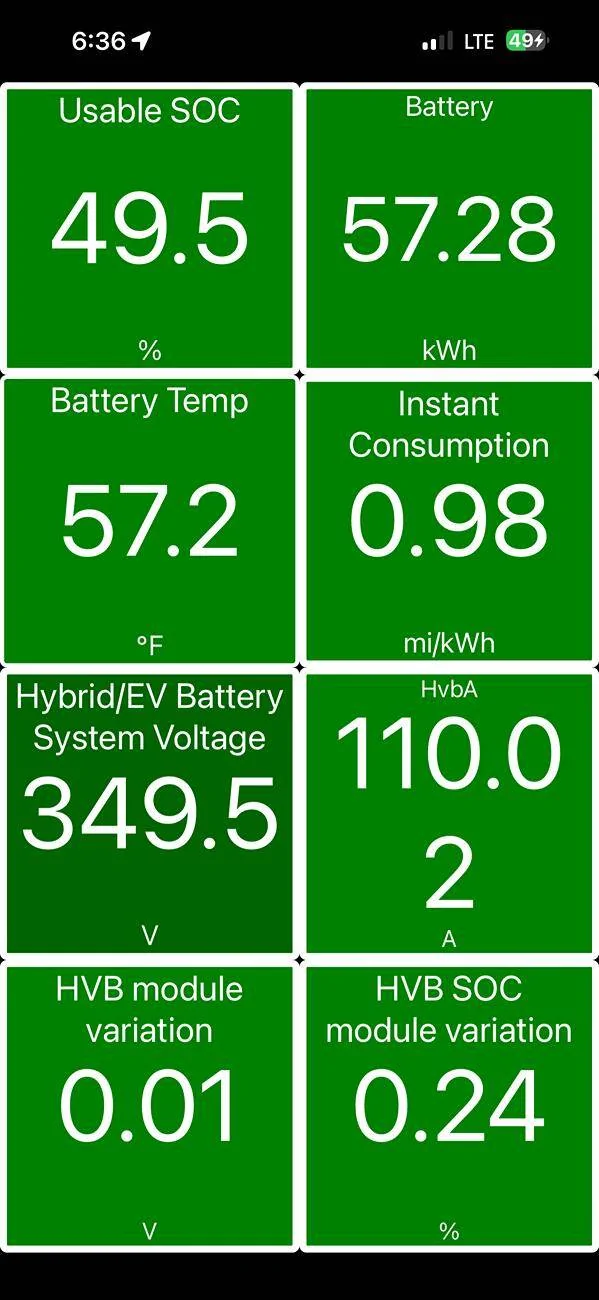
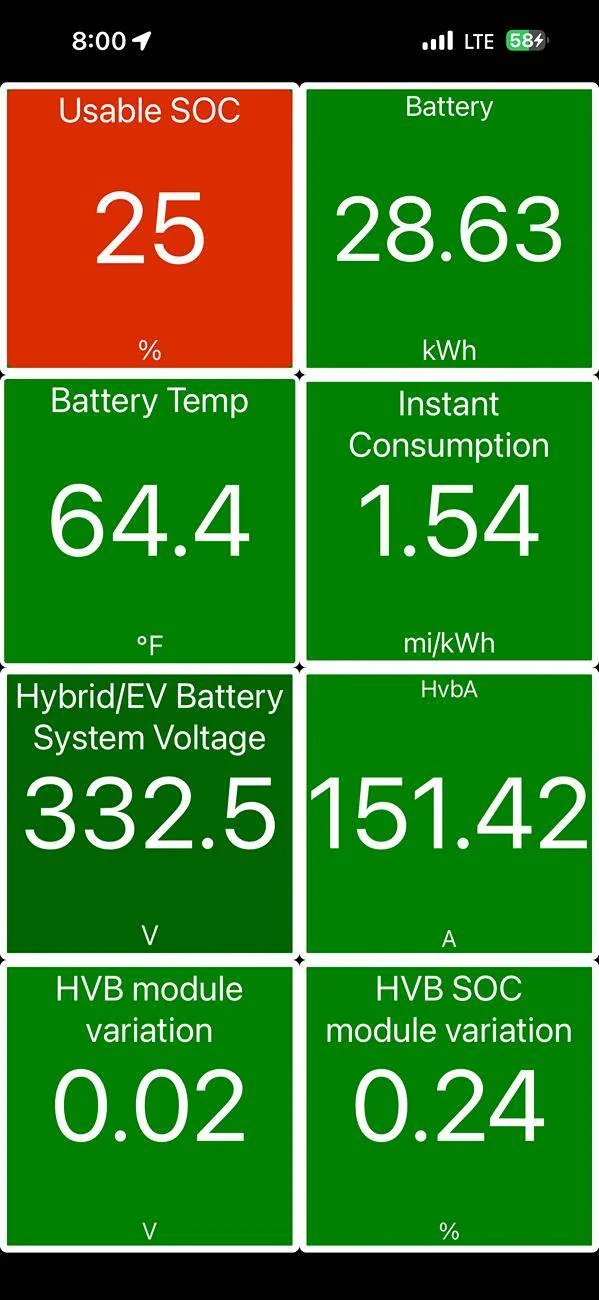
I have had direct experience overseeing battery engineering on contract to NASA, and for a specialized electric vehicle. I also have about 140,000 miles of experience driving electrified cars and trucks, including my 2023 Lightning.Unless you have experienced this or a Ford engineer for the Lightning, please don’t try to dismiss and invalid others true experiences through gaslighting.
Are you one of the same NASA engineers that faked the moon landings? ???I have had direct experience overseeing battery engineering on contract to NASA, and for a specialized electric vehicle. I also have about 140,000 miles of experience driving electrified cars and trucks, including my 2023 Lightning.
If you actually read what I wrote, what said is absolutely true: There is no dipstick or float meter that can DIRECTLY measure the amount of energy stored in a battery. There is no tech that currently can do that. Battery management systems (BMS) provide an estimation based on INDIRECT metrics such as voltage delta, and their absolute accuracy is subject to numerous variable effects, including temperature, discharge rate, battery age/cycles, specific chemistry, etc. While unlikely, some corrupted code in a control module might throw off the result in a particular vehicle.
In my judgment, the accuracy "problem" being discussed in this thread - which, given my daily reading of this forum, appears to be unique - is either a result at the edge of an explainable range of tolerance or is a one-off that will be hard to duplicate. Show me similar data from a statistically significant number of different Lightnings, and I will re-evaluate my position.


FYI, responses like this is why I no longer answer questions or post new information I uncover as we continue to test the SKOne E80.5 cell (used in all of our Lightnings).Are you one of the same NASA engineers that faked the moon landings? ???
Thank you for your valuable but indirect and unrelated job history.
Thank you for also gaslighting and trying to invalidate others experiences with the product of question with actual data. I welcome your data specifically to the subject matter at had with Ford’s software and the Lightning.
Thank Mickey, me and many on this forum value your hard work and knowledge. I appreciate you taking the time to comment as your direct experience was what I was referring to as you have alluded many times on here that our cells act “different”, and that data is invaluable.FYI, responses like this is why I no longer answer questions or post new information I uncover as we continue to test the SKOne E80.5 cell (used in all of our Lightnings).
It seems that those who can see some data from the CAN, with no knowledge of how the data is generated, know SO MUCH more then those of us who see actual data in ESS (Energy Storage Systems) and have learned over the years what it actually means.
I will say that I am not happy with the performance of the E80.5 in our testing, but I won't bother to elaborate on why because I'm sure someone on this forum will tell me why it doesn't matter. I will drop this one bread crumb for all those who know more about the cells then me based on anecdotal, indirect information; If you must store the cells at 45C, make sure you are at 80% SOC (actual capacity). This goes against most everything I have posted before, but there is actual data on why I say this.
You may be correct here. Marketing typically wins over science and accuracy ?One other factor: Ford has tweaked its algorithms for SOC and range several times in both the Lightning and Mach-E. I'm not convinced that these adjustments were made to improve accuracy, so much as to appease drivers/customers.

Here is a perfect example of why past EV battery experience, even of those with a great deal of first hand battery demo experience, must be careful applying it to new batteries without first seeing the results of long term extensive testing.If you must store the cells at 45C, make sure you are no lower than 80% SOC (actual capacity). This goes against most everything I have posted before, but there is actual data on why I say this.
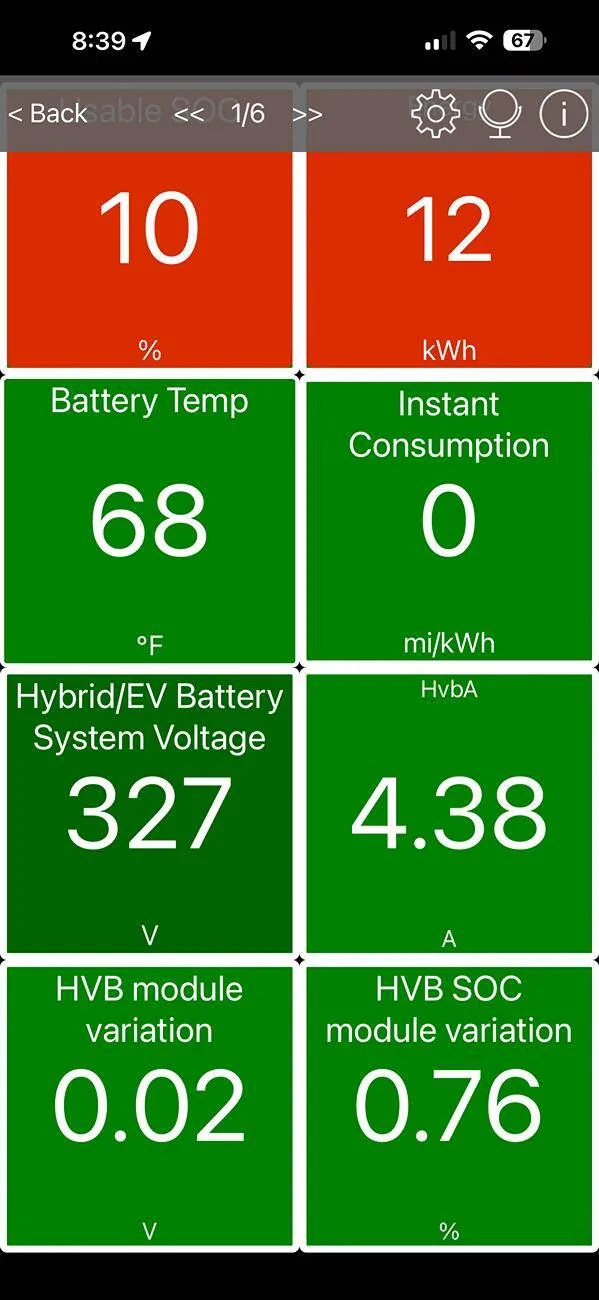
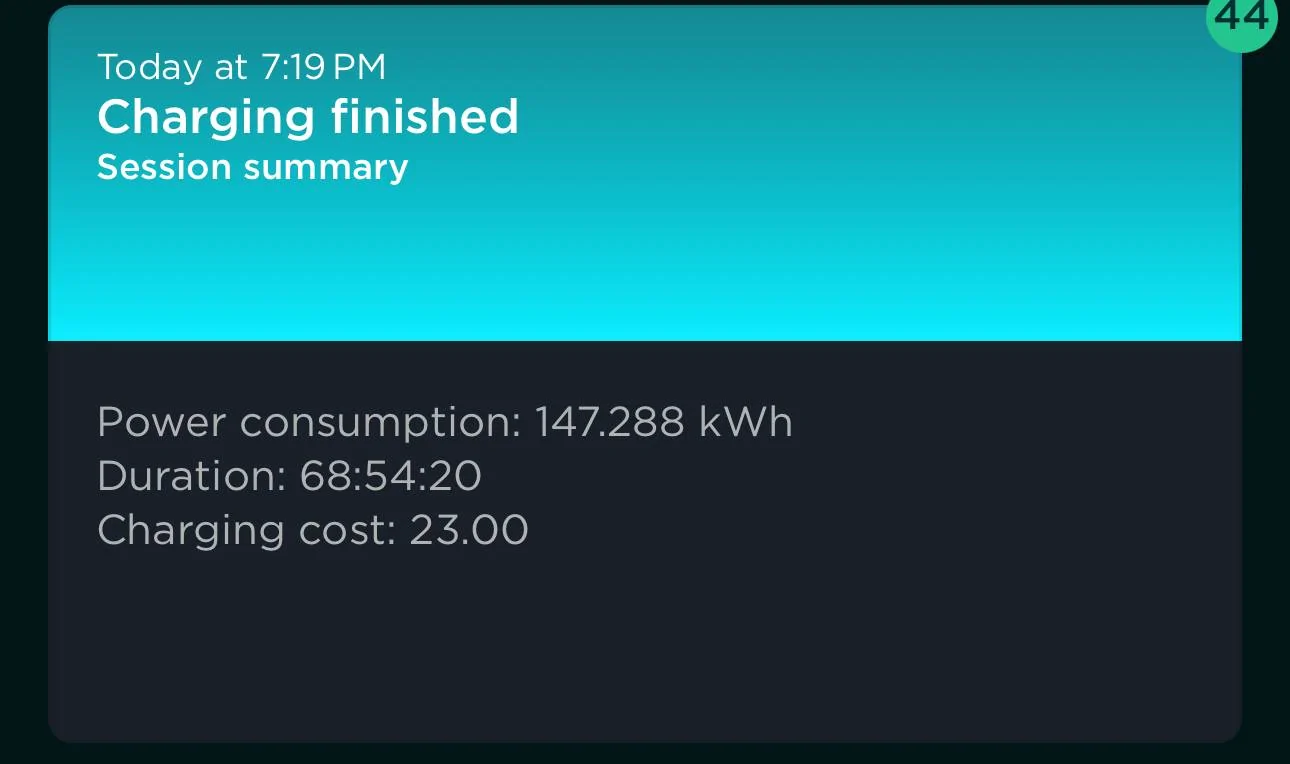
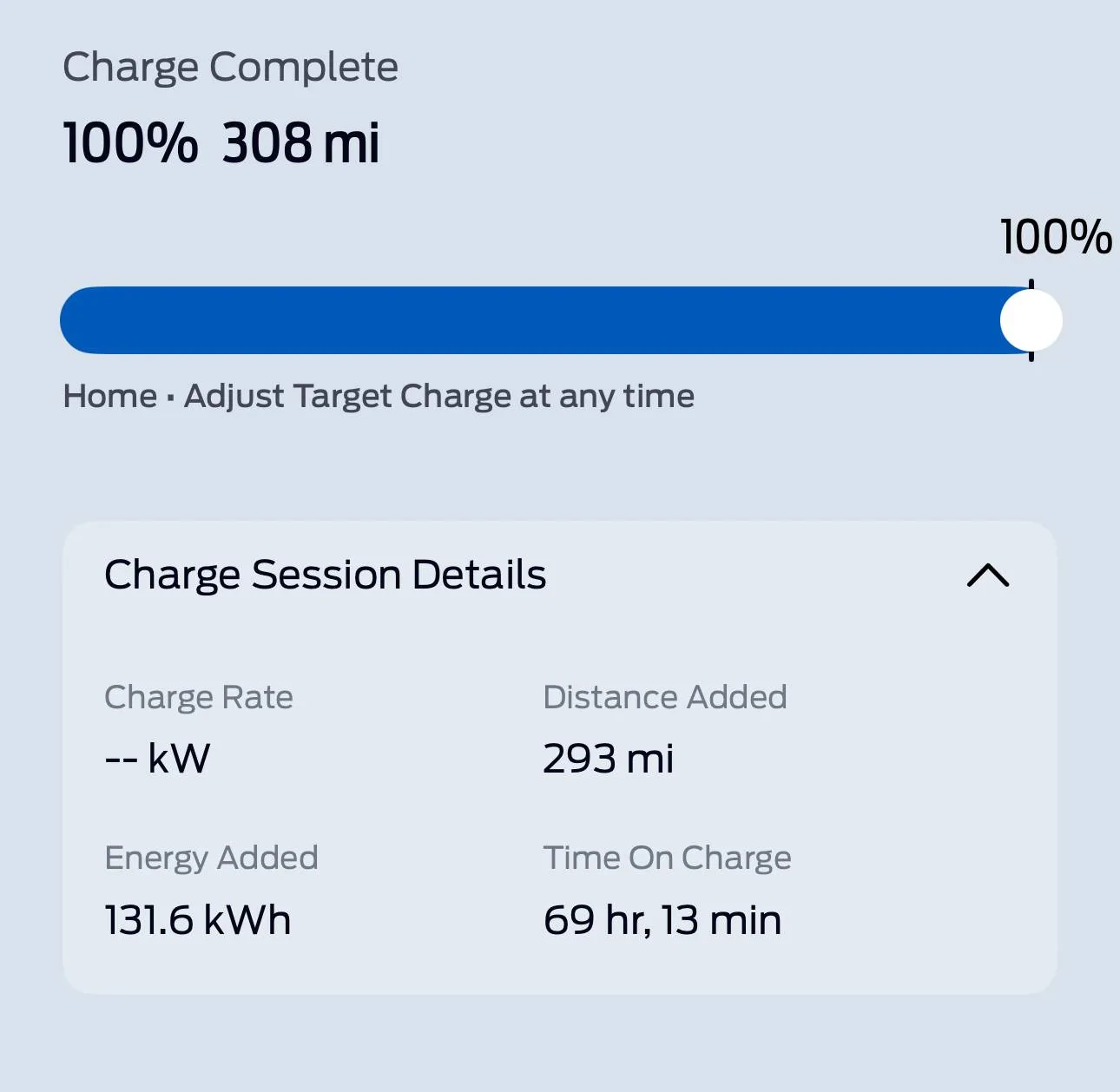
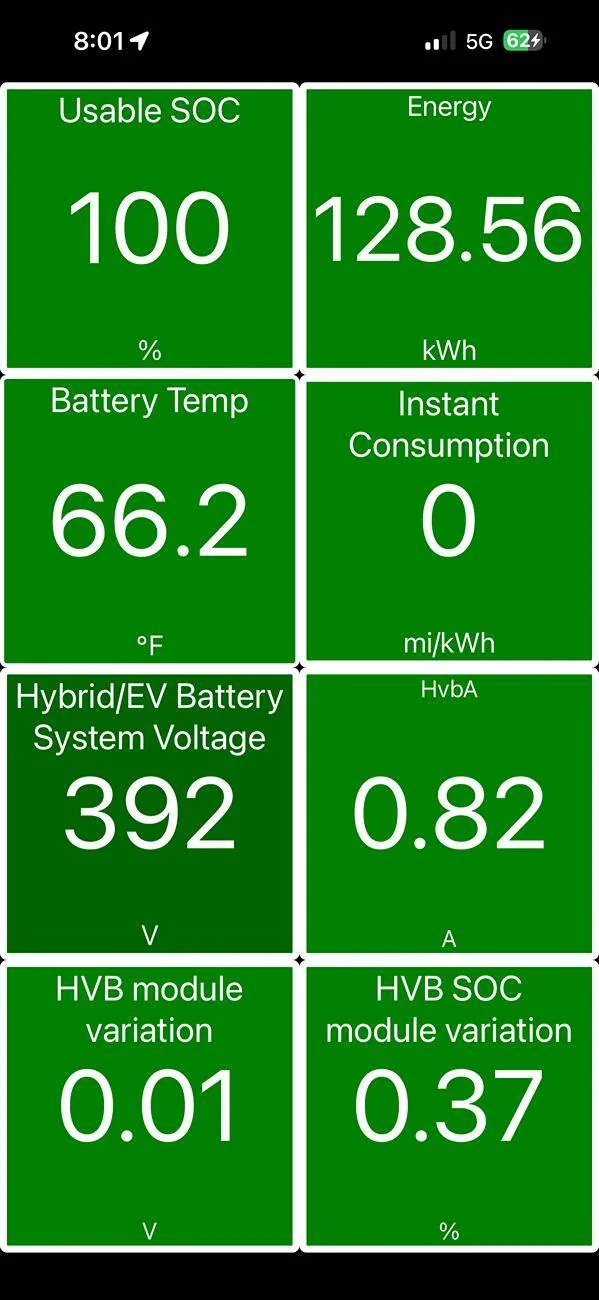

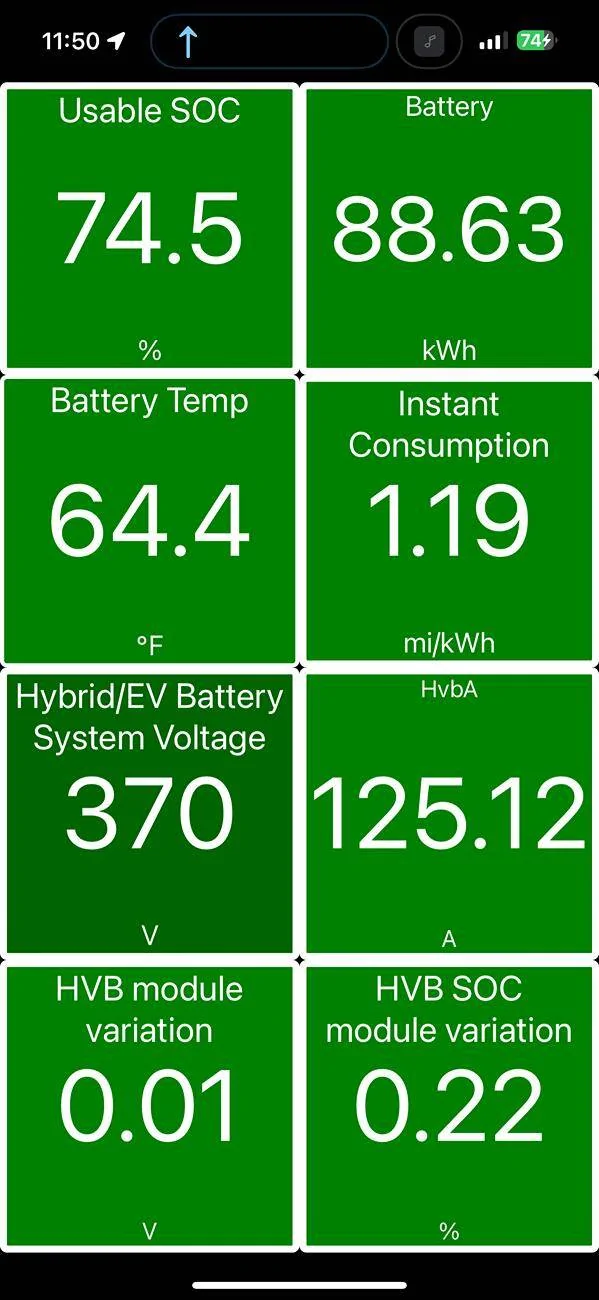
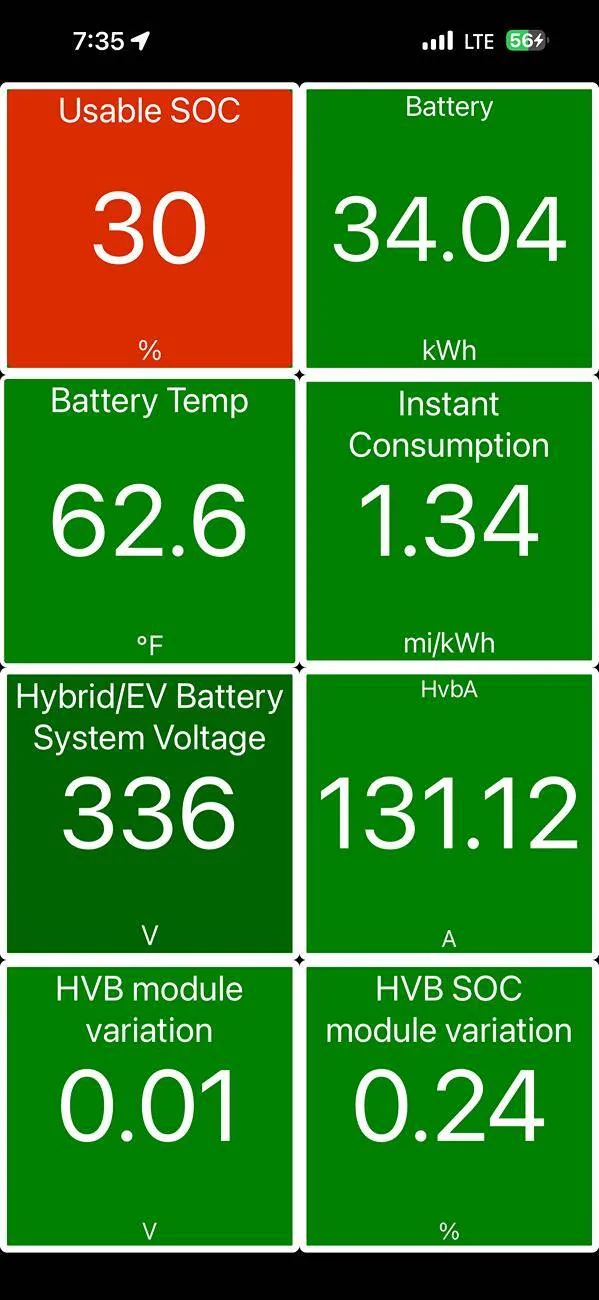
What was the apx exterior temps (driveway / garaged)?From Car Scanner the dSOC is showing 100% and shows only 128.56 kWh in the battery @ 66 deg F.


