

Sponsored

Another Powertrain / Reduced Power fault: Fix #31

OP
OP
Barrels

Barrels

Well-known member
First Name
Steve
Joined
Dec 21, 2022
Threads
3
Messages
54
Reaction score
34
Location
Washington
Vehicles
2018 F150 3.5L
Occupation
Retired
Update while I wait for the appointment. I obtained an OBDlink dongle and downloaded Forscan. I do not have any DTC codes but when I looked specifically at the BECM module my HEWARCHAR, the variation in state of charge between battery modules, is 9.26%. I am told the tolerance upper end is 3%. So some rebalancing is needed and that hopefully will fix it, or I need a new module. We will see if the dealer concurs. Now why did storage per the manual cause this?
Sponsored

 

El Duderino

Well-known member
Joined
Mar 25, 2025
Threads
4
Messages
263
Reaction score
250
Vehicles
2025 Flash Job 1
I have the same question, why did storage without the 12v battery connected cause large HVB module variation?

Subscribing for updates after dealer has a look. Hopefully it's resolved quickly for you.
 
  • Like
Reactions: chl

chl

Well-known member
First Name
CHRIS
Joined
Dec 16, 2022
Threads
9
Messages
3,456
Reaction score
2,109
Location
alexandria virginia
Vehicles
2023 F-150 LIGHTNING, 2012 Nissan Leaf, 2015 Toyota Prius, 2000 HD 883 Sportster
Occupation
Patent Atty / Electrical Engineer
Update while I wait for the appointment. I obtained an OBDlink dongle and downloaded Forscan. I do not have any DTC codes but when I looked specifically at the BECM module my HEWARCHAR, the variation in state of charge between battery modules, is 9.26%. I am told the tolerance upper end is 3%. So some rebalancing is needed and that hopefully will fix it, or I need a new module. We will see if the dealer concurs. Now why did storage per the manual cause this?
With that big a difference, probably/definitely bad cell(s) in a module = module replacement, alas.
 

chl

Well-known member
First Name
CHRIS
Joined
Dec 16, 2022
Threads
9
Messages
3,456
Reaction score
2,109
Location
alexandria virginia
Vehicles
2023 F-150 LIGHTNING, 2012 Nissan Leaf, 2015 Toyota Prius, 2000 HD 883 Sportster
Occupation
Patent Atty / Electrical Engineer
I have the same question, why did storage without the 12v battery connected cause large HVB module variation?

Subscribing for updates after dealer has a look. Hopefully it's resolved quickly for you.
Seems like that is just a coincidence - hard to see how they could be connected.

I suppose IF the ambient temperatures were below freezing where the truck was stored, and the 12v battery is disconnected, the truck can't protect the HV battery by warming it.

The OP seems to be in Washington state, and it happened in winter storage, so it is not hard to imagine an HVB temp below freezing may have been reached.

With all those error message the OP was seeing, my first suspicion was the 12v battery system has an issue, and when he charged it, most of them went away, but the power train issue stayed and charging issues, due to the HVB no doubt.

He must have be having both issues I'd say.

If it were me, I'd have left both of the batteries connected and on chargers in a cold climate in winter to reduce the risk of freezing, if in an unheated space.

The Ford manual says 50% HVB and 12v disconnect when storing more than 30 days which the OP did:
---
Battery Systems
We recommend the following actions for
your vehicle:
• When storing your vehicle for greater
than 30 days the state of charge
should be approximately 50%.
Additionally, we recommend
disconnecting the 12v battery which
will reduce system loads on the HV
battery.
---

BUT there is a temperature warning earlier in the manual which they left out of that storing section above:

---
Storage Temperature
Storing your vehicle in temperatures
between 32°F (0°C) and 113°F (45°C) is
the most beneficial range for the high
voltage battery.
At temperatures just above the freezing
point or lower, plug in your vehicle to
maintain battery performance and

maximize driving range.
...
When you park your vehicle for an
extended period of 30 days or more, we
recommend your battery be at an
approximately 50% state of charge.
---

So I suppose it is possible that charging when returning at below freezing temperatures damaged some cells in at least one module.

If that is the case, Ford should have been clearer in the manual about not charging when the battery temperature gets below 32F.
 
Last edited:

bmwhitetx

Well-known member
First Name
Bruce
Joined
May 21, 2021
Threads
48
Messages
3,136
Reaction score
4,502
Location
DFW-Texas
Vehicles
2022 F150 Lightning Lariat ER
Occupation
Retired engineer
Update while I wait for the appointment. I obtained an OBDlink dongle and downloaded Forscan. I do not have any DTC codes but when I looked specifically at the BECM module my HEWARCHAR, the variation in state of charge between battery modules, is 9.26%. I am told the tolerance upper end is 3%. So some rebalancing is needed and that hopefully will fix it, or I need a new module. We will see if the dealer concurs. Now why did storage per the manual cause this?
With that variation I fear it will require a new module. Both times I needed a module replaced, I had a high variation. I have documented it here. The dealer needs to know about the SSM that is mentioned in that thread since yours is not throwing a relevant DTC.

Since you have an OBD dongle, download the CarScanner app. In my post i mention the two parameters to look at. Besides module percent variation there is a module volt variation. The dealer should use FDRS to do a Battery Health test. It will flag a cell that exceeds 0.03V and the fix is to replace the entire module that contains that bad cell. My variation was 0.13V, four times the limit.

I’m not sure storage caused this as the main cause. These cells just go bad for some reason. Dozens of us (maybe hundred+) have been impacted. But the WSM does state the truck rebalances cells when left alone for 48 hours.
 
Last edited:

Sponsored

chl

Well-known member
First Name
CHRIS
Joined
Dec 16, 2022
Threads
9
Messages
3,456
Reaction score
2,109
Location
alexandria virginia
Vehicles
2023 F-150 LIGHTNING, 2012 Nissan Leaf, 2015 Toyota Prius, 2000 HD 883 Sportster
Occupation
Patent Atty / Electrical Engineer
With that variation I fear it will require a new module. Both times I needed a module replaced, I had a high variation. I have documented it here. The dealer needs to know about the SSM that is mentioned in that thread since yours is not throwing a relevant DTC.

Since you have an OBD dongle, download the CarScanner app. In my post i mention the two parameters to look at. Besides module percent variation there is a module volt variation. The dealer should use FDRS to do a Battery Health test. It will flag a cell that exceeds 0.03V and the fix is to replace the entire module that contains that bad cell. My variation was 0.12V, four times the limit.

I’m not sure storage caused this as the main cause. These cells just go bad for some reason. Dozens of us (maybe hundred+) have been impacted. But the WSM does state the truck rebalances cells when left alone for 48 hours.
Sadly, yes. I think any variation between modules that high is a bad indication.

It will be interesting to see how the OP's situation plays out.

I wonder how many battery modules have had to be replaced?
Only Ford knows I guess.

Interesting that the Workshop Manual says the truck will re-balance when left alone for 48 hours.
Where did you buy one, directly from Ford or elsewhere?

I believe I read somewhere that re-balancing in the Lightnings is (some variation of?) passive balancing and only occurs during charging - unless being intentionally re-balanced by a battery repair shop - but Ford has not revealed the details, as far as I know.

If it also does it when left alone 48 hours, that's good news I guess.

But if the 12v battery is disconnected as in the OP storage case, could cell balancing occur?
Does the truck need to be plugged in to an EVSE to do this re-balancing?

Seems like it would be a better idea to have things connected, 12v maintainer and EVSE, when in storage to keep the batteries healthy.

With a relatively large battery it can take many charge cycles to accomplish passive re-balancing depending on how bad the imbalance is.

Did Ford tell you how long re-balancing would take after your module was replaced?
I have read reports of them saying it can take several weeks I think.

Many unanswered questions - Ford should have a white paper about it somewhere.
 

bmwhitetx

Well-known member
First Name
Bruce
Joined
May 21, 2021
Threads
48
Messages
3,136
Reaction score
4,502
Location
DFW-Texas
Vehicles
2022 F150 Lightning Lariat ER
Occupation
Retired engineer
@chl, I have bought a 3-day subscription to PTS a few times. Gives you access to all the FDRS service logs from the dealer. Can see when they tested something, updated a module, did a battery test, etc, and the results of each step. You also get access to the WSM for all vehicles. I've saved off tons of pages as PDFs for reference later (no small feat).

I discussed the 48-hour rebalance tidbit in my HVB variation thread I linked above. Would definitely need 12V power.

The dealer has a module rebalance tool that brings the replacement module to the same level as the existing modules. My repair notes for the last module indicate they did a pre-balance and then normal balance on the new module.

AFAIK dealer has no way to balance at the cell level, just the module level. This is based on my reading of the WSM and I've been known to mis-intepret that. Zach and Jesse know much more. There was a guy in Europe that took his battery out and rebalanced an individual cell. Post is somewhere here. But dealer will not do that.
 

chl

Well-known member
First Name
CHRIS
Joined
Dec 16, 2022
Threads
9
Messages
3,456
Reaction score
2,109
Location
alexandria virginia
Vehicles
2023 F-150 LIGHTNING, 2012 Nissan Leaf, 2015 Toyota Prius, 2000 HD 883 Sportster
Occupation
Patent Atty / Electrical Engineer
@chl, I have bought a 3-day subscription to PTS a few times. Gives you access to all the FDRS service logs from the dealer. Can see when they tested something, updated a module, did a battery test, etc, and the results of each step. You also get access to the WSM for all vehicles. I've saved off tons of pages as PDFs for reference later (no small feat).

I discussed the 48-hour rebalance tidbit in my HVB variation thread I linked above. Would definitely need 12V power.

The dealer has a module rebalance tool that brings the replacement module to the same level as the existing modules. My repair notes for the last module indicate they did a pre-balance and then normal balance on the new module.

AFAIK dealer has no way to balance at the cell level, just the module level. This is based on my reading of the WSM and I've been known to mis-intepret that. Zach and Jesse know much more. There was a guy in Europe that took his battery out and rebalanced an individual cell. Post is somewhere here. But dealer will not do that.
Thanks!
I'll have to check out that HVB variation thread.

I figured the dealers should have a rebalance tool, but some reports seemed to indicate they didn't or they maybe didn't use it.

But I guess even with all that preparation, it still takes time for the truck BMS to get everything aligned among the old and new modules.

I've seen video of replacing individual cells in Leaf batteries, but they are much smaller batteries than the Lightning, maybe easier to do?

When the warranty is gone, might be a thing with the Lightnings too.

I suppose somewhere there might be a pile of removed modules waiting for someone to repair some day.
 

chl

Well-known member
First Name
CHRIS
Joined
Dec 16, 2022
Threads
9
Messages
3,456
Reaction score
2,109
Location
alexandria virginia
Vehicles
2023 F-150 LIGHTNING, 2012 Nissan Leaf, 2015 Toyota Prius, 2000 HD 883 Sportster
Occupation
Patent Atty / Electrical Engineer
@chl, I have bought a 3-day subscription to PTS a few times. Gives you access to all the FDRS service logs from the dealer. Can see when they tested something, updated a module, did a battery test, etc, and the results of each step. You also get access to the WSM for all vehicles. I've saved off tons of pages as PDFs for reference later (no small feat).

I discussed the 48-hour rebalance tidbit in my HVB variation thread I linked above. Would definitely need 12V power.

The dealer has a module rebalance tool that brings the replacement module to the same level as the existing modules. My repair notes for the last module indicate they did a pre-balance and then normal balance on the new module.

AFAIK dealer has no way to balance at the cell level, just the module level. This is based on my reading of the WSM and I've been known to mis-intepret that. Zach and Jesse know much more. There was a guy in Europe that took his battery out and rebalanced an individual cell. Post is somewhere here. But dealer will not do that.
OK found and read it, very strange at first....

Maybe they figured if the truck sits for 48 hours, then there is a risk of dendrite formation in the higher charged cells increasing the risk of a short and thermal runaway?

Interesting.
 

bmwhitetx

Well-known member
First Name
Bruce
Joined
May 21, 2021
Threads
48
Messages
3,136
Reaction score
4,502
Location
DFW-Texas
Vehicles
2022 F150 Lightning Lariat ER
Occupation
Retired engineer
With a relatively large battery it can take many charge cycles to accomplish passive re-balancing depending on how bad the imbalance is.

Did Ford tell you how long re-balancing would take after your module was replaced?
I have read reports of them saying it can take several weeks I think.
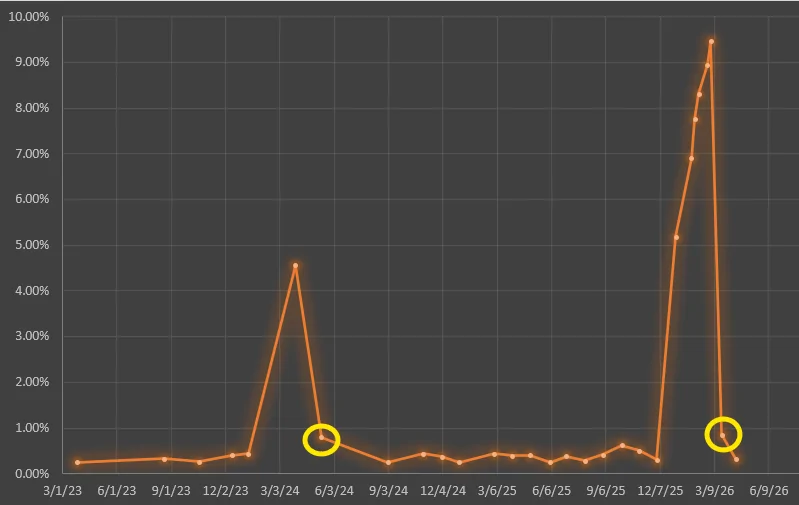
I can kinda answer this question. After both module replacements I noticed a slightly elevated module variation (0.8%) immediately afterwards that settled and stayed lower when measured later. I don't have the exact time frame since I didn't measure regularly, but there is a definite decrease.

If I have 3rd module fail, I'll do more frequent monitoring :facepalm: .
Ford F-150 Lightning Another Powertrain /  Reduced Power fault: Fix #31 1776212396080-51
 

Sponsored

chl

Well-known member
First Name
CHRIS
Joined
Dec 16, 2022
Threads
9
Messages
3,456
Reaction score
2,109
Location
alexandria virginia
Vehicles
2023 F-150 LIGHTNING, 2012 Nissan Leaf, 2015 Toyota Prius, 2000 HD 883 Sportster
Occupation
Patent Atty / Electrical Engineer
I can kinda answer this question. After both module replacements I noticed a slightly elevated module variation (0.8%) immediately afterwards that settled and stayed lower when measured later. I don't have the exact time frame since I didn't measure regularly, but there is a definite decrease.

If I have 3rd module fail, I'll do more frequent monitoring :facepalm: .
1776212396080-51.webp
Thanks...hope for no third module failure!
 

ctuan13

Well-known member
First Name
Chuck
Joined
Jul 31, 2022
Threads
33
Messages
747
Reaction score
958
Location
Pittsburgh, PA
Vehicles
1979 Continental, 2022 F150 Lightning, 03 Marauder, 2024 F350
Seems like that is just a coincidence - hard to see how they could be connected.

I suppose IF the ambient temperatures were below freezing where the truck was stored, and the 12v battery is disconnected, the truck can't protect the HV battery by warming it.

The OP seems to be in Washington state, and it happened in winter storage, so it is not hard to imagine an HVB temp below freezing may have been reached.

With all those error message the OP was seeing, my first suspicion was the 12v battery system has an issue, and when he charged it, most of them went away, but the power train issue stayed and charging issues, due to the HVB no doubt.

He must have be having both issues I'd say.

If it were me, I'd have left both of the batteries connected and on chargers in a cold climate in winter to reduce the risk of freezing, if in an unheated space.

The Ford manual says 50% HVB and 12v disconnect when storing more than 30 days which the OP did:
---
Battery Systems
We recommend the following actions for
your vehicle:
• When storing your vehicle for greater
than 30 days the state of charge
should be approximately 50%.
Additionally, we recommend
disconnecting the 12v battery which
will reduce system loads on the HV
battery.
---

BUT there is a temperature warning earlier in the manual which they left out of that storing section above:

---
Storage Temperature
Storing your vehicle in temperatures
between 32°F (0°C) and 113°F (45°C) is
the most beneficial range for the high
voltage battery.
At temperatures just above the freezing
point or lower, plug in your vehicle to
maintain battery performance and

maximize driving range.
...
When you park your vehicle for an
extended period of 30 days or more, we
recommend your battery be at an
approximately 50% state of charge.
---

So I suppose it is possible the below freezing temperatures damaged some cells in at least one module.

If that is the case, Ford should have been clearer in the manual.
I would've kept the 12V connected as well, but only because the BMS and other systems need wakeup power to keep things balanced, but NMC (Nickel Manganese Cobalt) lithium batteries as well as many other lithium chemistries, are not damaged by simply dropping below freezing.

They can even be safely discharged down to something like -20°F, but obviously with reduced energy potential. It's charging most lithium chemistries below freezing that will cause permanent damage with crystal formation in the electrolyte that damages the internal structure of the battery.

The only thing his storage at freezing Temps with the 12V disconnected could have caused is if the HV BMS requires 12V wakeup power to stay active, the modules could have become out of balance with slightly different self discharge rates.
 

chl

Well-known member
First Name
CHRIS
Joined
Dec 16, 2022
Threads
9
Messages
3,456
Reaction score
2,109
Location
alexandria virginia
Vehicles
2023 F-150 LIGHTNING, 2012 Nissan Leaf, 2015 Toyota Prius, 2000 HD 883 Sportster
Occupation
Patent Atty / Electrical Engineer
I would've kept the 12V connected as well, but only because the BMS and other systems need wakeup power to keep things balanced, but NMC (Nickel Manganese Cobalt) lithium batteries as well as many other lithium chemistries, are not damaged by simply dropping below freezing.

They can even be safely discharged down to something like -20°F, but obviously with reduced energy potential. It's charging most lithium chemistries below freezing that will cause permanent damage with crystal formation in the electrolyte that damages the internal structure of the battery.

The only thing his storage at freezing Temps with the 12V disconnected could have caused is if the HV BMS requires 12V wakeup power to stay active, the modules could have become out of balance with slightly different self discharge rates.
Agreed about the low temp for NMC, was quoting the manual about 'below freezing' and wondering if the OP returned and charged the battery when it was too cold.

That is, perhaps some damage occurred when charging at below freezing after the OP returned?

I clarified the post to reflect that now.

Thanks for pointing that out!
 
OP
OP
Barrels

Barrels

Well-known member
First Name
Steve
Joined
Dec 21, 2022
Threads
3
Messages
54
Reaction score
34
Location
Washington
Vehicles
2018 F150 3.5L
Occupation
Retired
I will try to shed light on your queries.....

The truck saw a low temp of 20 degrees outside during the winter. Pretty close to that inside the un-insulated garage.

It was revived April 5, daytime temp reached 66F, low was 47, average 56 at my home weather station.
 

chl

Well-known member
First Name
CHRIS
Joined
Dec 16, 2022
Threads
9
Messages
3,456
Reaction score
2,109
Location
alexandria virginia
Vehicles
2023 F-150 LIGHTNING, 2012 Nissan Leaf, 2015 Toyota Prius, 2000 HD 883 Sportster
Occupation
Patent Atty / Electrical Engineer
I will try to shed light on your queries.....

The truck saw a low temp of 20 degrees outside during the winter. Pretty close to that inside the un-insulated garage.

It was revived April 5, daytime temp reached 66F, low was 47, average 56 at my home weather station.
I would expect that the truck would condition the battery before trying to charge it and there by protect it from charging when below freezing, but perhaps something went wrong.

And if the ambient temps were above freezing when charging began the battery should not have been below freezing.

So, it is hard to know why cells failed if that is what happened.
Sponsored


Top