
21st Century Truck
Well-known member
- Thread starter
- #1
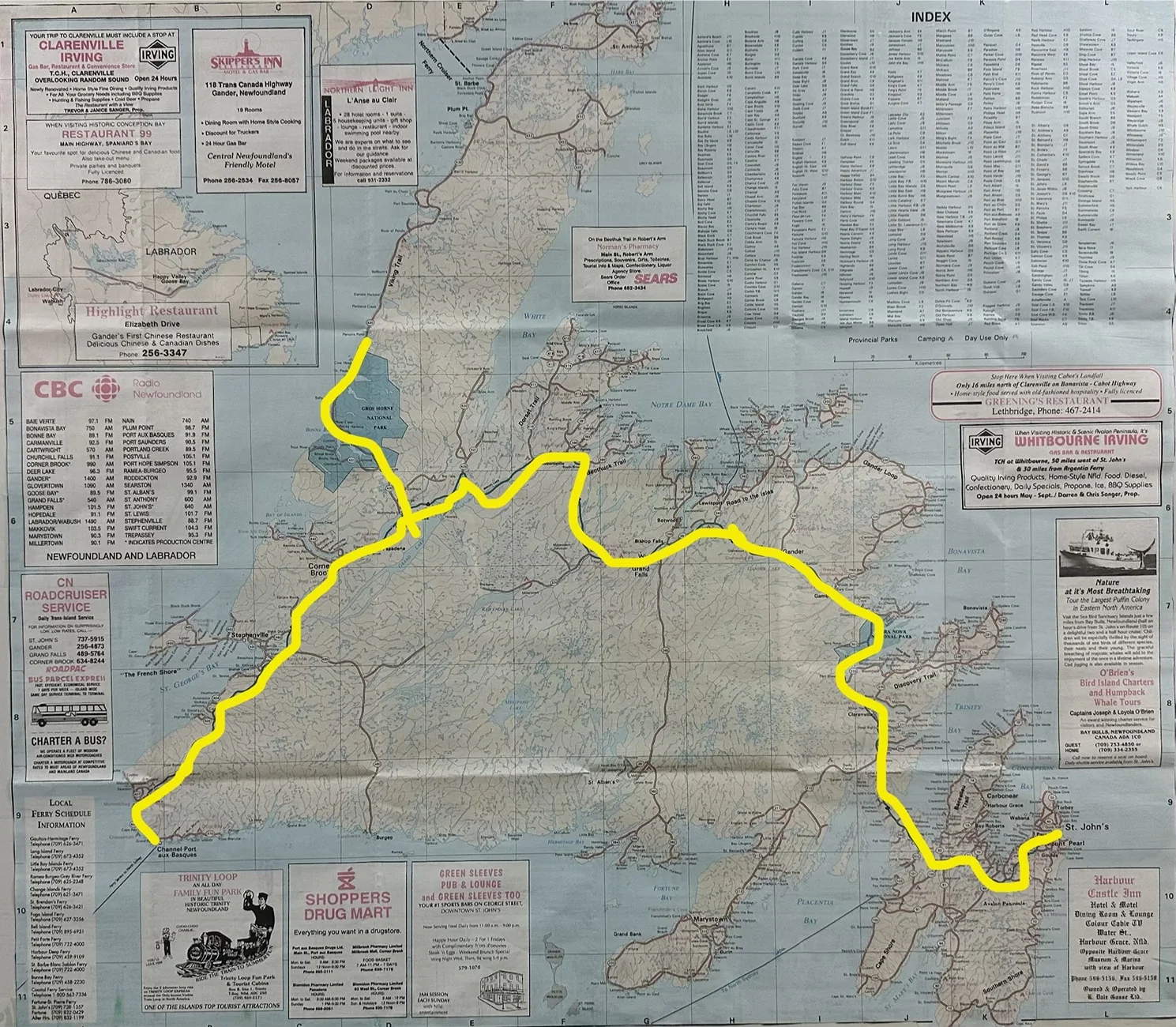
As teased last month, my report of a three-week F150 Lightning + teardrop camper Winter drive from Virginia to Newfoundland Canada and back.


Why: it was a 40 year anniversary of a tragedy back in December 1985 and I figured if not now, I'll likely never make it back up there.
DC Fast charging stations: yes Newfoundland does have them. They are, almost exclusively, ChargePoint DC Fast 50 kW stations, which for our Extended Range Lightning meant about 2.5 to 3 hours per fillup while on the road. The good parts: 1). almost always they are located by a Tim Horton's (Canadian eq. of decent fast food) or at a combo gas station / truck stop with a lounge for truckers, and 2). on the very wide empty spaces of Newfoundland they are pretty evenly spaced out every 50+ miles or so, so that one can pretty much get to one in a pinch. In the area of the capital of St. Johns on the extreme East coast, we found a new just-installed pair of 350 kW DC Fast stations, brand new and next to each other, branded NL Hydro which is the local hydroelectric power company. They both worked, for two fillups, although both had a malfunction each during our use. Over on the Canadian Atlantic Maritime mainland there were more and faster DC Fast choices, with three other networks - Noodoe, Charge Lab and Flo.
AC Level 2 charging stations: every ChargePoint station on the Rock (local name for Newfoundland) had the DC Fast 62 kW hookup as well as a Level 2 hookup. On occasion, enough hotels also had an occasional ChargePoint Level 2 charging point. This became important over time as we learned to live with an EV and camper in the harsh December climate on the Rock.
Who: I and also a 17-year old nephew from Europe who jumped at the chance to join me during his Holiday school break, and whose parents agreed to slightly extend his school holiday break. Those here who remember our Mach E trip across the USA back in 2023 as written up on the Mach E Forum, well, it's the same 14-year old boy but now a Big 17. I wanted to have a trusted traveling companion because, well, it's the near Arctic in December & January, and all that.
Tires: Nokian Hakkapelitta tires I picked up, slightly used, from a member here who has sold his Lightning. They are mounted on a spare set of OEM Lightning rims I picked up from another member here who has up-rimmed his wheels. These are great Winter tires, whether on snow, ice or in serious clear-road cold. We slipped only once, while descending a sharply banked downward sloping off-ramp from the main highway, in Deer Lake. The off-ramp was coated in thick ice under the layer of snow... it was way below freezing and evening, and the ice must have been trickling surface water earlier in the day. The Hakka tires stopped us in time.
Lightning malfunctions: none, zero, zip across the about 4.5 thousand miles and three weeks of this trip in the Canadian and New England cold, with an added assist from the polar vortex.
Temperatures we encountered on the Rock ranged from just about freezing (rare) to seriously below freezing, I think about 5 degrees F was the lowest.
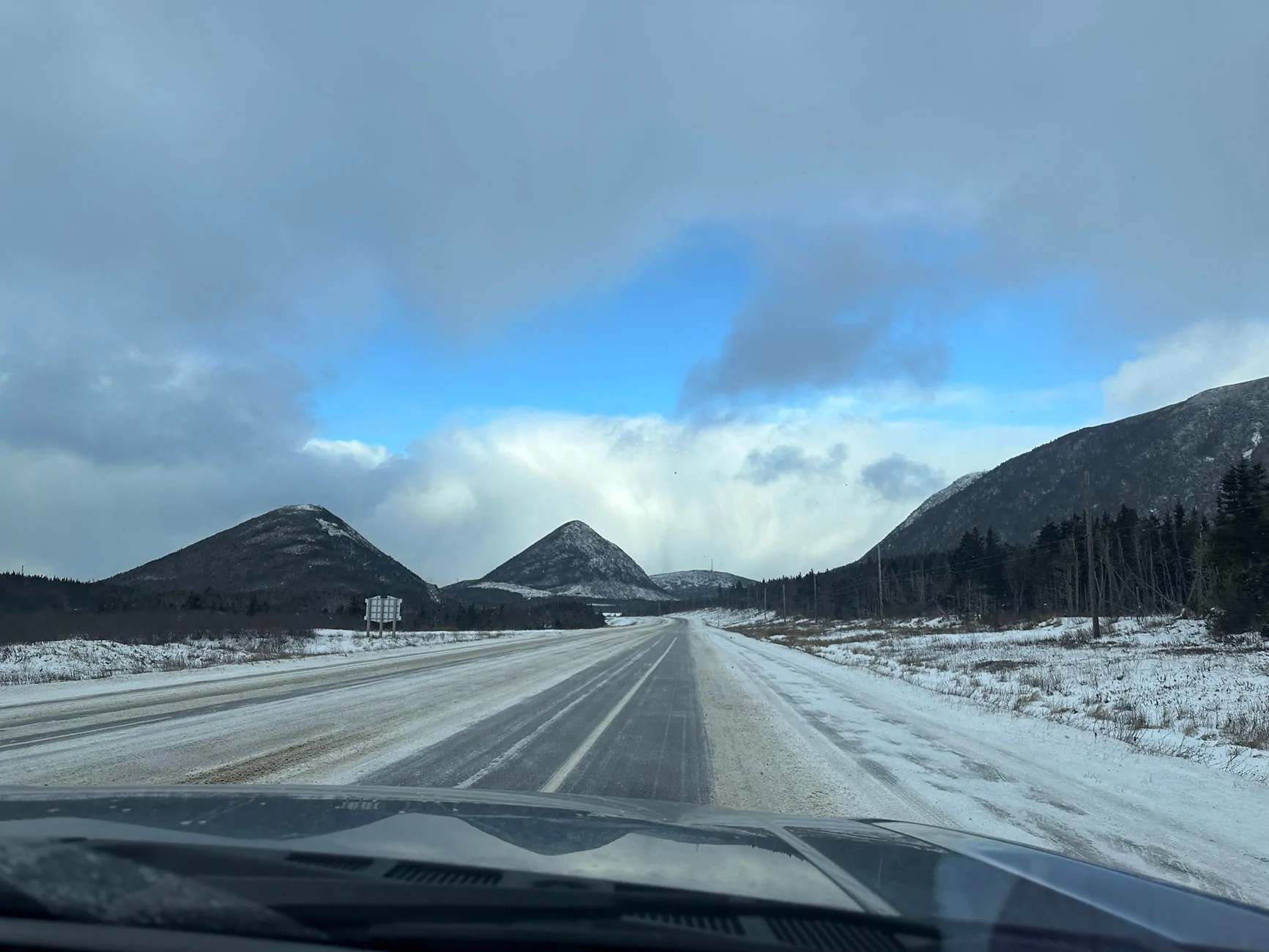
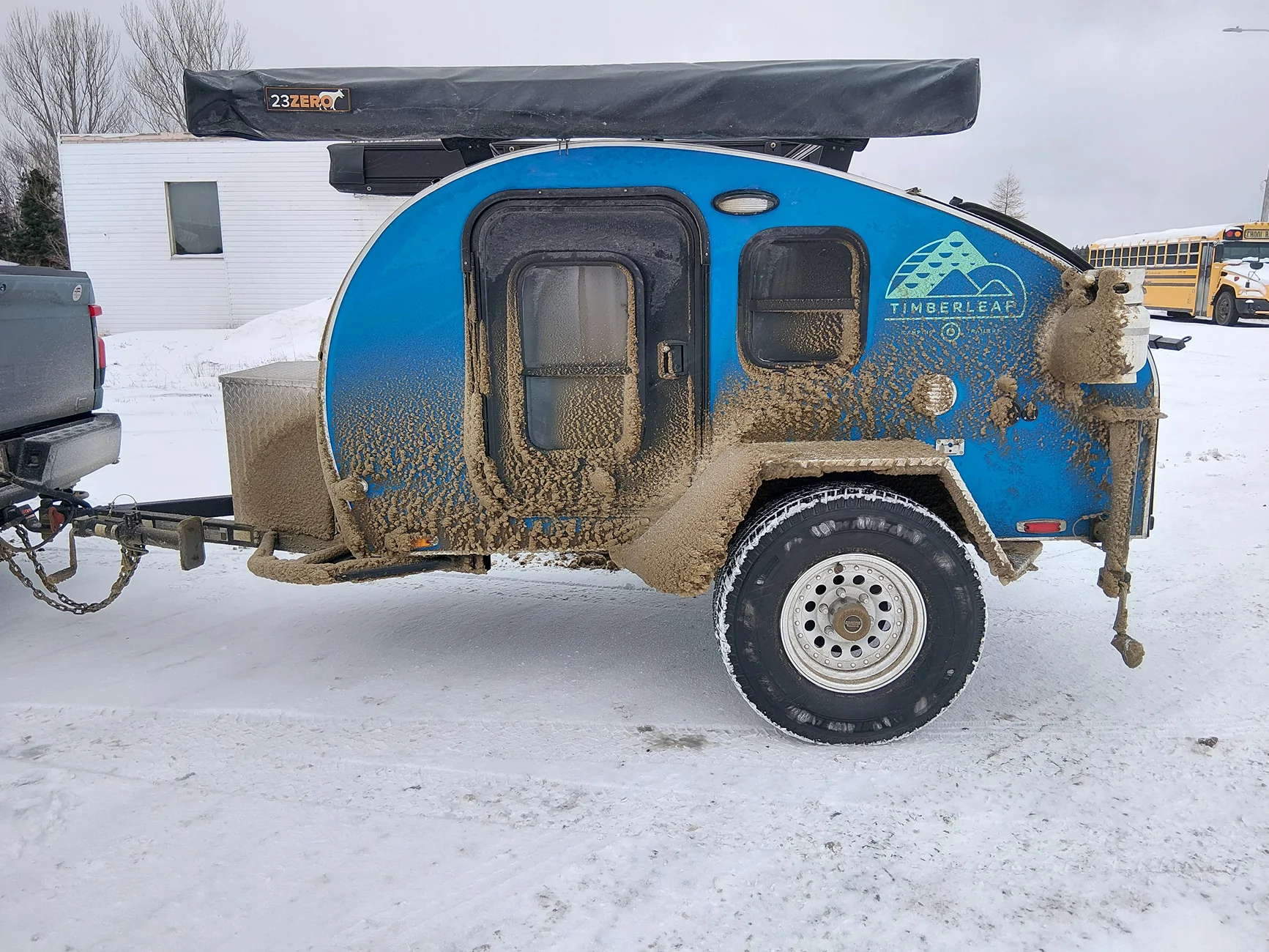
Weather: cold to really cold. Wind was strong enough to blow snow sideways for 12+ hours on the days when it blew. We had two blizzards while on the Rock. Newfoundlanders told us that we can experience all four seasons when on the Rock, and often all four in one day... this came true several times. Between the 1st and 2d blizzard while camping near St. Johns, we held a powwow and decided to quit camping and just use motels (off-season now of course). The teardrop camper was plenty warm in the cabin, but with the wind and the often-blowing snow it was simply impossible to cook food or even to boil a pot of coffee, and all our prepared awnings and shelter walls froze solid with ice and became nearly unmanageable. At that point, the teardrop became an emergency lifeboat, along for the ride.
More on L2 charging: with the long distances on the Rock the traction battery was often low at night. Although we did have camp space in an RV park near St. Johns, the place only provided Level 1 electricity. In the morning, the cold-soaked traction battery was often unable to receive DC Fast charge until it warmed up... even with the two 350kW DC Fast stations in St. Johns, the traction battery only allowed 73 - 76 kWh charging speeds. We discovered the secret was to always attempt to AC Level 2 charge overnight, and to leave the truck plugged in until our preset Departure Time warmed the truck up, even if we had to walk to the truck from our hotel on another property. On the FordPass we could both see the slow overnight charging until the truck was full, and then another spike in the morning to warm things up.
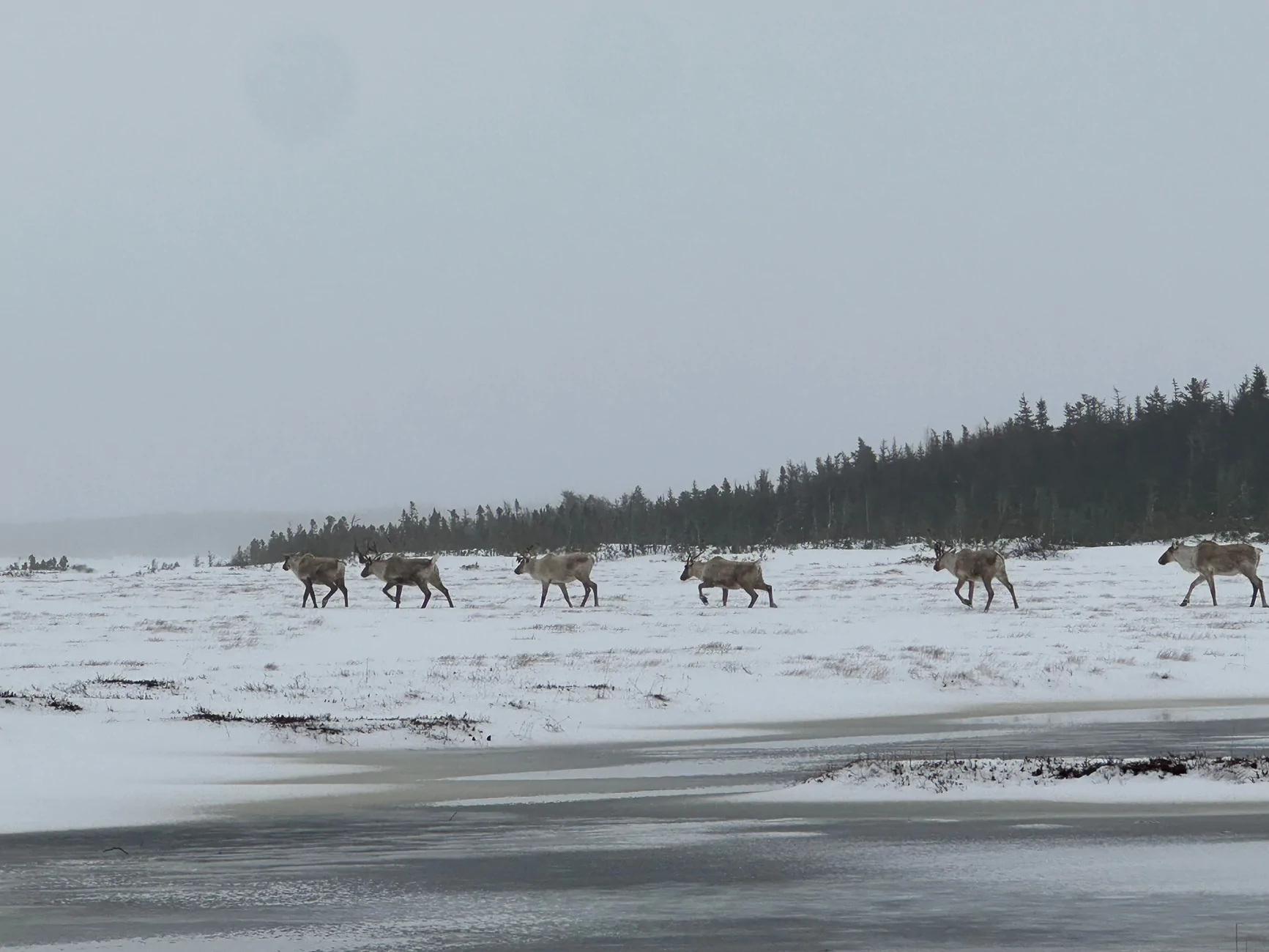
Animals: we saw three moose, all females. Two, in two separate places, were just standing right on the side of the road as we passed, right after dark the 1st evening on the Rock. One we saw dead two days later, killed by a blow to her head in the breakdown lane / snowbank lane by a snowplow the night before (1st blizzard). Once the locals explained to us that moose often use the road after dark, we just quit driving after dark. Those Newfoundland moose, even females, are some huge animals. The two live standing ones had their backs as high as my chest, while I was sitting in the F150's driver's seat. We also saw four separate herds of caribou, with nephew "sneaking up" on the 1st herd through the snowfield until they decided they had enough and moved on, with him at 20 feet away.
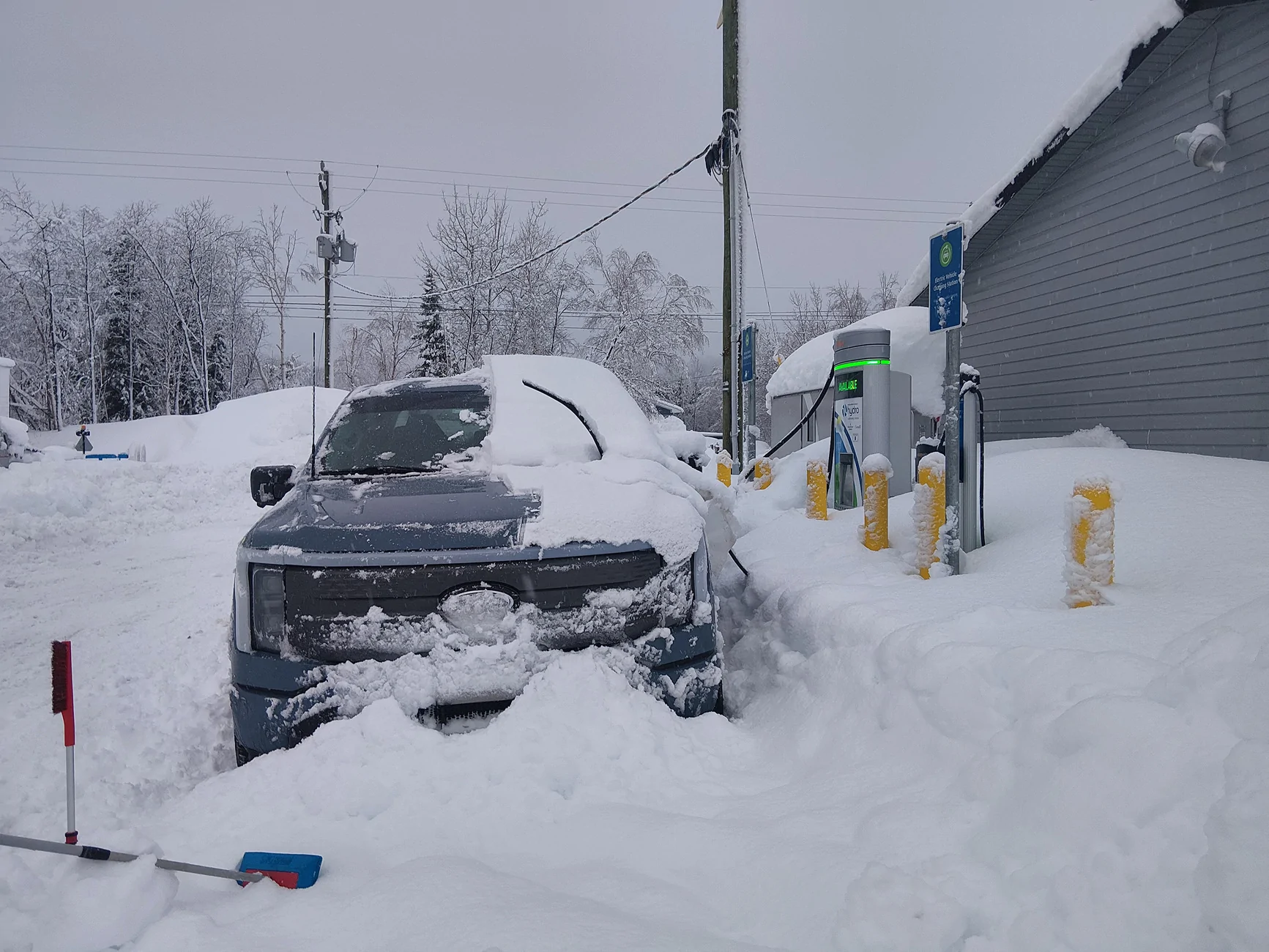
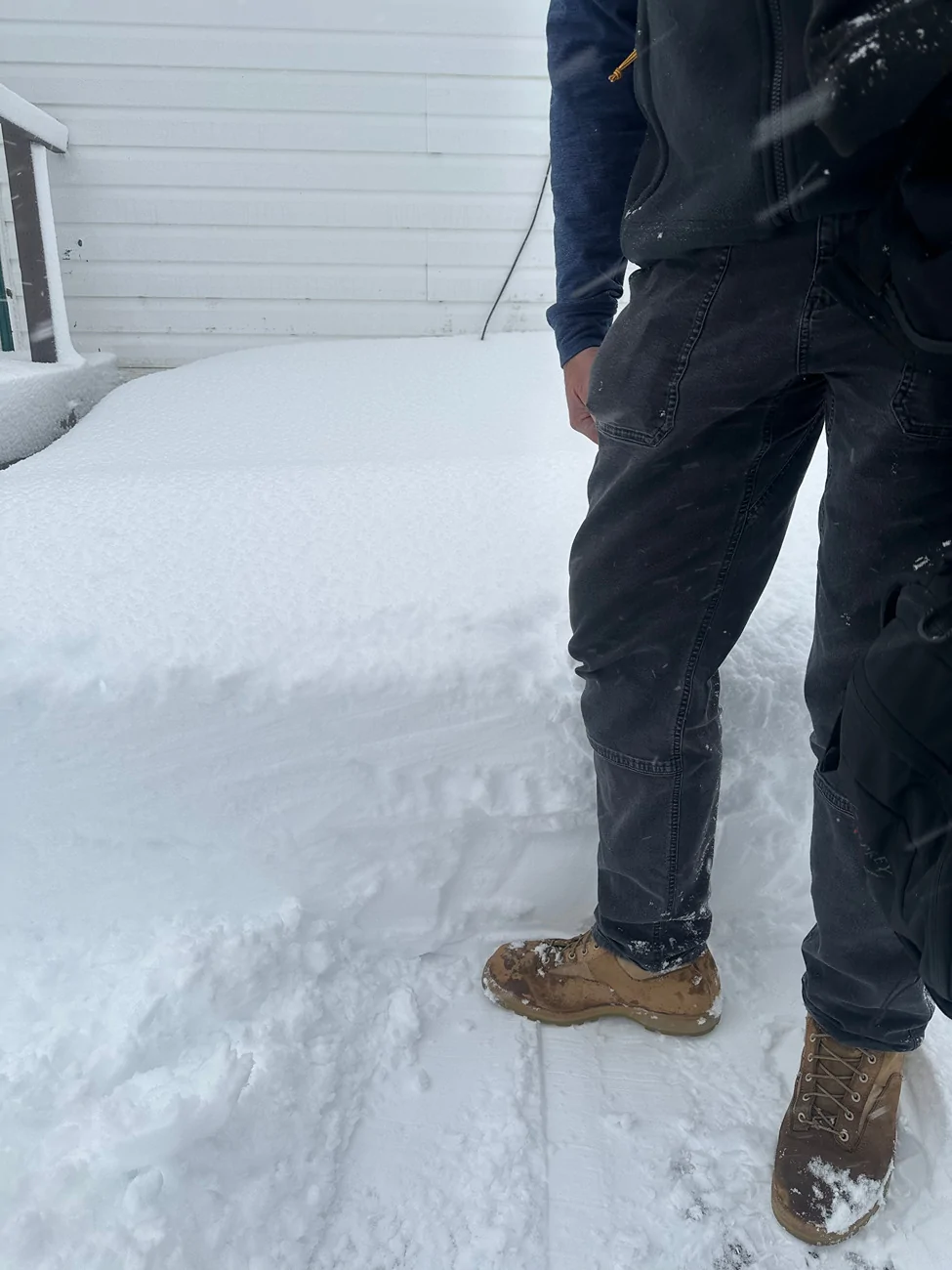
Snow: the roads were clear or being cleared during both blizzards, until the Canadian road service just gave up during the 2d, stronger blizzard when we were in the center of the island, heading back between Grand Falls and South Brook. We actually got the Lightning and teardrop stuck in South Brook, trying to pull up the the ChargePoint DC Fast charging station on the side of the local country store / motel where we had stayed at on our way East several days before. Going around the yard and building to get close to the ChargePoint station, the Lightning just bottomed out on the knee+ high powdery snow in the paved yard, around the corner from the ChargePoint.
While I do have a set of four RUD snow chains behind the rear seat, the roads had been clear enough that I hadn't used them. Once we were stuck high-bottomed, there was no real point messing with the chains. However, on a lark I had bought a set of two MaxTraxx Australian orange recovery bards last Fall, after I had buried the Lightning in deep-powder dune-buggy red dirt at the Sandy Hollow State Park in Utah last August with another nephew. I jammed both MaxTraxx boards in front and slightly under the front wheels, and (to the 17-year old nephew's amazement) the Lightning climbed slowly onto both boards and dug itself out, forward, at a slow speed in less than one minute. KUDOS to MaxTraxx!

It was evening and the owner / operators of the motel & country store who had remembered chatting with us on our way East several days before, in classic Canadian fashion persuaded us to not continue as the snow was falling fast and the sunset was an hour away, and then gave us a free motel room. Very Newfoundlander / Canadian classy! In the very early morning the next day, about 3 a.m. when the blizzard subsided, the owner got his powerful snow-clearing front loader stuck on the yard in front of the buildings, even though he had chains on his industrial front loader wheels. We all had a good laugh about it over morning coffee. Later that morning, three snowmobilers came by... they had hunting permits for moose and 1.5 days to fill them until New Year, so they were on a mission (after the store coffee). Just to pay-in-kind for the free room, we shoveled the entries of the four motel rooms off for the owners. Besides, it was great exercise after the long drives.
Efficiency: While up on the Rock and towing the teardrop, we consistently saw Lightning efficiency at 1.0 or 1.1 m/kW on the IPC, sometimes down to 0.9. Once into Maine and then Massachusetts where we stopped to see family, the efficiency climbed to 1.4 or 1.5. Of course, the further South we went, the higher it got afterwards.
Other EVs while on the Rock: we saw one, in St. Johns, at the new NL Hydro hypercharger station.
Electricity price: on the Rock, electricity is idiotically cheap. The source = hydro stations in Labrador next door. Consistently, whether on DC fast or AC level 2 charging, our price was about 1/2 (yes, that's "one half") the price we saw anywhere else in the Canadian Atlantic Maritime provinces. It cost about $16.+ Canadian to DC Fast charge the Lightning from low to 90%. On the other hand, once in Massachusetts... WOW! In Massachusetts, it cost $44.+ US to AC Level 2 charge overnight one block away from a family home we stayed with.
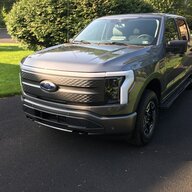
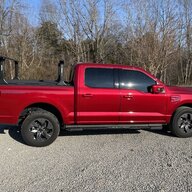
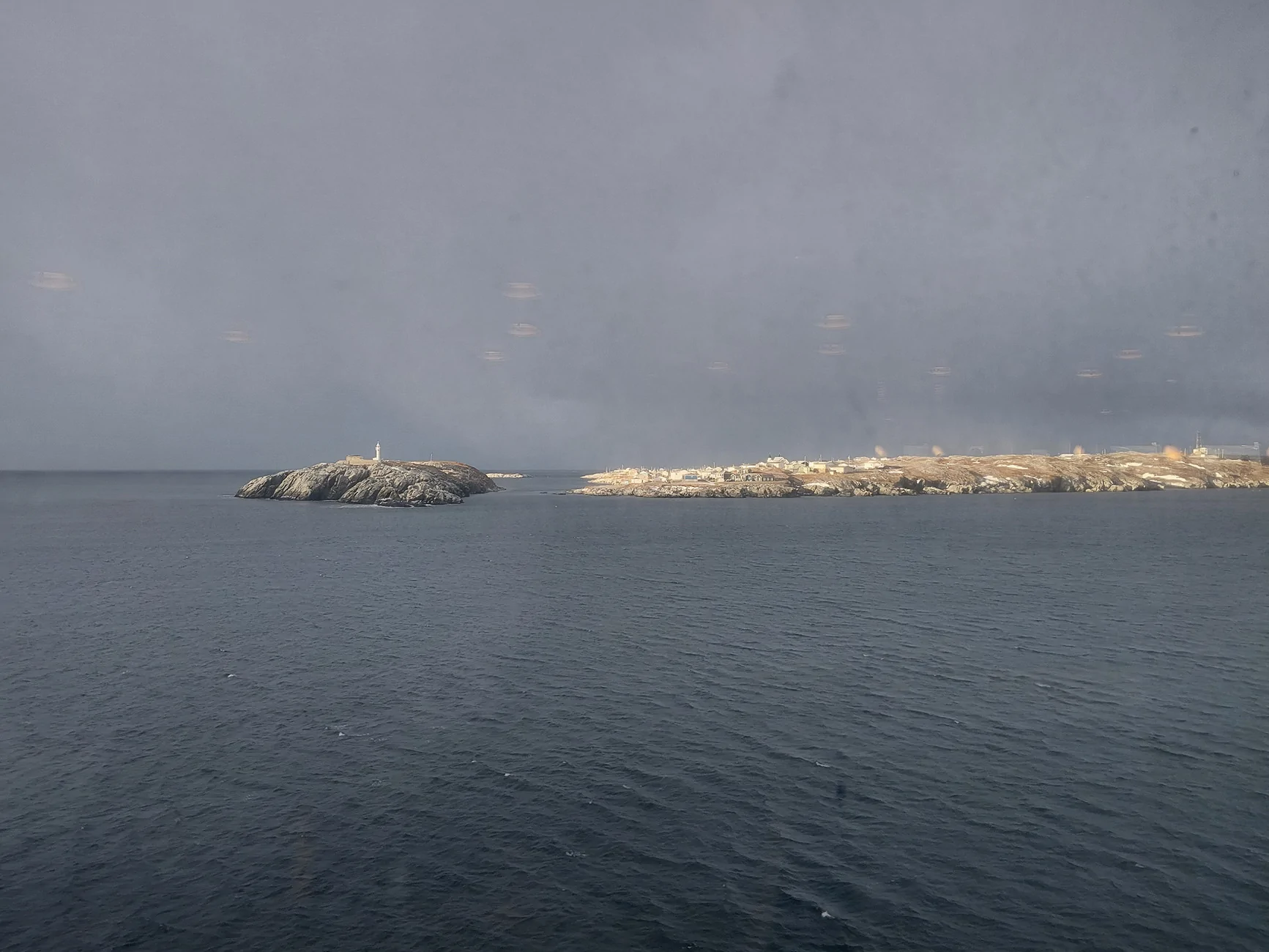
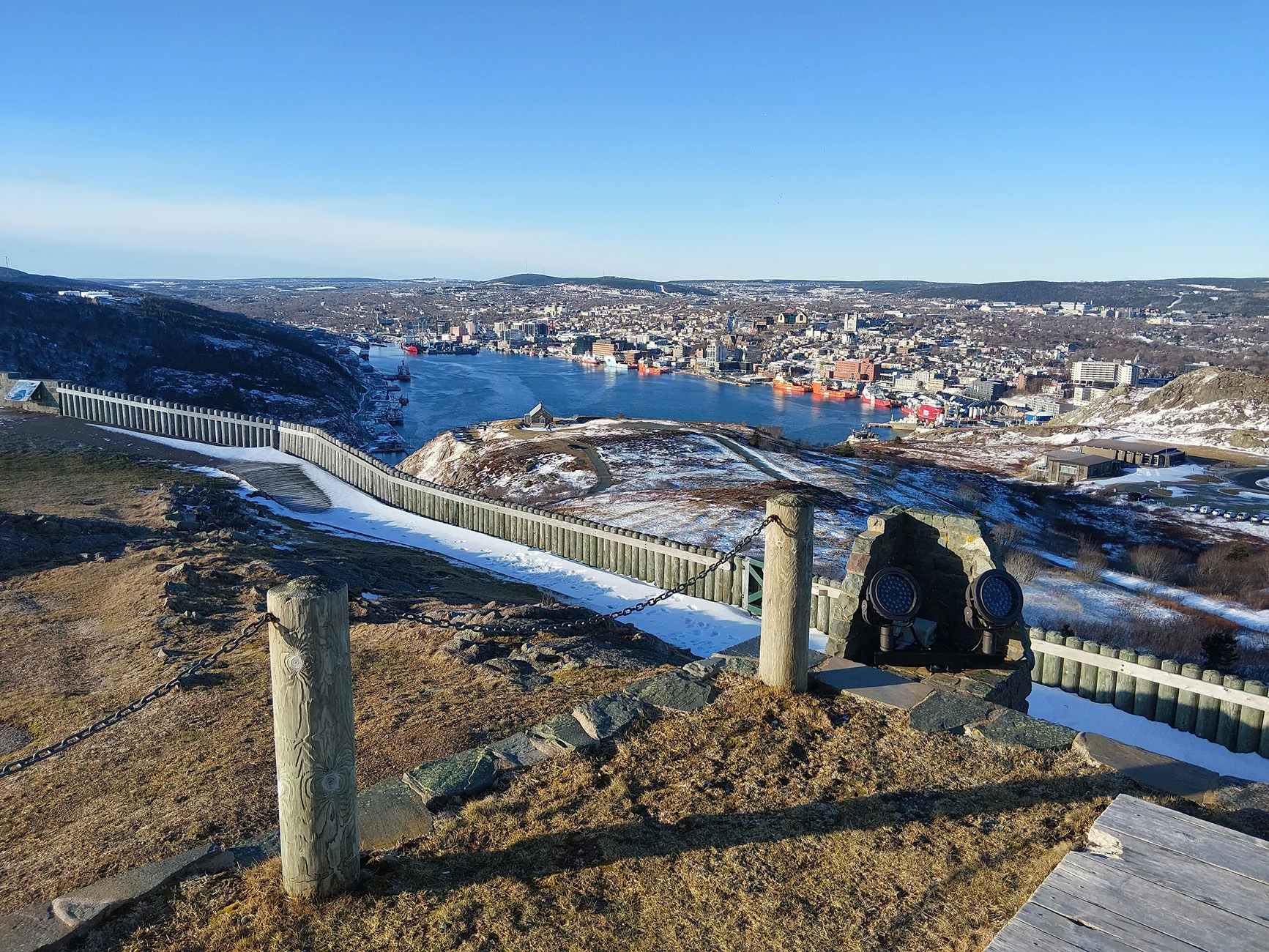
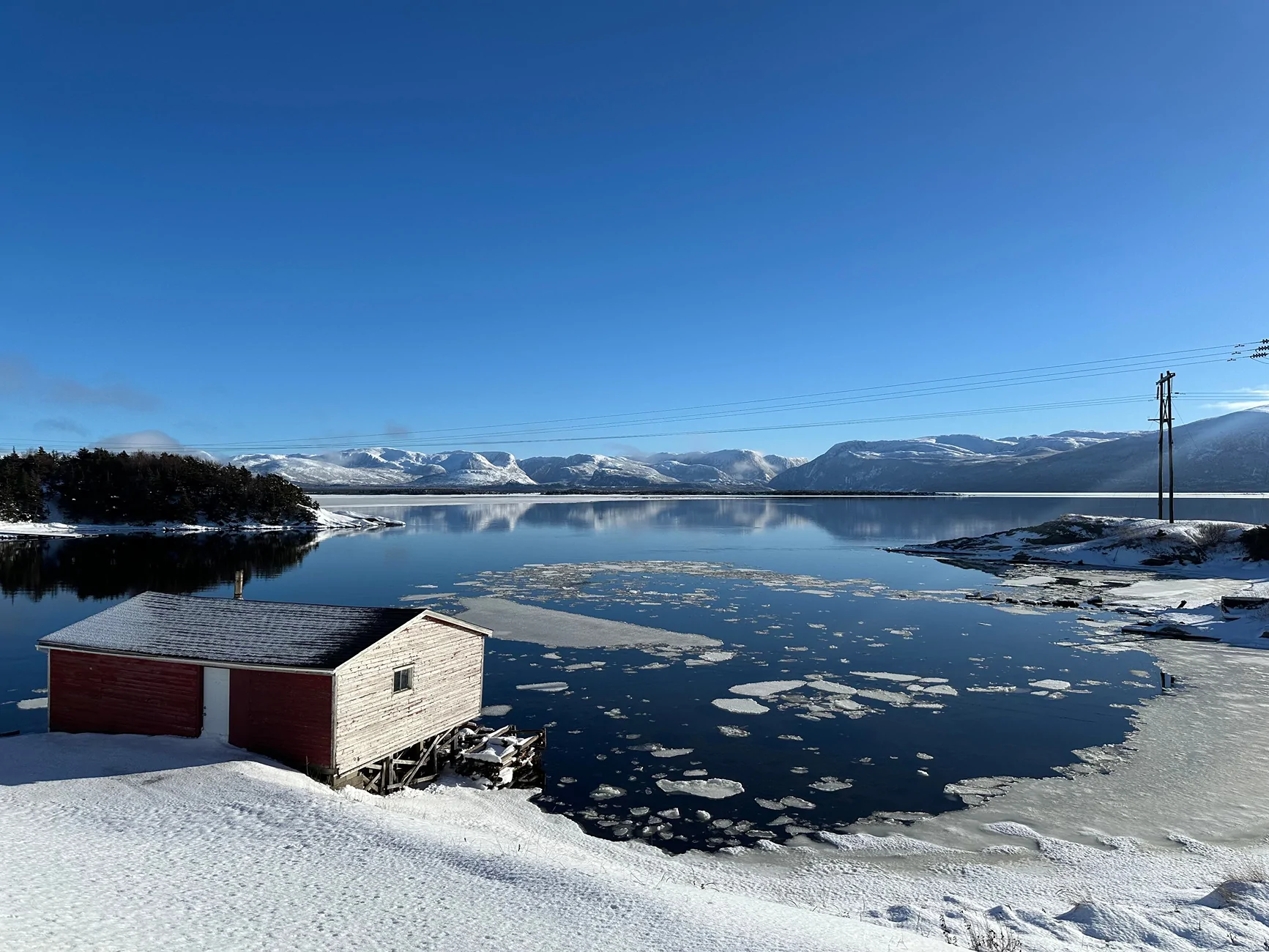
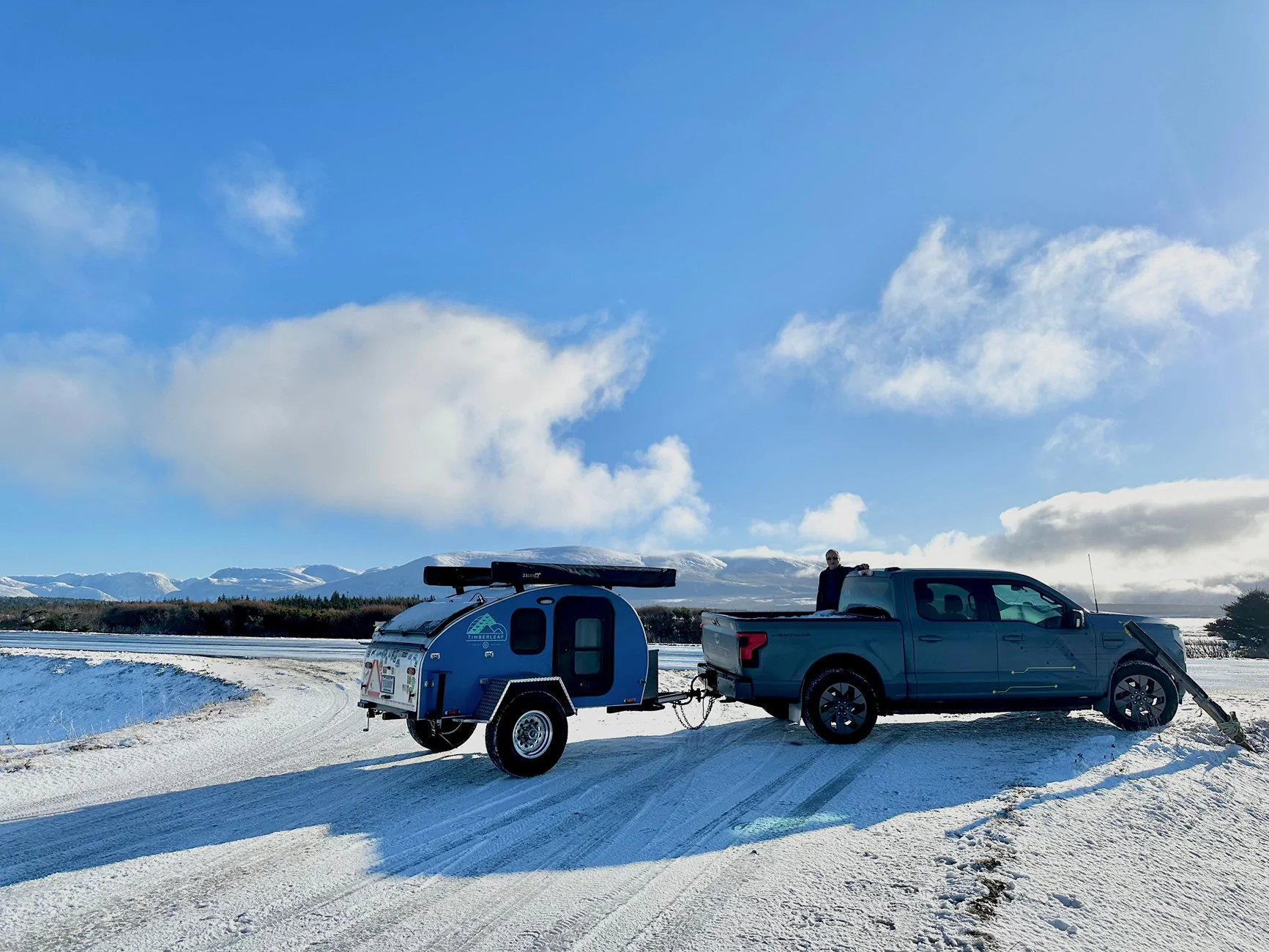
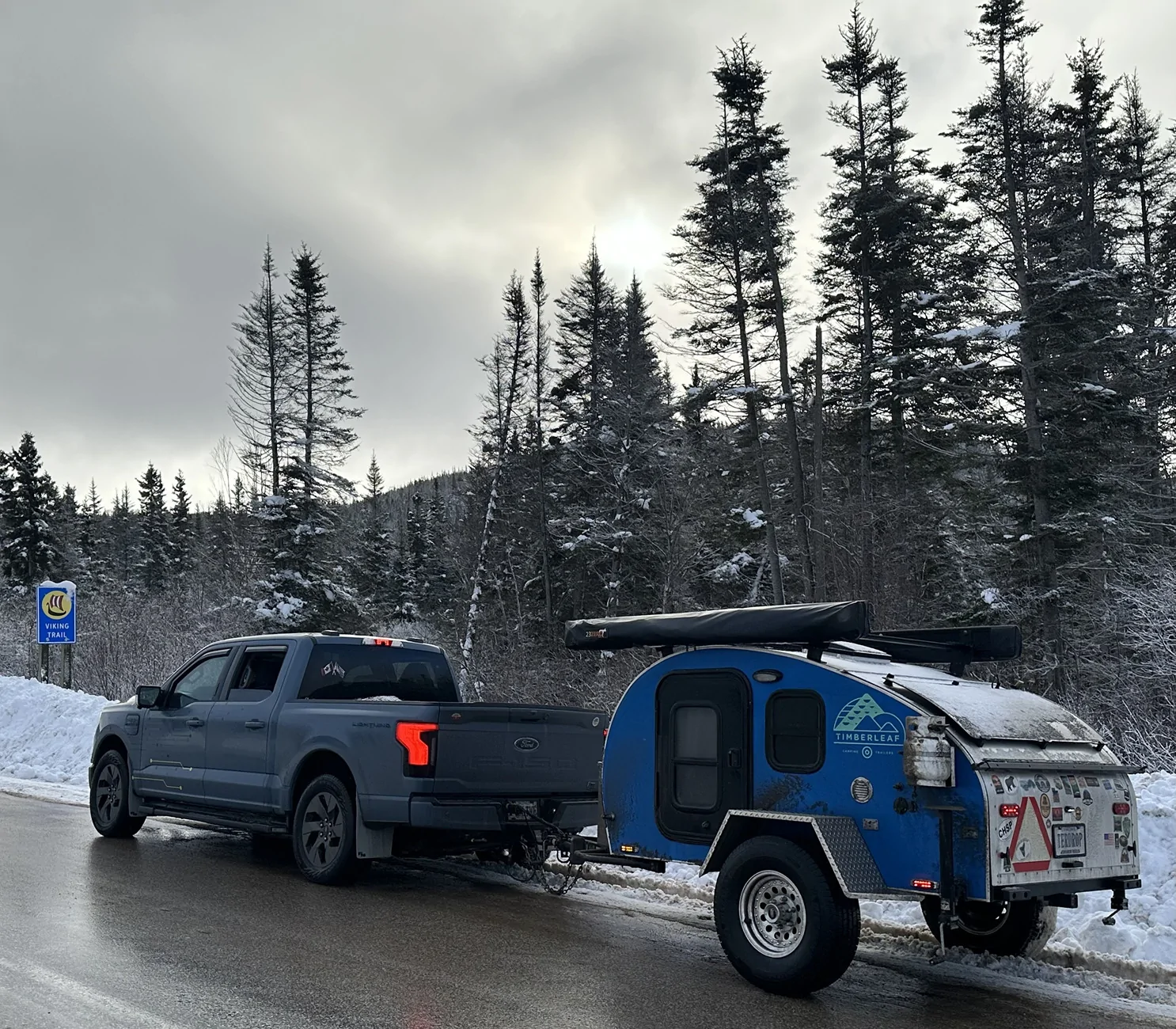
Hope this is fun reading with good info. Pls enjoy the pictures. Note the one picture with the blue & yellow road sign next to the Lightning and teardrop... this one that has a red sail

Why: it was a 40 year anniversary of a tragedy back in December 1985 and I figured if not now, I'll likely never make it back up there.
DC Fast charging stations: yes Newfoundland does have them. They are, almost exclusively, ChargePoint DC Fast 50 kW stations, which for our Extended Range Lightning meant about 2.5 to 3 hours per fillup while on the road. The good parts: 1). almost always they are located by a Tim Horton's (Canadian eq. of decent fast food) or at a combo gas station / truck stop with a lounge for truckers, and 2). on the very wide empty spaces of Newfoundland they are pretty evenly spaced out every 50+ miles or so, so that one can pretty much get to one in a pinch. In the area of the capital of St. Johns on the extreme East coast, we found a new just-installed pair of 350 kW DC Fast stations, brand new and next to each other, branded NL Hydro which is the local hydroelectric power company. They both worked, for two fillups, although both had a malfunction each during our use. Over on the Canadian Atlantic Maritime mainland there were more and faster DC Fast choices, with three other networks - Noodoe, Charge Lab and Flo.
AC Level 2 charging stations: every ChargePoint station on the Rock (local name for Newfoundland) had the DC Fast 62 kW hookup as well as a Level 2 hookup. On occasion, enough hotels also had an occasional ChargePoint Level 2 charging point. This became important over time as we learned to live with an EV and camper in the harsh December climate on the Rock.
Who: I and also a 17-year old nephew from Europe who jumped at the chance to join me during his Holiday school break, and whose parents agreed to slightly extend his school holiday break. Those here who remember our Mach E trip across the USA back in 2023 as written up on the Mach E Forum, well, it's the same 14-year old boy but now a Big 17. I wanted to have a trusted traveling companion because, well, it's the near Arctic in December & January, and all that.
Tires: Nokian Hakkapelitta tires I picked up, slightly used, from a member here who has sold his Lightning. They are mounted on a spare set of OEM Lightning rims I picked up from another member here who has up-rimmed his wheels. These are great Winter tires, whether on snow, ice or in serious clear-road cold. We slipped only once, while descending a sharply banked downward sloping off-ramp from the main highway, in Deer Lake. The off-ramp was coated in thick ice under the layer of snow... it was way below freezing and evening, and the ice must have been trickling surface water earlier in the day. The Hakka tires stopped us in time.
Lightning malfunctions: none, zero, zip across the about 4.5 thousand miles and three weeks of this trip in the Canadian and New England cold, with an added assist from the polar vortex.
Temperatures we encountered on the Rock ranged from just about freezing (rare) to seriously below freezing, I think about 5 degrees F was the lowest.
Weather: cold to really cold. Wind was strong enough to blow snow sideways for 12+ hours on the days when it blew. We had two blizzards while on the Rock. Newfoundlanders told us that we can experience all four seasons when on the Rock, and often all four in one day... this came true several times. Between the 1st and 2d blizzard while camping near St. Johns, we held a powwow and decided to quit camping and just use motels (off-season now of course). The teardrop camper was plenty warm in the cabin, but with the wind and the often-blowing snow it was simply impossible to cook food or even to boil a pot of coffee, and all our prepared awnings and shelter walls froze solid with ice and became nearly unmanageable. At that point, the teardrop became an emergency lifeboat, along for the ride.
More on L2 charging: with the long distances on the Rock the traction battery was often low at night. Although we did have camp space in an RV park near St. Johns, the place only provided Level 1 electricity. In the morning, the cold-soaked traction battery was often unable to receive DC Fast charge until it warmed up... even with the two 350kW DC Fast stations in St. Johns, the traction battery only allowed 73 - 76 kWh charging speeds. We discovered the secret was to always attempt to AC Level 2 charge overnight, and to leave the truck plugged in until our preset Departure Time warmed the truck up, even if we had to walk to the truck from our hotel on another property. On the FordPass we could both see the slow overnight charging until the truck was full, and then another spike in the morning to warm things up.
Animals: we saw three moose, all females. Two, in two separate places, were just standing right on the side of the road as we passed, right after dark the 1st evening on the Rock. One we saw dead two days later, killed by a blow to her head in the breakdown lane / snowbank lane by a snowplow the night before (1st blizzard). Once the locals explained to us that moose often use the road after dark, we just quit driving after dark. Those Newfoundland moose, even females, are some huge animals. The two live standing ones had their backs as high as my chest, while I was sitting in the F150's driver's seat. We also saw four separate herds of caribou, with nephew "sneaking up" on the 1st herd through the snowfield until they decided they had enough and moved on, with him at 20 feet away.
Snow: the roads were clear or being cleared during both blizzards, until the Canadian road service just gave up during the 2d, stronger blizzard when we were in the center of the island, heading back between Grand Falls and South Brook. We actually got the Lightning and teardrop stuck in South Brook, trying to pull up the the ChargePoint DC Fast charging station on the side of the local country store / motel where we had stayed at on our way East several days before. Going around the yard and building to get close to the ChargePoint station, the Lightning just bottomed out on the knee+ high powdery snow in the paved yard, around the corner from the ChargePoint.
While I do have a set of four RUD snow chains behind the rear seat, the roads had been clear enough that I hadn't used them. Once we were stuck high-bottomed, there was no real point messing with the chains. However, on a lark I had bought a set of two MaxTraxx Australian orange recovery bards last Fall, after I had buried the Lightning in deep-powder dune-buggy red dirt at the Sandy Hollow State Park in Utah last August with another nephew. I jammed both MaxTraxx boards in front and slightly under the front wheels, and (to the 17-year old nephew's amazement) the Lightning climbed slowly onto both boards and dug itself out, forward, at a slow speed in less than one minute. KUDOS to MaxTraxx!
It was evening and the owner / operators of the motel & country store who had remembered chatting with us on our way East several days before, in classic Canadian fashion persuaded us to not continue as the snow was falling fast and the sunset was an hour away, and then gave us a free motel room. Very Newfoundlander / Canadian classy! In the very early morning the next day, about 3 a.m. when the blizzard subsided, the owner got his powerful snow-clearing front loader stuck on the yard in front of the buildings, even though he had chains on his industrial front loader wheels. We all had a good laugh about it over morning coffee. Later that morning, three snowmobilers came by... they had hunting permits for moose and 1.5 days to fill them until New Year, so they were on a mission (after the store coffee). Just to pay-in-kind for the free room, we shoveled the entries of the four motel rooms off for the owners. Besides, it was great exercise after the long drives.
Efficiency: While up on the Rock and towing the teardrop, we consistently saw Lightning efficiency at 1.0 or 1.1 m/kW on the IPC, sometimes down to 0.9. Once into Maine and then Massachusetts where we stopped to see family, the efficiency climbed to 1.4 or 1.5. Of course, the further South we went, the higher it got afterwards.
Other EVs while on the Rock: we saw one, in St. Johns, at the new NL Hydro hypercharger station.
Electricity price: on the Rock, electricity is idiotically cheap. The source = hydro stations in Labrador next door. Consistently, whether on DC fast or AC level 2 charging, our price was about 1/2 (yes, that's "one half") the price we saw anywhere else in the Canadian Atlantic Maritime provinces. It cost about $16.+ Canadian to DC Fast charge the Lightning from low to 90%. On the other hand, once in Massachusetts... WOW! In Massachusetts, it cost $44.+ US to AC Level 2 charge overnight one block away from a family home we stayed with.
Hope this is fun reading with good info. Pls enjoy the pictures. Note the one picture with the blue & yellow road sign next to the Lightning and teardrop... this one that has a red sail
Sponsored
Last edited: