
Sponsored

EREV - A Horsepower Math Problem?

hturnerfamily

Well-known member
First Name
William
Joined
Jan 8, 2022
Threads
50
Messages
2,476
Reaction score
3,210
Location
rural Georgia
Vehicles
22 LIGHTNING PRO IcedBlueSilver 8/23/2022
Occupation
Owner
"I realize you stress 'as an example', but did you sanity check this? My BEV L doesn't even get close to this."
Exactly - I was just trying to simplify the 'math' using an example where 1/2 the miles are from the battery, and the other 1/2 from the generator/engine... some EV's do, though...

"It would more likely be at the pack voltage and not the L2 voltage, but the answer is 22 kw, or using your setup 91.7A"
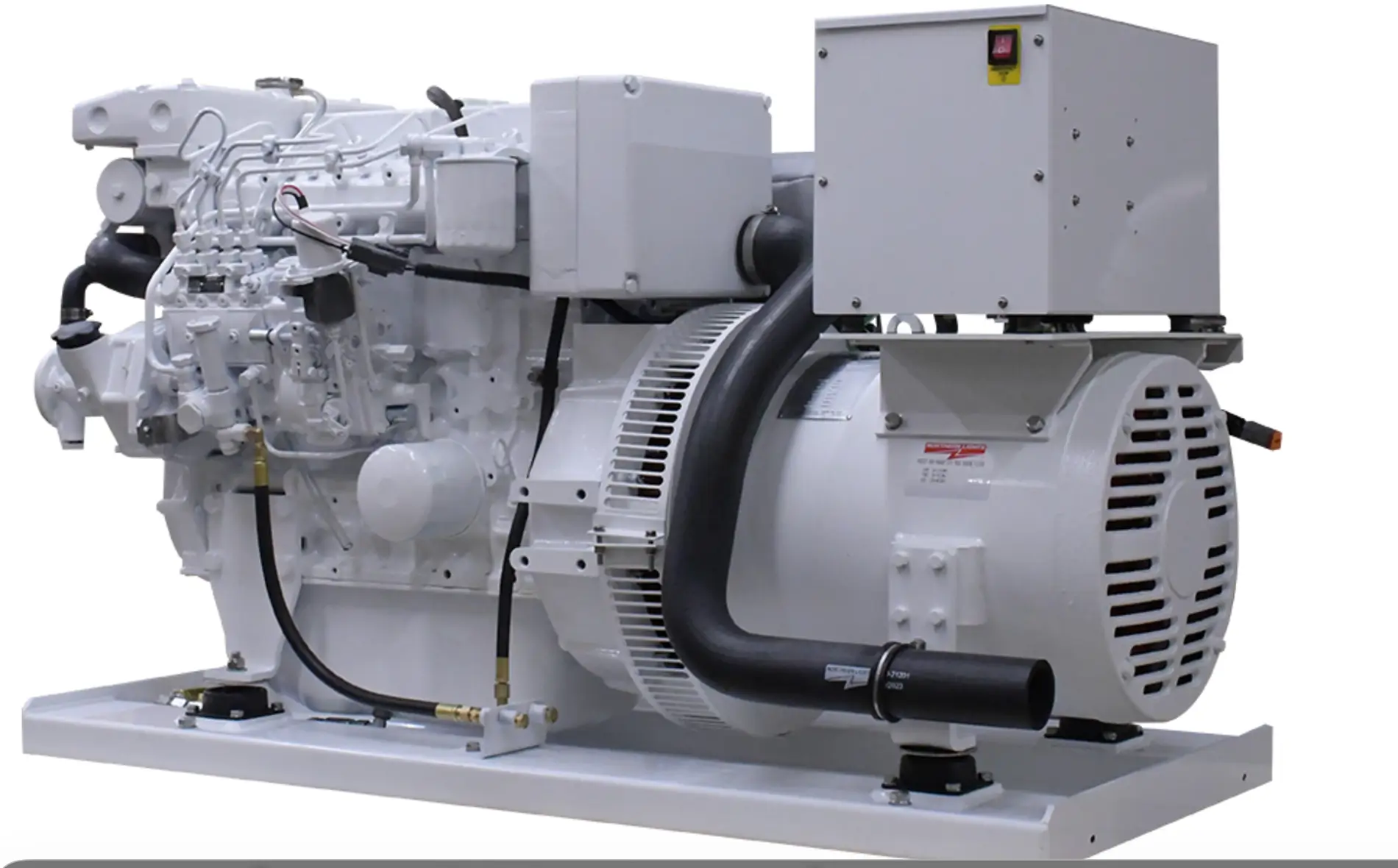
I'm trying to wrap my brain around some type of 400+volt generator... give me some examples of some, especially something that would fit in the frunk area.

"But I agree with your basic premise, EPA test cycles are decent for gas vehicles but way too optimistic on EVs. I personally estimate a usable pack size of 50 kwh (2 hours at 55 plus change) and a generator output of 100-250 kw continuous. 100 if they go with efficiency and 250 for high performance applications"
Why would you assume such a much smaller size of battery pack, especially one on an EV Truck?... this would seem to defeat the whole purpose of the platform.
I would like to see, too, some examples of some 100-250kw continuous Generators... it seems like a very tall order for a vehicle.

RAM says that they are using the 3.6L Pentastar® V6 engine with a liquid-cooled 92-kilowatt-hour battery pack paired with a 130-kilowatt generator.
Sponsored
 

P-38

Well-known member
First Name
Mike
Joined
Jan 28, 2025
Threads
2
Messages
180
Reaction score
138
Vehicles
2024 Lightning Lariat
The engine won't have any mechanical connection to the wheels (some will argue that cables are mechanical, just because this is the internet, but I mean driveshaft, etc.).
Well you see...the engine sits on motor mounts which attach to the frame and the frame is attached to the wheels thru various parts so there 100% is a mechanical connection... :crackup: :facepalm: :cwl::bandit:
 
OP
OP
Lytning

Lytning

Well-known member
Joined
Jan 8, 2022
Threads
12
Messages
742
Reaction score
1,278
Location
Georgia
Vehicles
Prev: 2000 SVT Lightning; Now: 2022 BEV Lightning
Occupation
Engineer
I honestly don’t understand the “importance” of how the ICE is “connected” to the wheels. The ICE is physically connected to the generator, and is the only source of power to drive the generator. Whether the generator output flows through the HV battery, or somehow bypasses the HV battery, when the HV battery is at its minimum allowable SOC, the ICE-driven generator will be the only source of power to the wheels. And that is why the size of the ICE and generator matter so much.
 

Newton

Well-known member
Joined
May 27, 2021
Threads
12
Messages
538
Reaction score
752
Location
WA State
Vehicles
VW e-Golf, 2023 Lightning Lariat SR, Kia EV6, Toyota T-100
Plenty of pure battery EVs get more than 350 miles of range, including the Silverado (492) and the Lucid (512). It won't be too long before that is the range that we all expect - I was super happy that my 2019 e-Golf got a rating of 120 miles which is now pathetic.

Voltage is not the issue for a generator, a Van de Graaff generator is a simple mechanical device that can generate thousands of volts at a very low current. The issue is the kW rating, and the electric motors that drive trucks can consume 500 kW in larger vehicles such as the Silverado - and you usually have two of them. If you want a generator that can do this for any length of time, it has to be a large block diesel with a lot of torque at the low end. In addition, the alternator that converts mechanical to electrical energy has to be very large with a bunch of copper in the windings and lots of metal to dissipate the heat.

So that is the technical challenge that you have to overcome in an EREV. If you had a pure diesel electric (no battery) such as a train the generator would have to be impractically large for a light truck. In any case, a diesel would probably be at least as expensive as simply adding batteries, but the cheaper gasoline engines are not really suited for large generators - they die quickly. Charging the batteries with a lower power generator while running doesn't really help the user because you will still eventually run out and have to go to the dreaded fast charger. In the mind of the scared EV novice, running out after 500 miles is just the same as running out after 80 miles.

The only hint I see of this future is Fords recently released EREV Bronco in China which apparently solves the problem by simply having poor performance when it is running on generator-only. It feels a little deceptive to talk about a "758 mile range" when many of those miles have much less performance than when the battery is running. I do not know how bad it is, but someone who is used to driving 85 will be pretty unhappy once their top speed is limited to 50 until they go to the dreaded fast charger.

Obviously the engineers will try to do something better than that but they run into a fundamental problem - converting mechanical energy to electrical energy and then back to mechanical energy is going to be less efficient than the already inefficient mechanical ICE arrangement. (One real design issue for generators is heat dissipation in the alternator - and that heat represents energy loss.) If you are limited to the same size of engine that the ICE truck has, you are going to have less power than the equivalent ICE when you are in generator mode. If the solution is to have two levels of performance, I do not see how this satisfies the truck user. You don't want to lose power after you have driven your trailer 100 miles to the mountains.
 

Sponsored

Newton

Well-known member
Joined
May 27, 2021
Threads
12
Messages
538
Reaction score
752
Location
WA State
Vehicles
VW e-Golf, 2023 Lightning Lariat SR, Kia EV6, Toyota T-100
In the end, I think that the EREV is a psychological (and political) solution rather than an engineering one. I have met people in California who are as surprised that I'm coming from Canada in an EV as if I told them that I had walked. They don't know that compared to my EV6 the Lightning has pathetic range and a glacial charging rate, but it is more comfortable so we take it on long trips. These are the people that Ford is halfheartedly trying to convert, and I'm kind of worried that they will have a worse experience than those of use with pure EVs. That may be the point, though...
 

Newton

Well-known member
Joined
May 27, 2021
Threads
12
Messages
538
Reaction score
752
Location
WA State
Vehicles
VW e-Golf, 2023 Lightning Lariat SR, Kia EV6, Toyota T-100
Because you dont have to run the battery to minimum SOC. Thats just computer logic to balance generstor output and battery output. Ultimately though the battery HAS to be available, the demand placed on the system is highly variable and the battery provides that variation.

No reason that at 50% SOC the generstor kicks on full time, and at 25% SOC speed and acceleratiin are limited. Or 75% and 50%. After that its just giving the drivers some settings to bias the system one way or another.
I agree that if you want any kind of decent performance the battery has to be available, but I'm not sure that is what happens.

If we want to speculate about these systems we need to know the output of the generator in kW, and we don't know it for either of the two EREV truck systems that are in or close to production. You cannot know this from the HP rating of the gas engine, as I have said often.

So, consider this to be wild speculation based on some knowledge. I believe that the Ramcharger is a 30kW system based on some information and speculation. In one report, I read that they can send 30kW to a house in an emergency. The Pentastar V6 has a displacement of 3.7L which would be too small for a 50kW Diesel generator (4.5L for this 50kW) but about right for approximately a 30kW generator. I know that I am comparing different technologies but a diesel engine will always be capable of more torque than a similar displacement gasoline.

I also looked at the dimensions of the Ford Ecoboost V6 which I think is the largest engine that fits in the F-150 compared to the dimensions of the diesel generators and again, roughly 30kW is all that I think can fit. This is of course very speculative and rough but I'd say that 30kW is in the ballpark and even trying to get that much from a gasoline engine that is specifically designed to be light is ... bold.

If we use 30kW as a benchmark then we can go even further out on the speculative limb to see what the managers are thinking while the engineers cringe. The Lightning is rated at about 2.6 mi/kWh from the EPA (Lariat 320mi/131kWh). At that rate, one hour of driving will generate a (absolute maximum) of 78 miles of charge so if you keep it under 80 you can drive as much as you have gas in the tank + the electric range.

Unfortunately it is not that simple, beginning with the fact that I rarely see numbers that high and certainly not when towing. Additionally in the heavy towing cases that the EREV is supposed to solve, the battery will be hot which limits how much charging you can do.

The really hard problem to solve is that 30kW is not going to drive the electric motors very well, and while it is driving the motors it is not charging the battery. So once the battery is down it stays down until you fast charge. The assumption when they say things like "700 mile combined range" is that you can just go to a gas station and fill up - but that is not true. You will have to go to both a gas station and a charger for the next leg of your 1400 mile trip.

To make this work as a driver, I think you are going to have to be very aware of your current usage, expected usage, and plan on turning on the 'charger' much earlier than you think - probably at the beginning of your trip. For customers who already have difficulty with route planning ("just use ABRP!" we say so often) this is going to be even more off-putting.

The really big question for me is "how well does it drive with the battery completely empty?" Can I tow my (imaginary) big rig up Washington Pass, and at what speed?

Ford F-150 Lightning EREV - A Horsepower Math Problem? Untitled
 

hturnerfamily

Well-known member
First Name
William
Joined
Jan 8, 2022
Threads
50
Messages
2,476
Reaction score
3,210
Location
rural Georgia
Vehicles
22 LIGHTNING PRO IcedBlueSilver 8/23/2022
Occupation
Owner
yes, those are agreed points that most of us have little to go on, at least yet...

from the very beginning, an advertised '700 miles Combined range' can be a little misleading, at least to those unaware of all the REAL elements to this idea. I doubt that anyone assuming that you can then drive 80+mph on the Interstates for the whole 700 miles is going to be pleased with the 'real' outcome... they'll be stopping to fast charge about 200 miles in. They'll have seen the battery SOC dropping like a rock, and yet the Generator is, yes, running. Still, it won't look good, and range anxiety will still be a thing.

You can get range anxiety at 50 miles in, and you can just as easily get it at 300 miles in.

A Generator that could possibly drive the vehicle at the same speeds and for the same miles might as well be your ONLY power source, since, well, WHY then would you need a battery??

The Generator's ONLY job is to recharge the battery pack. It is NOT to drive the truck.
 

chriserx

Well-known member
First Name
Chris
Joined
Oct 3, 2025
Threads
4
Messages
764
Reaction score
593
Location
Louisiana
Vehicles
2025 Ford Lightning Flash Job 2 😭
A Generator that could possibly drive the vehicle at the same speeds and for the same miles might as well be your ONLY power source, since, well, WHY then would you need a battery??
To run HVAC at a stop, to store regen braking, to store 'excess' power generated, to enhance efficiency by running the generator at it's most efficient output, to combine battery power and gen power in a way some supercars have for performance reasons. And this is just what I came up with in under a minute, imagine what an actual engineer could with time. I don't disagree with your sentiment, just playing devils advocate.
 

hturnerfamily

Well-known member
First Name
William
Joined
Jan 8, 2022
Threads
50
Messages
2,476
Reaction score
3,210
Location
rural Georgia
Vehicles
22 LIGHTNING PRO IcedBlueSilver 8/23/2022
Occupation
Owner
To run HVAC at a stop, to store regen braking, to store 'excess' power generated, to enhance efficiency by running the generator at it's most efficient output, to combine battery power and gen power in a way some supercars have for performance reasons. And this is just what I came up with in under a minute, imagine what an actual engineer could with time. I don't disagree with your sentiment, just playing devils advocate.
I don't disagree, but my point was actually just the premise that the Generator is somehow going to 'drive' the truck when the battery is low or depleted... or, maybe just when the owner WANTS to drive it that way - otherwise, that's called a HYBRID, like we've had for years.

If a generator/engine that can be placed within the Frunk and will be a large enough and consistent enough to power the truck down the road, then why not not just have a token 10kwh battery pack, or just a 1kwh battery pack... you'd be mostly relying on a generator/engine running 100% of the time.

I DO, though, disagree with the premise that the Generator/engine is going to be powerful enough to power the truck at 100% torque and hp you might expect... sounds like any 'generator power' directly to the motors will be simply for SUPPLEMENTAL support, with the battery output already at a HIGH output, for steep terrains and heavy loads, etc.
I'd like to be proven wrong, and that's o.k. if so... I'm good for knowing more exact ways and equipment involved in powering such a vehicle.
 

Sponsored

chriserx

Well-known member
First Name
Chris
Joined
Oct 3, 2025
Threads
4
Messages
764
Reaction score
593
Location
Louisiana
Vehicles
2025 Ford Lightning Flash Job 2 😭
I don't disagree, but my point was actually just the premise that the Generator is somehow going to 'drive' the truck when the battery is low or depleted... or, maybe just when the owner WANTS to drive it that way - otherwise, that's called a HYBRID, like we've had for years.

If a generator/engine that can be placed within the Frunk and will be a large enough and consistent enough to power the truck down the road, then why not not just have a token 10kwh battery pack, or just a 1kwh battery pack... you'd be mostly relying on a generator/engine running 100% of the time.
I'm not against what they're attempting even if I think it's a bit backwards, but it would allow them to maintain our software while getting potentially more sales from more traditional truck drivers and act as a bridge for nascent solid state battery tech to mature. I feel strongly that 50 kwh usable would be the sweet spot for this type of truck, a decent EV only range, decent buffer. Ford is likely going to aim for the current truck use average for its EV mark which is local trips, non towing and maybe 500-1000 lb load, 25 kwh would be good enough for this. But for EV marketing and a decent battery life expectancy I'd expect around 50 kwh
 
OP
OP
Lytning

Lytning

Well-known member
Joined
Jan 8, 2022
Threads
12
Messages
742
Reaction score
1,278
Location
Georgia
Vehicles
Prev: 2000 SVT Lightning; Now: 2022 BEV Lightning
Occupation
Engineer
Because you dont have to run the battery to minimum SOC. Thats just computer logic to balance generstor output and battery output. Ultimately though the battery HAS to be available, the demand placed on the system is highly variable and the battery provides that variation.

No reason that at 50% SOC the generstor kicks on full time, and at 25% SOC speed and acceleratiin are limited. Or 75% and 50%. After that its just giving the drivers some settings to bias the system one way or another.
I understand that the generator would start at a mid-level SOC to add kW to the HV battery and extend range. But, I can also envision in a heavy towing situation where the HV battery, even with generator input, could drop to its minimum allowable SOC. At that point, the vehicle will either stop, or continue under power provided only by the generator (either through the HV battery, or bypassing the HV battery).
 

Mal106

Well-known member
First Name
Mal
Joined
May 9, 2025
Threads
4
Messages
238
Reaction score
189
Location
SW VA
Vehicles
2025 Lightning Flash
Occupation
Retired Pilot
If i were Ford I'd just take the Ecoboost 3.5 truck and replace the 10 speed with whatever generator could use it's max power and let it power the current lightning drive train. Then stuff in as much battery as the chassis could carry and still have 1500 to 2000lb payload.
Tune the 3.5 for generator operation and let software give you what you need and when. Defeciencies in EPA range that happen due to battery size can be made up with fuel tank size.
 

grottomatic

Member
Joined
Dec 19, 2025
Threads
0
Messages
5
Reaction score
3
Location
US
Vehicles
2025 Lightning Flash
I don’t see why they don’t just make a big battery 2.7 ecoboost plugin hybrid. The 2.7 is a great engine, proven performer with high reliability that has been accepted by fleets-but needs more towing power, which they can get with electric on the driveline. I think they will ditch the current powerboost and work on a hybrid that can actually have the battery buffer to help with towing, and the battery only range to get you at least to work (30-40 kWh). The current powerboost has a tiny battery that is gone about half a second into towing a grade and then you get the poor economy of a 3.5 twin turbo on full blower.

I think the EREV is going to be too expensive and too heavy for the benefits without massive breakthroughs in battery weight and efficiency losses with genset operation. There will be massive warranty issues.

Without absolutely stunning performance out of the generator and DC bus (I don’t think you can get away without the ability for the generator to provide massive power directly to the motors in a towing situation) the solution doesn’t make a lot of sense for something early marketing tells us is going to “tow like a locomotive.”
 

ZeusDriver

Well-known member
Joined
Dec 1, 2025
Threads
9
Messages
239
Reaction score
206
Location
East Coast, USA
Vehicles
2022 Lightning
I'm trying to wrap my brain around some type of 400+volt generator... give me some examples of some, especially something that would fit in the frunk area.
Surely you jest. The drive motors of the current Lightning are 400 volt generators. The rotors are 8 or 9 inches across. Every electric motor is simultaneously a generator. (There can be vey slight tweaks to an electric machine to make a motor better at generating, but these are extremely subtle.) In my little PHEV (EREV in todays words) prototype, the drive motor and the generator were exactly the same, and the motor provided propulsion at 91% efficiency and generated at 91% efficiency. In this application, the total generating process was actually just slightly more efficient than the drive process, because there was nothing electronic controlling the generator. In other words, there was just a contactor (a heavy switch) and heavy wires between the generator and the batteries (Whereas the drive motor was controlled by a fancy version of pulse width modulation.)

Some concepts are more easily understood with a brushed permanent magnet motor. You can probably guess that such a motor has a particular maximum speed when fed by e.g. 12 VDC. Suppose you have no load on the motor. What keeps it from going faster and faster and then flying apart from centrifugal effects? The back emf generated by the motor as is runs increases with speed. At the point that the back emf and input voltage are the same, then there is no difference in voltage, thus no flow and thus no further acceleration.

If you read about the Ram EREV truck, you will see that there is no starter motor. There was also no starter motor in my little protype. The generator was the motor that started the engine.

This article explains back emf: https://en.wikipedia.org/wiki/Counter-electromotive_force
Sponsored


Top