
Sponsored

MidAtlanticLightningClub

Well-known member
First Name
Mark
Joined
Aug 28, 2024
Threads
26
Messages
401
Reaction score
518
Location
Maryland
Vehicles
F-150 Lightning Lariat ER
Occupation
retired
OP
OP
MidAtlanticLightningClub

MidAtlanticLightningClub

Well-known member
First Name
Mark
Joined
Aug 28, 2024
Threads
26
Messages
401
Reaction score
518
Location
Maryland
Vehicles
F-150 Lightning Lariat ER
Occupation
retired
Here's a further write-up from @Mach-Lee on the Mach E Forum:

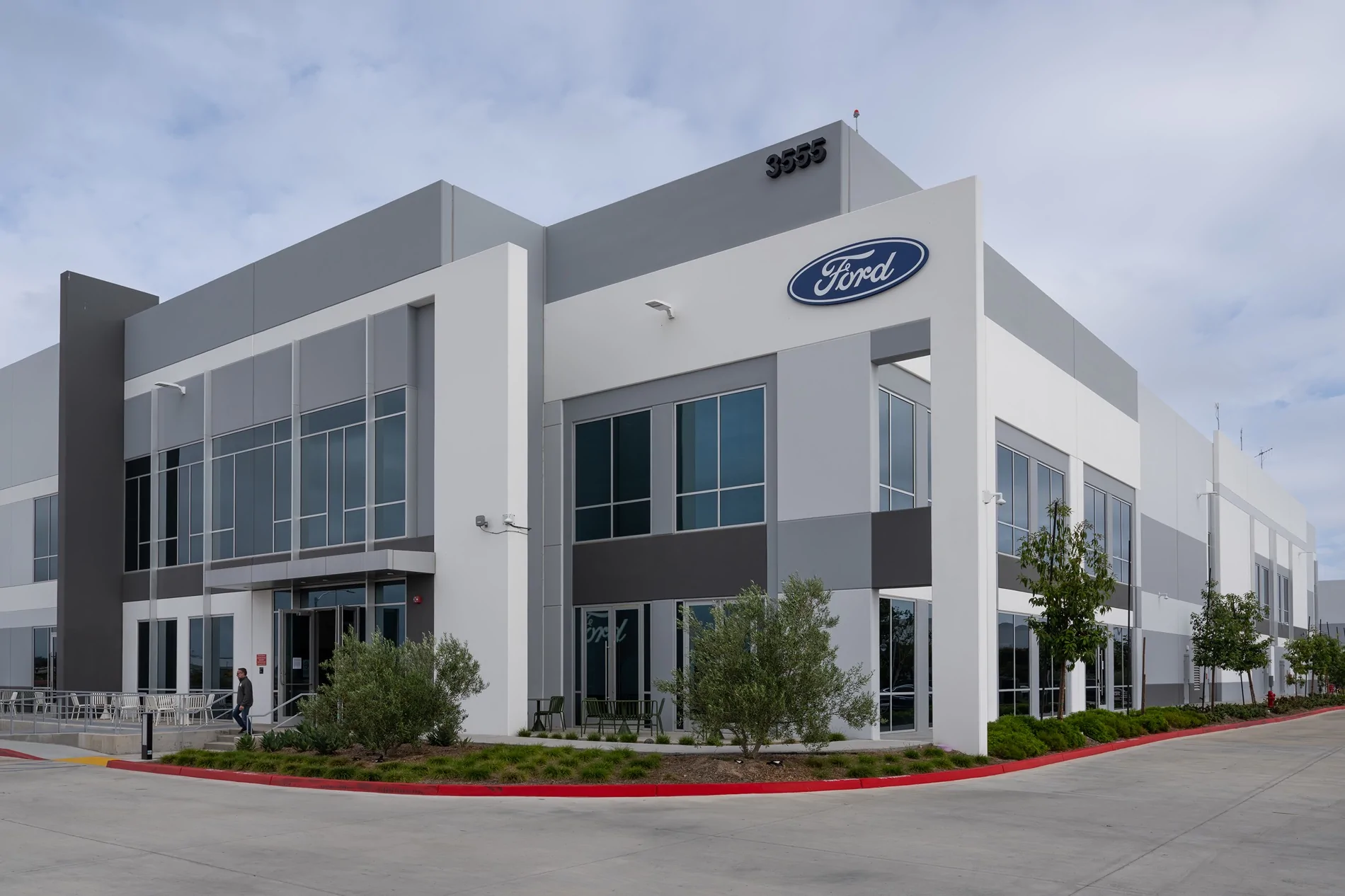
Last week Ford held an event at their Electric Vehicle Development Center (EVDC) in Long Beach, CA. You’ll hear from a few regulars here, we were able to tour their new facilities that are busy developing the new Universal Electric Vehicle (UEV) platform. The current work is focused on finalizing the design of the new midsize electric truck.

Ford F-150 Lightning Ford Skunkworks (EVDC) visit - behind the scenes look & report {filename}


The tour was focused on the facilities rather than the vehicle itself, although we “happened” to catch a brief glimpse of a camouflaged test mule truck near the end. More on that later. We were not allowed to take photos during the tour, but Ford gave us unprecedented access to their facility, colloquially known as the “Skunkworks”.

The tour began with opening remarks from Alan Clarke, the director of the EVDC. He spoke about adapting Kelly Johnson’s 14 rules of running a Skunk Works which famously designed the U-2, SR-71, and F-117 stealth aircraft for the EVDC.

I will describe what I saw chronologically. This will be a long post, but that’s my style.

Design Studio

Overall, it was a very nice, brand-new facility inside. On our way in, we saw a few employees “coding” at workstations. The first “stop” was the design studio, where we saw a front unicasting, structural battery back with seats, and a firewall-back body-in-white (rear was covered). Ford’s goal is to build the vehicle in a completely different way that minimizes components, wasted assembly line space, and production time. In order to build the vehicle differently, it has to be designed differently from the start. The legacy way is to weld the body together first, then put all the interior components and trim in through the door openings. The new way is to do as much of the assembly in parallel as possible, then put together big, almost fully complete pieces. A good example of this are firewall components, such as the blower housing and the accelerator and brake pedals. These can now be easily installed on the front casting subassembly before it’s mated to the rest of the car. Same with the seats, they can be bolted on top of the battery pack rather than having to go in through the door openings. This also is far more ergonomic for assembly workers.

This is speculation, but it defiantly looked like something is up with the structure at the back of the cab, also considering the rear unicasting design with buttresses. Possibly a folding bulkhead or midgate.

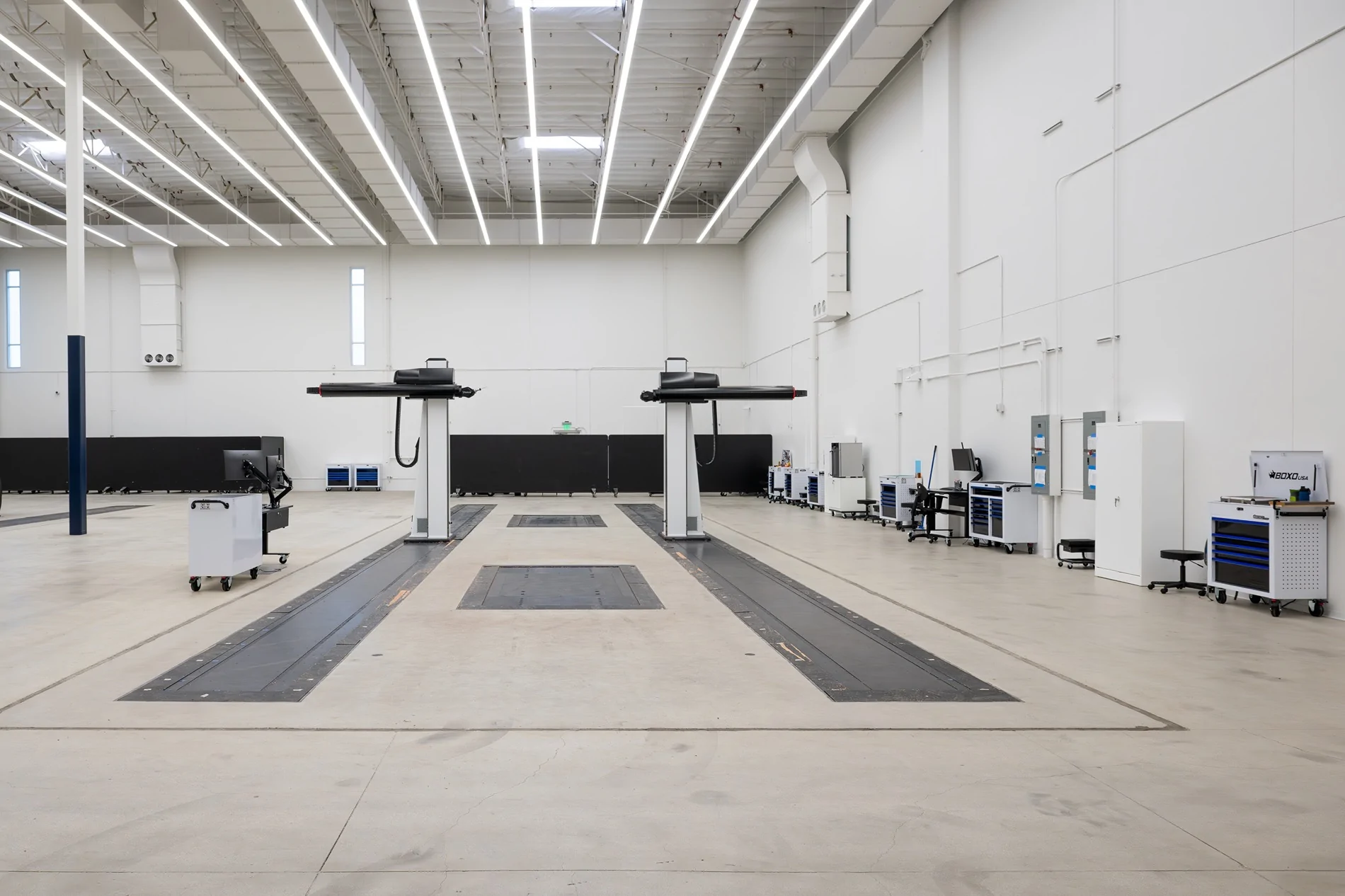
Adjacent was a gigantic open room for clay model design (complete with a vehicle turntable). Yes, they still sculpt shapes out of clay to get them just right. There were large tracks in the floor for laser scanning machines, they also had a CNC milling machine to sculpt shapes into clay. Basically, they can go both directions with shapes—clay to computer, and computer to clay.

Ford F-150 Lightning Ford Skunkworks (EVDC) visit - behind the scenes look & report {filename}


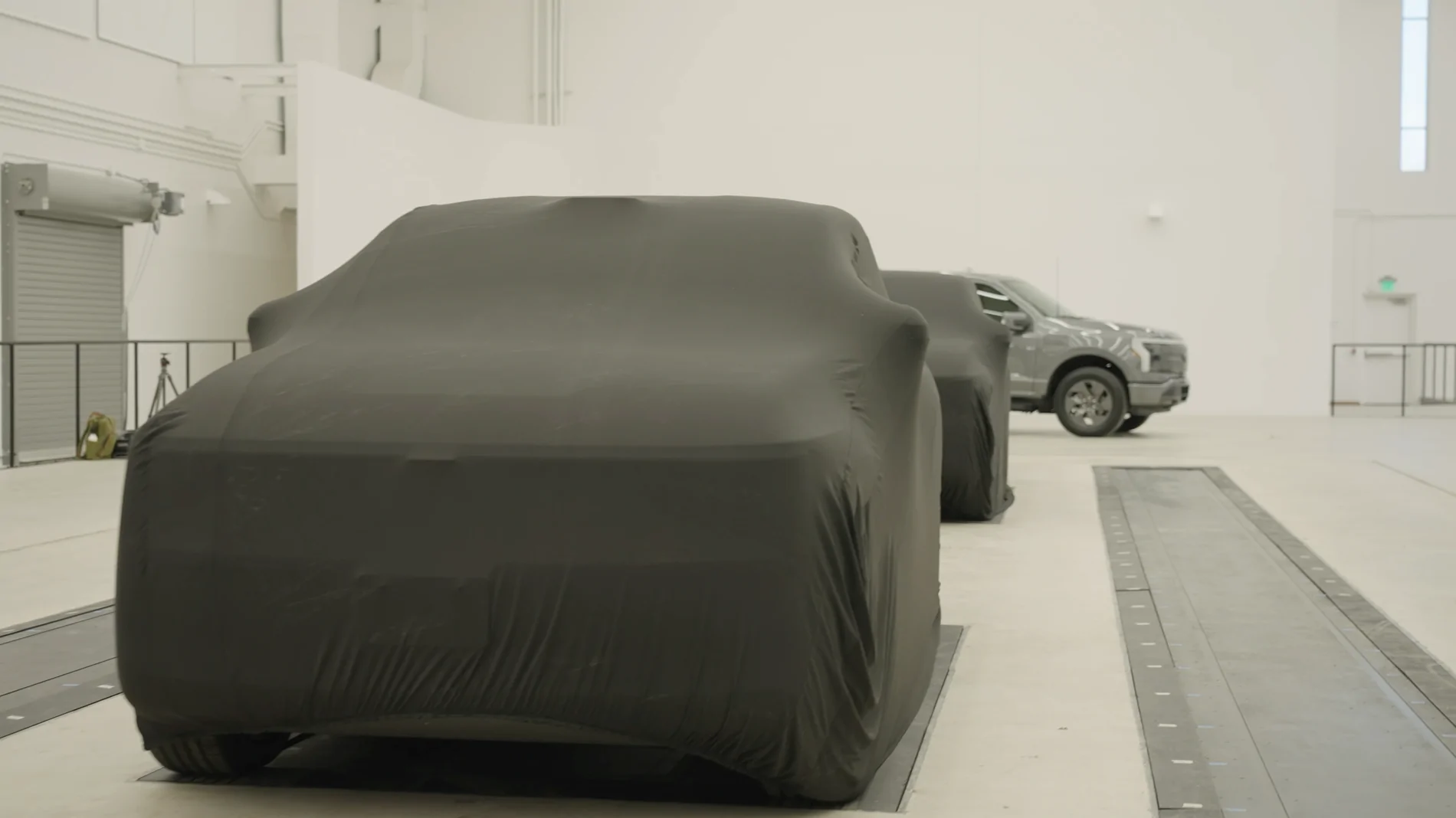
We were also teased by several covered prototype models of the midsize truck in this room.

Ford F-150 Lightning Ford Skunkworks (EVDC) visit - behind the scenes look & report {filename}


Trim shop

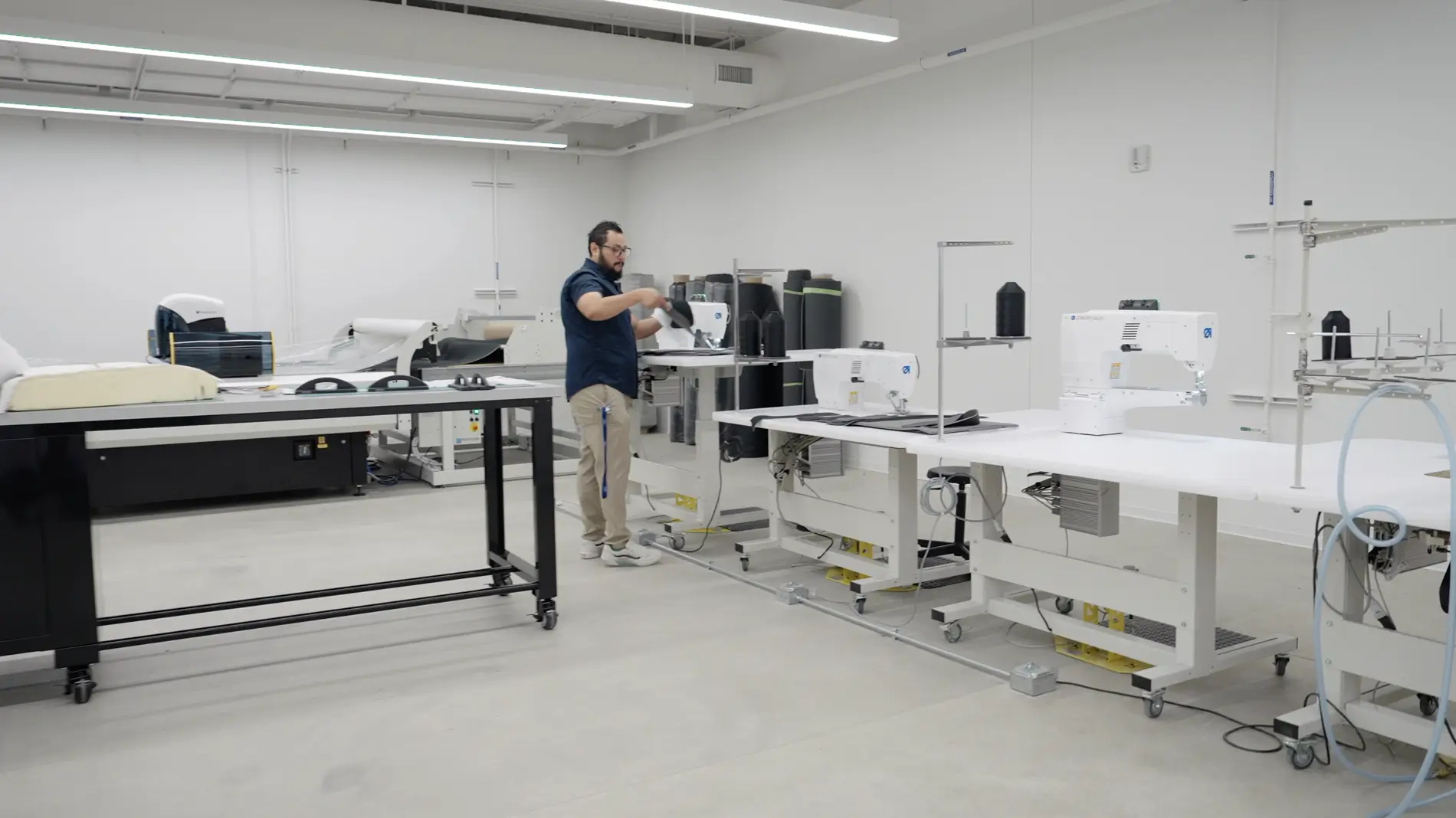
Next stop was the trim shop where they make seats. We saw a large pattern cutter, sewing machines, pattern making software, and prototype seat covers. With this shop, Ford can rapidly prototype various seat profiles and cover variations in only a week, rather than a 3+ month process with an outside supplier. There was a focus on eliminating material waste by optimizing pattern cutting with computer software. A small change in a seat shape can sometimes make a large difference in scrap waste if the pieces can be packed more closely together on the pattern cutter.

Ford F-150 Lightning Ford Skunkworks (EVDC) visit - behind the scenes look & report {filename}


Fabrication Shop

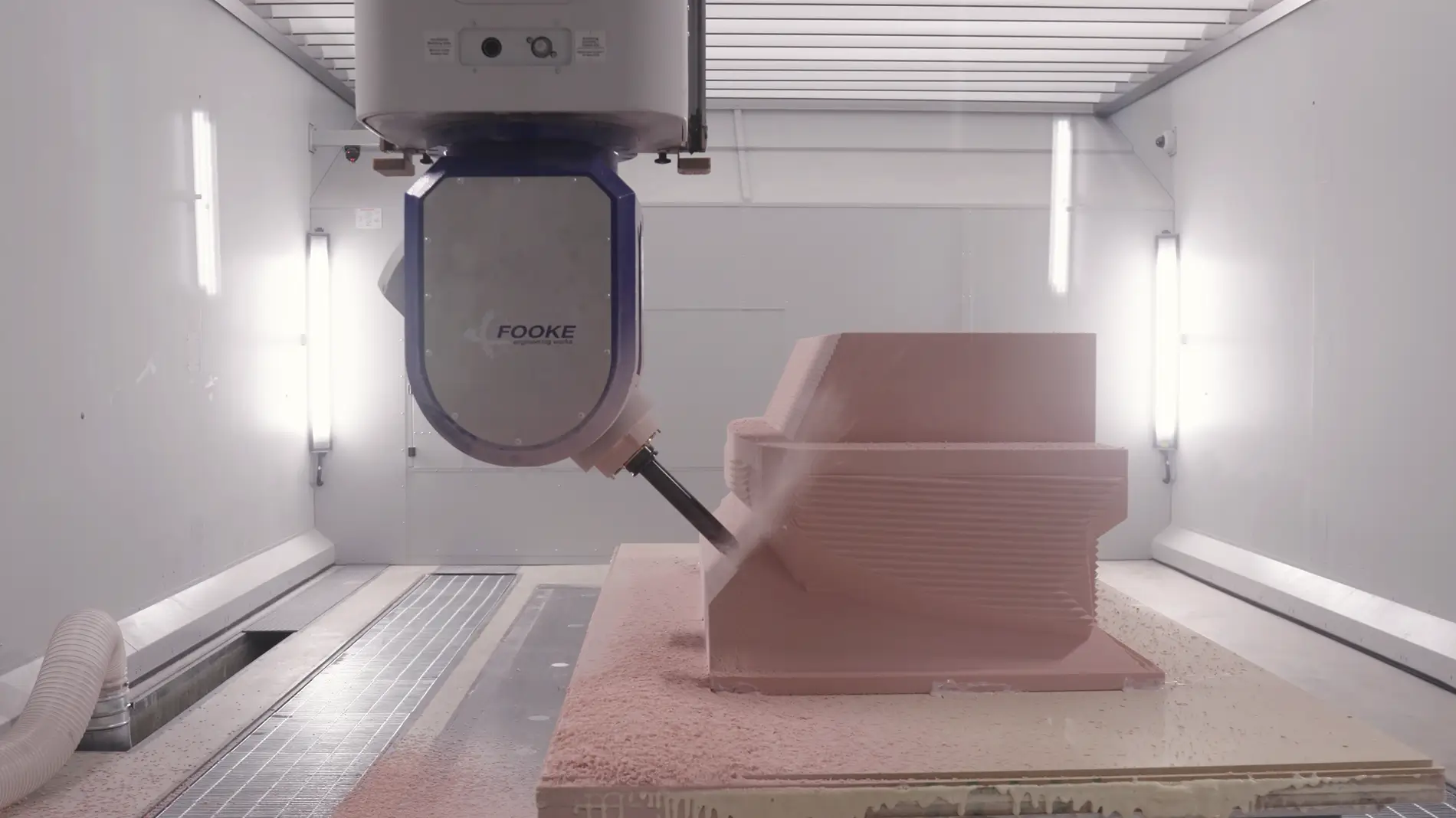
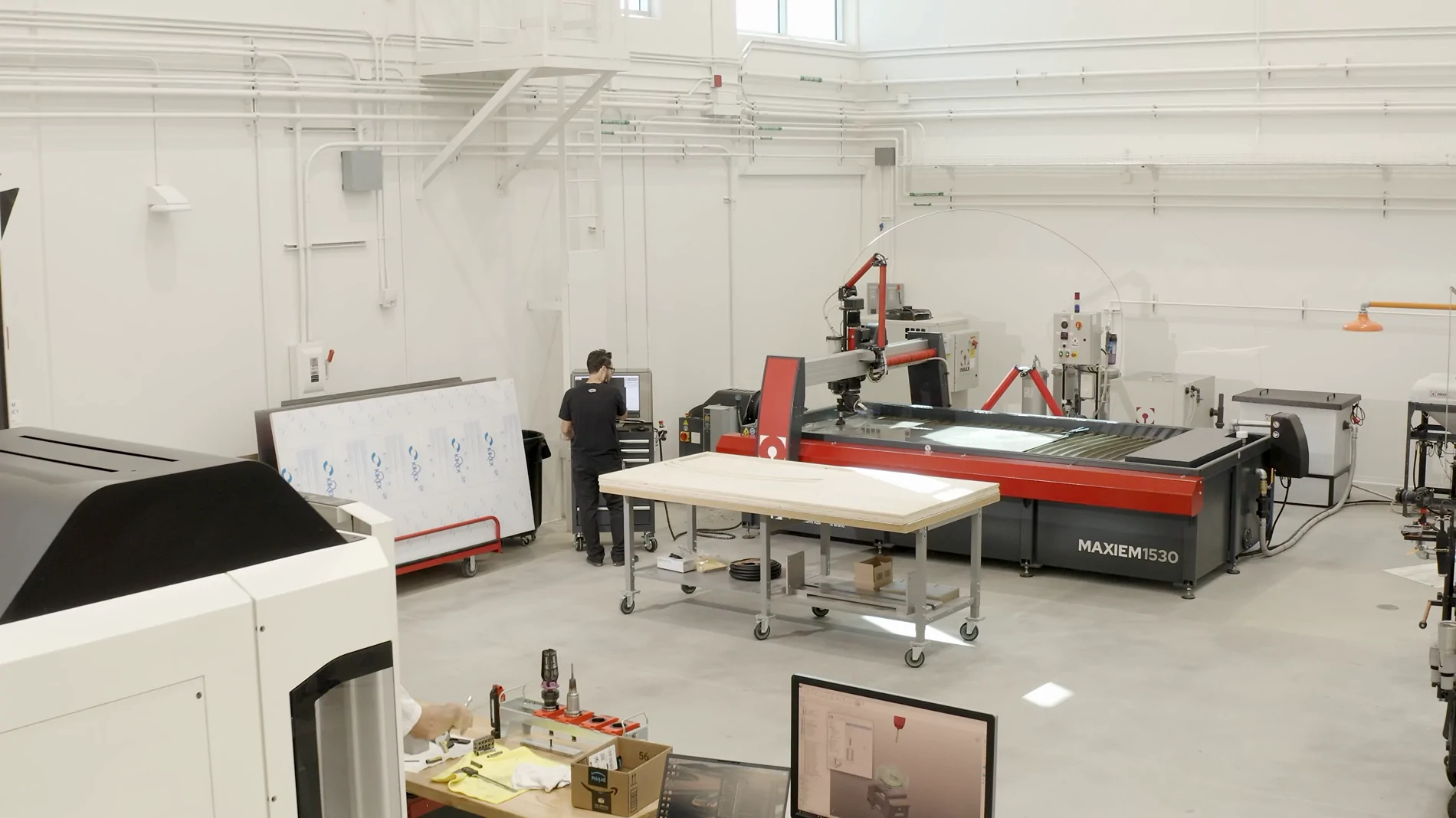
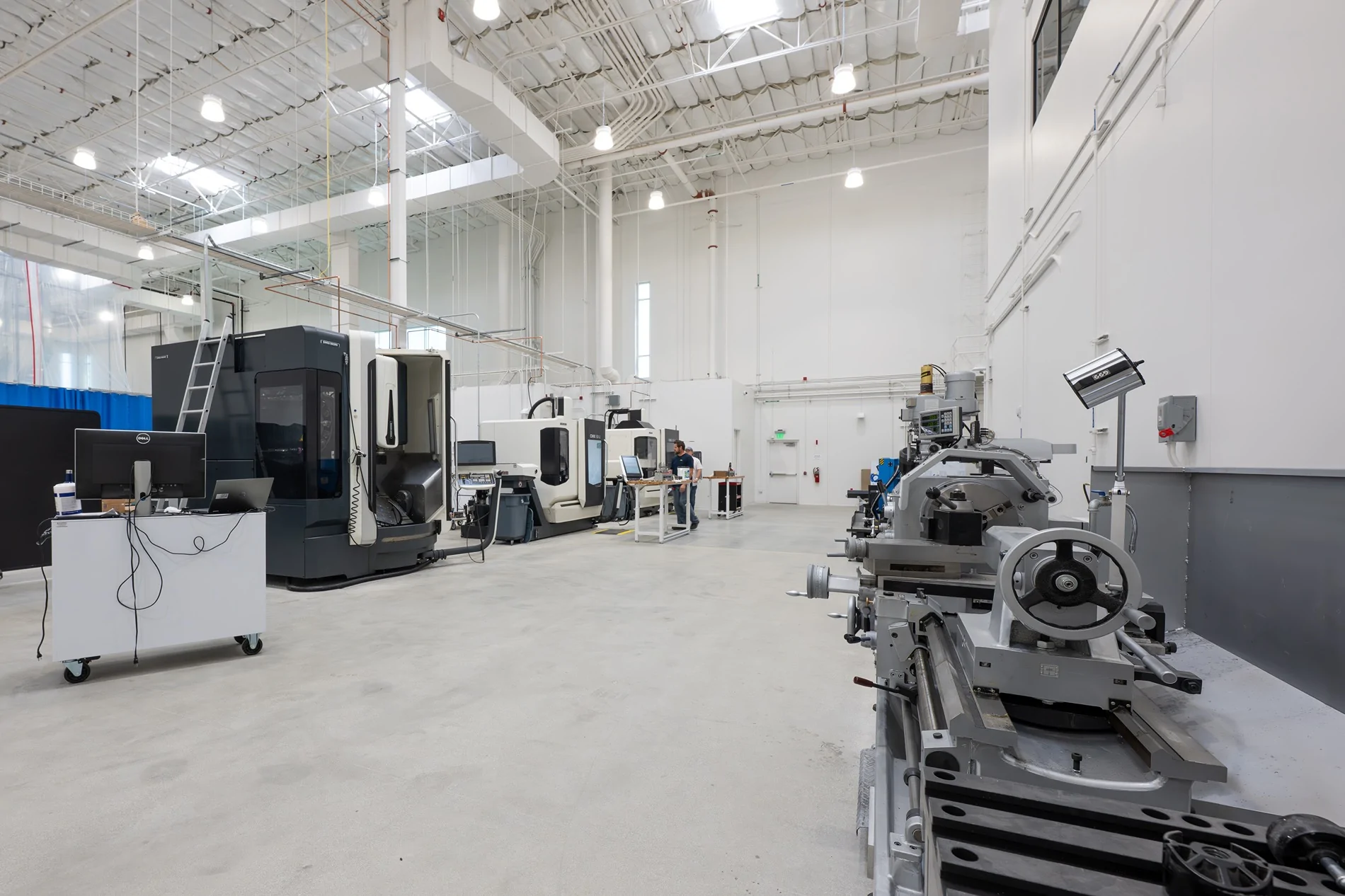
Down the hall in the fabrication shop, the centerpiece was a huge foam milling machine. They said it had the ability to make any size and shape part out of pink foam, from a small switch all the way up to an entire foam vehicle for aerodynamic testing. Foam examples shown were an entire hood and a tailgate. They also had about a dozen Bambu Labs 3D printers, and a larger SLA machine. Not shown to us, but they also have a complete metalworking shop including a waterjet cutter, multiple CNC machines, press brake, and welding tables. The paint shop allows them to test any color combination or surface finish (matte, gloss) on interior or exterior parts. Basically, in this part of the budling they can rapidly make whatever shape and size material they need to for mockup and prototyping purposes.

Ford F-150 Lightning Ford Skunkworks (EVDC) visit - behind the scenes look & report {filename}

Ford F-150 Lightning Ford Skunkworks (EVDC) visit - behind the scenes look & report {filename}

Ford F-150 Lightning Ford Skunkworks (EVDC) visit - behind the scenes look & report {filename}


To demonstrate the past, they had a plywood mockup of a generic prototype vehicle with real seats installed. This was the “old” method to test spacing, roominess, and sightlines. The new method involves the use of 3D foam cutting, painting, and fabricated metal parts to make mockups that are more accurate than ever before. Small design changes can be precisely iterated.

Battery Lab

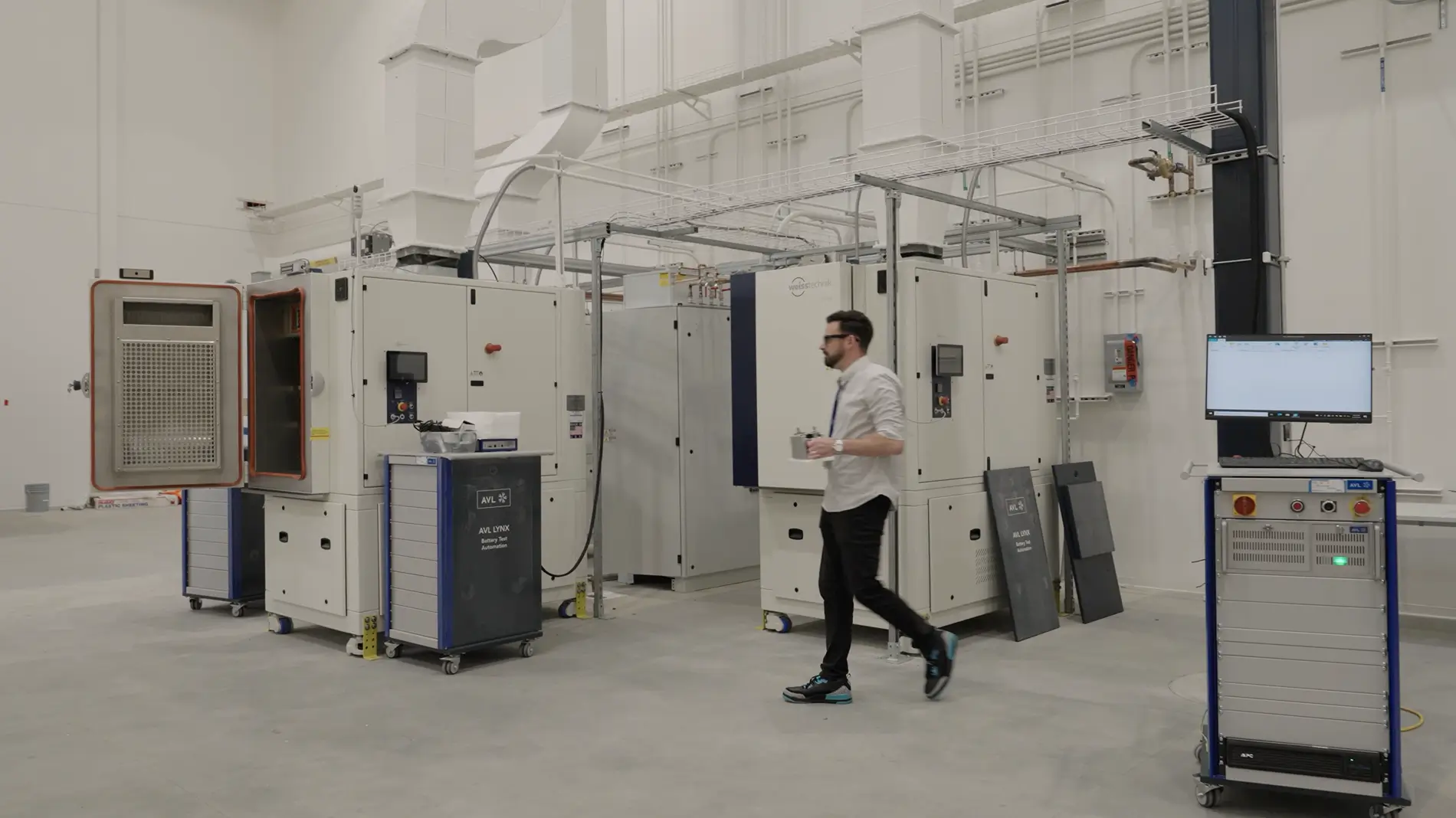
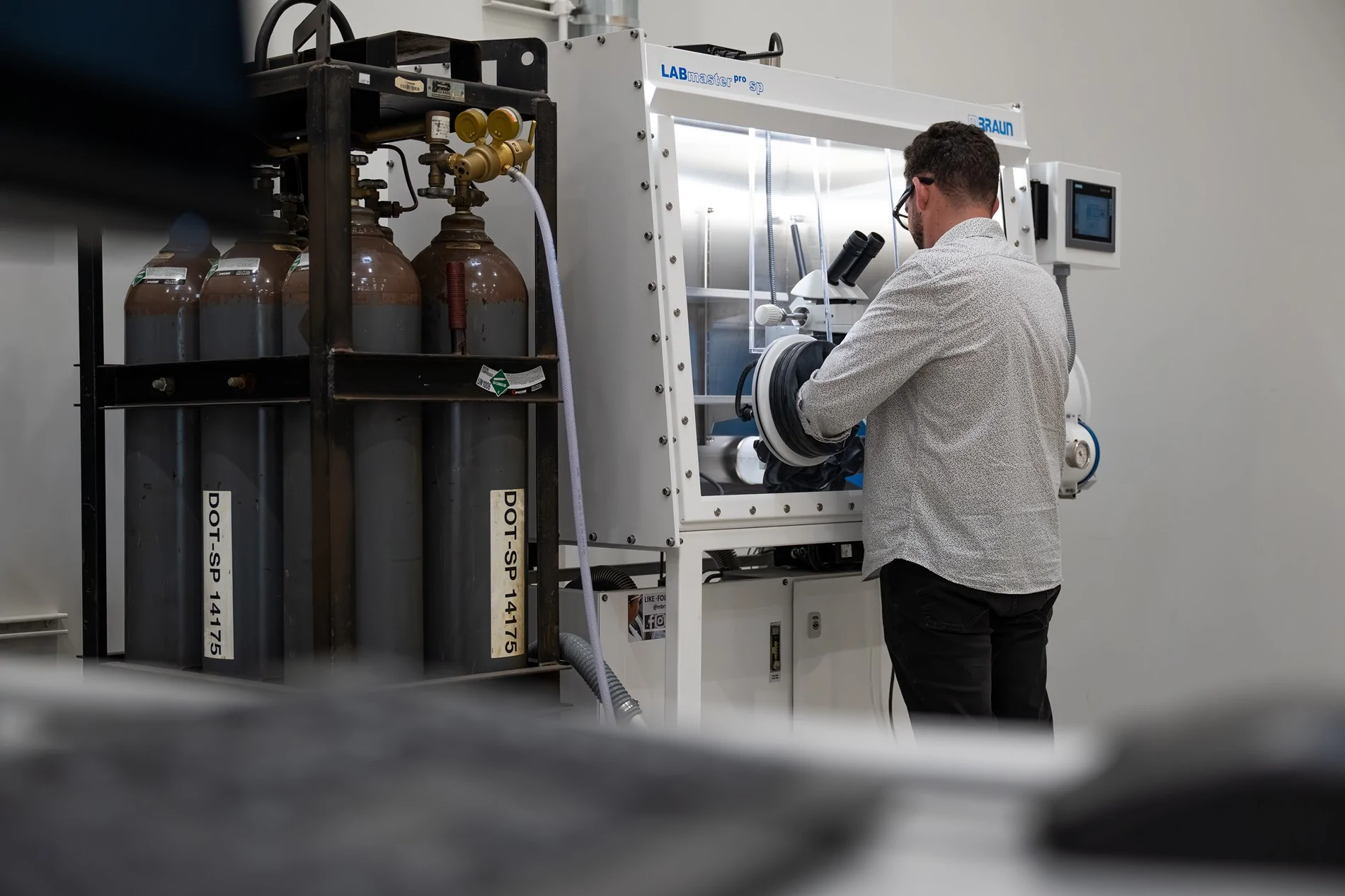
This area was still under development, but had several environmental chambers for battery cell testing. They also had a laser welder (for welding cell tabs), and a glove box (inert atmosphere) for dissembling cells. The centerpiece was a large overhead crane assembly, this would be used to lift cell modules and battery packs. They said this is where they can explore different battery pack assembly methods.

Ford F-150 Lightning Ford Skunkworks (EVDC) visit - behind the scenes look & report {filename}

Ford F-150 Lightning Ford Skunkworks (EVDC) visit - behind the scenes look & report {filename}


Thermal Lab

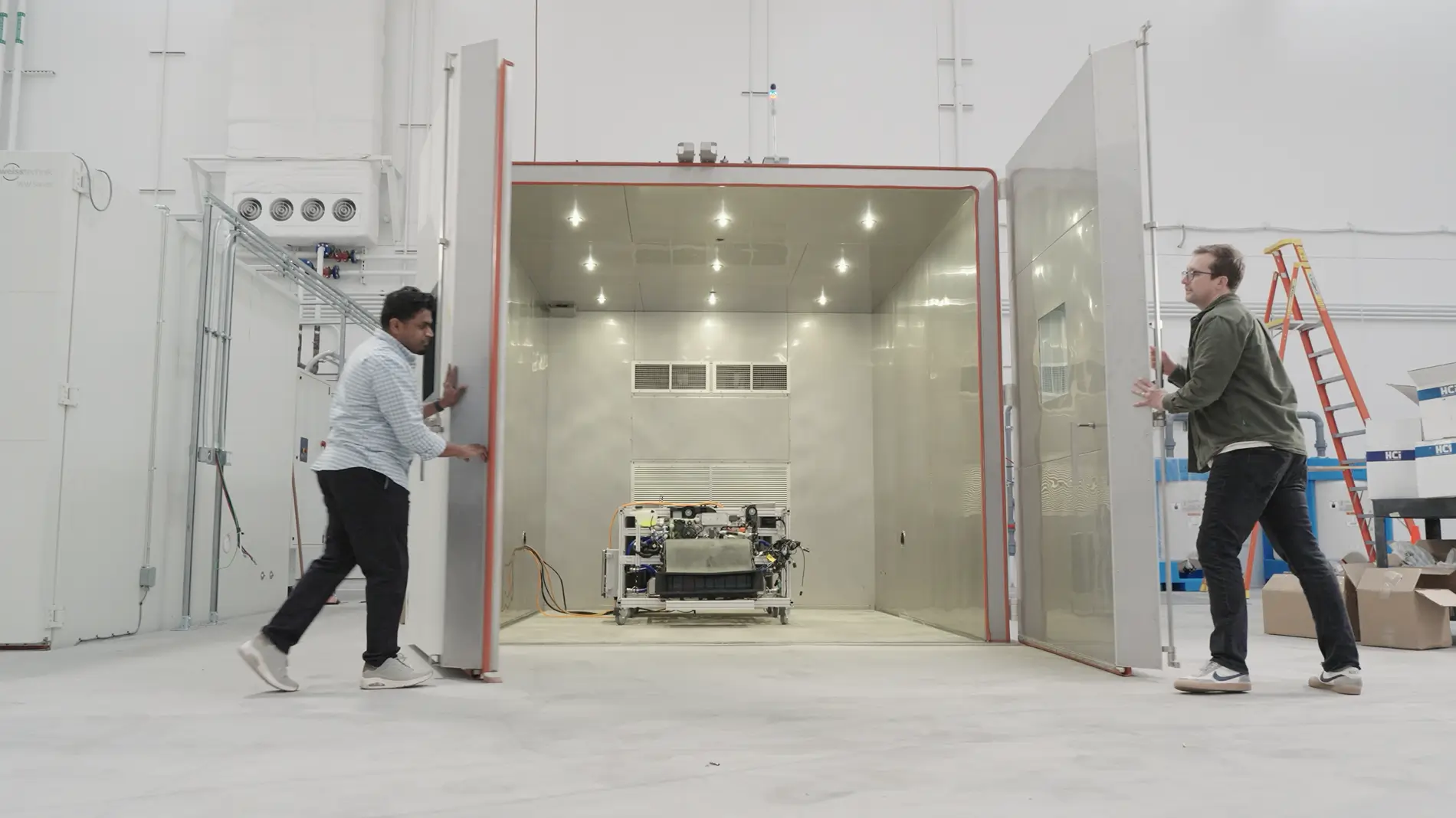
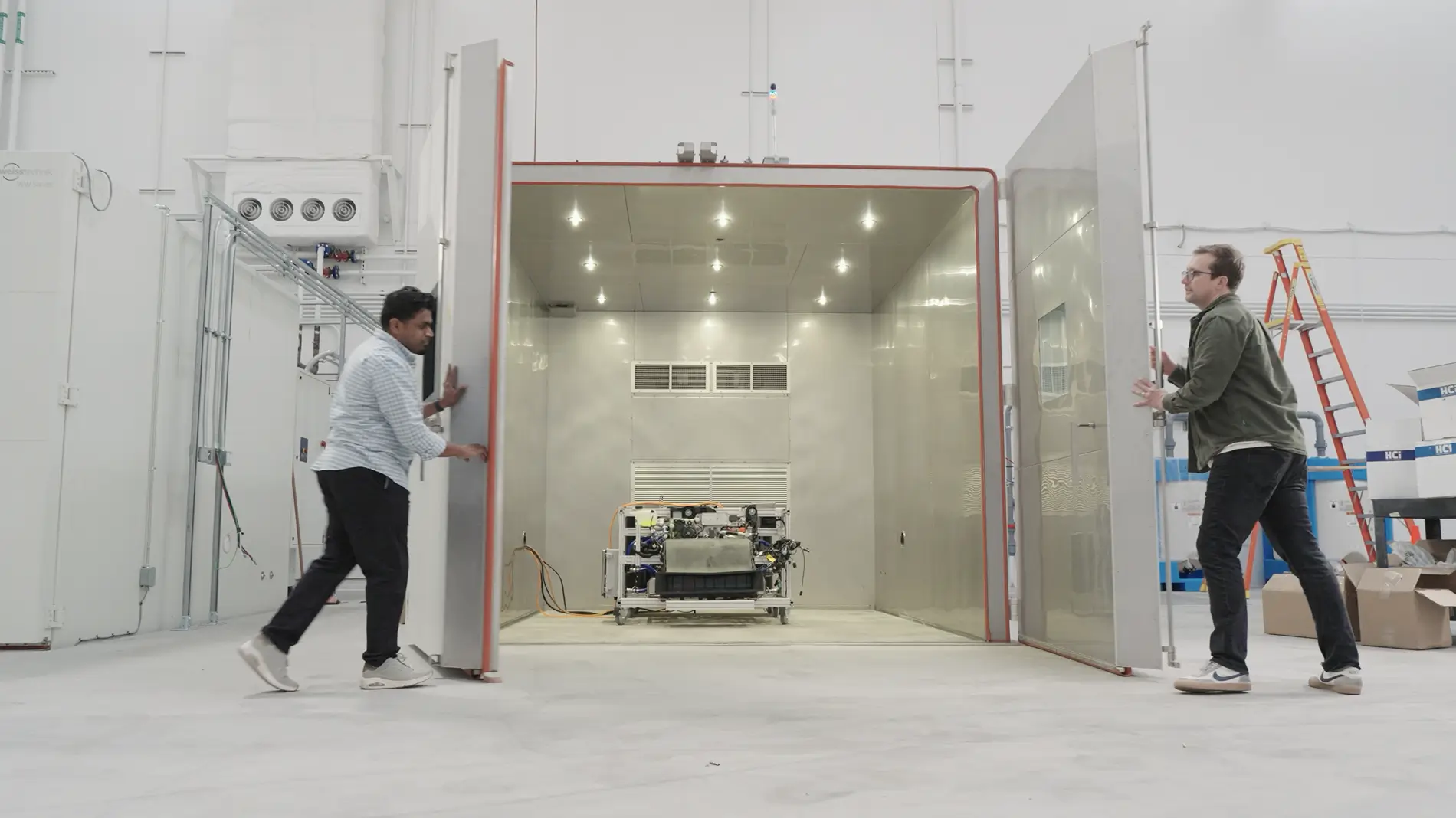
This area has several large environmental test chambers for testing the extremes of temperature on components. Some of the chambers was large enough to contain an entire battery pack or subassembly. One was large enough to contain an entire vehicle, and has solar lighting installed (to simulate the heat of the sun). They said they will test the vehicles in temps ranging from -40ºC to +60ºC.

Ford F-150 Lightning Ford Skunkworks (EVDC) visit - behind the scenes look & report {filename}


The crown jewel here was a very large (small house size) environmental chamber being built around a rolling AWD dynamometer. The car sits in the center with wheels spinning on the rollers. This high-precision dynamometer is capable of simulating whatever speed and road load profiles they want. Other features are a gigantic fan for simulating wind, and there will be a full solar array installed near the ceiling of the chamber to simulate solar loads. There will also be a high-power DC fast charger installed immediately adjacent to recharge vehicles on the dyno, with high-fidelity energy monitoring. For example, they can simulate the road load of driving up a mountain on a hot day and then immediately DC fast charging to stress the vehicle thermal systems. This dyno will also be certified for EPA range testing (it will run the EPA test cycles, every Wh measured), so Ford can determine the MPGe and range that goes on the window sticker.

High Voltage and Electrical Lab

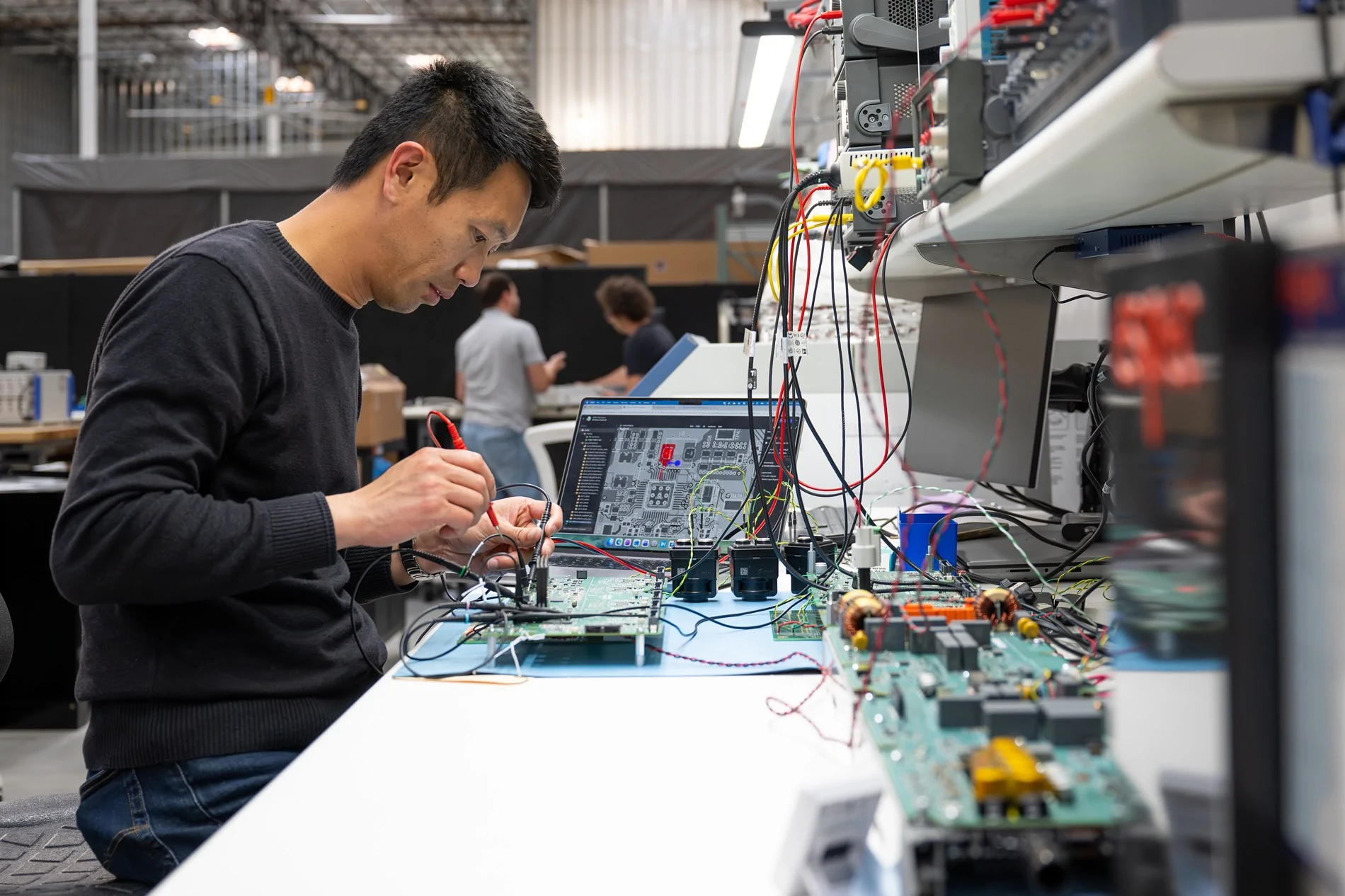
This lab was the most technologically advanced. There were racks of electronics equipment, wires going everywhere. Lots of test equipment and soldering stations for working on circuit boards. More environmental test chambers with battery cells inside. They were currently running an EPA discharge cycle on a test cell, monitoring voltage and current. On a table they had a few high voltage components out on display us, a motor inverter, the Ebox, and the charge port. The Ebox contains the high voltage contactors, as well as the on-board charger, DC/DC converter (48V output), and inverter for AC output/bidirectional charging. There are liquid cooling ports on the end of it for the power electronics, it’s essentially an extra-long HVBJB but overall much smaller than the size of the legacy parts it would replace. The charge port was very interesting—it’s a NACS port with a locking mechanism, but they have also integrated a local body module on the backside of it, a 2-in-1. There are wire harness connectors at the bottom back of it, these might be used to power nearby body components such as the charge port door and the taillights. Interesting design choice for sure.

Ford F-150 Lightning Ford Skunkworks (EVDC) visit - behind the scenes look & report {filename}

Ford F-150 Lightning Ford Skunkworks (EVDC) visit - behind the scenes look & report {filename}


There was a brief stop with a Faraday tent and dipole antenna for testing spurious RF emissions of electronics. Basically, they can make sure the power electronics are not going to cause interference to AM/FM radio, broadcast, or military radio frequencies.

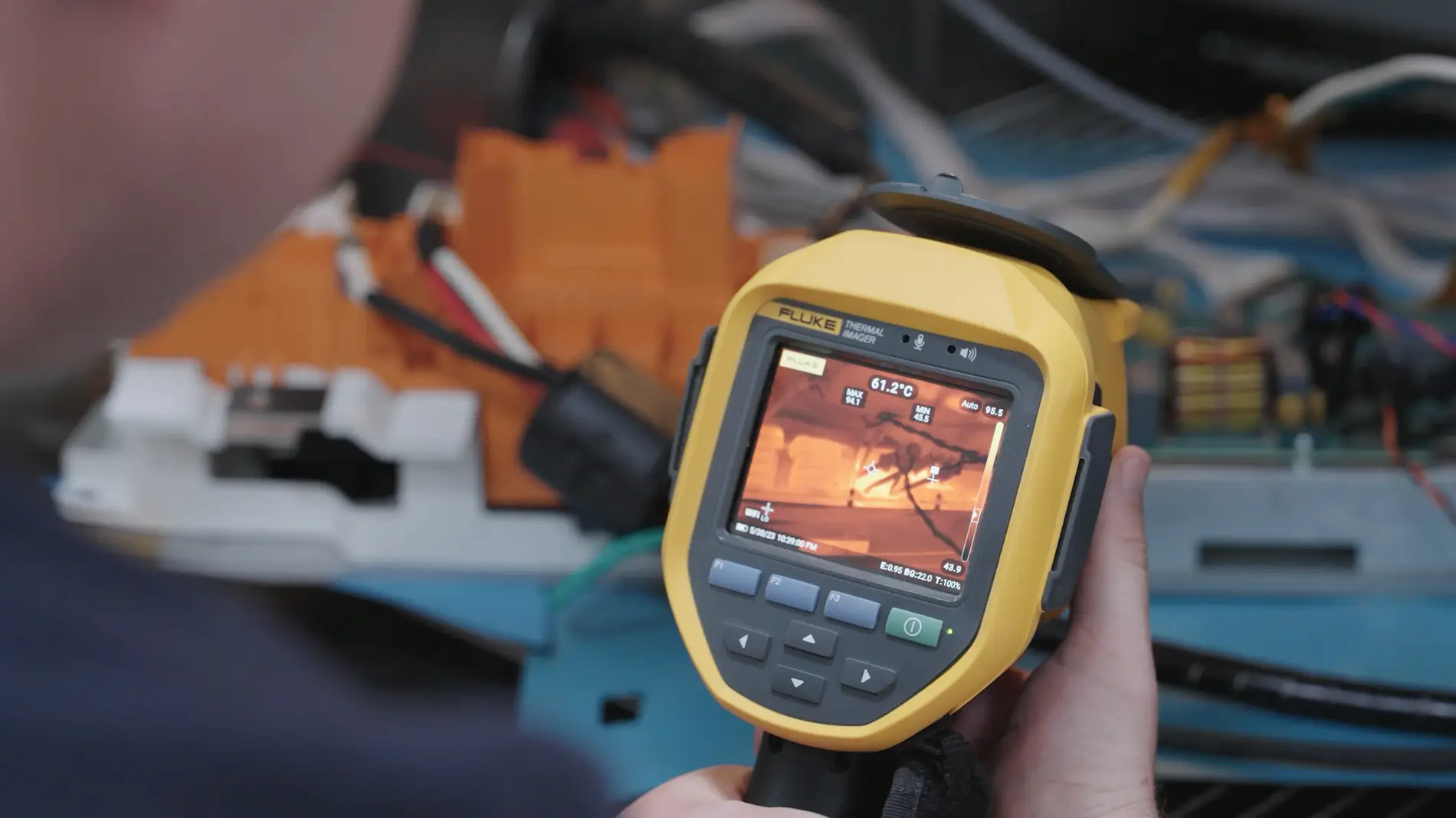
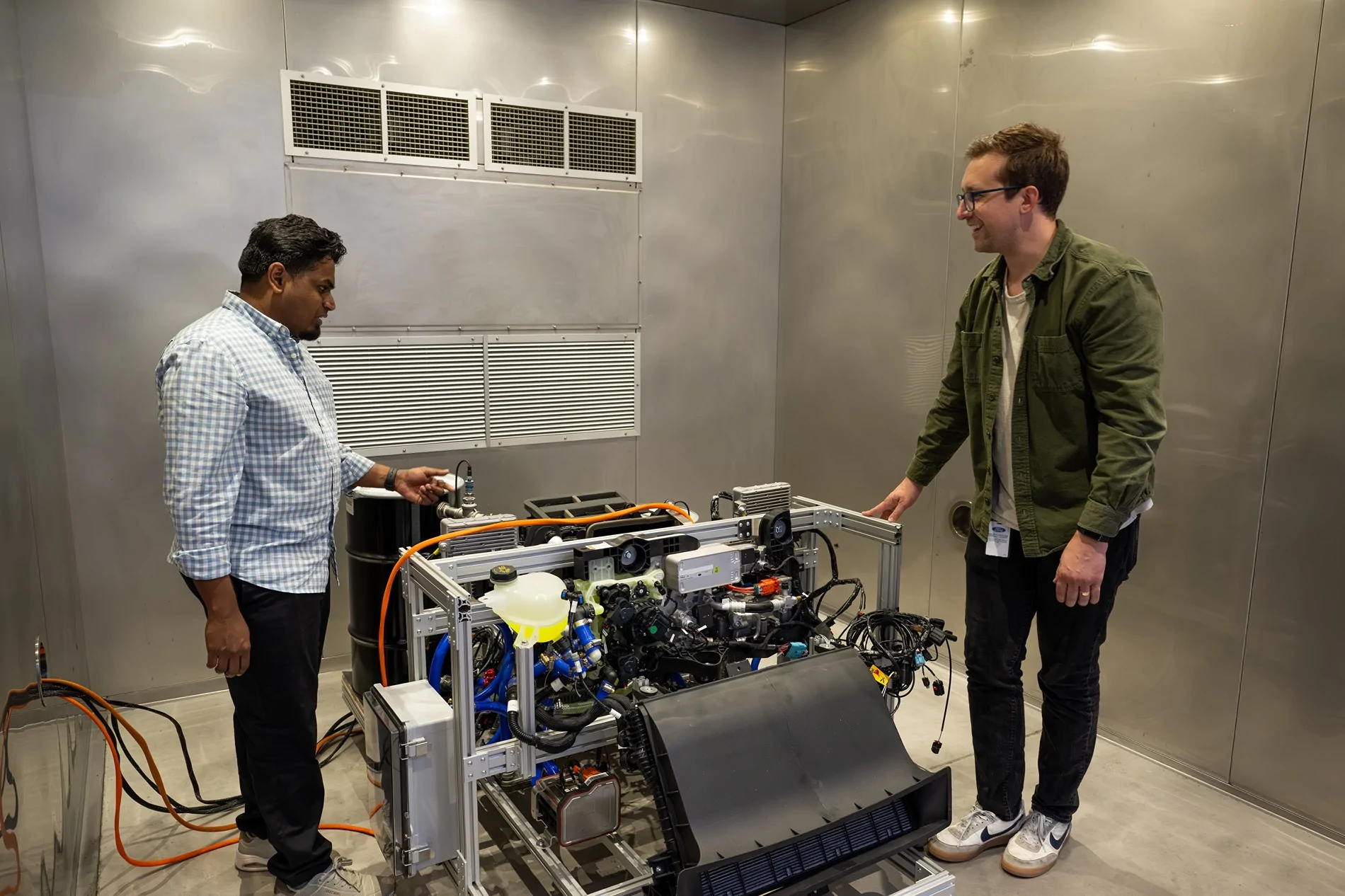
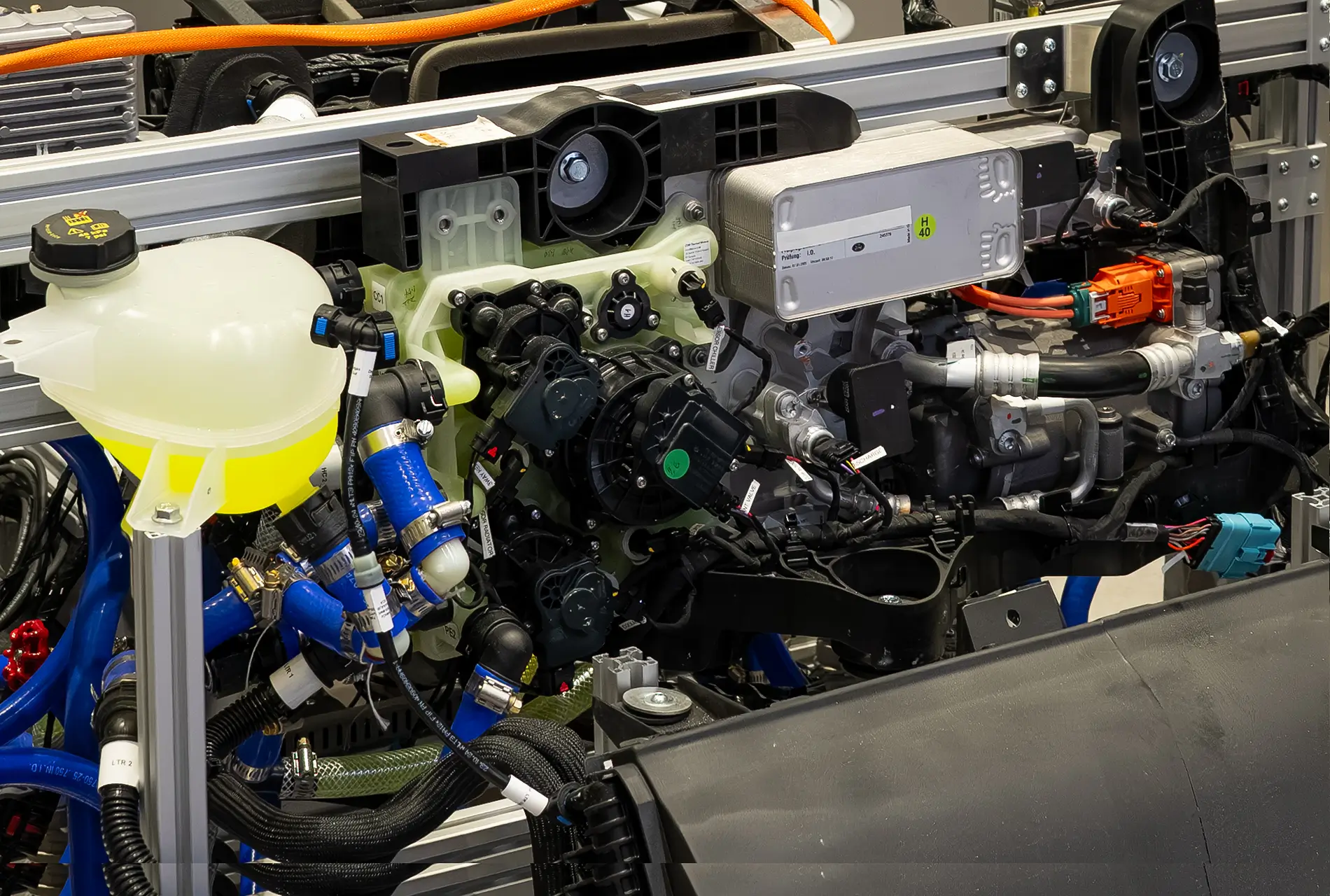
The next station was my favorite—it showed the new heat pump and thermal/HVAC system installed in the front unicasting. All the coolant hoses were hooked up for testing in an environmental chamber. The big news here is Ford has designed an integrated coolant manifold that is the size of a large textbook (contains several pumps and valves in one). This would be Ford’s equivalent of the Tesla Octovalve. This manifold is the consolidated solution to all the crazy coolant piping and pumps everywhere in the current generation Ford EVs. All the inputs/outputs are consolidated on the left side (looks like about four loop pairs), and the run to heater core is much more direct. There were two plate heat exchangers or chillers, I presume one for water-to-refrigerant and the other for water-to-water heat transfer. They said with this setup they can basically transfer heat to and from whatever components they need to (e.g. motor to cabin, charger to battery, etc.)

Ford F-150 Lightning Ford Skunkworks (EVDC) visit - behind the scenes look & report {filename}


Closeup of new coolant manifold:

Ford F-150 Lightning Ford Skunkworks (EVDC) visit - behind the scenes look & report {filename}


The compressor is mounted right next to the coolant manifold on the same frame, EEVs right there too. Another big new feature they announced is the heat pump is capable of vapor injection or hot gas bypass. This is a feature of cold weather heat pumps, and allows the heat pump to continue operating and essentially generate its own heat down to a colder ambient temperature. They said this will allow the elimination of the PTC heater, although the prototype still had a PTC heater installed. Hopefully this new thermal system is up to keeping the cabin and battery warm even in harsh Canadian arctic temps, while being more efficient.

The thermal system was packaged nicely along the firewall, this should allow there to be a small frunk space in front of it. Probably not much bigger than medium duffle bag, but that’s the tradeoff for having a heat pump.

Wiring Integration Lab

There were several body components from the truck connected together with wiring harnesses (headlights, taillights, window regulators, switches, steering wheel, touchscreen) on a test grid. This is used to test for any mistakes in a device’s pinout (such as swapped signal and ground pins) and to integrate all the modules together and make sure they talk to each other as expected.

I saw some interesting things here. Speculation warning, none of this is confirmed. The center touchscreen was covered, but is horizontal, about a 13” screen. There was not a separate instrument cluster screen (but perhaps it had been removed). The steering wheel was there, and the buttons on it seem to be a new layout for Ford. Rather than defined buttons, there was a small scroll wheel on each side, and also a left and right arrow button on each side. Still had stalks on both sides as well. That’s about it. That would support the presence of a more software defined UI experience. The thumbwheels and screen remind me of a Tesla Model 3/Y (also sans instrument cluster?).

The NACS charge port was in the left rear of the vehicle. Next to it was another module, my best guess is this is an AC outlet panel for the bed. Likely powered off the Ebox. That fits with what Ford would likely do with their history of Pro Power Onboard on their trucks.

The wiring mockup was being powered by a power supply installed in the location of the Ebox (backseat area). I did not see any low voltage battery in the setup. Nor did I see any provisions for one. The DC/DC is in the Ebox, so ideally the LVB would be located close by. Wonder if they figured out a way to eliminate a LVB, we’ll see.

Harness Lab

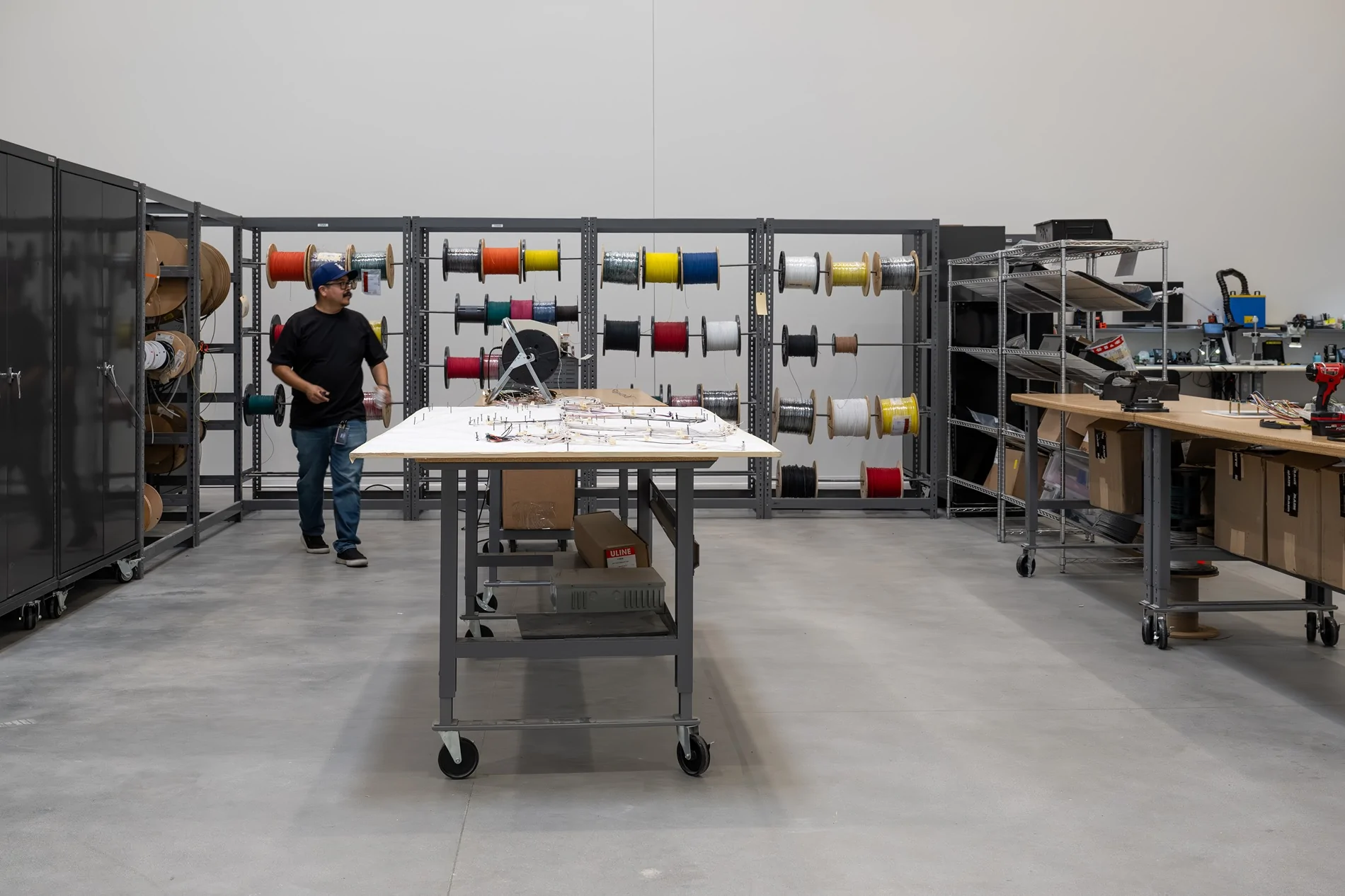
Here they can build whatever wire harness they need, with whatever connectors they need. Pretty self-explanatory. Spools of wire, bins of connectors and pins, soldering/test station. They were building a harness on a board with nails for each intersection.

Ford F-150 Lightning Ford Skunkworks (EVDC) visit - behind the scenes look & report {filename}


Metrology Lab

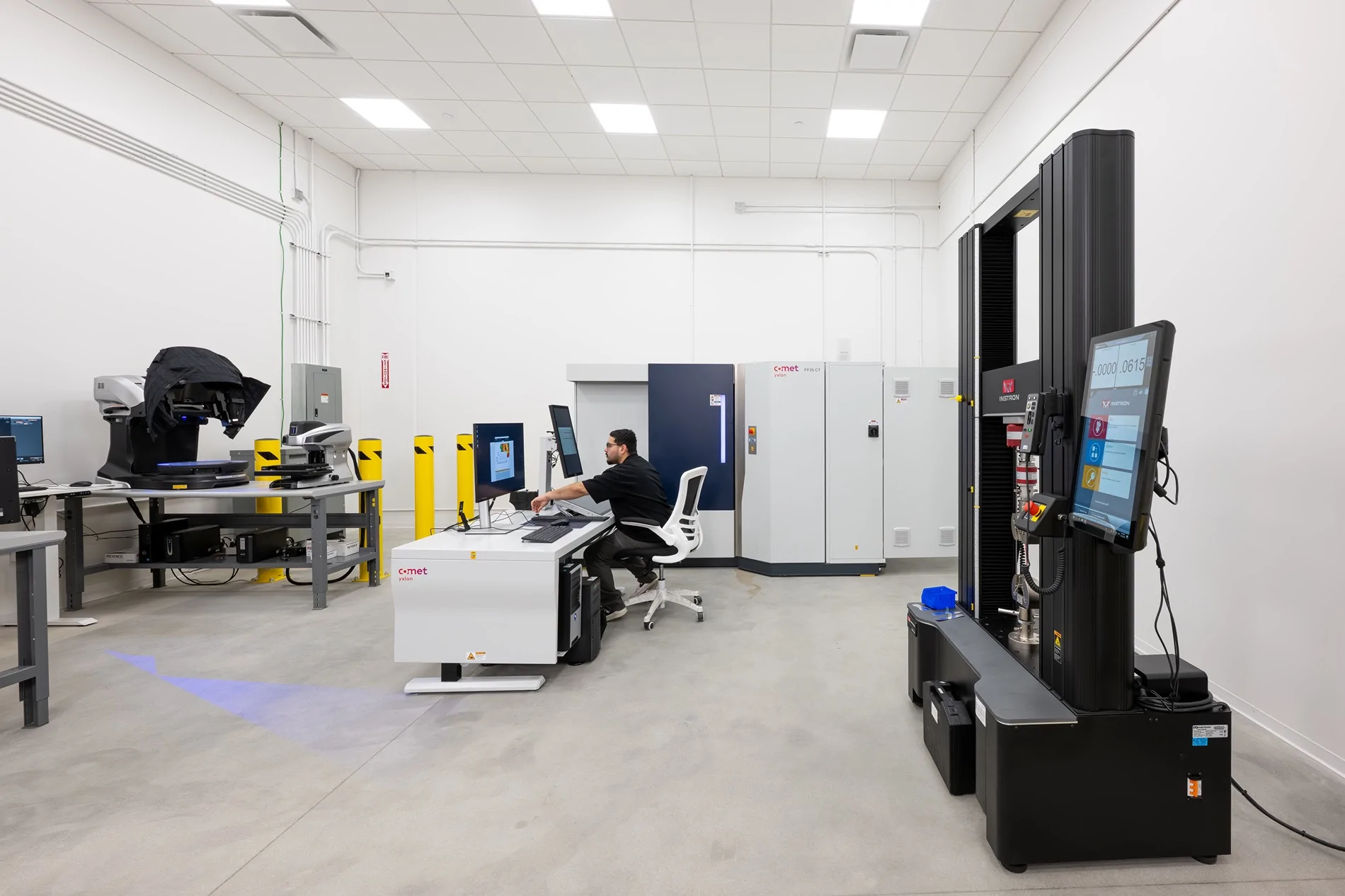
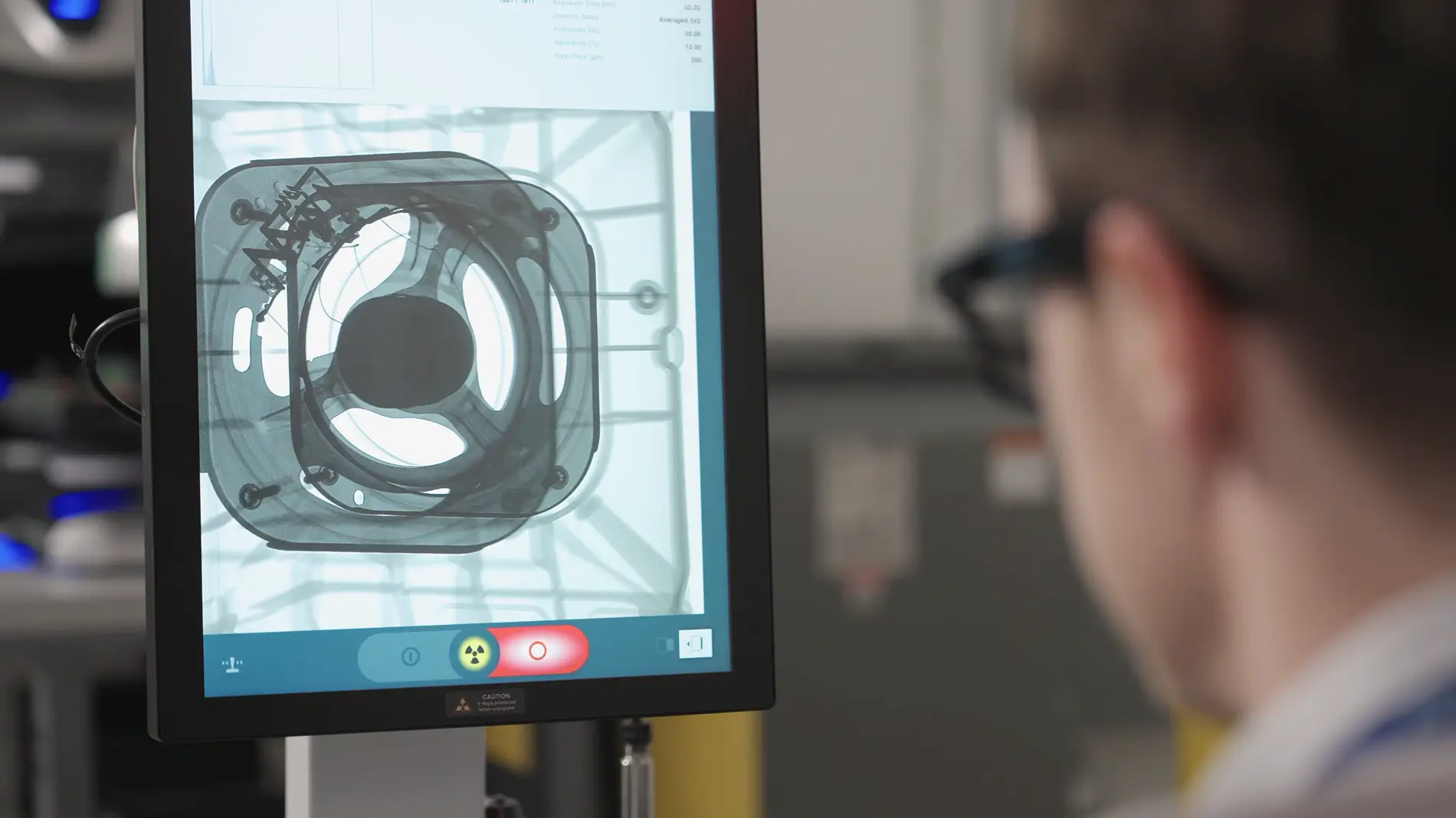
Metrology is the science of measurement. This lab has several machines for measuring dimensions and properties of materials. First shown was a handheld 3D laser scanner which can measure and verify part dimensions. A center console was scanned for a demo. They had a universal testing machine or tensile tester. They pulled a piece of metal plate apart with it to measure the stress-strain curve. They also had a large industrial CT scanner, which can see inside parts. This can be usual for finding voids or electrode defects, also for examining for cracked solder joints, among many uses. They also had a measuring microscope, turntable 3D scanner and a laser-induced breakdown spectrometry (LIBS) machine for determining elemental composition.

Ford F-150 Lightning Ford Skunkworks (EVDC) visit - behind the scenes look & report {filename}

Ford F-150 Lightning Ford Skunkworks (EVDC) visit - behind the scenes look & report {filename}


Fleet Center

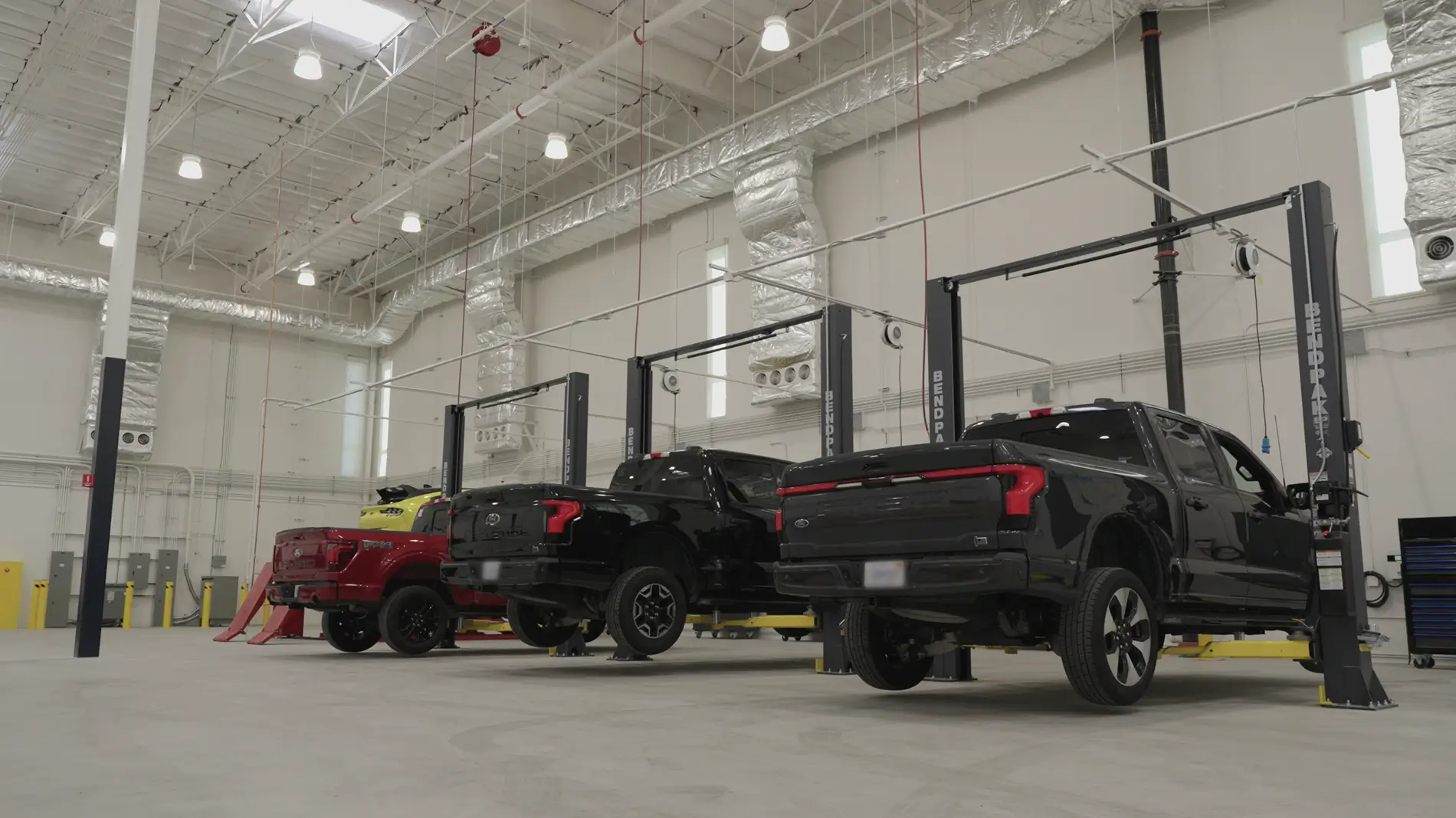
Last was a large garage with about six two-post lifts. They said these are used to work on prototype vehicles and test mules. For example, they can raise or take apart vehicles to install extra instrumentation sensors. The technician recalled recently installing over 500 thermocouples at various places in the vehicle for real-world thermal testing.

Ford F-150 Lightning Ford Skunkworks (EVDC) visit - behind the scenes look & report {filename}


Conclusion

On our walk back to the entrance, we were surprised by a camouflaged test mule of the truck. To put some things in perspective, it looked bigger than a Maverick but smaller than a Ranger. Similar ground clearance, probably around 8”. The front looked more like a rounded SUV nose rather than the boxy truck (but not ugly). Roof had the distinctive curved down slope and the bed looked about the same length as the maverick (4.5’). They supposedly have stated test production and final validation with about 100 units scheduled. They still anticipate a mid 2027 release for the truck.

Overall, this was an impressive tour that showcased Ford’s investment in EVs and the future of the company. There were a lot of expensive machines here. But overall, the EVDC feels much like a smaller start-up engineering firm. I guess that’s the best of both worlds, small company vibe with the freedom to do things their way, but backed by the major capital of Ford. I liked what I saw, overall these guys should have to tools at their disposal to make a great EV.

Ford F-150 Lightning Ford Skunkworks (EVDC) visit - behind the scenes look & report {filename}

Sponsored
 

ryun

Well-known member
Joined
Jan 17, 2023
Threads
15
Messages
355
Reaction score
429
Location
Earth
Vehicles
2022 Kia EV6 Wind AWD, 2023 Lightning XLT SR
There were a lot of reasons why I bought my Lightning, but one of the reasons was so that I could help invest in the build out of more electric vehicles for the US fleet. Happy to see my small investment paying off. Fingers crossed it's a great vehicle like the Lightning and that it gets more sales so we can all keep the momentum going.
 

Sponsored
OP
OP
MidAtlanticLightningClub

MidAtlanticLightningClub

Well-known member
First Name
Mark
Joined
Aug 28, 2024
Threads
26
Messages
401
Reaction score
518
Location
Maryland
Vehicles
F-150 Lightning Lariat ER
Occupation
retired
Here's the first hand from @Kamuelaflyer on the Mach E Forum:

Since the cat got me up early, I'll add my thoughts about the tour and what we saw. It was a great experience, and I think we're in for an interesting year.

A Visit to Ford’s EV “Skunk Works” (EVDC)

TL;DR (Quick Takeaways)


  • Visited Ford Motor Company’s EV Development Center in Long Beach
  • Yes, saw a camouflaged midsize EV pickup (details limited)
  • Bigger story: Ford is rethinking how EVs are designed and built from the ground up
Key themes:

  • No process is untouchable
  • Every step has to justify itself
  • Legacy processes don’t get tenure
What stood out:

  • Assembly “tree” (modular build) instead of traditional line
  • Unicasting (large structural castings) to reduce parts and cost
  • Zonal architecture → fewer modules, much less wiring
  • Wiring harness example: ~4,000 ft shorter, ~22 lbs lighter
  • Advanced environmental dyno replacing some extreme-condition testing
  • New E-box consolidating multiple electrical functions
  • Heat pump system targeting the elimination of resistive heating
  • Native NACS port expected
The truck (brief sighting only):

  • Clearly midsize
  • Bigger than Maverick, smaller than Ranger
  • Definitely not full-size and not an updated Ranchero
  • Beyond that = guesswork
Why it matters:

  • Potential for lower-cost EVs
  • Faster updates and improvements
  • Better reliability at launch
  • Fewer early adopter headaches

Full Write-Up

On April 29, I had the opportunity to visit Ford Motor Company’s Electric Vehicle Development Center (EVDC) in Long Beach.

Yes, we saw a heavily camouflaged midsize EV pickup.

But the truck itself isn’t the main story.

The real story is how Ford is rethinking how EVs are designed, tested, wired, assembled, and repaired.


A Different Kind of Operation

The EVDC operates very differently from a traditional automaker environment. Engineering, design, testing, and manufacturing are co-located, enabling faster iteration and real-time problem solving.

During the tour, Ford explicitly referenced Kelly Johnson and the original Skunk Works approach—small, focused teams moving quickly and challenging assumptions.

That mindset shows up everywhere:

  • No process is untouchable
  • Every step must justify itself
  • Legacy processes don’t get a free pass

Assembly Is Being Rethought

Ford is exploring a modular “assembly tree” approach rather than a traditional linear assembly line.

Vehicles are built in major sections:

  • Rear
  • Mid (including battery and floor)
  • Front
These sections are assembled separately and joined later in the process.

The goal is fewer parts, fewer workstations, and faster production. The challenge will be synchronizing parallel assembly streams without creating bottlenecks.


Simplification: Fewer Parts, Fewer Wires

Two major shifts stood out:

Unicasting (similar to gigacasting):

  • Large structural components replacing many smaller parts
  • Reduced complexity, cost, and weight
  • Repairability addressed through cut zones and adhesive-based fixes
Zonal architecture:

  • Fewer, more powerful centralized computers
  • Dramatically reduced wiring
  • Easier updates and diagnostics
One example shown:

  • Wiring harness ~4,000 feet shorter
  • ~22 pounds lighter

Testing and Systems Integration

The EVDC includes an advanced environmental dyno capable of simulating:

  • Extreme temperatures (-40°C to 60°C)
  • Load, wind, humidity, and terrain
This allows more testing in controlled conditions rather than relying entirely on real-world extremes.

Other highlights:

  • E-box consolidating multiple electrical functions
  • Heat pump system aiming to eliminate resistive heating
  • Native NACS charging integration (port location still not finalized)

The Truck (What We Actually Saw)

We did get a brief look at a camouflaged pickup entering the fleet area.

Based on that short view:

  • It is clearly midsize
  • Larger than Maverick, smaller than Ranger
  • Not full-size
Beyond that, any precise sizing or configuration would be speculation.


Why This Matters

For EV adoption, this approach could lead to:

  • Lower costs through simpler manufacturing
  • Faster iteration and updates
  • Improved reliability at launch
  • Fewer early adopter issues
In short, a smoother experience for mainstream buyers.


Bottom Line

This isn’t just about a single vehicle.

It’s about whether Ford can successfully simplify how EVs are built.

If they can, it could influence how the next generation of EVs is designed and manufactured.
 

Maineiac12

Well-known member
Joined
Feb 14, 2024
Threads
39
Messages
636
Reaction score
830
Location
Iowa
Vehicles
2024 F-150 Lightning Flash 312A
What do companies have against a passenger side front charge port location? It would be compatible with Tesla superchargers and much better for towing than driver side rear.
 

CD4TNF

Well-known member
Joined
Jun 8, 2024
Threads
25
Messages
324
Reaction score
427
Location
PNW
Vehicles
2022 F150 Lightning Platinum
Video from The Electric Duo talking about their experience.

 
OP
OP
MidAtlanticLightningClub

MidAtlanticLightningClub

Well-known member
First Name
Mark
Joined
Aug 28, 2024
Threads
26
Messages
401
Reaction score
518
Location
Maryland
Vehicles
F-150 Lightning Lariat ER
Occupation
retired
Video from The Electric Duo talking about their experience.

A link to their video was in my original post that started this thread. Then the admin deleted my post and replaced it with a link to the Ranchero forum.
 

Sponsored

RickLightning

Well-known member
Joined
Jan 17, 2022
Threads
112
Messages
7,086
Reaction score
9,739
Location
SE MI
Vehicles
'22 Lightning ER Lariat,'22 Mach-E Premium 4X
OP
OP
MidAtlanticLightningClub

MidAtlanticLightningClub

Well-known member
First Name
Mark
Joined
Aug 28, 2024
Threads
26
Messages
401
Reaction score
518
Location
Maryland
Vehicles
F-150 Lightning Lariat ER
Occupation
retired
It's interesting timing that VW just released this announcement:

VW TESTS ‘GAMECHANGER’ AT WOLFSBURG

Volkswagen Group has started a pilot production process at its Wolfsburg headquarters. The project carries the internal codename Gamechanger. Its aim is simple enough: cut costs, lift manufacturing efficiency and make profitable electric vehicle production in Germany viable.

Volkswagen faces pressure to restructure its European production network, cut overcapacity and reduce costs. At the same time, it is preparing to launch its next-generation SSP electric platform.

The project will widely be expected to include megacasting. That process forms large body sections from a few high-pressure cast parts instead of hundreds of individually stamped components. Volvo has since adopted megacasting on its new EX60.

Also, major modules such as the front-end, dashboard and underbody will get built on separate lines before workers merge them into a finished vehicle.

The appeal is plain. A single bottleneck can stop a conventional production line. Parallel assembly streams remove that single point of failure. According to proponents, that approach can halve both factory footprint and production costs, while also speeding throughput.

Wolfsburg is expected in time to build an electric Golf on the SSP platform, along with an SUV counterpart. The likely names are ID. Golf and potentially ID. Roc, though Volkswagen has not officially confirmed any model names.

https://evne.ws/4tgruSM
 

bmwhitetx

Well-known member
First Name
Bruce
Joined
May 21, 2021
Threads
48
Messages
3,146
Reaction score
4,516
Location
DFW-Texas
Vehicles
2022 F150 Lightning Lariat ER
Occupation
Retired engineer
A link to their video was in my original post that started this thread. Then the admin deleted my post and replaced it with a link to the Ranchero forum.
Ok they made this very confusing. Yours was a good report but it’s gone while other reports have now been added here.

I suggest you edit your first post and leave their redirect but add back in your original report. They are just trying to drive traffic to their new forum. That’s understandable but this info is fine to be on this forum also.
 

21st Century Truck

Well-known member
First Name
Martin
Joined
Jul 11, 2024
Threads
17
Messages
1,104
Reaction score
1,320
Location
Virginia
Vehicles
Ford 150 Lightning 2023 XLT ER pkg. 312A
A propos of Ford's likely EV truck market segment aim: had an all-electric Maverick or Ranger been available in 2024 I probably would have bought one rather than the Lightning.

Of course, Ford had to start somewhere, and my Lightning has served me very well other than in downtown high-rise underground parking lots 🤣
 

Grumpy2

Well-known member
Joined
Nov 23, 2022
Threads
21
Messages
1,110
Reaction score
1,218
Location
Central Oregon Coast
Vehicles
23 F150 Pro SR
Occupation
Retired Hvy Construction
These reports are exciting. FORD is clearly not backing away from EVs as some folks are afraid, and they have learned much from the previous models. This dog and pony show was an excellent idea.

Our Lightnings will be outdated, sure, but not replaced in the near term, and I believe FORD will support them fully.

I think FORD has a good chance to survive the wave of Chinese products on the market so far.

True success will depend on the battery charging curve. Will a 10-90% charge get down below 15 minutes, as the Chinese apparently can do ???
Sponsored


Top