


ClevelandBeemer
Well-known member
Anything but make it charge faster…. 
Sponsored
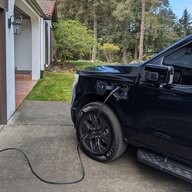
If they announced the addition of an EREV option *without* saying it replaces the existing Lightning... I think many people, including me, would see it this way. That's not what happened.A lot of people here see the EREV as a downgraded BEV lightning, I see it as an upgraded powerboost, with potentially simpler architecture and larger EV range.

100% this.If they announced the addition of an EREV option *without* saying it replaces the existing Lightning... I think many people, including me, would see it this way. That's not what happened.
Instead, they cancelled one of the only good BEV truck options and thought that promising us an EREV on an "eventually" timeline would soothe the pain. It doesn't. It's a sign from Ford that they don't understand many of their existing Lightning customers.
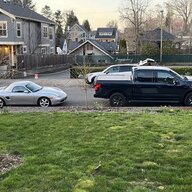
I cannot agree more that an EREV/PHEV can be the worst of both worlds. I had a Porsche Cayenne e-Hybrid PHEV. All the expense of an ICE, and not enough EV range.If you drive/tow long distances enough that driving a BEV is an issue, then a solution already exists, it's called an ICE F150. What do you gain by getting an EREV? The additional initial cost of having two power trains, along with maintenance and complex problems will far exceed any saving you get using an inefficient EV mode that needs to haul around dead weight (engine/fuel/exhaust/cooling etc) for the few times you are not towing uphill both ways. EREV's are costly problematic training wheels for BEV's. Been out for over a decade now and the facts are out there if you do your research (I was foolish enough to buy into the marketing and learned my lesson). They will sell well to the uninformed but after people experience they are the worst of both worlds, they will go to BEV or back to ICE the next time around. Expensive lesson but for some people (including myself) we need to experience it for ourselves to learn.
Agree with you here except the coal part, if you wanted a vehicle powered by coal you'd just do full BEV and live somewhere with heavy % of coal generation. Lot less fussy than steam engines.I cannot agree more that an EREV/PHEV can be the worst of both worlds. I had a Porsche Cayenne e-Hybrid PHEV. All the expense of an ICE, and not enough EV range.
IMHO, all ICE vehicles should be Hybrid. Would improve fuel economy and simplify much of the vehicles systems using electric pumps instead of belt driven. BEV are the future however. I think that as battery technology and charging services improve that will become self evident. Except for those people whom still want to drive vehicles powered by coal.
I agree with you in principle, but doubt that the value and utility of the EREV will ever be good for anyone other than frequent long distance towers, which while they are a market, they are far from a large market.A lot of people here see the EREV as a downgraded BEV lightning, I see it as an upgraded powerboost, with potentially simpler architecture and larger EV range.
If the execution and price is right, why wouldn't I want it for the expanded capability over my BEV lighting? Most people care about value and utility, and care little about making an environmental statement.
From a simplicity point of view, I prefer BEV with removable secondary power source, much like Zach's EverDrive, but more refined. Sadly that would never be viable as a consumer production for the masses.
Eh I could see how it would be obnoxious towing, getting into my 30s I need to stretch more than ten years ago and the lightning without a trailer is the perfect timing for me personally to stretch/pee/etc.Does Ford have shares in Cath Bags or something?
Or do they think that only men drive long distances?
I'm joking, obviously, but I fail to see how *any human* can be safe on the road without taking regular breaks every few hours. And that break time is perfect for a recharging stop.
When I drive from Oregon to SoCal (which I do a fair bit) I usually cover 600-700 miles in a day. That's more than enough for safety. Ok, if you're towing, you may end up doing less (the last time I towed cross country from Oregon to Colorado I did about 500 miles a day I think) but seriously.
WHAT... IS... THE... OBSESSION... WITH... DISTANCE?
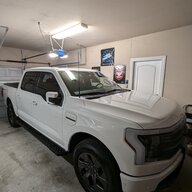
It's the worst of both worlds. Can't believe this is the direction they e decided to go.Reposting what I said in a different thread, this appears more fitting here:
The whole concept of EREV is comical. Between maintaining what is effectively now two vehicles under one roof, to filling up an an EV with gas or Charging an ICE vehicle with electricity.


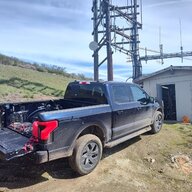
That would be nice. There is certainly a market to have high rate DCFC chargers at rest areas. Note that the California Department of Transportation (CalTrans) has been installing 50 KW DCFC chargers at a lot of the state's rest areas. Granted that they are only 50 KW, but they are free. The lower speed makes it unlikely that most people would sit there for an hour or more to charge, but rather charge while making a rest stop (I've done exactly that).Need more DCFC at roadside rest stops. That way when we stop to pee every two hours we can also top off the battery.
If I were towing that any distance on a regular basis, I'd be going 3/4 ton diesel.If you have the ER, road tripping is not an issue at all. Its almost perfect, and Ive got some good charge rates, no complaints on time.
If you tow a 9000 lbs trailer, yeah get a Powerboost or something built to tow. This is was always the majority of owners who use power tools, tow lifts and job equipment, everyday driver, big ass truck for family. This was never meant to be a long distance tow rig.

If you stopped for less than an hour, how much would that add to the battery? At 50 KW, would it even be worth it? Genuinely curious, not sarcastic. I noticed this past weekend while on a trip down to Jupiter, FL, the Turnpike has Service Plazas every 45 miles with DCFC at all of them. A mix of Tesla and something else. I don't see why all rest stops wouldn't do this eventually.That would be nice. There is certainly a market to have high rate DCFC chargers at rest areas. Note that the California Department of Transportation (CalTrans) has been installing 50 KW DCFC chargers at a lot of the state's rest areas. Granted that they are only 50 KW, but they are free. The lower speed makes it unlikely that most people would sit there for an hour or more to charge, but rather charge while making a rest stop (I've done exactly that).