
Sponsored

Lightning E-Rev 690 to 700 mile range

Athrun88

Well-known member
Joined
Sep 30, 2024
Threads
0
Messages
302
Reaction score
363
Location
Toronto, Ontario, Canada
Vehicles
2024 F150 Lightning Lariat ER Avalanche
Guy is a troll; comes here, makes an account, and immediately gets in a fight with most of the community.

Agree that Ford should have added the generator as an option to the BEV at the cost of the frunk or something like that. Ford has some smart people and I'm sure they could have worked a solution. I generally blame the bean counters for anything that gets canned where the product just makes sense but didn't meet profit expectations.

I think the general concensus here is that an EREV is just a glorified hybrid that bonds the worst of both worlds. Sure you get a flash of benefit here and there, but how often does the average F-150 owner tow more than 7500lbs? I can tell you that driving around my semi-rural town that all the people driving F-150, RAM 1500, and Sierra/Silverados are not towing much (if at all) let alone filling the bed with max payload. I get purchasing a vehicle for the theoretical max capacity (as I did myself) but going backwards to a hybrid just to get the range/towing for the 1 time of the month you do tow doesn't make sense. Better to use the other two brain cells, sit down, and plan the route to take into account the added charging required. More demand on the charging front will show companies that investing in the infastructure is better in the long run than engineering individual cars/trucks that can go 1000 miles on a charge.

In my opinion, it's a better investment to build up infastructure to support quicker charging with more ports than it is to develop a super high density battery pack that most buyers don't care about or don't want to pay for!

TL;DR - EREV is a downgrade and yet another transitional technology to satisfy the old and stubborn or young and dumb, BEV is the future like it or not.
Sponsored


jobofly79

Well-known member
First Name
Joe
Joined
Feb 17, 2025
Threads
23
Messages
206
Reaction score
295
Vehicles
2024 Ford Lightning Flash 312A
I tow my 7500lb travel trailer 4-5 times a year max and a distance around 200 miles. Sure, in those cases it would be nice to have the EREV so i can go father between stops. However, I am completely fine dealing with that inconvenience due to fact that the other 350 days a year this truck does everything I need it to and it does it well.
 

Jon A

Member
Joined
Mar 15, 2026
Threads
0
Messages
12
Reaction score
1
Location
Montana
Vehicles
2014 GMC 6.2L
Occupation
Engineer
Congrats on being one of the five people excited about Ford's step backwards.
Nah, after this thread there must be at least 6 or 7 of us by now! ;)

As for a step backward, I don't see it that way. I see it as a way of continuing the program. When a company is losing obscene amounts of money making a product, the reasonable thing to do is to stop the bleeding--cancel the whole product line. Giving EREVs a try to see if they can make it profitable is a way of continuing the product instead of stopping altogether.

You have to remember, EREVs are BEVs....just with some "extra stuff." They're developing the new chassis, the motors, the battery, the electronics--everything they need for the next BEV. When/if battery costs/performance improve to the point they think a BEV can be profitable, they can yank out the "extra stuff," slap the frunk back in and have an instant BEV option. They can do that at the drop of a hat any time in the future. That would never happen if they canceled the program completely, which is the only financially wise alternative.

The alternative seemingly being proposed by many here--that Ford simply be a charity for a small group of customers, continuing to sell a product to them at a much lower price than it costs to produce is not a sustainable business model.
The number 1 reason the Lightning didn't sell well is becuse of the dealer model. Had nothing to do with the product itself.
You certainly might be right. Time will tell.
 

Zaptor

Well-known member
Joined
Jan 25, 2023
Threads
40
Messages
429
Reaction score
822
Location
PNW
Vehicles
2022 Lightning Lariat ER and 2023 Lightning XLT ER
Occupation
.......... Trophy husband
I'm never going back to ICE, not even for another sports car, and certainly not for a truck when our 2 Lightnings have been the best trucks we've ever owned.

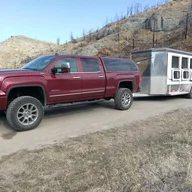
I *do* tow 10,000 lbs all the damn time, and 1500' elevation change uphill on a twisty road too, no exaggeration. It honestly does it better than my 2020 RAM 3500 with the Cummins and "24,000 lbs" towing capacity, less noise and drama.

I just don't try to do those things *and* go 700 miles. I move rocks, gravel, building materials, my dump trailer, my travel trailer, my raft, yard debris all without stress (or cost, yay solar) and I always tell myself that if the math doesn't pencil out for what I'm trying to do I will rent an ICE truck to perform the task....

Been three years and I haven't rented a truck yet, just ICE sports cars on vacations lol (Corvette and Cayman) let someone else pay for oil changes ;)

Cheers,
-Zap
 
Last edited:

Jon A

Member
Joined
Mar 15, 2026
Threads
0
Messages
12
Reaction score
1
Location
Montana
Vehicles
2014 GMC 6.2L
Occupation
Engineer
I’ve realized that most important is charging speeds. I don’t want a bigger battery, I don’t want more range, I want to charge in 15 minutes or less, I want more convenient drive thru chargers, I want roadside rest stops right off of the highway to have charging at them for my road trips. I don’t care if towing on the highway I have to stop every 140 miles, I just want the stop to be right off the highway and give me another 140 miles towing or 250 miles not towing in less than 15 minutes.
This is the key to BEV’s faster charging. This concept doesn’t make sense to you because it appears that you have never owned an EV to understand the experience and what is truly needed.
On the contrary, that makes perfect sense to me. I want those things too! It's quite obvious those things would make BEV ownership a no-brainer. This has nothing to do with lack of "understanding," it has to do with this most unfortunate tether I have to reality (it's really annoying, it ruins all the fun!).

The reality is, no matter how much you or I may want an infrastructure capable of that covering the entire country doesn't matter. The cold, hard reality is it won't exist anytime this decade, the next decade or even the next decade (not the entire country, some areas might be there).

To bring fueling time equivalent to gas cars, you're going to need 1-2 MEGAWATT capable chargers (as well as batteries that can take it and be affordable at the same time). Do you have any idea how expensive those will be to install over much of the country at even a fraction of locations gas is readily available? Who is going to pay for that? Would you be willing to pay $1, $2+ (or more, depending upon location) per kWh at these charging stations so they will eventually pay for themselves?

Whatever brand new truck I buy next will be rusting in a junkyard by the time this is a reality.
Like I said in a post I made earlier in this thread, Ford messed up by not adding the EREV to this lineup as an option and keeping the BEV by its side.
Hopefully they will have a BEV option relatively soon if battery prices come down. More available options to the consumer is always a good thing.
 

Sponsored

PJnc284

Well-known member
Joined
Sep 30, 2024
Threads
0
Messages
1,151
Reaction score
1,292
Location
Garner, NC
Vehicles
2023 Ford F150 Lightning Lariat ER
Nah, after this thread there must be at least 6 or 7 of us by now! ;)

As for a step backward, I don't see it that way. I see it as a way of continuing the program. When a company is losing obscene amounts of money making a product, the reasonable thing to do is to stop the bleeding--cancel the whole product line. Giving EREVs a try to see if they can make it profitable is a way of continuing the product instead of stopping altogether.

You have to remember, EREVs are BEVs....just with some "extra stuff." They're developing the new chassis, the motors, the battery, the electronics--everything they need for the next BEV. When/if battery costs/performance improve to the point they think a BEV can be profitable, they can yank out the "extra stuff," slap the frunk back in and have an instant BEV option. They can do that at the drop of a hat any time in the future. That would never happen if they canceled the program completely, which is the only financially wise alternative.

The alternative seemingly being proposed by many here--that Ford simply be a charity for a small group of customers, continuing to sell a product to them at a much lower price than it costs to produce is not a sustainable business model.

You certainly might be right. Time will tell.

aka "extra problems". Ford is already setting the recall record and expect that to continue.
 

Jon A

Member
Joined
Mar 15, 2026
Threads
0
Messages
12
Reaction score
1
Location
Montana
Vehicles
2014 GMC 6.2L
Occupation
Engineer
You are also implying that more of the other 96% would be interested in an EREV with nothing to back that up. I believe the numbers will be far less than 4%.
There's no data either way from Ford, of course. But we do have market indications from both Ram and Scout pre-orders that indicate many times more people are considering buying the EREV than were the BEV. Actual sales data doesn't exist yet so there's no "real" data yet.
By the time Ford goes into production, or I should say if they go into production, solid state batteries will be out. That alone resolves many of the issues with BEV at a fraction of the price they can make a Frankenstein.
Yes, the magic batteries that will be available next year...as has been said for the last 10 years or so. Don't get me wrong, they'll get here eventually, but I wouldn't place any large bets they'll be here in quantity, at a low price very soon. Even when they are, they are only solving the easy part of the problems to solve (see my above infrastructure comments).
My ELR is very similar to what Ford and RAM will be releasing....What I am talking about is the experience of living with the EREV technology and its inherent drawbacks.
That's what I was talking about as well. Have you compared the specs of your EREV to those of the RAM (Ford hasn't released detailed specs yet)? A whopping 84 HP 4-banger (you did say it sounded like a lawnmower, right?) 157 HP in EV mode, man, that must feel just like driving a Tesla, right? 16.5 kWh battery--to small for much usable EV range, much less having a buffer to ensure the vehicle has more than 84 HP at times. And all powered through that fantastic CVT automatic tranmission!

I was saying your EREV was the Trabant of the EREV world (compared with modern offerings). Your experience with all its "drawbacks" have little in common with the experience users can expect from the new Lighting or Ram.
Notice how GM, who has the most experience with EREV's, is staying out of the EREV truck game. hmmm, wonder why.
They also refuse to say how much money they are losing on each 9000lb Avalanche (that'll barely tow its own weight) they sell. Mary Barra is becoming the OG Carlos Tavares.

You are saying that adding an engine powerful enough to produce power to tow a 14k lb trailer up a mountain path
If you understood how the system worked, you'd know the engine doesn't need to produce enough power to tow a 14k lb trailer up a mountain. It only needs to produce the average power needed to go up and down the mountain and maintain on flat ground. That's the beauty of it--no Power Strokes required.
...added cooling, exhaust, gas tank, inverters, etc... to a completed BEV is going to be cheaper than the BEV alone. The math aint mathing for me.
Of course if you keep the battery the same size the pure BEV will be cheaper. But nobody wants to buy those. Comparing it with a BEV with a battery of usable size, it will be cheaper. I'll let the CEO of Ram math for you:
Battery costs are the biggest factor separating traditional gas trucks from their electrified siblings. “REV was a 229-kilowatt-hour (kWh) battery. Let’s pick $100 per kWh just to make the math easy. That’s a $23,000 battery,” he said. “The standard range REV has a 168 kWh battery. That’s a $17,000 battery.”

The Ramcharger’s battery, however, is smaller—only 92 kWh. “From day one, the cost basis is going to be anywhere from $8,000 to $14,000 less than those other options,” Kuniskis emphasized. “And that’s at $100. If you’re over $100, the cost basis is even better.”
The engine they chose for the genset is a pretty simple, old reliable one that is cheap as dirt to produce. It's been simplified even further for this application (missing some emissions equipment, nearly all of the engine driven accessories as the aren't needed anymore). You're looking at a production price significantly less than that of the standard battery BEV and dramatically cheaper than that of the big battery version (which is what those who want to tow would choose).

Where the marketing/beancounting teams will set the final prices is still up in the air though. I expect them to be somewhat more expensive than the equivalent gas trucks, but dramatically less than the extended range BEV versions would have been.
 

RickE

Well-known member
First Name
Rick
Joined
Oct 12, 2021
Threads
5
Messages
56
Reaction score
67
Location
Miami
Vehicles
22 F150 Lightning Lariat ER
This sounds pretty good for fords next generation of electric trucks. On board generator to keep the truck battery charged for heavy loads and towing and long road trips. Sounds exciting. I’m glad ford is moving forward with this setup and I look forward to see the new f150 series electric truck line up. Who’s all in? I’m starting to save my hard earned money now… whoohoo ford built tough.
I wonder what the cost will be on the new EREV F-150. It has to be considerably high because you are adding a V-6 engine to the Lightning. Also wonder if Ford will do the classic bait and switch like they did with the Lightning. Advertise it for under $40K. Then do not produce any at $40K.
 

22legit2quit

Well-known member
Joined
Nov 17, 2024
Threads
16
Messages
148
Reaction score
166
Vehicles
2024 Ford Lightning Flash ER
This sounds pretty good for fords next generation of electric trucks. On board generator to keep the truck battery charged for heavy loads and towing and long road trips. Sounds exciting. I’m glad ford is moving forward with this setup and I look forward to see the new f150 series electric truck line up. Who’s all in? I’m starting to save my hard earned money now… whoohoo ford built tough.
It’s not happening. Never has and never will. Erevs don’t make it, if they make it to market they come to the American market neutered or in a completely unrealistic setup to see the value. Think of the volt, the bmw i3, and think of the dodge ram charger or ram erev (because you have to think about it because everyone is still waiting). There’s a reason why the plug in hybrids all have similar electric only ranges. It doesn’t affect the oil and gas company profit and the upcharge gives the automakers a cool gadget to pass the cost on to the consumer with.

Yes, it makes sense. Completely. It’s how trains work, trains are the most efficient way of moving freight not just because of the rail system but also because they’re designed to use the energy with the fewest steps and least amount of drag on the system as a whole. Like I said earlier it won’t happen. If it does they’ll make the cost excruciating, although I’m sure a few of the early adopters of the lightning can tell you all about that. After being retired from the army for 2 years I realize that the civilian business world is not much different. Good idea fairies abound and the only difference is that buy in being in the civilian business world actually comes with a monetary cost that you have little chance of getting roi or even fair value for in the end.
 

Sponsored

Quibbs

Well-known member
Joined
Jul 7, 2023
Threads
5
Messages
69
Reaction score
167
Location
SE
Vehicles
23 Lightning, it's electrifying (and discontinued)
Jon A is entitled to his position as I am mine.

I think the case for a FORD EREV is not very strong or compelling for most people.
Imho it's a quickly conceived compromise borne from tariffs, fires and politics. All tied together. A hurried option that sounds good from a distance but any critical thinking applied and it starts to lose it's shine.

The implication of weak sales and no one wanting a BEV is misleading. It reeks of data taken out of context or massaged to support a certain naritive (ie sales, cost to make).

It's opinion dressed as fact. A surface view implied to be all encompasing.

There is way more to this story. It ignores how mismanaged the inital launch was, the assumptions made by Ford which affected where they spent their money (factories, etc.) and the return they expected to realize. The lack of dealer network support.

There is also when the tax credit was taken away, which car makers priced in, and tariffs, that impacted the supply chain and then you have an administration that is actively working against clean energy. It shook up the market and did what it was designed to do, impact/slow EV sales. All of this transpired fairly quickly, within the last two years.

Band wagon, piss poor planning, impacted by a mafia inspired administration.

EREV predicitons...
It may not even get released.
EREV will not be cheaper than the BEV.
EREV will not dramatically surpass sales of the Lightning.

Time will really tell the tale but I'm confident enough about these predictions as to post them on the interwebs for posterity
 

Shmoe

Well-known member
First Name
Mike
Joined
Jun 30, 2025
Threads
2
Messages
199
Reaction score
362
Vehicles
2024 F-150 Lightning Lariat, 2025 Rivian R1S, Sold-2020 Tesla Model 3 SR+
EREV predicitons...
It may not even get released.
EREV will not be cheaper than the BEV.
EREV will not dramatically surpass sales of the Lightning.

Time will really tell the tale but I'm confident enough about these predictions as to post them on the interwebs for posterity
This is spot on with hindsight being 20/20 on Ford. There's a 50% chance it never sees the light of day.
 

TurboChris

Member
First Name
Chris
Joined
Sep 10, 2023
Threads
1
Messages
21
Reaction score
55
Location
Illinois
Vehicles
Mustang, 23 Lightning ER
Occupation
Management
Jon in the example of the $100/kwh with the Ram EREV having a 92 kWh battery that would be $9,200 then add in the cost of the engine, additional cooling system, fuel system, exhaust system what else am I missing lol.
Now let’s compare that to the current lightning 98 kWh battery being $9,800 battery cost without any of the engine and fuel components. The ER Lightning at 140 kWh battery would be $14k which is less than $5k more than the Ram EREV battery alone without all the engine stuff.
This EREV stuff isn’t going to be nearly as cost savings or profitable as Ram is implying which is why Ram is trying to compare it to a giant 200+ kWh battery.
The worst part about the EREV’s is they will utilize only a small percentage of the battery pack during operation by design. Hence the Ram EREV using a 92kwh battery that is only rated to 145 miles on battery range alone which will be worse in the winter and going 85 mph down the highway.
My point on this being I doubt any of these EREV’s will have a battery that is really any worthwhile amount smaller than the current standard range lightning so really where is the cost savings? Where is the profit margin gains? I fail to see where any of this will come from. These are still going to be $80k+ trucks in any decent trim level which isn’t going to equate to massive sales.
If I can only get 20-25mpg in an EREV that cost me $80k then I think I’ll just buy an ecoboost instead at that point for $30k less!
The EREV is definitely huge progress vs current hybrids I most certainly will not deny that! But personally I don’t see it as a step forward vs the BEV lightning.
Having both in the lineup would be best which is something everyone in this thread is in agreement on and hopefully ford does use it to bring forth a new BEV lightning on this EREV platform as well like you mentioned.
 

Jon A

Member
Joined
Mar 15, 2026
Threads
0
Messages
12
Reaction score
1
Location
Montana
Vehicles
2014 GMC 6.2L
Occupation
Engineer
Jon in the example of the $100/kwh with the Ram EREV having a 92 kWh battery that would be $9,200 then add in the cost of the engine, additional cooling system, fuel system, exhaust system what else am I missing lol.
Now let’s compare that to the current lightning 98 kWh battery being $9,800 battery cost without any of the engine and fuel components. The ER Lightning at 140 kWh battery would be $14k which is less than $5k more than the Ram EREV battery alone without all the engine stuff.
You're completely correct. An EREV isn't going to be cheaper than a BEV with a small battery, and pretty close in cost to those with medium sized batteries.

But, that's not quite a fair comparison. I think most reasonable people would agree, that the 140 kWh Lighning is somewhere between "not ideal" to "not good" to "not usable," depending upon the person and the conditions for towing over long distances. So I do think comparing it to the larger battery trucks is fair as they are the closest in performance/usability.

I'm guessing Ford was planning on a much larger battery for the next gen Lightning had they stuck with the BEV. If I understand correctly, since the Lighting was originally built off the frame designed for the ICE trucks, they simply had no more room to fit a bigger battery. The new frame for the RAM has its frame rails pushed farther apart so there's lots of room. As you can see from the above, they were originally planning the a big 229 kWh version to match the towing performance of the Silverado. They decided that was financially stupid, cancelled it...and then decided even the 168 kWh version would be a money loser at current battery prices and cancelled that.

And so here we are. "Begun, the EREV wars have."
The worst part about the EREV’s is they will utilize only a small percentage of the battery pack during operation by design. Hence the Ram EREV using a 92kwh battery that is only rated to 145 miles on battery range alone which will be worse in the winter and going 85 mph down the highway.
This is also true. Only 70 kWh of that battery is "usable" by the user, on purpose. They only allow you to charge it to 97% actual SOC for battery longevity (I think the indicated SOC will actually say 100% at this level). When the indicated SOC reads "0%" and the generator kicks on (in the more normal modes) you'll still have about 17% of battery left actual SOC. This is so you never run into a reduced power situation--put your foot to the floor and it will give you all 650 HP, all the time, even at an indicated 0% SOC. When in Tow/Haul mode, it's even more extreme. I don't know if a final number has been set yet, but 35% has been thrown around which would be an actual 43% or so SOC. That's how it's able to go full speed up even the longest mountain passes towing 14K when the generator couldn't do that on its own. When you hit the top, the SOC will be reduced but will charge back up to 35% or more going down the other side.

That said, I don't think the exact EV range really matters all that much once you're in an EREV. You're never going to not make it somewhere and get stranded. I think what matters the most is that it's more than enough to cover typical daily driving for 90%, 95% (or whatever) of users. That's where all the money savings comes in and being "just like a BEV" for most people nearly every day.

But when you need to jump in and take a 200 or 300 mile trip, it's not really going to matter if the generator kicks on at exactly 145 miles or 135 or 155. If you're playing the radio you may not even notice it happens and the driving experience will be the same. And at the end of the trip, your gas mileage will be off the charts better than any ICE vehicle making the same trip.

And that goes for cold weather as well. Cold weather can have very real usability effects for the users of some BEVs. You might not be able to make it to the same charger on the same trip you could in the summer. You might need to "plan a completely different route" and make an extra charging stop (or more on a long trip).

But with an EREV, suffering from all the same effects, all that will happen is that the generator comes on a little sooner than usual. You may not even notice. It shouldn't change your driving experience on the trip in any noticeable way. You'll just burn a bit more gas. I think most people will view that as a small price to pay to not have to worry about any hassle being caused by cold weather.
If I can only get 20-25mpg in an EREV that cost me $80k then I think I’ll just buy an ecoboost instead at that point for $30k less!
It's true, on really long trips (even medium-long when towing) you're not going to save much, if any gas compared with an ICE truck.

What you do get, is 650 HP (in the case of Ram, I don't know what the Ford will have)--no ecoboost can match that. Significantly less NVH giving a much more pleasant driving experience. You get the EV towing capabilities--effortlessly and quietly towing up and down mountains in a way EVs are just so much better at than any ICE truck.

Those are the advantages on the open road over gas trucks. The gas savings comes in your day to day use where many users may not burn any gas at all for months at a time.

All the above is based up specs for the RAM since we don't have specs for the Lightning yet. It will be very interesting in the coming months as Ford releases specs to see how closely they match or how they differ. I do think they'll try to match the performance given their obvious one-upmanship of the initial range announcement (690 miles, hell, ours will do 700!). But they may strategize things slightly differently (a little more of this, a little less of that, etc). It'll be fun to see what they come up with.

Good discussion. (y)
 

jobofly79

Well-known member
First Name
Joe
Joined
Feb 17, 2025
Threads
23
Messages
206
Reaction score
295
Vehicles
2024 Ford Lightning Flash 312A
But, that's not quite a fair comparison. I think most reasonable people would agree, that the 140 kWh Lighning is somewhere between "not ideal" to "not good" to "not usable," depending upon the person and the conditions for towing over long distances. So I do think comparing it to the larger battery trucks is fair as they are the closest in performance/usability.
I think this is to general of a statement. I believe "and I am sure others do as well" that the current ER version of the Lightning is perfect for the majority of truck owners. Most of my friends drive full size half tons and none of them tow with it more than a couple of times a year. The majority of their driving is to and from work, running kids to and from sports practices/games, the occasional road trip, and home deport runs. The lightning can accomplish most/all of that just as well as their current trucks. And in a much cheaper way.
Sponsored


Top