
Sponsored

Proposed Federal EV road fee - draft legislation in the House.

RocketGhost

Well-known member
First Name
Spencer
Joined
May 22, 2024
Threads
5
Messages
519
Reaction score
712
Location
Memphis TN
Vehicles
2022 Lariat ER
The only way to make this new wallet drain fair for everyone is to charge a per mile usage fee. Why should someone that's retired and rarely goes anywhere have to pay the same price as someone that drives 8hrs a day?

If they pass it without a mileage clause, that's unfair taxation.
Pretty high cost to administer that in some states. Where I live there are no vehicle inspections. I doubt they would let people self-report their mileage. They would have to have workers and facilities to do mileage checks.

My state already has an EV fee that is equivalent to what the average driver in our state pays in state and federal gas taxes each year. It's indexed to inflation, but the gas tax is not, so EV drivers will be paying more than their "fair share." Especially if my state doesn't change their fee to take out the federal portion if this bill passes.

When my state implemented their fee I remember looking up the study, I don't remember what the average driver in our state pays in federal gas taxes but I know it was for sure less than $150.
Sponsored


 

chl

Well-known member
First Name
CHRIS
Joined
Dec 16, 2022
Threads
11
Messages
4,121
Reaction score
2,572
Location
alexandria virginia
Vehicles
2023 LIGHTNING PRO, 2012 Nissan Leaf, 2015 Toyota Prius, 2000 HD 883 Sportster
Occupation
Patent Atty / Electrical Engineer
Alas.

Yes, yes, but...that is harder and harder to do when it is consistently and overwhelmingly now one particular party that is anti-EV and pro-carbon, and another that is pro-EV and anti-carbon.

It did not used to be this way - Lamar Alexander R. Tenn. drove an EV and was pro-EV back in the day.

The oil industry has poured millions into lobbying and PACs supporting the politicians that back this kind of anti-EV legislation, and meanwhile reaps millions in subsidies using our tax dollars as well.

The best politicians money can buy.

Like it or not, EVs have been made political by those who push carbon based fuels and their minions.
 

NeighborGeek

Well-known member
First Name
Steve
Joined
Jun 22, 2025
Threads
6
Messages
132
Reaction score
159
Vehicles
2025 F150 Lightning Flash
Pretty high cost to administer that in some states. Where I live there are no vehicle inspections. I doubt they would let people self-report their mileage. They would have to have workers and facilities to do mileage checks.
I could see a solution that requires self reporting milage annually when renewing your plates and when transferring ownership. When selling the vehicle, you have to pay the fee based on the milage at time of sale in order to get the title out of your name. Obviously, it's in the buyer's interest to ensure the reported milage is accurate, or else it will become their problem when they renew the registration.
I'm sure it can't be quite that simple, but it's one way it could be done.
Alternatively, there could be a requirement to visit the DMV each year to renew your registration, and someone from there will come out and verify the vehicle milage in person. Or, combine the two. Maybe you self report every year, but every 4th year you have to go in to have a state employee record the milage.
 

dorbi

Active member
Joined
May 13, 2026
Threads
0
Messages
34
Reaction score
28
Location
WA
Vehicles
'05 Silverado, '21 ID.4
I like the per mile charges (if they can be readily assessed) but some of the people here that drive a lot more than ‘average’ will not.
They probably would not, but it's no different than state & federal gas taxes currently. Unfortunately, it seems like civic duty is no longer in the public mindset. We've become a very individualistic society. "Unless it benefits me, why would I do *that*?"
 

chl

Well-known member
First Name
CHRIS
Joined
Dec 16, 2022
Threads
11
Messages
4,121
Reaction score
2,572
Location
alexandria virginia
Vehicles
2023 LIGHTNING PRO, 2012 Nissan Leaf, 2015 Toyota Prius, 2000 HD 883 Sportster
Occupation
Patent Atty / Electrical Engineer
My state, Virginia has a per mile program for Hybrids and EVs.
They use a GPS device in the OBD port to keep track.

They call the 'tax' on EVs and Hybrids a road use fee, OK fine we don't pay gas taxes at the pump in an EV and gas taxes pay for road maintenance, so I see the rationale. EVs are often heavier than other vehicles so they are harder on roads.

But most states seem to ignore the benefit EVs and Hybrids provide - cleaner air, land and water, so fewer heath costs for related diseases, quieter highways and streets, etc. and do not provide subsidies for those benefits to society.

Their job is to find revenue to pay for roads. The Federal Hwy Trust Fund is one source the need.

Charging a per mile fee is fairer than a flat fee in theory.

Some day maybe there will be a tax on ICE vehicles to fund treatments for the health problems air pollution from ICE cars and trucks cause? Dream on...
 

Sponsored

Wendy

Well-known member
Joined
Jul 5, 2024
Threads
3
Messages
191
Reaction score
220
Location
Puget Sound
Vehicles
1967 Saab 96 (dead), Silverado (squished), 2023 F150 Lariat ER
Benefits of EVs?

last week we visited Madrid, they have a complex system of circles from the center of the city and tags for each vehicle type … from what I was told if you drive an EV you can drive anywhere in the city and park for free many places. Vs a Diesel where you need to stay on the outskirts.
Some places get the obvious benefits of driving clean.
 

hturnerfamily

Well-known member
First Name
William
Joined
Jan 8, 2022
Threads
50
Messages
2,475
Reaction score
3,214
Location
rural Georgia
Vehicles
22 LIGHTNING PRO IcedBlueSilver 8/23/2022
Occupation
Owner
... just yesterday, at the resort hottub at the beach, I mentioned the very appreciation of Pres Eisenhower, who was well before my time, of course, but, even if for military movement purposes, proposed the Interstate Highway system that many take for granted... and we enjoy it, in our current 'mobile society'... just think of what it would be like to only have basic 'rural' two lane roads?

...having said that, I don't mind paying my 'share' of road taxes to help maintain the roads, whether in my own state, or all over the U.S... a 'Federal' share can be shared among all states, or, a 'State' share could help 'only' my own state. And, after the rough ride over many cement-based interstate sections in my own state, I will happily suggest that the DOT use asphalt only... just my two cents.

How do you 'fairly' apply this road tax?

- while a 'based on mileage' might be the 'fairest', like a sales tax is, most of us would NOT want to have to state our mileage to the government, or 'guess' our annual usage, or use an OBD device, etc... at least, I'd rather not.

- if not a mileage-based tax, then what? Yes, the current per-gallon tax makes sense for gas and diesel vehicles, even for most PHEV electric vehicles who still must add 'gas' periodically... but, what about us EVs who don't 'fill up' on liquid products?
Well, we DO fill up on electrons, at least infrequently for some, and very frequently for others, especially those traveling. A DCFC 'tax' addition would seem to help make this 'fairer', probably in most of our minds...
But, this is only 'part' of our equation of power - where does that leave at-home charging, which might be for most of the 'everyday' miles around our home base? Without suggesting some type of official device to measure EV power usage at home, it leaves this part out of the 'equation'...

- the other current option, is, well, probably not our favorite, as EV owners - the annoying Annual EV Vehicle Registration 'fee', or tax, as most of us well are familiar with.
On some levels, it may seem to be a somewhat fair amount, like my $218, depending on your own driving and usage, but, on the other hand, it could be quite high for others.
Negatively, though, it gives you NO way to pay this 'fee' over time, like a gas tax - it is due, IN FULL, RIGHT THEN.
And, don't get me started, but in my jurisdiction/state, there is also NO REFUND, even a prorated partial refund, if you SELL your EV, or trade it, during that timeframe.

There is no overall 'easy' answer, at least if you are going to continue with the tax at the fuel pump - the only other option, at least in my feeble mind, would be a static Annual FEE, for EVERY Vehicle, at the time of registration, and no longer at the pump... but,

Would it be Based on the value of the vehicle?
Based on a 'someone decided this would be a good amount' calculation?
Based on the number of axles?
Based on the GVWR?
Based on Commercial versus Personal?
Based on an OBD or similar device or software implementation in every vehicle?
 

jefrank

Well-known member
First Name
Jeff
Joined
Dec 11, 2021
Threads
11
Messages
332
Reaction score
382
Location
Fenton, Michigan
Vehicles
2022 Ford F-150 Lightning Lariat ER, 2004 BMW 330Ci
... just yesterday, at the resort hottub at the beach, I mentioned the very appreciation of Pres Eisenhower, who was well before my time, of course, but, even if for military movement purposes, proposed the Interstate Highway system that many take for granted... and we enjoy it, in our current 'mobile society'... just think of what it would be like to only have basic 'rural' two lane roads?

...having said that, I don't mind paying my 'share' of road taxes to help maintain the roads, whether in my own state, or all over the U.S... a 'Federal' share can be shared among all states, or, a 'State' share could help 'only' my own state. And, after the rough ride over many cement-based interstate sections in my own state, I will happily suggest that the DOT use asphalt only... just my two cents.

How do you 'fairly' apply this road tax?

- while a 'based on mileage' might be the 'fairest', like a sales tax is, most of us would NOT want to have to state our mileage to the government, or 'guess' our annual usage, or use an OBD device, etc... at least, I'd rather not.

- if not a mileage-based tax, then what? Yes, the current per-gallon tax makes sense for gas and diesel vehicles, even for most PHEV electric vehicles who still must add 'gas' periodically... but, what about us EVs who don't 'fill up' on liquid products?
Well, we DO fill up on electrons, at least infrequently for some, and very frequently for others, especially those traveling. A DCFC 'tax' addition would seem to help make this 'fairer', probably in most of our minds...
But, this is only 'part' of our equation of power - where does that leave at-home charging, which might be for most of the 'everyday' miles around our home base? Without suggesting some type of official device to measure EV power usage at home, it leaves this part out of the 'equation'...

- the other current option, is, well, probably not our favorite, as EV owners - the annoying Annual EV Vehicle Registration 'fee', or tax, as most of us well are familiar with.
On some levels, it may seem to be a somewhat fair amount, like my $218, depending on your own driving and usage, but, on the other hand, it could be quite high for others.
Negatively, though, it gives you NO way to pay this 'fee' over time, like a gas tax - it is due, IN FULL, RIGHT THEN.
And, don't get me started, but in my jurisdiction/state, there is also NO REFUND, even a prorated partial refund, if you SELL your EV, or trade it, during that timeframe.

There is no overall 'easy' answer, at least if you are going to continue with the tax at the fuel pump - the only other option, at least in my feeble mind, would be a static Annual FEE, for EVERY Vehicle, at the time of registration, and no longer at the pump... but,

Would it be Based on the value of the vehicle?
Based on a 'someone decided this would be a good amount' calculation?
Based on the number of axles?
Based on the GVWR?
Based on Commercial versus Personal?
Based on an OBD or similar device or software implementation in every vehicle?
Complex question = simplest possible answer to our legislators, hence the flat-fee applied to PEVs and BEVs. Wouldn't want to tax their teeny-tiny brains looking at nuance.

I mean, if they did that they might realize that gas tax revenue has been falling over time as MPG goes up and maybe a per gallon tax was never the correct answer.
 

dorbi

Active member
Joined
May 13, 2026
Threads
0
Messages
34
Reaction score
28
Location
WA
Vehicles
'05 Silverado, '21 ID.4
Complex question = simplest possible answer to our legislators, hence the flat-fee applied to PEVs and BEVs. Wouldn't want to tax their teeny-tiny brains looking at nuance.

I mean, if they did that they might realize that gas tax revenue has been falling over time as MPG goes up and maybe a per gallon tax was never the correct answer.
I think the per gallon tax is actually the best answer. They just haven't updated it in several decades to keep up with inflation.
 

PJnc284

Well-known member
Joined
Sep 30, 2024
Threads
0
Messages
1,240
Reaction score
1,410
Location
Garner, NC
Vehicles
2023 Ford F150 Lightning Lariat ER
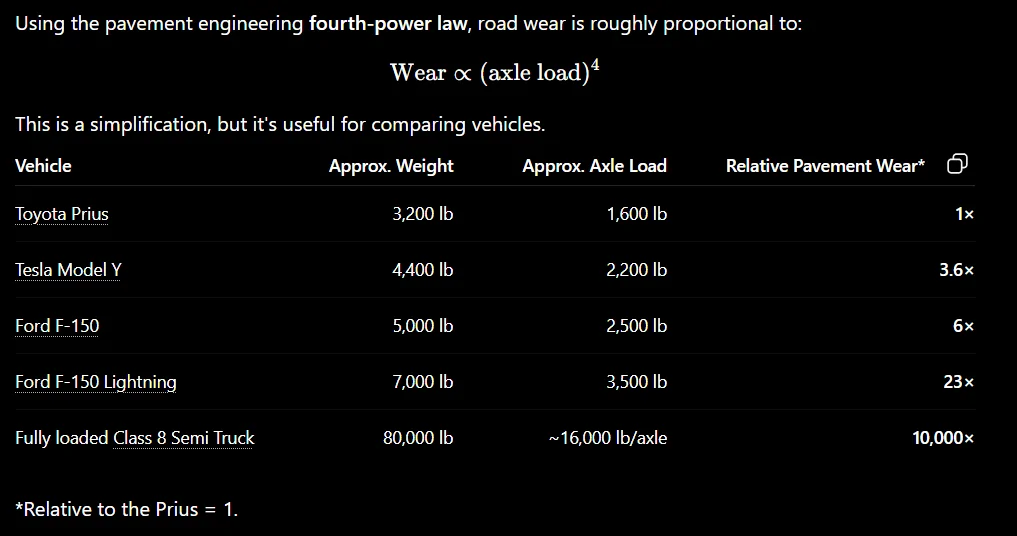
EVs are often heavier than other vehicles so they are harder on roads.
Asked the all-knowing AI out of curiosity.

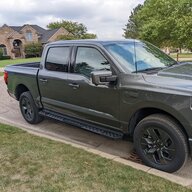
Ford F-150 Lightning Proposed Federal EV road fee - draft legislation in the House. 1780432864874-qf


What this means

If a Prius causes 1 unit of pavement wear:
  • A Model Y causes about 4 units.
  • An ICE F-150 causes about 6 units.
  • An F-150 Lightning causes about 23 units.
  • A loaded semi causes about 10,000 units.

Another way to view it:
  • One loaded semi can cause about as much pavement wear as:
    • 10,000 Priuses
    • 2,800 Model Ys
    • 1,700 ICE F-150s
    • 430 F-150 Lightnings
Important caveat

This comparison is for structural pavement wear. Many roads are damaged by:
  • Freeze/thaw cycles
  • Water intrusion
  • Poor drainage
  • Utility cuts
  • Aging pavement

On many local roads, those factors can matter more than passenger vehicle traffic.
 
  • Like
Reactions: chl

Sponsored

chl

Well-known member
First Name
CHRIS
Joined
Dec 16, 2022
Threads
11
Messages
4,121
Reaction score
2,572
Location
alexandria virginia
Vehicles
2023 LIGHTNING PRO, 2012 Nissan Leaf, 2015 Toyota Prius, 2000 HD 883 Sportster
Occupation
Patent Atty / Electrical Engineer
Asked the all-knowing AI out of curiosity.

1780432864874-qf.webp


What this means

If a Prius causes 1 unit of pavement wear:
  • A Model Y causes about 4 units.
  • An ICE F-150 causes about 6 units.
  • An F-150 Lightning causes about 23 units.
  • A loaded semi causes about 10,000 units.

Another way to view it:
  • One loaded semi can cause about as much pavement wear as:
    • 10,000 Priuses
    • 2,800 Model Ys
    • 1,700 ICE F-150s
    • 430 F-150 Lightnings
Important caveat

This comparison is for structural pavement wear. Many roads are damaged by:
  • Freeze/thaw cycles
  • Water intrusion
  • Poor drainage
  • Utility cuts
  • Aging pavement

On many local roads, those factors can matter more than passenger vehicle traffic.
Good job!

Of course that's why semi's do pay fees based on weight, miles traveled etc. to both the feds and some states - they call some of them 'taxes' and some fees, but a rose by any other name...smells like a tax. :)

The calculations of the 'fees' are somewhat convoluted, and the Heavy Vehicle Use Tax is zero unless the truck exceeds 55,000lbs - omg!

And a bunch of exempted orgs. See: https://www.fhwa.dot.gov/policyinformation/hvut/mod1/whatishvut.cfm

But of course practically EVERYTHING a commercial trucking company spends money on provides a tax deduction against income...

And for the EV and hybrid tax (Highway Use Fee) in Virginia, if the vehicle weighs more than 10,000lbs it is exempt because they pay a weight-distance tax under another name - the Commonwealth (of Virginia) Transportation Fund.

Might need to be a CPA to figure this sheet out?
 

DavidS

Well-known member
First Name
DAVID
Joined
Dec 27, 2025
Threads
0
Messages
237
Reaction score
231
Location
Green Bay, WI
Vehicles
F150 Lightning Lariat
The other unmentioned option is to put LPR’s on federally funded roads and turn them into toll roads.
 

TaxmanHog

Moderator
Moderator
First Name
Noel
Joined
Jan 19, 2022
Threads
240
Messages
17,101
Reaction score
19,474
Location
SE. Mass.
Vehicles
2022 Lightning Lariat-ER, 2024 HD Road Glide CVO-ST
Occupation
Retired
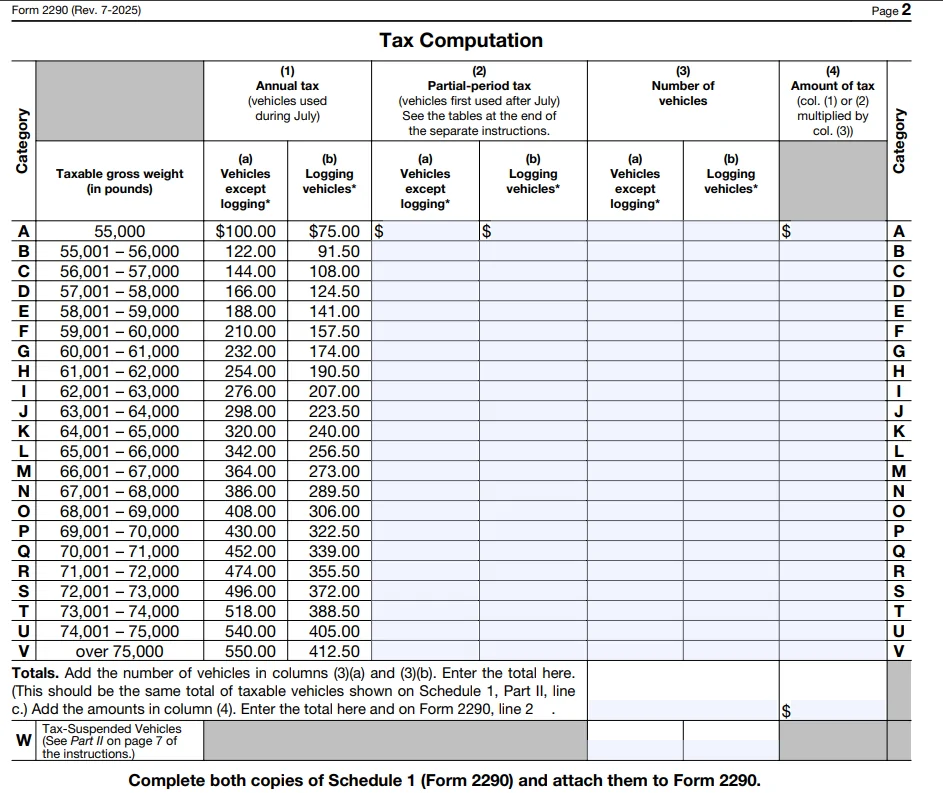
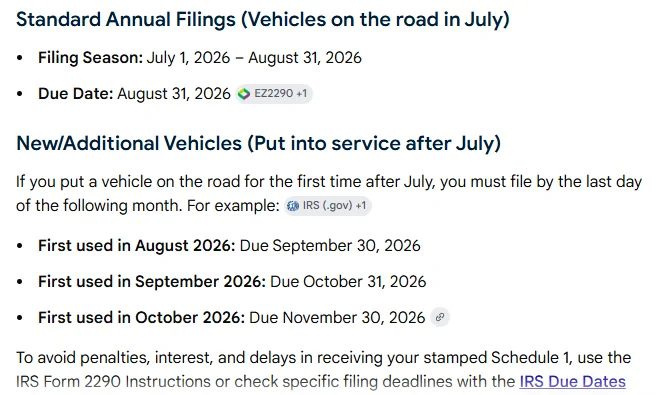
IRS could come up with a variation on form 2290 which is the federal excise tax for heavy commercial vehicles. due annually in August of each year, heaviest of class 8's pay $550 per truck.

Ford F-150 Lightning Proposed Federal EV road fee - draft legislation in the House. 1780485464120-t7


Ford F-150 Lightning Proposed Federal EV road fee - draft legislation in the House. 1780485576001-cl
 
OP
OP
21st Century Truck

21st Century Truck

Well-known member
First Name
Martin
Joined
Jul 11, 2024
Threads
21
Messages
1,207
Reaction score
1,564
Location
Virginia
Vehicles
Ford 150 Lightning 2023 XLT ER pkg. 312A
IRS could come up with a variation on form 2290 which is the federal excise tax for heavy commercial vehicles. due annually in August of each year, heaviest of class 8's pay $550 per truck.

1780485464120-t7.webp


1780485576001-cl.webp
I like this idea... it's after all all about the axle weight of vehicles which use public roads, to pay their share.

Additionally, this avoids the "in-state" vice "out-of-state" fairness of road use issues... some I'm sure never drive out of their state, while our Lightning for example has driven through at least 28 states.
 

Jseis

Well-known member
Joined
Jul 22, 2023
Threads
62
Messages
736
Reaction score
1,293
Location
Washington
Vehicles
July 2021 SR MME, July 2023, Lightning Lariat
Occupation
Retired
I’d be all for taxable GCVW EV-VMT for a Lightning at say 17,500 lbs. for $100. I vaguely recall heavy truck front axle rating at around 15,000-18,000 lbs per front axle (depending on tire size rating and concrete truck front tires a great example). This means a loading on one tire greater than the empty weight of a Lightning (per front tire!).

Of…course being retired means my monthly 2,000+ miles dropped to maybe 200 a month so of course a VMT seems attractive compared to a annual fee based on weight.

See below… it is complicated…

To fully cover the true cost of road maintenance, a national Vehicle Miles Traveled (VMT) fee would need to average between 1.5 to 2.5 cents per mile for light passenger vehicles to replace the current gas tax baseline. However, because pavement damage scales exponentially with vehicle weight, a "true cost" framework would feature a highly tiered, variable pricing structure rather than a flat rate. [1, 2, 3, 4]
The layout, pricing mechanics, and logistical design of such a system would take a specific shape. [1]

The Pricing Matrix (Rates by Vehicle Class)
Under a true-cost cost allocation model, fees are calculated based on the fourth-power law, which dictates that road stress increases relative to axle weight.

Vehicle Type [1, 2, 3, 4, 5]Estimated Fee per MilePrimary Cost Driver
Light Passenger Cars (Gas & Electric)1.5¢ – 2.5¢General traffic management, baseline weathering
SUVs & Light Trucks2.5¢ – 4.0¢Increased curb weight and spatial footprint
Delivery Vans / Medium Duty5.0¢ – 12.0¢High localized urban street wear
Heavy Freight Trucks (Class 8)20.0¢ – 45.0¢Structural pavement and bridge degradation

Key Variable Fee Overlays
A flat fee fails to capture structural and societal road costs. An optimized system would apply dynamic surcharges: [1, 2, 3, 4, 5]
  • Weight-Per-Axle Pricing: Imposed heavily on commercial vehicles, similar to Oregon’s weight-mile tax, scaling sharply as truck weight increases. [1]
  • Congestion Surcharges: Adding a premium (e.g., up to 10¢/mile) during peak hours in dense urban centers to mitigate traffic management costs. [1]
  • Location Discounts: Lower rates applied to rural roads where transit alternatives do not exist and where vehicles do not contribute to urban gridlock. [1, 2]

Collection and Enforcement Infrastructure
To replace gas taxes cleanly, states and pilots like the ⁠Washington State Transportation Commissionutilize a multi-tiered collection framework: [1]
  1. The Low-Tech Approach (Odometer Audits): Drivers report mileage annually during vehicle registration renewal. This keeps administration costs low (roughly 4% to 6% of revenue) and protects location privacy. [1, 2, 3]
  2. The High-Tech Approach (Automated Telematics): Vehicles use onboard diagnostics (OBD-II) plug-ins or factory telematics to log miles automatically. This allows for automated billing but introduces higher system operating costs. [1, 2, 3, 4, 5]
  3. Cross-Border Reconciliation: A unified clearinghouse, similar to the ⁠Tax Foundation’s proposed federal coordination, prevents out-of-state "free-riders" by routing out-of-state miles back to the driver's home jurisdiction. [1]

Core Implementation Roadblocks
  • High Overhead: Collecting fuel taxes happens at a few hundred distribution points. Managing accounts for millions of individual motorists pushes collection overhead much higher than traditional fuel taxes.[1, 2]
  • Privacy pushback: Automated GPS-based systems face severe public resistance due to government location-tracking concerns. [1, 2]
  • Equity Concerns: Rural drivers travel longer distances by necessity and face disproportionately higher annual bills under a flat structure, necessitating regional discount credits. [1, 2, 3]
    Ford F-150 Lightning Proposed Federal EV road fee - draft legislation in the House. 1780500279803-e0
    Ford F-150 Lightning Proposed Federal EV road fee - draft legislation in the House. 1780500279811-d8
Sponsored


Top