


Maquis
Well-known member
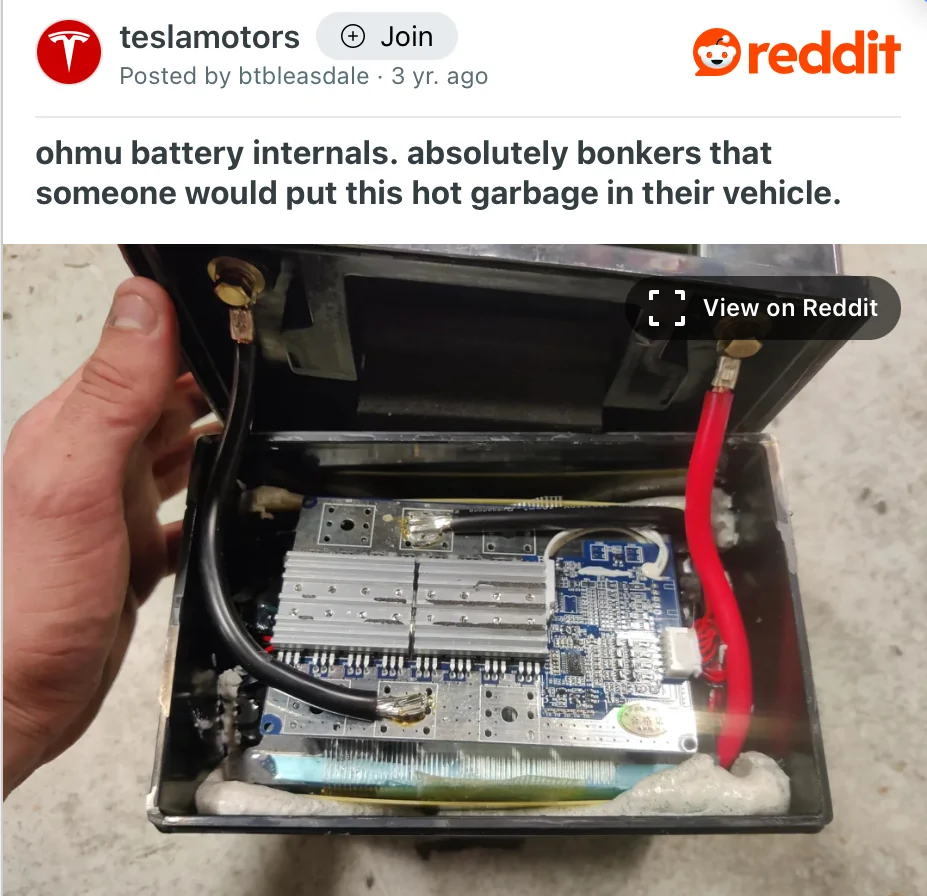
Basically run of the mill cells and a circuit board held in place with spray foam.Interesting. I haven’t seen a cutaway. Thanks.
I think then I’ll stick to replacing my AGMs every few years.
Sponsored
Basically run of the mill cells and a circuit board held in place with spray foam.Interesting. I haven’t seen a cutaway. Thanks.
I think then I’ll stick to replacing my AGMs every few years.

So those Ohhmu batteries aren’t any good?Basically run of the mill cells and a circuit board held in place with spray foam.


No hard mount on that circuit board!? It would jar loose in the first week of owning it with my road and the use I put my truck through. Nothing to stop the circuit board from contacting the terminals.Basically run of the mill cells and a circuit board held in place with spray foam.

Not worried at all, 50k miles and 2 years later it still works every time I push the button!No hard mount on that circuit board!? It would jar loose in the first week of owning it with my road and the use I put my truck through. Nothing to stop the circuit board from contacting the terminals.
You couldn’t pay me to put that in my truck.
I am truly happy for you that it hasn't caused any problems for you.Not worried at all, 50k miles and 2 years later it still works every time I push the button!

‘Thanks for a very informative post. It would be nice if @johnnyonetime could measure the voltage at battery terminal with negative before and after BMS. When the truck has been off for a while and when it is on and share the results so we can compare with our original batteries connected.Some context might help provide color to this conversation.
Looking at individual cells nominal and 12v cells in series voltages can help explain how different or similar a lead acid, lithium iron phosphate, and lithium ion batteries are.
Nominal cell voltages:
Lead acid = 2.1 v
Lfp = 3.2 v
Lithium ion = 3.6 v
Nominal voltages of cells in series to fit a 12 volt battery application:
Lead acid (6) cells = 12.6 v
Lfp (4) cells = 12.8 v
Li (4) cells = 14.4 v
So lithium ion is quite a bit different than lead acid. But Lfp is pretty close to lead acid when comparing the whole battery voltage in series.
Without getting into the specifics of Ford's lead acid charging algorithm, you can at least see how a 12v Lfp battery charged with a 12v Lead acid charging setup would be close enough to not necessitate changes to charging voltages.
This post isn't the whole enchilada per se, but I am trying to illustrate that lithium iron phosphate 12v batteries aren't radically different than your standard lead acid 12v battery we have all known forever. The guts are different, cell balancing is more important in Lfp, but 12.6v vs 12.8v nominal is only 1.6% difference in amount...
No hard mount on that circuit board!?
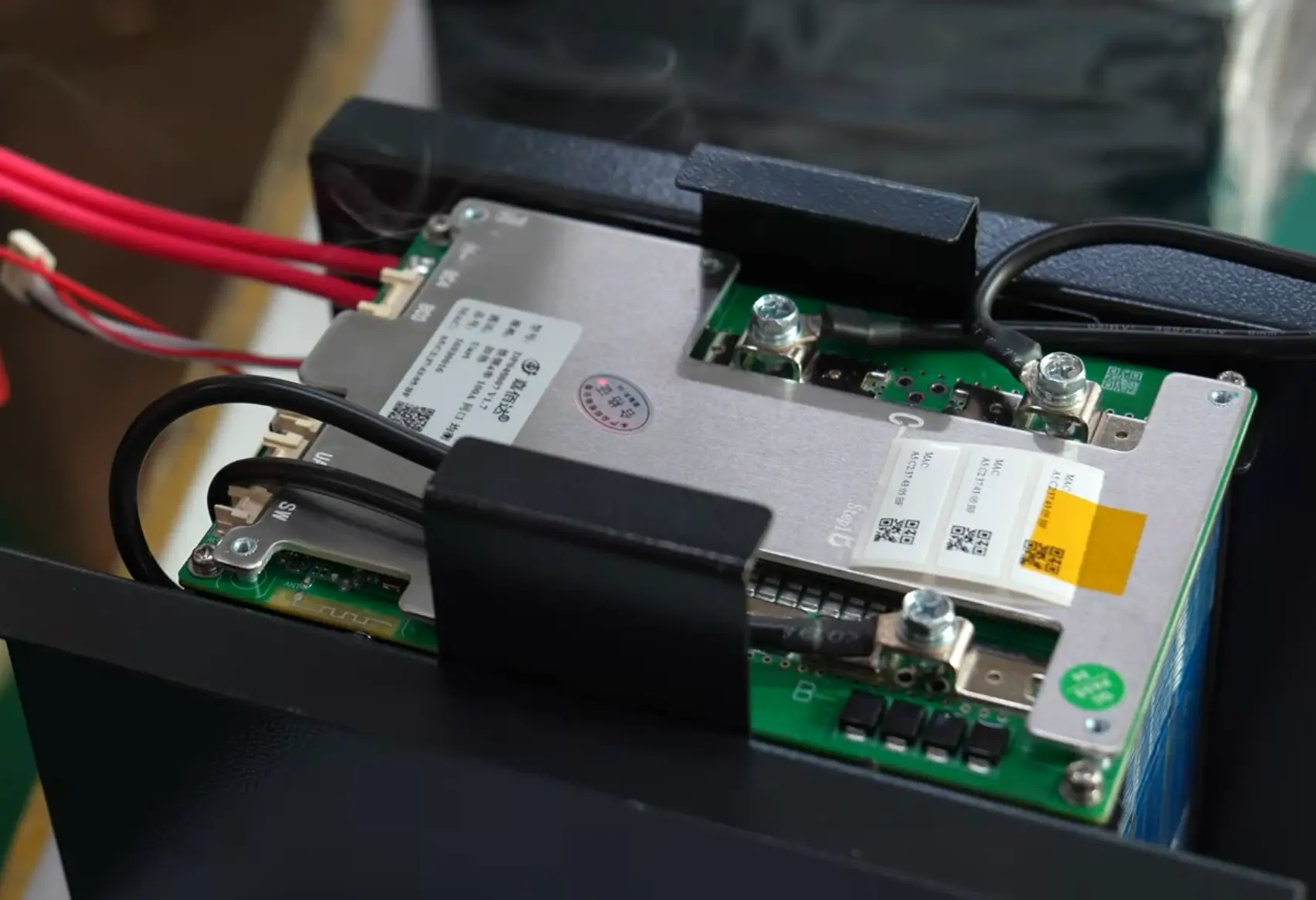


Since they are being used to swap with conventional or AGM lead acid batteries it makes sense they would include the BMS as a component, for safety and longevity, by balancing the cells.All LFP batteries have an internal BMS.
The Ford AGM battery may have a different terminal voltage than the 12.6V though.Some context might help provide color to this conversation.
Looking at individual cells nominal and 12v cells in series voltages can help explain how different or similar a lead acid, lithium iron phosphate, and lithium ion batteries are.
Nominal cell voltages:
Lead acid = 2.1 v
Lfp = 3.2 v
Lithium ion = 3.6 v
Nominal voltages of cells in series to fit a 12 volt battery application:
Lead acid (6) cells = 12.6 v
Lfp (4) cells = 12.8 v
Li (4) cells = 14.4 v
So lithium ion is quite a bit different than lead acid. But Lfp is pretty close to lead acid when comparing the whole battery voltage in series.
Without getting into the specifics of Ford's lead acid charging algorithm, you can at least see how a 12v Lfp battery charged with a 12v Lead acid charging setup would be close enough to not necessitate changes to charging voltages.
This post isn't the whole enchilada per se, but I am trying to illustrate that lithium iron phosphate 12v batteries aren't radically different than your standard lead acid 12v battery we have all known forever. The guts are different, cell balancing is more important in Lfp, but 12.6v vs 12.8v nominal is only 1.6% difference in amount...
Ha, small world!I have a 48v Ryobi myself, that's when I was introduced to the, at that time, fairly new LFP technology. I put 4 12v 50ah lfp in it to replace the agm it came with, still running strong.
The mower has power now that it didn't have brand new, I tried using the mulch plug but it kept bogging down so I took it off. Now with lfp I'm able to reinstall it and it doesn't bog at all.
I did have to purchase a new 48v charger for it due to the difference in chemistry, in my work van I put the same battery in and the alternator keeps it charged with no issue.
Now those same batteries are connected in parallel with my home solar storage bank and the inverter keeps them all charged.
Best part about the lfp is it doesn't care if you always run it flat, it'll recover on it's own and it doesn't care if you keep it charged at 100% either. The built in BMS keeps it happy.
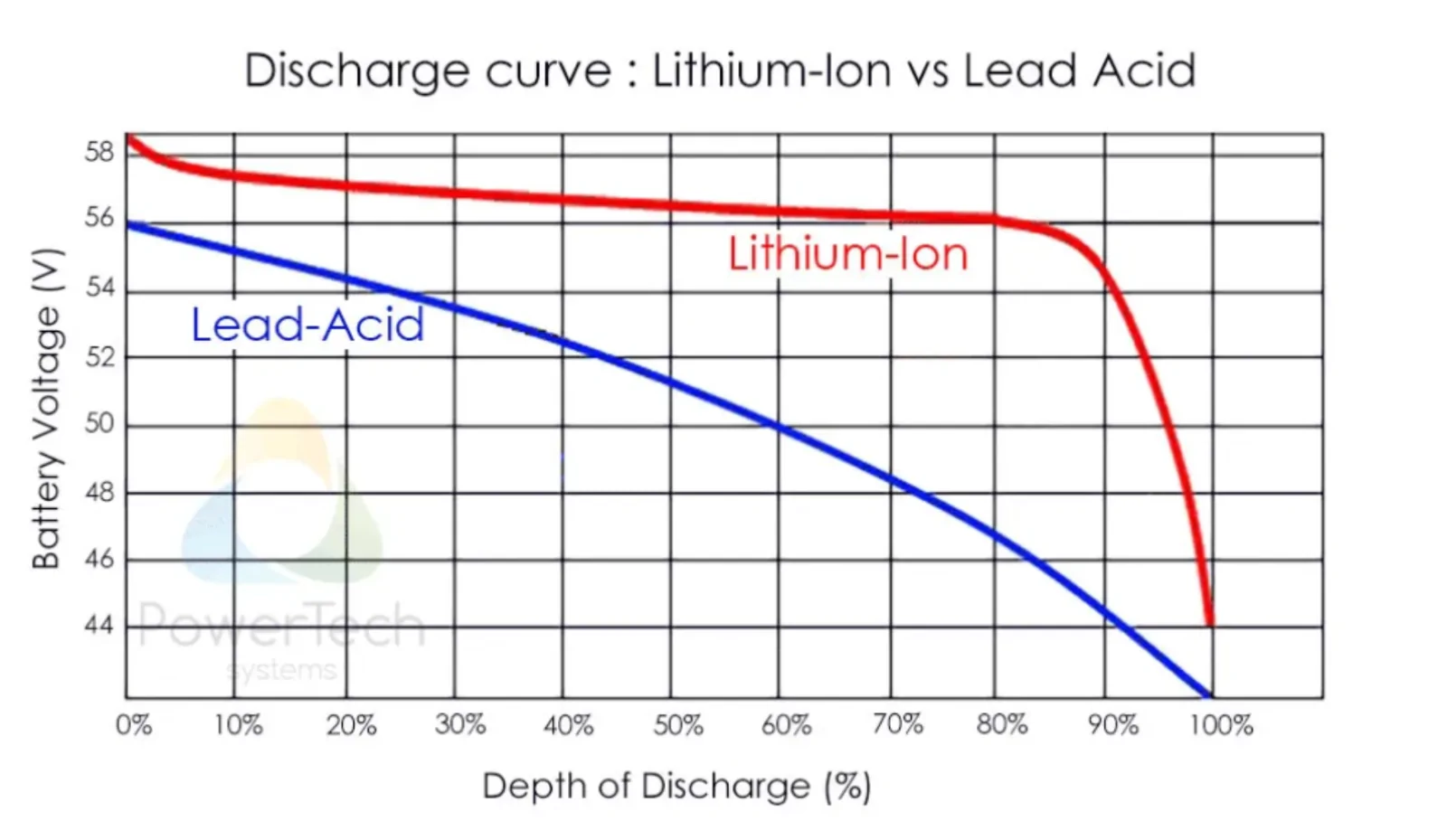
the voltage level of the lithium will make it appear that it’s almost full when it’s almost empty. Maybe the Ford BMS is smart enough to only care about counting coulombs and doesn’t ever lose track or need to measure voltage, but I’m doubtful. I’d be happy to be wrong.
I bought and installed in my Lightning an Ohmmu Li-H3-BH (LFP) 12 Volt Battery two weeks ago, based upon positive user comments on this forum. I just returned from a 25 mile errand trip. Ohmmu 12 volt SOC, easily accessible in the Ohmmu app, is at 100%.
Among several reasons for rewarding Ohmmu with my purchase, them delivering an easily accessible 12 volt battery SOC was near the top of my list ... something that @Ford Motor Company would not do in over 3 years.
Now, if Ohmmu sold BlueCruise 1.4 ...
OHMMU is already selling Salty batteries at $100 less.If it comes to fruition, I imagine the CATL sodium ion battery could make other Li batteries obsolete, and be a big boon for solar as well as EVs and general battery use.
They must have changed that with one of the updates. I saw for the first time a few days ago my truck trying to protect 12V battery by shutting things off when it's SOC was around 50%.the problem has been the Lightning didn't keep the AGM fully charged and would let it fall below 50% which is a no-no for AGMs.
Yeah, that’s my point. There seems to be something going on in the Ohmmu BMS that’s converting the lithium battery voltage / SOC to reflect the voltage / SOC of an AGM.If that was the case, @johnnyonetime battery would not reach 87% SOC as he showed earlier. In the situation you are describing, Truck would stop charging the battery long before then. So something in this setup must be smart enough to keep the electrons flowing.
Already!? OK, have to check it out.OHMMU is already selling Salty batteries at $100 less.
They must have changed that with one of the updates. I saw for the first time a few days ago my truck trying to protect 12V battery by shutting things off when it's SOC was around 50%.
Yes, they make me nervous for exactly that reason.Lipo's are what we use in all our drones, those suckers are extremely volatile. Those are not Li-ion or Lifepo4 (LFP).
Lithium polymer (Lipo), I had one that swole up so I was going to recycle it then decided to see something, electronic equivalent to "Hold my beer" I set it out front on concrete away from anything flammable, and poked it with the tip of my knife when all hell broke loose!!!
Made me jump back I'll tell ya that lol . That thing spewed smoke like a jet engine then it shot flames out and I came inside and watched the rest from the living room, haha. Never actually exploded just spewed and popped a few times then burned itself out. Thermal runaway is spooky.
I don't play with those any more than I have to, haven't flown any of my drones but the ones I have, all have built in bms, those packs you buy from the hobby shop for racing drones and really anything RC in genera,l gotta be careful with them, once mine get so much as a dent in them, they go straight to the recycler.


