


Skidrowe
Well-known member
If you had a 70kwh battery going 70mph at 1 mile per kwh (due to load), you would discharge the battery in 1 hour. That would be a 1C discharge rate. Even if you had a generator that could run at 70kw and output it continuously for an hour to charge the battery the whole time, that battery would have to have a 2C rating and that thing would get HOT! The current ER batteries charge just above 1C for about 5 minutes at the beginning of a charge session before dropping down below 1C to about .7C for the majority of the remaining charge cycle. It would take a different battery chemistry and/or a significantly improved cooling mechanism for the battery.Ya'll need to stop throwing HP and KW together in this thread it just makes it confusing jumping back and forth and that they dont really represent the same idea in this construct.
The Lightning stores kwh, and uses kw while driving.
2.0mi/kwh at 70mph is 35kw average, meaning you use 35kwh in one hour. To maintain even steven you need a generator to output 35kw continuously.
Assuming you are pulling a trailer and getting 1.0mi/kwh you need a generator capable of 70kw.
The question is if Ford will engineer for zero average battery depletion in a worse case situation, or allow allow battery SOC to drop while driving (you can bet they will, they have to).
My estimate, ~70kw. Steady state towing a modestly sized RV or a heavy but small trailer. Doing that in the mountains will deplete your battery.
Battery will be 70-90 kw, just below SR now, saving battery. This marches the performance figure.
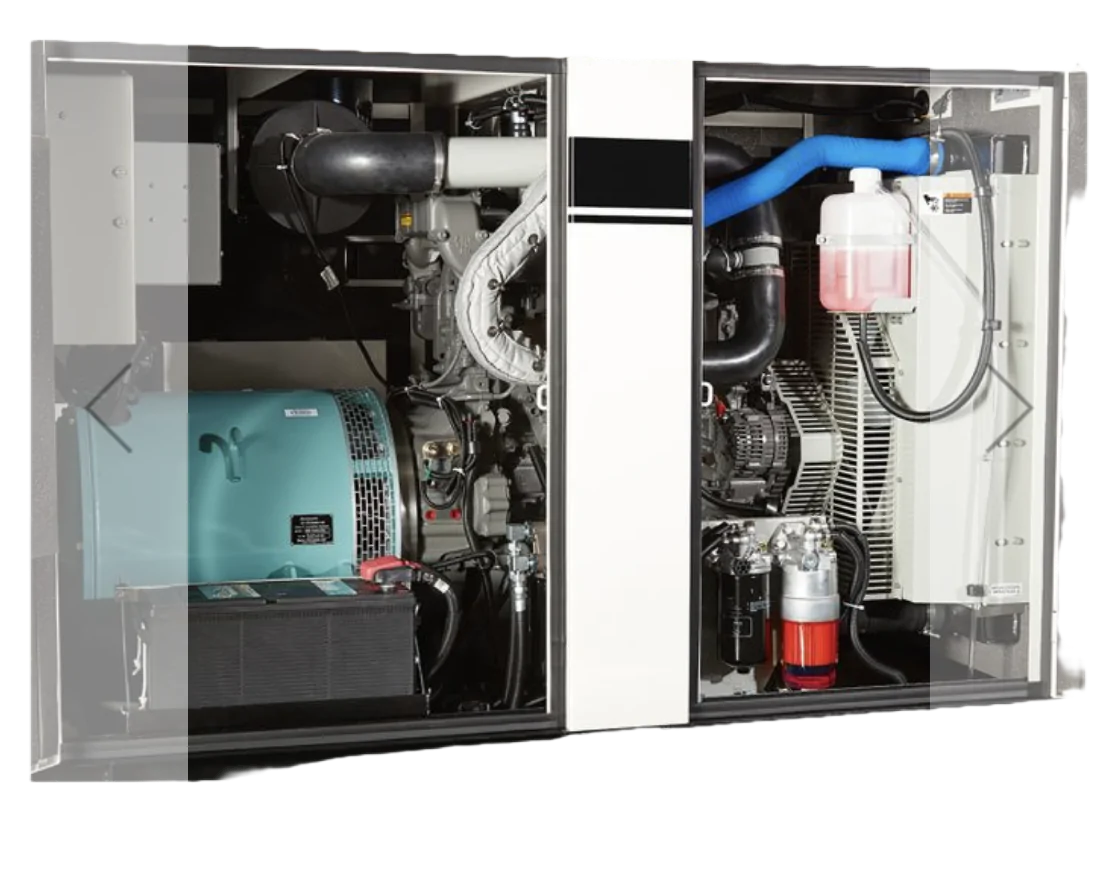
I've been curious how efficient a generator Ford can manufacture. It will likely have to be diesel and a rough estimate is that a 70kw diesel generator would burn 5-6 gallons of diesel per hour at 100% load. That would be $30 of diesel to go 140 miles with a big load. Or 23-28 mpg with a limited range.
If you increased the battery capacity and generator output, it would increase range at a non-linear rate because you wouldn't also increase the distance (speed) you'd go in an hour. So then the battery would be discharging at a less than 1C rate and leave more room to charge simultaneously without heating the battery up as much. I wonder where the sweet spot would be between battery size, generator output, and total range.
The possibility of thermal runaway increases (I don't know if it's significant) if the cooling mechanism fails while the battery is both charging and discharging at a high rate. Safety measures would have to throttle your power output and charge rate from the generator and would result in a significantly different towing experience than the peak performance of these batteries and motors are capable of.
Despite me not being interested in anything but a battery powered EV, I'm really curious how the engineers at Ford will balance and overcome all these limitations of modern EV batteries and ICE technology. Solving problems is fun. Reading how others solved them is a close second.
Sponsored



 -admin-warning-no-politics.33426/post-618051


