

Sponsored
chriserx
Well-known member

Not likely have to, but could. I personally take it to be in the vein of plug in hybrid EV, definitely could be wrong.So with this truck, you may have to charge it AND put gas in the tank?
I feel like this could be pretty good in colder climates where the waste heat produced by the engine could warm the pack, and heat the cabin. I personally wanted a BEV for low maintenance and 'fewer points of failure' over hybrids.
PJnc284
Well-known member
- Joined
- Sep 30, 2024
- Threads
- 0
- Messages
- 1,214
- Reaction score
- 1,390
- Location
- Garner, NC
- Vehicles
- 2023 Ford F150 Lightning Lariat ER
They cancelled both bev options and renamed the Ramcharger as the Ram 1500 REVLast I heard they cancelled the ramrev. I had a deposit on one and got it back.
hturnerfamily
Well-known member
- First Name
- William
- Joined
- Jan 8, 2022
- Threads
- 50
- Messages
- 2,472
- Reaction score
- 3,206
- Location
- rural Georgia
- Vehicles
- 22 LIGHTNING PRO IcedBlueSilver 8/23/2022
- Occupation
- Owner
the RAM EREV is still on their website, just not ready to build or order quite yet
the SCOUT EREV is trying to come out of it's hiding, too.... hopefully... although expensive
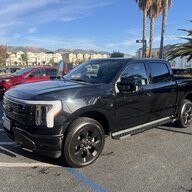
the LIGHTNING EREV remains to be seen as to the configuration and battery pack size, etc.... we'll see
the only real Truck EVs left, at least in current production, are the Rivian, the CyberTruck, the Silverado/Danali, and possibly the upcoming SLATE "Lego Truck", which is enticing...
FORD may announce a Maverick or Ranger EV later...it remains to be seen.
The newly announced JEEP RECON may be alluring, too, as a Full EV... seemingly a cross between the Wrangler and the Grand Cherokee... hopefully will have some towability, too.
FORD's BRONCO and EXPLORER EVs are only overseas... don't know why.
Toyota only has a Hybrid.
Nissan? not sure...
the SCOUT EREV is trying to come out of it's hiding, too.... hopefully... although expensive
the LIGHTNING EREV remains to be seen as to the configuration and battery pack size, etc.... we'll see
the only real Truck EVs left, at least in current production, are the Rivian, the CyberTruck, the Silverado/Danali, and possibly the upcoming SLATE "Lego Truck", which is enticing...
FORD may announce a Maverick or Ranger EV later...it remains to be seen.
The newly announced JEEP RECON may be alluring, too, as a Full EV... seemingly a cross between the Wrangler and the Grand Cherokee... hopefully will have some towability, too.
FORD's BRONCO and EXPLORER EVs are only overseas... don't know why.
Toyota only has a Hybrid.
Nissan? not sure...
ZeusDriver
Well-known member
- Joined
- Dec 1, 2025
- Threads
- 9
- Messages
- 239
- Reaction score
- 206
- Location
- East Coast, USA
- Vehicles
- 2022 Lightning
Yes, that and being able to avoid having to charge at superchargers. With a SR Lightning, I have too often made three long charging stops in a day, whereas I would otherwise have one quick stop for gas. A family member with a Tesla Model X has given up its use for long trips. Just too much hassle -- they drive their Jeep instead. If my Lightning had 400 mile range, I'd be completely happy with it -- but it looks like it could be a long time before Ford provides that, even though GM is already there.Wouldn't the entire case for the range extender (ice generator) be to put power back into the batteries? When would you use the range extender? not on your daily commute. You'll go home and charge there.
But when you are towing and need more range. That's the selling point right?
Sponsored
The Weatherman
Well-known member
- First Name
- Dean
- Joined
- Apr 20, 2023
- Threads
- 35
- Messages
- 2,007
- Reaction score
- 2,959
- Location
- South Central KY
- Vehicles
- 2022 RR F150 Lightning Lariat ER, 2020 Explorer PL
- Occupation
- Retired
You can add a Kia EV Midsized Truck coming also. Planned launch in late 2026 or early 2027.the RAM EREV is still on their website, just not ready to build or order quite yet
the SCOUT EREV is trying to come out of it's hiding, too.... hopefully... although expensive
the LIGHTNING EREV remains to be seen as to the configuration and battery pack size, etc.... we'll see
the only real Truck EVs left, at least in current production, are the Rivian, the CyberTruck, the Silverado/Danali, and possibly the upcoming SLATE "Lego Truck", which is enticing...
FORD may announce a Maverick or Ranger EV later...it remains to be seen.
The newly announced JEEP RECON may be alluring, too, as a Full EV... seemingly a cross between the Wrangler and the Grand Cherokee... hopefully will have some towability, too.
FORD's BRONCO and EXPLORER EVs are only overseas... don't know why.
Toyota only has a Hybrid.
Nissan? not sure...
ZeusDriver
Well-known member
- Joined
- Dec 1, 2025
- Threads
- 9
- Messages
- 239
- Reaction score
- 206
- Location
- East Coast, USA
- Vehicles
- 2022 Lightning
Surprisingly good explanation, given that so much of auto "journalism" on YouTube is garbage. This is a clear explanation of how the Ford will work, too, given that there are not a lot of options for replacing a huge BEV pickup truck with a huge EREV pickup. If the manufacturer thinks that people want great towing range and capacity, and are willing to pay for an EREV that has a lot of power when running in electric mode, then they are pretty well boxed in to offering something like the Ram.here's a terrific explanation video of the upcoming RAM EREV, which will have the similar configuration of the LIGHTNING EREV... watch the whole video, as he is great at giving us real-world operational info...
Ford will want to offer similar towing capability, and similar performance, which will require a large battery pack. They will also likely use a normally aspirated V6, a 4 being too small to keep up with the demand. It will be interesting to see the two side-by-side in the marketplace. There seems to be no limit to how much people will spend on pickup trucks.
For perspective, consider that an Escalade IQ can cost $180,000, and it is just a BEV. Ford and all the other large pickup manufacturers have added more and more luxury content, because much of that content is very high profit margin... and for reasons that escape me, people buy into that. To get your heated steering wheel, you buy a $5000 package for $10 worth of hardware.
Personally, I'd be happy with an EV more like my 1990 F150 4.9. Great at towing (but awful by today's standards) adequate performance (but awful by today's standards) today's quietness and handling, and a 3 cylinder range extender. $35,000.
OP
OP
Lytning
Well-known member
- Thread starter
- #69
I don’t understand why @Ford Motor Company did not reduce the F-150 BEV Lightning manufacturing capacity to meet the market size. Then, reconfigure the freed up capacity to produce Ranger and Maverick BEV’s. The charging infrastructure is getting better every day. I expect the market share for BEV’s will steadily increase as charging infrastructure and vehicle choices continue to expand.
ZeusDriver
Well-known member
- Joined
- Dec 1, 2025
- Threads
- 9
- Messages
- 239
- Reaction score
- 206
- Location
- East Coast, USA
- Vehicles
- 2022 Lightning
Yes. Either reduce capacity to meet market size, or actually promote the trucks adequately to increase market share. I have not met a Ford salesperson who knew much about the Lightning... maybe there are some in California.I don’t understand why @Ford Motor Company did not reduce the F-150 BEV Lightning manufacturing capacity to meet the market size. Then, reconfigure the freed up capacity to produce Ranger and Maverick BEV’s. The charging infrastructure is getting better every day. I expect the market share for BEV’s will steadily increase as charging infrastructure and vehicle choices continue to expand.
Jim Farley seems unable to set a course and stick to it. I was considering a Maverick when I bought the Lightning. Certainly would have purchased a new Maverick BEV if one were available, instead of this used Lightning. Back in 2021 I was on the list for a Lightning pro, but got off the list when they jacked up the price. I am no fan of bait and switch.
Sponsored

Skidrowe
Well-known member
If you had a 70kwh battery going 70mph at 1 mile per kwh (due to load), you would discharge the battery in 1 hour. That would be a 1C discharge rate. Even if you had a generator that could run at 70kw and output it continuously for an hour to charge the battery the whole time, that battery would have to have a 2C rating and that thing would get HOT! The current ER batteries charge just above 1C for about 5 minutes at the beginning of a charge session before dropping down below 1C to about .7C for the majority of the remaining charge cycle. It would take a different battery chemistry and/or a significantly improved cooling mechanism for the battery.Ya'll need to stop throwing HP and KW together in this thread it just makes it confusing jumping back and forth and that they dont really represent the same idea in this construct.
The Lightning stores kwh, and uses kw while driving.
2.0mi/kwh at 70mph is 35kw average, meaning you use 35kwh in one hour. To maintain even steven you need a generator to output 35kw continuously.
Assuming you are pulling a trailer and getting 1.0mi/kwh you need a generator capable of 70kw.
The question is if Ford will engineer for zero average battery depletion in a worse case situation, or allow allow battery SOC to drop while driving (you can bet they will, they have to).
My estimate, ~70kw. Steady state towing a modestly sized RV or a heavy but small trailer. Doing that in the mountains will deplete your battery.
Battery will be 70-90 kw, just below SR now, saving battery. This marches the performance figure.
I've been curious how efficient a generator Ford can manufacture. It will likely have to be diesel and a rough estimate is that a 70kw diesel generator would burn 5-6 gallons of diesel per hour at 100% load. That would be $30 of diesel to go 140 miles with a big load. Or 23-28 mpg with a limited range.
If you increased the battery capacity and generator output, it would increase range at a non-linear rate because you wouldn't also increase the distance (speed) you'd go in an hour. So then the battery would be discharging at a less than 1C rate and leave more room to charge simultaneously without heating the battery up as much. I wonder where the sweet spot would be between battery size, generator output, and total range.
The possibility of thermal runaway increases (I don't know if it's significant) if the cooling mechanism fails while the battery is both charging and discharging at a high rate. Safety measures would have to throttle your power output and charge rate from the generator and would result in a significantly different towing experience than the peak performance of these batteries and motors are capable of.
Despite me not being interested in anything but a battery powered EV, I'm really curious how the engineers at Ford will balance and overcome all these limitations of modern EV batteries and ICE technology. Solving problems is fun. Reading how others solved them is a close second.
Mal106
Well-known member
Just heard Farley say that the dismal EV sales since the incentives went away forced the decision. I feel this was very shortsighted. Everyone knew and expected that. No one knows when or if the demand will return in the US but EVs continue to grow in market share in practically the rest of the world. To eliminate the best or second best selling full size EV truck and much of the battery manufacture to support it may well be missing out on growing demand and cheaper batteries.
I have an MBA (unused) and realize the multi billion charges will help the balance sheet but I certainly hate to see accounting hocus pocus kill a vehicle with a great potential for profit if US consumers see the light.
I have an MBA (unused) and realize the multi billion charges will help the balance sheet but I certainly hate to see accounting hocus pocus kill a vehicle with a great potential for profit if US consumers see the light.
Skidrowe
Well-known member
I think I saw too many generalizations of "The generator will not be mechanically (keyword here) connected to the drivetrain" and conflated it to mean it will only send energy to the battery and not the motors. In a quick search, I was unable to find direct evidence to support what was in my head.The battery is not simultaneously charging at 1C, and discharging at 1C, giving you 2C. The energy from the generator doesnt travel "through" the battery, that energy is going to the motors, from there the flow of energy varies from into the battery to out of the battery depending on the current condition.
It makes more sense to have the motors drawing off both energy sources and thus reducing the rate at which the battery is depleted. And whatever mechanism lets the battery draw the power output from the motor during regenerative braking, will also let it draw the excess power the generator is outputting beyond the need of the motors to maintain speed (or accelerate) as you mentioned with your comment on energy flow.
700 miles is still a lot. My 2014 3.5 liter Eco boost didn't get 400 miles of range of combined driving on 30 gallons of gas. Maybe it would on a freeway road trip. But I can't see them putting in the 300 mile range battery of my lightning AND using that Eco boost engine as a generator while maintaining the same efficiency of both. The full gas tank weight alone would reduce the battery range. I wonder what sort of synergy they're expecting from the battery/generator to warrant a 700 mile range promise. The same goes for towing range while still expecting the current lightning towing performance.
ZeusDriver
Well-known member
- Joined
- Dec 1, 2025
- Threads
- 9
- Messages
- 239
- Reaction score
- 206
- Location
- East Coast, USA
- Vehicles
- 2022 Lightning
This number was no doubt picked to be 10 more than the 690 claimed by the RAM. Probably 200 miles on battery + 500 miles on a 25 gallon tank at 20 mpg. Goodbye frunk. Still a very tight squeeze. Seems like a revision of the front motor would be required.700 miles is still a lot. My 2014 3.5 liter Eco boost didn't get 400 miles of range of combined driving on 30 gallons of gas.
Sponsored


