

Sponsored
Level 3 Eyes-Off Driving Technology to launch on $30K Ford EV Truck. New AI Assistant launches early 2026
- Thread starter Administrator
- Start date
- Watchers 18


EVO
Well-known member
Info on where ev's are going.
https://www.cnbc.com/2026/01/07/for...ing EV, defense stocks on the move - 20301907
https://www.cnbc.com/2026/01/07/for...ing EV, defense stocks on the move - 20301907

WXman
Well-known member
- Joined
- Aug 16, 2025
- Threads
- 19
- Messages
- 434
- Reaction score
- 468
- Location
- Central Kentucky
- Vehicles
- 2025 F-150 Lightning Flash
- Occupation
- Meteorology/Transportation
That's exactly what we need. More nannies to make people worse at driving. Tesla has more fatalities inside their vehicles than any other brand in the world. I guess Ford is jealous.
Converted thread title to
Ford enters race to offer eyes-off driving tech, starting with $30,000 EV in 2028
Ford enters race to offer eyes-off driving tech, starting with $30,000 EV in 2028
Sponsored
PrimeRisk
Well-known member
- First Name
- Mark
- Joined
- Aug 4, 2024
- Threads
- 9
- Messages
- 346
- Reaction score
- 368
- Location
- Denver-Metro
- Vehicles
- 2024 F-150 L Lariat, 2023 Tesla MY, 2021 Tesla MYP
- Occupation
- Technonerd
Yeah, I'll eat my hat if FORD delivers on this promise in 2028. Current Blue Cruise 1.4 only works on about 3% of roads in North America, and not very well on those 3%.With their track record, believe it when I see it. Plus they can keep th AI BS.
The landscape of competition isn't all that great either. Mercedes-Benz's DRIVE PILOT is the only Level 3 automated driving system approved to allow eyes-off driving in the US. But that feature is not that much of an accomplishment. It only operates in specific heavy traffic conditions (lead car, clear road markings, pre-mapped), driving under 40 mph on specific highways, and only in some areas of California and Nevada.
Crafty
Member
- First Name
- Lane
- Joined
- Jun 15, 2023
- Threads
- 2
- Messages
- 17
- Reaction score
- 17
- Location
- Northern VA
- Vehicles
- 2023 Lightning Plat
I am guessing these will not be backward compatible
RickLightning
Well-known member
Yeah, I'll eat my hat if FORD delivers on this promise in 2028. Current Blue Cruise 1.4 only works on about 3% of roads in North America, and not very well on those 3%.
The landscape of competition isn't all that great either. Mercedes-Benz's DRIVE PILOT is the only Level 3 automated driving system approved to allow eyes-off driving in the US. But that feature is not that much of an accomplishment. It only operates in specific heavy traffic conditions (lead car, clear road markings, pre-mapped), driving under 40 mph on specific highways, and only in some areas of California and Nevada.


chl
Well-known member
- First Name
- CHRIS
- Joined
- Dec 16, 2022
- Threads
- 7
- Messages
- 2,528
- Reaction score
- 1,561
- Location
- alexandria virginia
- Vehicles
- 2023 F-150 LIGHTNING, 2012 Nissan Leaf, 2015 Toyota Prius, 2000 HD 883 Sportster
- Occupation
- Patent Atty / Electrical Engineer
What could go wrong?

(The HAL 9000 in the self-driving 2001 Space Odyssey)

Technical malfunction!

New speak for it blew up....

Who's running this current reality anyway?!

(The HAL 9000 in the self-driving 2001 Space Odyssey)
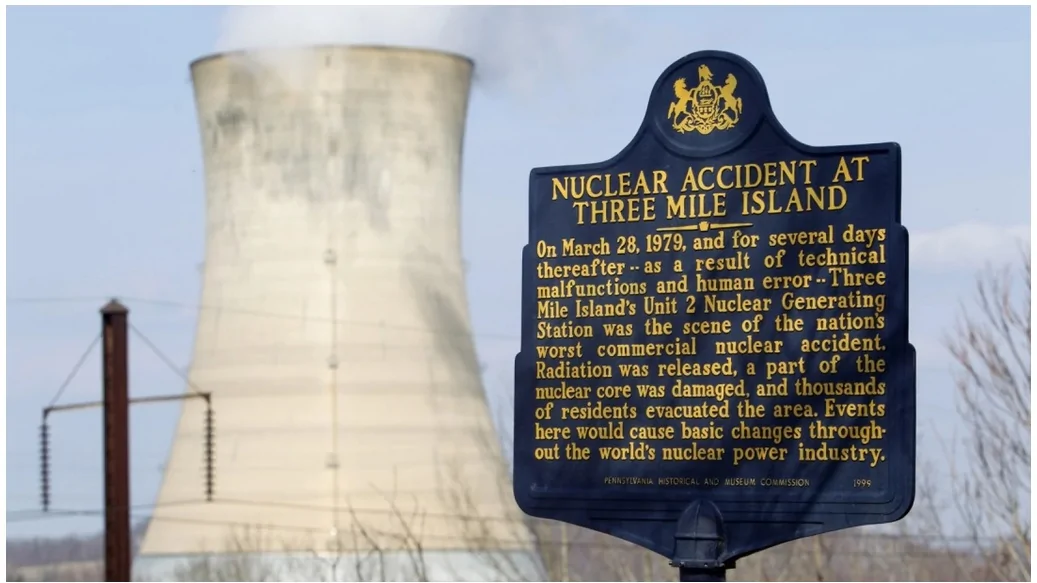
Technical malfunction!
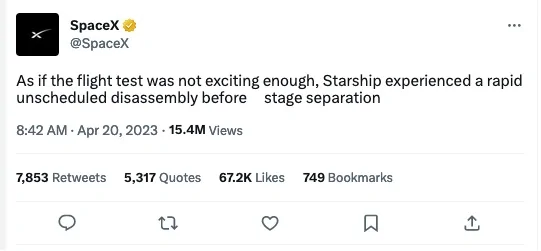
New speak for it blew up....

Who's running this current reality anyway?!
whynotdairy
Member
All i want is hands off driving that works 100% of the time, every time, and everywhere.
I won't trust eyes off autopilot until everyone has it.
And frankly, it's useless until the laws for distracted driving are changed for full level 3.
I won't trust eyes off autopilot until everyone has it.
And frankly, it's useless until the laws for distracted driving are changed for full level 3.
Sponsored
PrimeRisk
Well-known member
- First Name
- Mark
- Joined
- Aug 4, 2024
- Threads
- 9
- Messages
- 346
- Reaction score
- 368
- Location
- Denver-Metro
- Vehicles
- 2024 F-150 L Lariat, 2023 Tesla MY, 2021 Tesla MYP
- Occupation
- Technonerd
There is absolutely a future where Level 3+ Autonomy will be ubiquitous and every vehicle made will at least have it available, if not required, as an option. This will not mean there will be no crashes and there will still be injuries and deaths.All i want is hands off driving that works 100% of the time, every time, and everywhere.
I won't trust eyes off autopilot until everyone has it.
And frankly, it's useless until the laws for distracted driving are changed for full level 3.
The defect in this entire thing is not the AI or the laws, it's the human in the loop. Even if we reach Level 5 Autonomy where absolutely no human input is ever required, unless we take the steering wheel, pedals, and buttons out of the vehicle, the human will always be able to upset the system and cause problems.
The existing Level 2 systems are already proving that the computer performs better than the human. If you look at NHTSA statistics on accidents per million miles driven resulting in death, humans aren't very good at driving by themselves compared to when utilizing Level 2 automation systems. At least for the manufacturers that release this data. Humans perform at ~1.3 crashes per million miles resulting in death.
Tesla does: 0.26 crashes per million miles for any crashes and 0.0056 crashes per million miles resulting in death. (The Tesla death statistic is for all miles driven, not just when automation is in use). Volume matters too. Tesla reported in late 2025 that FSD had been used for over 700 Billion miles driven in their vehicles.
GM claims they are perfect: As of late 2025 they claim there have been no accidents on SuperCruise with over 700 million miles driven. The claim is highly dubious as GM has been in trouble for withholding evidence from the NHTSA for crashes involving their now defunct Cruise robotaxis.
Waymo: They report aggregate numbers that include any accident, even if it isn't their system's fault. (IE someone hits their car) They come in at 10 crashes per million miles, but when looking at crashes with any injury you get 0.41 injury-reported crashes per million miles (IPMM) vs 2.8 IPMM for humans. Waymo claims there have been no crashes resulting in death.
Ford doesn't: The question is why if Blue Cruise is so wonderful?
Mercedes doesn't.
BMW doesn't.
---
Until an agency like the NHTSA starts requiring public reporting from manufacturers in a consistent manner, it will be very hard to compare apples to apples for what is really going on. Manufacturers are not incented to provide this information and likely will not volunteer (other than Waymo and Tesla apparently). The NHTSA does have a General Order requiring reporting on crashes involving Automated Driving Systems, but they only publish aggregate data to the public (at least anything I can search up).
The Weatherman
Well-known member
- First Name
- Dean
- Joined
- Apr 20, 2023
- Threads
- 31
- Messages
- 1,830
- Reaction score
- 2,593
- Location
- South Central KY
- Vehicles
- 2022 RR F150 Lightning Lariat ER, 2020 Explorer PL
- Occupation
- Retired
How is that $10k HIS working out for you?
chl
Well-known member
- First Name
- CHRIS
- Joined
- Dec 16, 2022
- Threads
- 7
- Messages
- 2,528
- Reaction score
- 1,561
- Location
- alexandria virginia
- Vehicles
- 2023 F-150 LIGHTNING, 2012 Nissan Leaf, 2015 Toyota Prius, 2000 HD 883 Sportster
- Occupation
- Patent Atty / Electrical Engineer
AI has a long way to go yet.
Is there really a huge demand for self-driving vehicles?
So many things to anticipate out on the roads, the AI is going to have to be pretty damn good to avoid accidents on its own.
When power was out, all the autonomous vehicles in SF came to a stop - no idea how to get through an intersection with no traffic lights, like deer in the headlights they just stopped.
The geniuses who make and program these AI vehicles need to do a much better job handling the expected unexpected situation that could arise.
They don't know what they don't know.
Is there really a huge demand for self-driving vehicles?
So many things to anticipate out on the roads, the AI is going to have to be pretty damn good to avoid accidents on its own.
When power was out, all the autonomous vehicles in SF came to a stop - no idea how to get through an intersection with no traffic lights, like deer in the headlights they just stopped.
The geniuses who make and program these AI vehicles need to do a much better job handling the expected unexpected situation that could arise.
They don't know what they don't know.
whynotdairy
Member
There is absolutely a future where Level 3+ Autonomy will be ubiquitous and every vehicle made will at least have it available, if not required, as an option. This will not mean there will be no crashes and there will still be injuries and deaths.
The defect in this entire thing is not the AI or the laws, it's the human in the loop. Even if we reach Level 5 Autonomy where absolutely no human input is ever required, unless we take the steering wheel, pedals, and buttons out of the vehicle, the human will always be able to upset the system and cause problems.
The existing Level 2 systems are already proving that the computer performs better than the human. If you look at NHTSA statistics on accidents per million miles driven resulting in death, humans aren't very good at driving by themselves compared to when utilizing Level 2 automation systems. At least for the manufacturers that release this data. Humans perform at ~1.3 crashes per million miles resulting in death.
Tesla does: 0.26 crashes per million miles for any crashes and 0.0056 crashes per million miles resulting in death. (The Tesla death statistic is for all miles driven, not just when automation is in use). Volume matters too. Tesla reported in late 2025 that FSD had been used for over 700 Billion miles driven in their vehicles.
GM claims they are perfect: As of late 2025 they claim there have been no accidents on SuperCruise with over 700 million miles driven. The claim is highly dubious as GM has been in trouble for withholding evidence from the NHTSA for crashes involving their now defunct Cruise robotaxis.
Waymo: They report aggregate numbers that include any accident, even if it isn't their system's fault. (IE someone hits their car) They come in at 10 crashes per million miles, but when looking at crashes with any injury you get 0.41 injury-reported crashes per million miles (IPMM) vs 2.8 IPMM for humans. Waymo claims there have been no crashes resulting in death.
Ford doesn't: The question is why if Blue Cruise is so wonderful?
Mercedes doesn't.
BMW doesn't.
---
Until an agency like the NHTSA starts requiring public reporting from manufacturers in a consistent manner, it will be very hard to compare apples to apples for what is really going on. Manufacturers are not incented to provide this information and likely will not volunteer (other than Waymo and Tesla apparently). The NHTSA does have a General Order requiring reporting on crashes involving Automated Driving Systems, but they only publish aggregate data to the public (at least anything I can search up).
Maybe I'm a fogey, but if i'm not on rails, or a bus, I would rather be in control.
I do believe a computer is a better driver than me, but I would rather be the one to blame, or another human, if I or my family is grievously wounded or killed.
I hope the traffic safety authorities make a human at the respective car company culpable for crashes in a world where cars drive themselves.
We have seen shady tactics by tesla where FSD/ autopilot disengages a fraction of a second before a car crash happens so they can claim it has a better record than it actually does.
Sponsored
Similar threads


- Replies
- 2
- Views
- 524


