

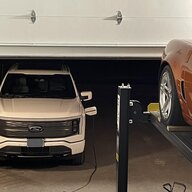
I'm referring to getting the truck onto the flat bed truck not on a hook & drag down the road.Not if they lift the rear wheels to tow, and dollies under the front.
Sponsored
I'm referring to getting the truck onto the flat bed truck not on a hook & drag down the road.Not if they lift the rear wheels to tow, and dollies under the front.

That's crazy, almost certainly a wiring issue. I'd be inclined to say possibly a failed computer module, but the only one that I know of that can tie all of those warnings together is maybe the gateway module. I'm headed to clock in for work so I can't search it for you but maybe look up that wiring harness that's behind the glovebox and check it out. Iirc there was a thread on it sorta recently.ok I had just pulled the 12 volt out and left the truck for last week or 2 but today I tried again put fully charged 12 volt in and here is my video of what happens, I am touching nothing after start button.
Frunk was open, door was open
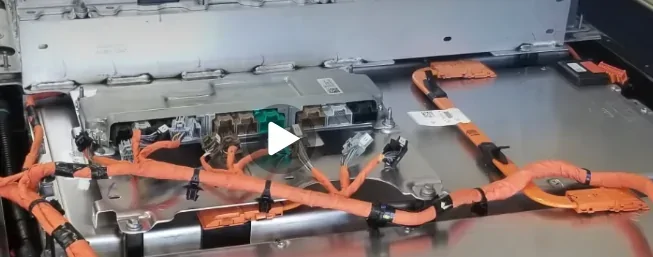
I believe the BMS is inside the HVB casket, but the interface plug on the outside is what might be compromised as it's exposed to possible water intrusion if the seals on the connector fail, the 'problem' might be only the connection, giving false failures about the BMS, or could be both failed but for different reasons.Well after many many weeks ( I let truck sit for 3 weeks before towing) Ford finally looked at my truck as it sat there for 2-3 weeks due to another truck all pulled apart in the 1 ev bay they have. So they are claiming it is a harness plug and the BMS corrosion issue and they need to order the plug/harness and a new BMS module, which is 7-10 days to get. Brutal Mr. Farley
Anyways my question is, can someone tell me where this BMS is located as I was thinking if water and salt could destroy this in just 3.5 years maybe I should silicone around the edge of the plug in harness.
$2050 plus tax repair by the way
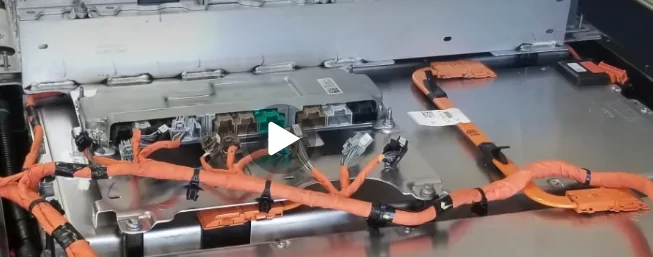

Anyways my question is, can someone tell me where this BMS is located
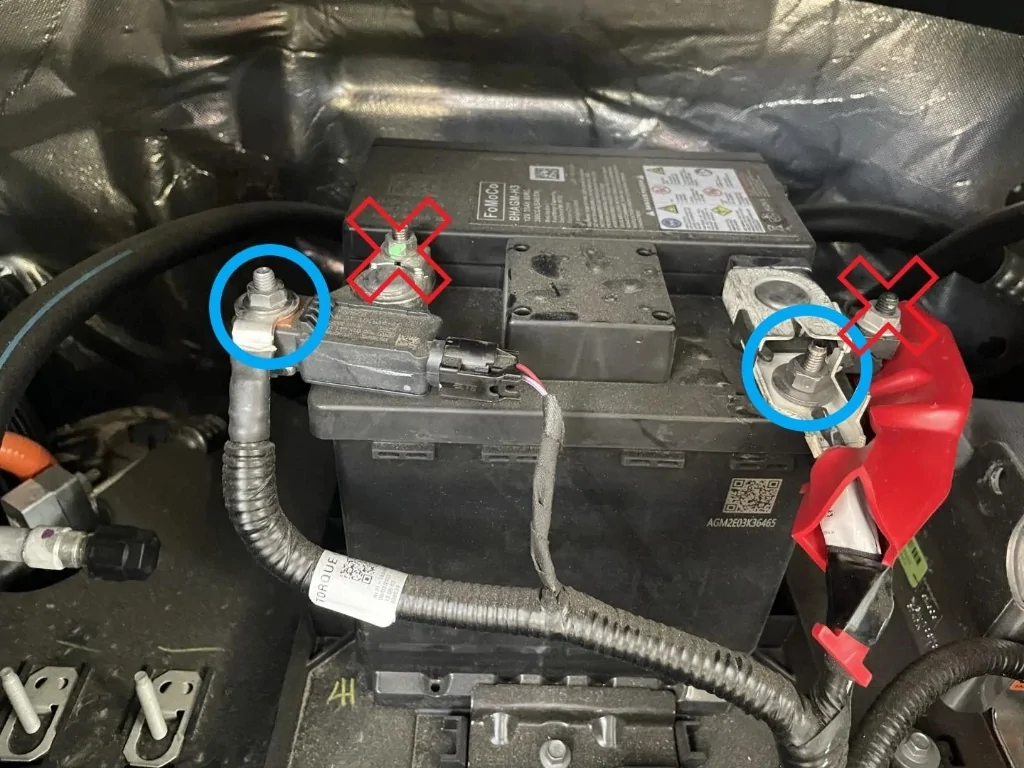
I have just skimmed this thread. Is the discussion for a BMS for the HVB? The BMS for the 12V LVB is part of the negative terminal cable and is located just before the attachment point to the negative terminal of the LVB.I believe the BMS is inside the HVB casket
See starting about 2'48" into Munro video (link#1 in quote just above): . Earlier in the video, the connector seals at the front end of the pack are discussed as suboptimal, which may be relevant to your problem, @Nomoregas.
Wouldn't such corrosion and failure be considered a failure of the drivetrain mechanism and, theoretically, be covered under the 8-year 100,000-mile warranty of the drivetrain (motors, HVB battery, etc) if the failure occurs in normal use?$2050 plus tax repair by the way
Summary
The reported HVB BMS failure due to salt/water corrosion in a 2022 Ford Lightning is best viewed as a design-for-environment issue rather than routine wear.
The Munro teardown analysis indicates that Ford’s battery pack uses a serviceable, gasket-based sealing approach with multiple interfaces and connectors. While functional, this design introduces more potential ingress points compared to fully sealed architectures.
Of particular concern is the placement of connectors and sealing interfaces at the front of the battery pack, an area subject to intense road spray, salt exposure, and freeze–thaw cycling. These are normal operating conditions across much of the U.S., not exceptional cases.
If moisture and salt were able to penetrate the sealing system and reach the BMS, leading to failure, this suggests a limitation in sealing durability or connector protection under expected environmental exposure.
In that context, the failure is reasonably interpreted as a design robustness issue rather than unavoidable corrosion, especially if it occurred within the expected service life of the vehicle.
Only the connector port is at the front exterior, while the actual BMS modules is inside.According to Google Search, the BMS for the HVB is located at the front of the HVB battery pack: