
MattVT
Active member
- Thread starter
- #1
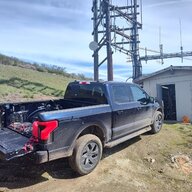
Our 2025 Lariat has been parked, completely unused, for a little over 2 weeks (since December 10), and I've been collecting data on the power drawer. It is plugged into a Level 2 charger (Emporia EVSE) with no limitations configured on the truck or charger about when it can charge - maximum available current is 48A. The State of Charge limit is set to 80% and it was at that level before we left it. No Departure Times are configured.

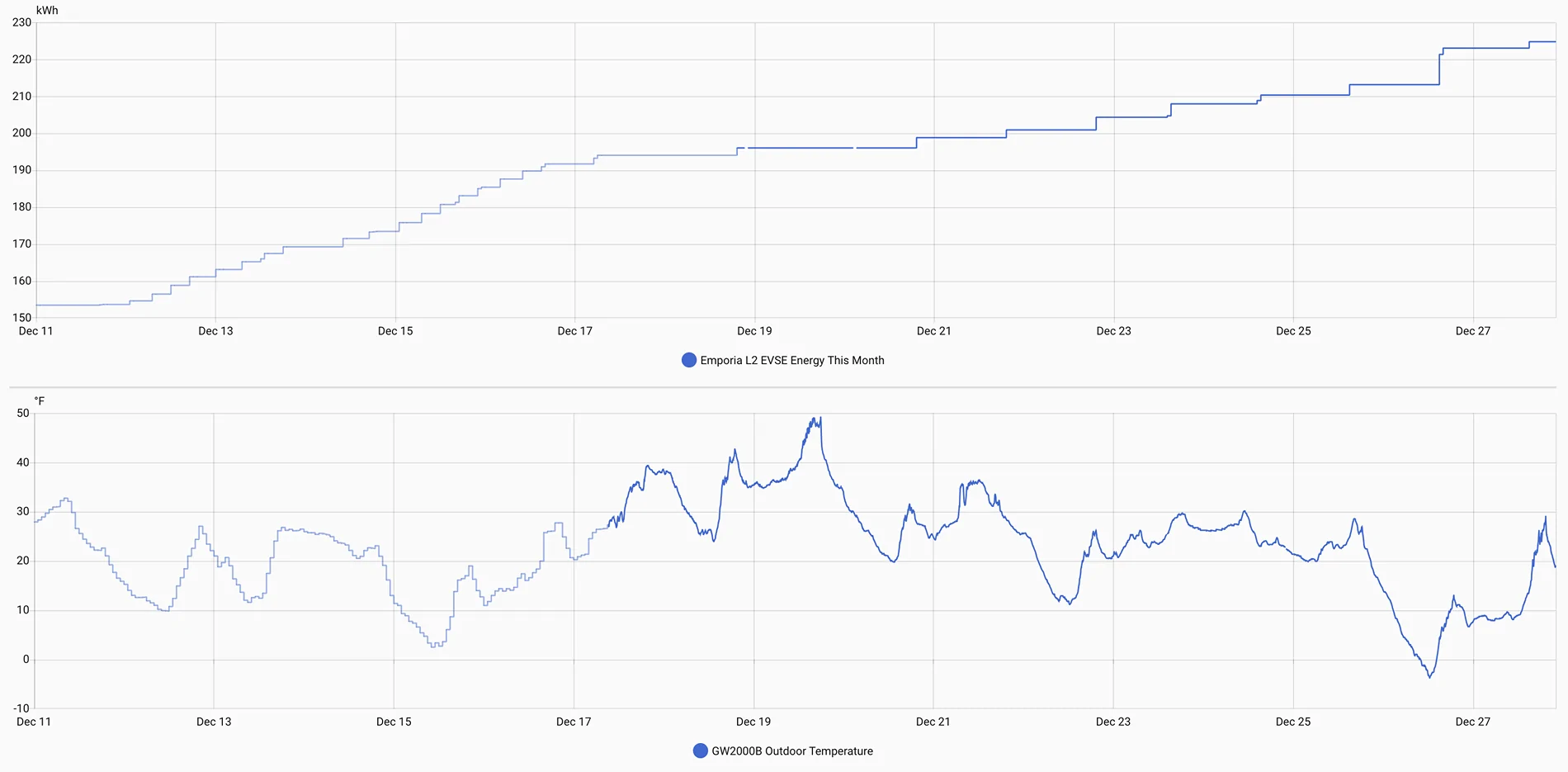
The truck is in Vermont where, as you can see from the bottom chart, temperatures have largely been below freezing, dipping as low as -4°F (-20°C), but averaging somewhere around 20°F (-7°C). We locked up the truck and left it on December 10. On December 23 I connected via FordPass and remote started the truck, just to see if that would have any effect on the sleep.
The top chart above shows cumulative energy usage in December, so essentially each time the line goes up, that's the truck pulling power. It looks like a pretty distinct change in behavior around December 17, exactly 1 week after the truck was last used. While it does appear to pull more power (in both frequency and total energy) in colder temperatures, it definitely seems to have slowed down after the first week.
I'll be honest, I was somewhat surprised to see how much energy it's used - approximately 70kWh in 17 days, so an average of somewhere around ~4kWh per day. I realize I could have unplugged it and put it in "storage", but I was honestly just intrigued to see what would happen if I left it plugged in.
Another notable point is that it does not appear to have changed behavior 2 weeks after I last used it, which I had expected based on what I had read. Perhaps remote starting it after 13 days was enough to stop that, perhaps something has changed, or perhaps I misunderstood how the deep sleep works. Regardless, I can confirm that it pulled power today, the last refresh in FordPass via Home Assistant was 7 hours ago, and there's nothing in the FordPass app suggesting it's gone to sleep.
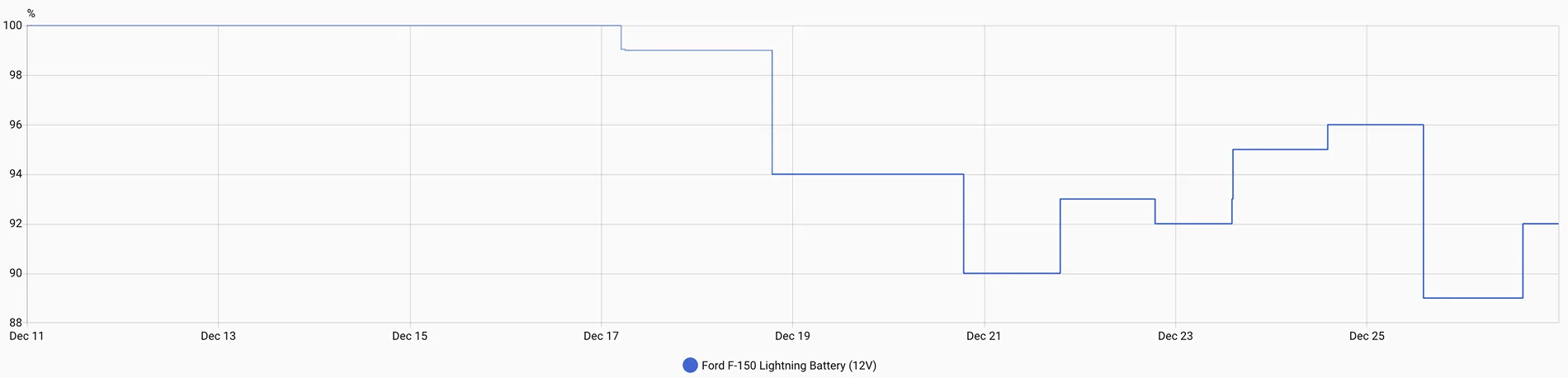
It also looks like it is keeping the 12V battery charged:

So anyway, no real question here, but just thought this was interesting as I hadn't seen data from a truck left plugged in for a prolonged period (> 2 weeks) in cold conditions recently.
The truck is in Vermont where, as you can see from the bottom chart, temperatures have largely been below freezing, dipping as low as -4°F (-20°C), but averaging somewhere around 20°F (-7°C). We locked up the truck and left it on December 10. On December 23 I connected via FordPass and remote started the truck, just to see if that would have any effect on the sleep.
The top chart above shows cumulative energy usage in December, so essentially each time the line goes up, that's the truck pulling power. It looks like a pretty distinct change in behavior around December 17, exactly 1 week after the truck was last used. While it does appear to pull more power (in both frequency and total energy) in colder temperatures, it definitely seems to have slowed down after the first week.
I'll be honest, I was somewhat surprised to see how much energy it's used - approximately 70kWh in 17 days, so an average of somewhere around ~4kWh per day. I realize I could have unplugged it and put it in "storage", but I was honestly just intrigued to see what would happen if I left it plugged in.
Another notable point is that it does not appear to have changed behavior 2 weeks after I last used it, which I had expected based on what I had read. Perhaps remote starting it after 13 days was enough to stop that, perhaps something has changed, or perhaps I misunderstood how the deep sleep works. Regardless, I can confirm that it pulled power today, the last refresh in FordPass via Home Assistant was 7 hours ago, and there's nothing in the FordPass app suggesting it's gone to sleep.
It also looks like it is keeping the 12V battery charged:
So anyway, no real question here, but just thought this was interesting as I hadn't seen data from a truck left plugged in for a prolonged period (> 2 weeks) in cold conditions recently.
Sponsored