

Sponsored

Adventureboy

Well-known member
First Name
Jonathan
Joined
Jan 30, 2023
Threads
2
Messages
1,201
Reaction score
1,227
Location
Ontario
Vehicles
2023 F150 Lightning Lariat
Alright, I did it. I replaced the baby H3 12v battery with a slightly less baby H4. I know the BMS is set for a 35AH battery, and this is a 50AH battery, but I think that is ok since it seems the charging is based on voltage, which doesn't care about battery capacity.

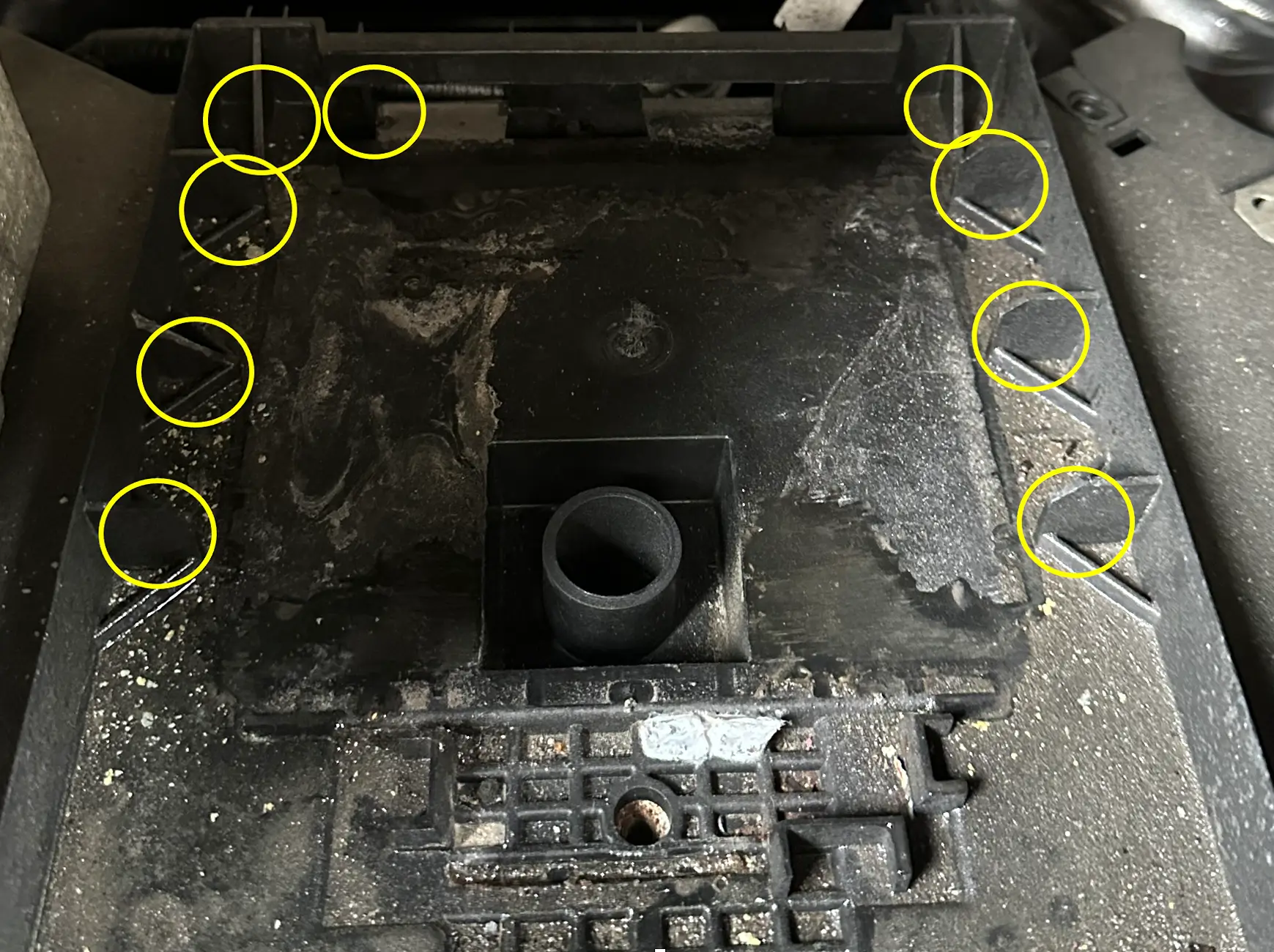
Here is the tray before modification.

There are 9 areas that need trimming for the H4 to fit.

Ford F-150 Lightning 12V Battery replacement with H4 1772940755293-o9


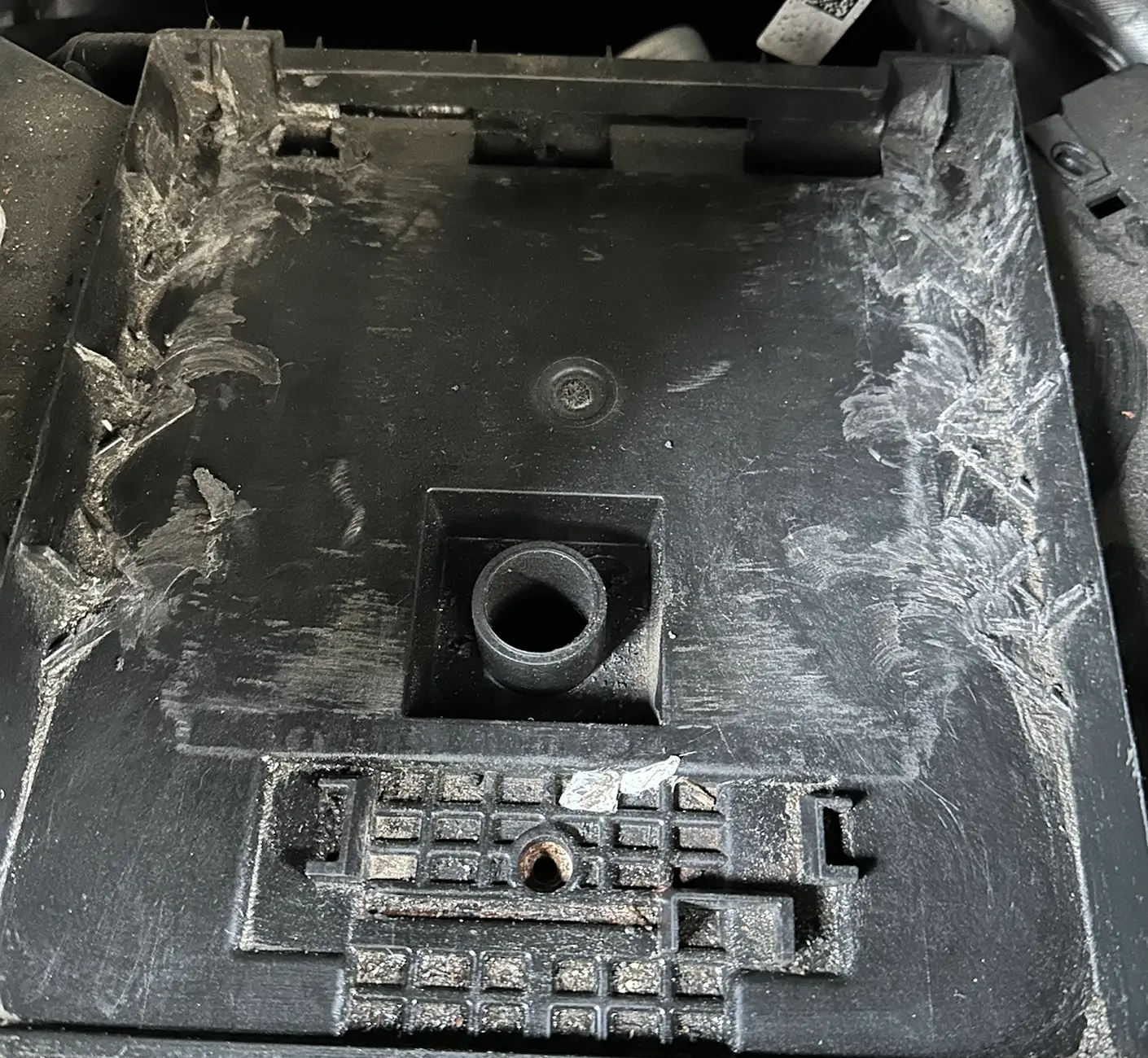
With a Dremel, I trimmed the 6 side tabs to allow for the wider H4. I also trimmed the two tabs on the back as well as the stopper on the back passenger side of the tray so the battery can slide under the rear seat.

Ford F-150 Lightning 12V Battery replacement with H4 1772941697352-98


The picture isn't great but the tabs are trimmed to about 3/16" from the edge of the tray.

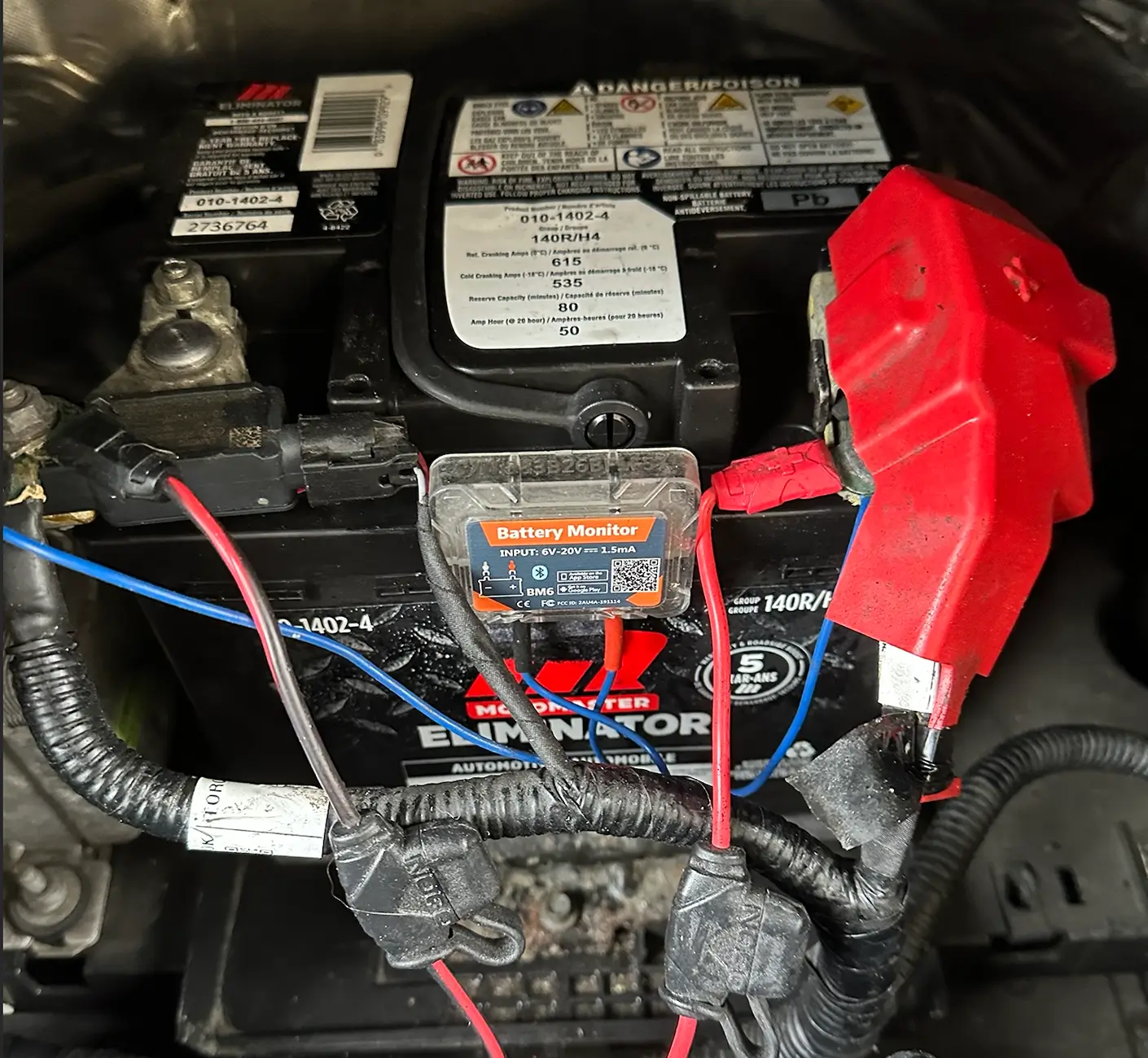
The result is the H4 (140R) slides right in and the front clip bolts right in to hold it in place since the depth of the H3 and H4 are the same.
Ford F-150 Lightning 12V Battery replacement with H4 1772941911132-9


BMS reset when installed. I'll report back in a few days on how the BMS manages the larger H4.
Sponsored


potato

Well-known member
First Name
John
Joined
Feb 1, 2024
Threads
0
Messages
463
Reaction score
693
Location
BC, Canada
Vehicles
2023 F150 Lightning XLT ER
Thanks. I thought about doing this but got lazy and just replaced the H3. Got a reasonable deal on the Motorcraft ($204 + GST) from a dealer in Edmonton.
 

Ekiehn

Well-known member
First Name
Eric
Joined
Jan 8, 2023
Threads
1
Messages
153
Reaction score
137
Location
34997
Vehicles
2023 F-150 Lightning Latiat, 2008 Ford Explorer, 2006 Ford Escape Hybrid
Occupation
IT
Alright, I did it. I replaced the baby H3 12v battery with a slightly less baby H4. I know the BMS is set for a 35AH battery, and this is a 50AH battery, but I think that is ok since it seems the charging is based on voltage, which doesn't care about battery capacity.
Here is the tray before modification.
There are 9 areas that need trimming for the H4 to fit.
1772940755293-o9.webp

With a Dremel, I trimmed the 6 side tabs to allow for the wider H4. I also trimmed the two tabs on the back as well as the stopper on the back passenger side of the tray so the battery can slide under the rear seat.

1772941697352-98.webp

The picture isn't great but the tabs are trimmed to about 3/16" from the edge of the tray.
The result is the H4 (140R) slides right in and the front clip bolts right in to hold it in place since the depth of the H3 and H4 are the same.
1772941911132-9b.webp


BMS reset when installed. I'll report back in a few days on how the BMS manages the larger H4.
You shouldn't have any concern regarding the bms since as you pointed out the bms only cares about voltage not anp hours. It will take longer to fully charge the 50 amp hour battery, that is the only hiccup in the scheme of things. Depending on how you drive and depending upon the programing for any "after hours" top off that might occur if the battery gets "low". That programing will probably assume a 35 amp hour battery and only supplement from the main battery accordingly... not sure of that but there are probably threads out there that have analyzed this.
 

srspring551

Well-known member
First Name
Scott
Joined
Mar 31, 2023
Threads
14
Messages
130
Reaction score
134
Location
WI
Vehicles
F150 Lightning Lariat 2023 ER, delivered 10-28-23
I see you have a BT (Ancel?) battery monitor. I've had my Ancel BM200 for almost 3 weeks and it still gives extremely incorrect SOC readings compared with my OBD reader. Anyone else have that monitor behavior? Is mine malfunctioning or does it take a very long time to equilibrate?
 

carys98

Well-known member
First Name
Cary
Joined
Jan 15, 2022
Threads
31
Messages
848
Reaction score
1,347
Location
Raleigh, NC
Vehicles
2023 Lightning Lariat SR
Occupation
Retired EE
You shouldn't have any concern regarding the bms since as you pointed out the bms only cares about voltage not anp hours. It will take longer to fully charge the 50 amp hour battery, that is the only hiccup in the scheme of things. Depending on how you drive and depending upon the programing for any "after hours" top off that might occur if the battery gets "low". That programing will probably assume a 35 amp hour battery and only supplement from the main battery accordingly... not sure of that but there are probably threads out there that have analyzed this.
I don’t have any hard evidence but I don’t believe the BMS is only concerned with voltage. I believe it is a ”fuel gauge” type of BMS and is monitoring the current in and out of the battery. If it only cared about the voltage it would just connect to the positive lead and would not need to be in series with the current path. That is why it is important to always connect a charger downstream of the BMS. A voltage only BMS would not care where you connected.

Thinking about it some more it still probably doesn’t matter but the SOC number will probably be wrong. The BMS is calibrated to a full 35 Ah battery so if for example you have drawn 3.5 Ah from the H3 it will show 90%. If you have an H4 your actual SOC after drawing 3.5 Ah will be 93%. You will always read lower than your actual SOC which should actually help keep it charged.
 
Last edited:

Sponsored

Athrun88

Well-known member
Joined
Sep 30, 2024
Threads
0
Messages
299
Reaction score
358
Location
Toronto, Ontario, Canada
Vehicles
2024 F150 Lightning Lariat ER Avalanche
Guessing there's not an easy way to update the LVB capacity somewhere to match the battery capacity in FORScan? I would love to either add another H3 for more capacity or upgrade the size of the one battery to power some of my addon accessories without fear that the truck will die.
 
OP
OP
Adventureboy

Adventureboy

Well-known member
First Name
Jonathan
Joined
Jan 30, 2023
Threads
2
Messages
1,201
Reaction score
1,227
Location
Ontario
Vehicles
2023 F150 Lightning Lariat
I don’t have any hard evidence but I don’t believe the BMS is only concerned with voltage. I believe it is a ”fuel gauge” type of BMS and is monitoring the current in and out of the battery. If it only cared about the voltage it would just connect to the positive lead and would not need to be in series with the current path. That is why it is important to always connect a charger downstream of the BMS. A voltage only BMS would not care where you connected.

Thinking about it some more it still probably doesn’t matter but the SOC number will probably be wrong. The BMS is calibrated to a full 35 Ah battery so if for example you have drawn 3.5 Ah from the H3 it will show 90%. If you have an H4 your actual SOC after drawing 3.5 Ah will be 93%. You will always read lower than your actual SOC which should actually help keep it charged.
I will track this. I believe any decent drive time will top up the battery as per any other automotive system based on voltage. The SOC may in fact be understated as it is assuming 35ah and I have 50ah. I'm OK with it saying its at 40% SOC when it is actually 60% SOC. It just means my battery will be healthier.
 

shelnian

Well-known member
First Name
Ian
Joined
Sep 15, 2022
Threads
0
Messages
98
Reaction score
51
Location
Seattle
Vehicles
2022 Mach-E Premium ER, 2023 Lightning XLT SR 312A
Occupation
Retired
Last September I ordered an H3 from Rockauto for my MME, but they sent me a H4. The MME battery holder didn't require a physical mod to support the H4, just had to move the stops. So far I haven't noticed any issues. MME received an OTA a few weeks back so assuming the LVB battery level checks are working correctly.
 

chl

Well-known member
First Name
CHRIS
Joined
Dec 16, 2022
Threads
9
Messages
2,953
Reaction score
1,851
Location
alexandria virginia
Vehicles
2023 F-150 LIGHTNING, 2012 Nissan Leaf, 2015 Toyota Prius, 2000 HD 883 Sportster
Occupation
Patent Atty / Electrical Engineer
My understanding is the 12v BMS keeps track of the energy added to the battery through coulomb counting.

To do so, it detects the current that passes through the BMS sensor (into and out of) and does the energy calculation using current flow wrt time to determine the SOC based on an assumed 35 Ah battery.

So it does not rely on the terminal voltage of the battery to determine SOC.

In other words, it detects the charge transfer via the BMS sensor, which is the same as Ah.

This is why a maintainer charger has to be connected down stream of the BMS sensor.

So with a larger Ah battery I believe the BMS might think the battery is fully charged when 35Ah's have been detected going into the battery by the BMS sensor, even though the larger battery is not fully charged.

Besides misstating the SOC, that could (and probably would) result in sulfate formation on the plates becoming permanent.

You need to fully charge a lead-acid battery to drive off the sulfates that form during discharging by charging the battery back to 100%.

AGM batteries take longer to reach 100%, which is one reason they keep failing in the Lightning when the Lightning does an incomplete job of charging to 100%.

Maybe there is a way to FORscan a change to the 35Ah in the calculation being done, but otherwise, you will not get the full lifetime out of the new battery.

Getting a new 35Ah battery and keeping it on a maintainer with an AGM mode as often as possible is the way to go for a long battery life in the Lightning.
 
Last edited:

mr.Magoo

Well-known member
Joined
May 27, 2022
Threads
26
Messages
1,030
Reaction score
1,323
Location
Michigan
Vehicles
2022 Lariat ER, AMB
My understanding is the 12v BMS keeps track of the energy added to the battery through coulomb counting.
And energy consumed.
There's four PIDs that you can use to track cumulative charge when on and discharge when on, off and sleep.

using current flow wrt time to determine the SOC based on an assumed 35 Ah battery.
I'm not as confident that it's using coulomb counting to determine SoC
In an ideal world, sure, that would make sense, but it builds up a "gap"/delta between charge and discharge over time . Numbers below is after almost two years and I have yet to find a correlation between the reported charge/discharge values and SoC.
The other one is 50 days earlier and as you can see the delta is very similar, yet in one case it's reporting 89% SoC and in the other 100%

Disregard the unit for now, 4.3C seems like nothing, but there's a factor around 100,000 or something because these numbers move very slowly. (ex. charging from 60% to 90% increases the value by 0.3-ish)
Ford F-150 Lightning 12V Battery replacement with H4 1773051118021-3l

Ford F-150 Lightning 12V Battery replacement with H4 1773052446906-js


So with a larger Ah battery I believe the BMS might think the battery is fully charged when 35Ah's have been detected going into the battery by the BMS sensor, even though the larger battery is not fully charged.

Besides misstating the SOC, that could (and probably would) result in sulfate formation on the plates becoming permanent.
Assuming you start with a fully charged battery, this would not be an issue and actually be a good thing since you're now shifting the "emergency" charging threshold from 40% SoC to 58%.
(somewhat simplified >>> 60% discharge from a 35Ah H3 AGM = 21Ah and 21Ah from a 50Ah H4 = 42%, so 58% remaining)
 

Sponsored
OP
OP
Adventureboy

Adventureboy

Well-known member
First Name
Jonathan
Joined
Jan 30, 2023
Threads
2
Messages
1,201
Reaction score
1,227
Location
Ontario
Vehicles
2023 F150 Lightning Lariat
Besides misstating the SOC, that could (and probably would) result in sulfate formation on the plates becoming permanent.
I agree SOC may not be as accurate with the larger battery but as @mr.Magoo points out, it may under-read the SOC, resulting in the truck keeping the larger battery in the top half of the true SOC range.

There will not be an issue with sulfation. 15 volts to the battery posts will fully charge any size AGM battery - it just takes a bit longer with a larger battery. The BMS resets coulomb counting when the battery is fully charged, and it starts over. (ie. The battery has 15v at the posts and no current is flowing into the battery, which means it is fully charged. This is how the BMS knows the battery is at 100% SOC).

The 12v BMS is just a passive gauge, so the truck knows when it needs to top up the 12v. (ie, it counts coulombs until it thinks the battery is down to 40% SOC, then signals the truck to turn on the DC-DC converter). It does a few other things, like watching for abnormal drain, and it also measures the number of coulombs between upper and lower voltage ranges so it can calculate the capacity of the battery (SOH), although it doesn't tell us what that is. Charging happens through the regulated DC-DC converter, and it holds 15v at the battery posts. The BMS will not stop charging.

It remains to be seen if the BMS gets confused and starts sending goofy messages. Resetting the BMS starts the calculations at 35ah.

So far so good.
 

Shawnson

Well-known member
Joined
Sep 11, 2023
Threads
2
Messages
252
Reaction score
200
Location
Edmonton
Vehicles
Lightning Lartiat ER, Model 3 LR, Crosstrek… hehe
Occupation
Developer
From YEG too. Nice to see a local lightning driver.
Thanks. I thought about doing this but got lazy and just replaced the H3. Got a reasonable deal on the Motorcraft ($204 + GST) from a dealer in Edmonton.
 

chl

Well-known member
First Name
CHRIS
Joined
Dec 16, 2022
Threads
9
Messages
2,953
Reaction score
1,851
Location
alexandria virginia
Vehicles
2023 F-150 LIGHTNING, 2012 Nissan Leaf, 2015 Toyota Prius, 2000 HD 883 Sportster
Occupation
Patent Atty / Electrical Engineer
The Lightning definitely uses coulomb counting, energy transfer monitoring if you like.

It might also check the terminal voltage, but I have seen no definitive evidence of that yet.

But I think if that were the case, we wouldn't need to recalibrate/reset the BMS when we put in a new battery - it could just sense the terminal voltage and rest itself, eh?

I am not really sure about the extent of interaction between the 12v battery BMS and the DC-DC converter. It does not seem to be too smart or exercise much control over the charging process, since we have plenty of reports of apparent under and over charging.

That's the main reason I use a smart battery maintainer in AGM mode and don't rely on the truck to maximize battery lifespan.

We have seen from the many posts, the Lightning 12v BMS system does not do a great job of keeping the battery fully charged, and the results are error messages, load shedding etc. as well as what I would call unnecessary premature battery failures.

Keep us posted on how it works out, that is, see if after a few weeks the BMS is still keeping the larger Ah battery fully charged or not.

Since the new battery has a larger energy capacity, the over discharging should be less of a problem, along with the load-shedding errors and needing a jump.

But maybe the not fully charging the battery to 100% will be a bigger problem with a bigger battery?

If you don't fully charge the battery to 100%, sulfates on the plates can become permanent over time leading to a shortened battery lifespan.

That is just a fact of lead-acid batteries, not my opinion - if you don't believe it, look it up for yourself. :)
 
OP
OP
Adventureboy

Adventureboy

Well-known member
First Name
Jonathan
Joined
Jan 30, 2023
Threads
2
Messages
1,201
Reaction score
1,227
Location
Ontario
Vehicles
2023 F150 Lightning Lariat
But I think if that were the case, we wouldn't need to recalibrate/reset the BMS when we put in a new battery - it could just sense the terminal voltage and rest itself, eh?

I am not really sure about the extent of interaction between the 12v battery BMS and the DC-DC converter. It does not seem to be too smart or exercise much control over the charging process, since we have plenty of reports of apparent under and over charging.
The BMS keeps parameters on the health of the 12v. As our 35ah battery ages, and gets down to say 20ah, it adjusts the dynamics around messaging and telling the DC-DC charger to engage, or go into deep sleep mode sooner. I've tracked this for a couple of years and the BMS definitely triggers 12v charging around 40% SOC on the standard-size battery. As the battery ages, it triggers this in shorter cycles. This is evidence it is tracking capacity. Resetting the BMS resets the tracked capacity back to 35ah, otherwise you'll continue to get messages when the 12v discharges 12-15ah.

If you don't fully charge the battery to 100%, sulfates on the plates can become permanent over time leading to a shortened battery lifespan.
Not an issue. Our trucks run 15v at the battery posts, so there is no chance it will be undercharged.
 

Shawnson

Well-known member
Joined
Sep 11, 2023
Threads
2
Messages
252
Reaction score
200
Location
Edmonton
Vehicles
Lightning Lartiat ER, Model 3 LR, Crosstrek… hehe
Occupation
Developer
How did you add a battery maintainer? Just plug it in to the frunk outlets? And run the maintainer into the battery compartment?

The Lightning definitely uses coulomb counting, energy transfer monitoring if you like.

It might also check the terminal voltage, but I have seen no definitive evidence of that yet.

But I think if that were the case, we wouldn't need to recalibrate/reset the BMS when we put in a new battery - it could just sense the terminal voltage and rest itself, eh?

I am not really sure about the extent of interaction between the 12v battery BMS and the DC-DC converter. It does not seem to be too smart or exercise much control over the charging process, since we have plenty of reports of apparent under and over charging.

That's the main reason I use a smart battery maintainer in AGM mode and don't rely on the truck to maximize battery lifespan.

We have seen from the many posts, the Lightning 12v BMS system does not do a great job of keeping the battery fully charged, and the results are error messages, load shedding etc. as well as what I would call unnecessary premature battery failures.

Keep us posted on how it works out, that is, see if after a few weeks the BMS is still keeping the larger Ah battery fully charged or not.

Since the new battery has a larger energy capacity, the over discharging should be less of a problem, along with the load-shedding errors and needing a jump.

But maybe the not fully charging the battery to 100% will be a bigger problem with a bigger battery?

If you don't fully charge the battery to 100%, sulfates on the plates can become permanent over time leading to a shortened battery lifespan.

That is just a fact of lead-acid batteries, not my opinion - if you don't believe it, look it up for yourself. :)
Sponsored


Top