
Firebelly
Member
https://www.floridastateparks.org/p...erfront Restroom,charging allowed in the park.Which State Park doesn’t allow it at campsites? That seems insane… I would make sure I charged only in the dark of night in that case…
Sponsored
https://www.floridastateparks.org/p...erfront Restroom,charging allowed in the park.Which State Park doesn’t allow it at campsites? That seems insane… I would make sure I charged only in the dark of night in that case…
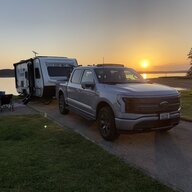
Interesting. I've charged at several other FL state parks with no issue. I've never encountered a state park that didn't allow it. I even had one repair the broken 50A at my site so I could charge.

Thank you.We just finished a 70 day trip. Only 2 campsites out of 20+ did not let us charge. The first one was a private campground and when we got there, we saw why - their entire electrical system was shaky. Wires sticking out everywhere, some pedestals didn't work, extension cords running from site to site. The second was a state park and rules clearly stated no EV charging, so we didn't charge there. In both cases, it was clearly stated in the rules - so if you read the rules then you should be able to tell ahead of time.
If they were to give you any grief, you could try to point out that electrical systems are designed to handle AC loads. An RV with 2 AC will draw about 240V / 12A, and with 3 ACs, 240V / 18A. So you might say that you will charge at less than 18A, and only at night, when the AC is not working as hard. You could also say you can see the kWh in the Ford app, and offer to pay them for the juice. Still be a lot cheaper and more convenient than a public charger.
An adjustable current EVSE is mandatory. Here's one https://www.amazon.com/Plug-Play-Connector-Waterproof-Adjustable-Electric/dp/B0DSJD5ZQG/?th=1
You'll also want an extension. This is for the case where the pedestal is at the back of the RV https://www.amazon.com/dp/B0CB277RGB?ref_=ppx_hzsearch_conn_dt_b_fed_asin_title_3&th=1
Finally, you may want a Y. This is so you can plug the truck and the camper at the same time. For a while, I would plug in the truck, and then plug the camper into the truck. That worked fine, but was a bit of a hassle to set up every night, and I had to leave the hard tonneau cover cracked open, which was OK except when it was raining. https://www.amazon.com/dp/B0CQC24BC3?ref_=ppx_hzsearch_conn_dt_b_fed_asin_title_1&th=1
Since then I added a 240V L14-30 to the rear bumper. The main point of this is so that I can plug in the camper while we're driving. We travel with pets, and when we go down south in the summer, we don't want them to fry. I wrote up the build here: https://docs.google.com/document/d/...EHSdljp20/edit?tab=t.0#heading=h.w3h6lipgn6se
The 5-15 plug is a 15 amp (12 usable) 120 volt standard plug. Several people here have reported that by making a (DANGEROUS) 6-15 plug to 5-15R adapter, you can feed 240 volts to the 5-15 pigtail and get 240 volts at 12 amps using the Ford Mobile Charge Cord. That should get you close to a 3KW charge rate.but I can run the 5-15 pigtail on the ford mobile charger to do 220v 12a, which would be more than enough.

Which State Park doesn’t allow it at campsites? That seems insane… I would make sure I charged only in the dark of night in that case…
Reminds me of a time long ago when a friend of mine used 5-15 plugs to hook up the PA system for his rock band. They were cheap connectors and readily available. Made setup and takedown really quick. Up until the time that someone plugged one into 120V by mistake. Scared the shit out of everyone with the loudest 60Hz sound imaginable for about 5 seconds before it went up in smoke.The 5-15 plug is a 15 amp (12 usable) 120 volt standard plug. Several people here have reported that by making a (DANGEROUS) 6-15 plug to 5-15R adapter, you can feed 240 volts to the 5-15 pigtail and get 240 volts at 12 amps using the Ford Mobile Charge Cord. That should get you close to a 3KW charge rate.
DANGER NOTE: Such an adapter is dangerous because it creates a 120 volt standard receptacle that will actually have 240 volts on it. Will likely blow up anything that can't actually handle 240 volts input. Only use this if you know what you are doing and make damn sure it does not get used for other products.
No surprise, but you can buy them right off Amazon.The 5-15 plug is a 15 amp (12 usable) 120 volt standard plug. Several people here have reported that by making a (DANGEROUS) 6-15 plug to 5-15R adapter, you can feed 240 volts to the 5-15 pigtail and get 240 volts at 12 amps using the Ford Mobile Charge Cord. That should get you close to a 3KW charge rate.
DANGER NOTE: Such an adapter is dangerous because it creates a 120 volt standard receptacle that will actually have 240 volts on it. Will likely blow up anything that can't actually handle 240 volts input. Only use this if you know what you are doing and make damn sure it does not get used for other products.
The webasto go that the ford mobile charger is based on is a 120/240v capable system designed for international use (many of whom use 240v systems).5-15 - is 120V, no? With 120v you will always be on L1. Also, be aware that 30A RV sockets (TT-30) are 120V - so you will also be at L1 with that. Only way to get L2 is with a 50A RV socket (14-50R) and a 240V EVSE. We always make sure to rent a 50A site. Increasingly, more sites are 30/50... but not all.
The real value is the ability to double your output on a 30A campsite outlet.The webasto go that the ford mobile charger is based on is a 120/240v capable system designed for international use (many of whom use 240v systems).
As was mentioned you can give the Ford mobile charger 240v on the 5-15 plug instead of 120v and it will do 12a 240v (~2.8kw), where as in a 120v outlet it is 12a 120v (~1.3kw).
You would of course have to use a 240v outlet, such as a 14-50
Right. Oops.How? A TT-30 is 120V. So you will get 120 / 12. Right?