

Sponsored

First highway segment in U.S. wirelessly charges electric heavy-duty truck while driving

vvgogh

Well-known member
Joined
Feb 16, 2023
Threads
25
Messages
152
Reaction score
156
Location
Colorado
Vehicles
'23 F-150 Lightning ER
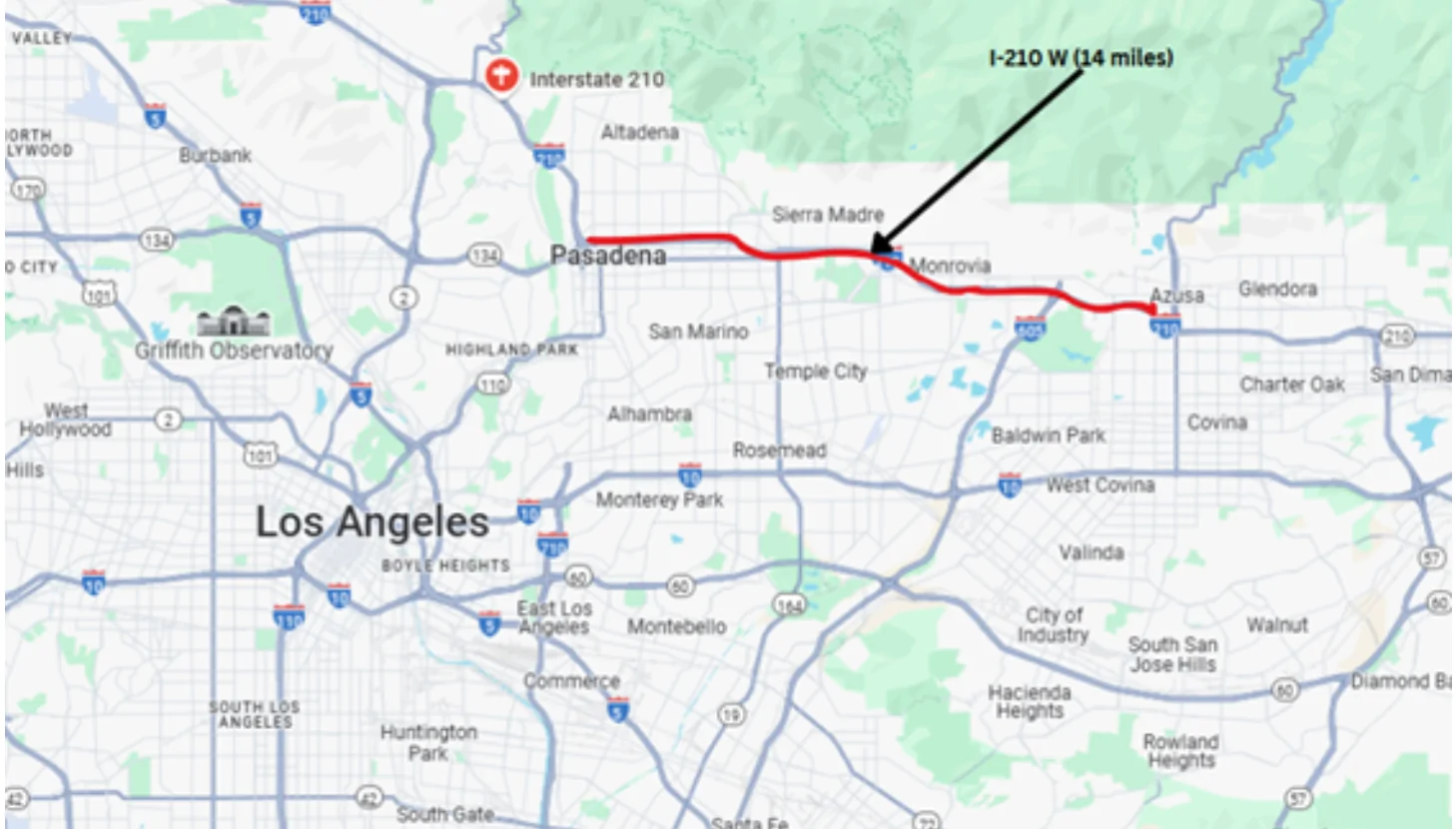
Here's a modeling paper from Purdue on the topic. The paper analyzed a 14 mile road segment near Los Angeles. Demand peaks at 28 MW during evening rush hour (Fig 8b). Figure 10a shows it needs 43 MW of solar, 114 MWh of storage, and a grid connection of 16 MW, estimated at $206M.

I wonder how much of that 28 MW makes it into the EV's batteries?

Ford F-150 Lightning First highway segment in U.S. wirelessly charges electric heavy-duty truck while driving 1765329770931-44
 
OP
OP
BSEE SPARKY

BSEE SPARKY

Well-known member
First Name
Derek
Joined
Jan 30, 2025
Threads
3
Messages
95
Reaction score
79
Location
Southern Indiana
Vehicles
2023 Lightning Lariat ER, MAX TOW, Power Running Boards
Here's a modeling paper from Purdue on the topic. The paper analyzed a 14 mile road segment near Los Angeles. Demand peaks at 28 MW during evening rush hour (Fig 8b). Figure 10a shows it needs 43 MW of solar, 114 MWh of storage, and a grid connection of 16 MW, estimated at $206M.

I wonder how much of that 28 MW makes it into the EV's batteries?

1765329770931-44.webp
I have always thought wireless charging had to be pretty lossy. Cell phones might be around a tenth of an inch between send and receive antennas. On big trucks, the distance must be 3+ feet. I am sure the transmit beam is very narrow, but still. I assume each transmitter only turns on when it knows there is a capable receiver.
 

hturnerfamily

Well-known member
First Name
William
Joined
Jan 8, 2022
Threads
49
Messages
2,336
Reaction score
2,985
Location
rural Georgia
Vehicles
22 LIGHTNING PRO IcedBlueSilver 8/23/2022
Occupation
Owner
I would think that this method is not only the most expensive of all 'designs' to provide some type of 'wireless' charging, but also the least effective...

A) you must be in the correct dedicated 'lane' to get the charge
B) your vehicle's charging receiver equipment must be under the vehicle, as close to the surface as possible, therefore more subject to road rash and damage
C) any installation, repair, or replacement of underlying wiring and equipment is going to be a very labor-intensive, time consuming, and expensive proposition, not to mention the days/weeks/months of traffic hold-ups and diversions...

on the other hand:
1) the wiring and equipment are out of the way, sight unseen, and do not spoil the roadway views,
except for the roadside electrical and Inverter/Converter/battery equipment every 100 yards or so...
2) the vehicles receiving equipment can be hidden underneath the vehicle, not spoiling the design/look/aero aspects of the vehicle

but, a BETTER idea:
*) look at how electrified trains and cable cars get power - overhead. It's continuous. It's not wireless. It's much easier to maintain/repair/install without hindering traffic. It uses overhead wiring and equipment so as not to interfere with current traffic patterns.
**) it would require vehicles to have overhead receiving equipment, possibly spoiling our current idea of an attractive vehicle, although for semi-trucks, this is likely not an issue, and they are much taller vehicles to more easily reach the overhead charging lines. This would place the overhead infrastructure out of reach, and safe, for the average personal vehicle.
***) we already see similar overhead designs as truckers start to arrive close to a roadside weigh station, where the overhead 'radar' is picking up their vehicle information, and informing them to either pull in, or continue on... a similar design seems to be an option for overhead electrical charging.

and, for another option, and even 'easier'...:
A) Truck stops, especially those with overnight/stopover parking spaces, to install DC Fast Chargers at each space, just like they offer now the integrate AirConditioner/Electrical/Entertainment window units for each vehicle as the driver sleeps.
B) Truck stops install DC Fast Chargers at drive-thru lanes, with the DOT allowing this 'charging time' not to impact the drivers Hours Of Service limits. If vehicles have DUAL onboard CCS or NACS charging ports, the idea could also expand to 'filling up' from both SIDES of the vehicle, with two separate DC Fast Chargers at the same time.

I like the IDEA of charging while moving, but this is really the most expensive method, and involving the government.
Truckers are already used to stopping for fuel, and that's not a fast process, either. It's not only the time to pump 200 gallons or more, but sometimes fraught with waiting in line for sometimes hours.
 

WXman

Well-known member
Joined
Aug 16, 2025
Threads
19
Messages
428
Reaction score
460
Location
Central Kentucky
Vehicles
2025 F-150 Lightning Flash
Occupation
Meteorology/Transportation
I've worked with in-pavement sensors every week for the past 23 years. What I see here is a technology that is going to be too expensive and require too much maintenance to be feasible. The money spent for the amount of charge received will be a terrible ratio, and it will be a nightmare to keep the system functional, particularly in that part of the country where winter weather takes a toll on concrete and pavements.

In short, this is a neat idea but it'll never see mass adoption.

I mean, what are we trying to solve here? The money spent on just one mile of this installation in the roadway and installation on a truck would pay for MANY many many tanks of diesel fuel.
 

Sponsored

RickLightning

Well-known member
Joined
Jan 17, 2022
Threads
106
Messages
6,603
Reaction score
8,998
Location
SE MI
Vehicles
'22 Lightning ER Lariat,'22 Mach-E Premium 4X

vvgogh

Well-known member
Joined
Feb 16, 2023
Threads
25
Messages
152
Reaction score
156
Location
Colorado
Vehicles
'23 F-150 Lightning ER
$15M/mile of energy storage!

At 60 mph, that's 1 minute of charging in that $15M mile. At 200 kW delivered, you'd get 3.33 kWh in that $15M mile. That's 7 miles of range at 2.1 miles/kWh delivered in 1 mile (1 min) of travel. Traveling the $206M 14 mile case-study corridor charges 98 miles, 84 more miles than you traveled at 60 mph while charging. Neat.

The future looks expensive.
 

carys98

Well-known member
First Name
Cary
Joined
Jan 15, 2022
Threads
29
Messages
806
Reaction score
1,255
Location
Raleigh, NC
Vehicles
2023 Lightning Lariat SR
Occupation
Retired EE
Things like this just distract from the actual solutions we should be working on. It’s kind of like the solid state batteries that are always just around the corner. It gives people an excuse to wait for the next big thing before moving to an EV. As long as the next big thing never gets here the oil companies and the Toyotas of the world can maintain the status quo. What we really need is higher voltage, faster charging batteries and the infrastructure to handle them. Basically, what the Chinese are doing.
 

The Weatherman

Well-known member
First Name
Dean
Joined
Apr 20, 2023
Threads
31
Messages
1,822
Reaction score
2,587
Location
South Central KY
Vehicles
2022 RR F150 Lightning Lariat ER, 2020 Explorer PL
Occupation
Retired
$15M/mile of energy storage!

At 60 mph, that's 1 minute of charging in that $15M mile. At 200 kW delivered, you'd get 3.33 kWh in that $15M mile. That's 7 miles of range at 2.1 miles/kWh delivered in 1 mile (1 min) of travel. Traveling the $206M 14 mile case-study corridor charges 98 miles, 84 more miles than you traveled at 60 mph while charging. Neat.

The future looks expensive.
But, that cost has to be decided by the number of electric vehicles that travel that same stretch. The more EV’s the cheaper it gets per EV.
 

JMD359

Active member
First Name
One843657295470895!
Joined
Dec 27, 2024
Threads
0
Messages
41
Reaction score
22
Vehicles
22 F150 Lightning Lariat,2022 Toyota Rav4 Prime,2011 F350 6.2L
Occupation
Mechanic
Figures a northern state that loads th w road with rock salt does this , what can possibly go wrong ? We can’t keep our existing infrastructure in decent shape , wonder how salt water getting to the workings of the charging system will play out long term! I can see it now sections of roads shorting to ground after years of use . Sorry If this technology is used it should be used in the south where salt isn’t used on roads and they are subject to frost heaving .
Sponsored


Top